A well-planned water park rarely stays completely wet from gate to gate. Entry plazas, shaded seating areas, changing zones, retail edges, and toddler dry-play pockets sit close enough to splash features to get intermittent overspray and heavy foot traffic from barefoot visitors. These wet-to-dry transition zones create a specific equipment problem: the products need the durability of aquatic-edge furniture, the safety performance of public playground equipment, and a drainage-friendly installation approach that does not turn the surrounding deck into a slipping hazard.
For operators, architects, and municipal buyers, the right transition play equipment keeps children moving safely between splash pads, wave pools, and dry recreation areas without importing corrosion, standing water, or maintenance-heavy electronics into the dry zone. The selection process should begin with materials and surfacing, then narrow toward product types that can survive repeated wetting and drying cycles under commercial use.
Why Wet-to-Dry Transitions Fail Without the Right Equipment
The failure at most water park boundaries is not that equipment gets wet. It is that ordinary playground products are installed as if they were sitting in a permanently dry schoolyard. Water from swimsuits, overspray, rain, and even routine deck washing enters bearings, pooled-in joints, and unsealed metal edges. The result is premature rust, swollen or delaminated panels, slippery footholds, and safety surfacing that breaks down faster than expected.
A transition zone has three demands that a typical dry playground does not. First, the equipment must tolerate intermittent water exposure without needing to be fully washed down and dried after every operating day. Second, it must not trap water where children place hands or run across. Third, the full installation, including fall surfacing, anchors, and deck transitions, must drain effectively. EN 1176 and ASTM F1487 set the baseline for playground safety, but water-park edge specification also requires design choices beyond minimum code [1][2].
Material Rules for Splash-Adjacent Play Equipment
Material selection matters more than product color or theme. In a splash-adjacent dry zone, steel should be galvanized or marine-grade stainless, especially for fasteners, spring bodies, swivel joints, and bearing housings. Small components fail first because they hold moisture in concealed contact points. A galvanic reaction can also start where stainless and carbon steel touch in a damp environment, so dissimilar metal contact should be reviewed at the specification stage.
Plastics and rotational-molded components should be UV-stabilized and resistant to chlorinated splash, sunscreen, and repeated cleaning. Textured surfaces should drain rather than hold water in small cups or grooves. Interactive equipment near water should use enclosures rated at least IP65, and ideally IP67 where direct spray or deck washing is possible. The International Electrotechnical Commission defines these enclosure ratings through IEC 60529 [4]. A dry-zone interactive play panel with most non-wet-rated components may look good on a brochure but becomes a maintenance liability within one season.
For fall surfacing, the transition area usually benefits from bound rubber or poured-in-place surfacing with a drainage slope of at least one percent. The surface should meet the impact-attenuation requirements in EN 1177 for the installed fall heights while remaining cleanable and quick-drying [5]. Avoid surfacing that compacts into a slick film when wet, and avoid loose fill at the immediate wet-to-dry boundary unless a durable separation and cleaning program are specified.
Selecting a manufacturer for mixed-use recreation areas requires checking surfacing, drainage, warranty language, and material compatibility together. <Selecting Commercial Playground Manufacturers A Step by Step Guide> covers a step-by-step comparison process that helps water park operators avoid suppliers who treat dry-zone equipment as an afterthought.
Equipment Types That Work Well in Dry-Zone Transition Areas
The most practical equipment for water park dry zones is unpowered, low-enclosure, and quick to inspect. Spinning equipment, spring riders, seesaws, and ground-level play panels all fit this profile because they provide strong play value without deep pockets that trap water or complex electronics that require climate-controlled enclosures.
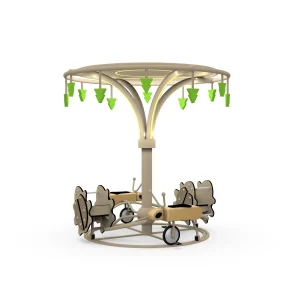
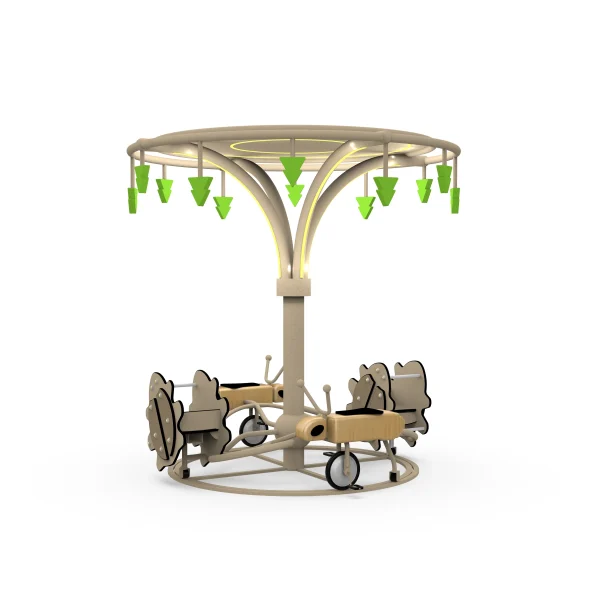
A centrally placed spinner can anchor a family dry-play pocket without requiring long platform structures. Look for sealed bearings, open drainage paths through the deck, and slip-resistant standing surfaces. Spinning equipment should also have controlled rotation so wet hands and bare feet do not create an uncontrolled speed problem. Lvdong’s commercial spinning range includes multi-user models designed for high-frequency outdoor use and EN 1176 compliance, with sealed rotation components suited to humid or splash-adjacent environments.
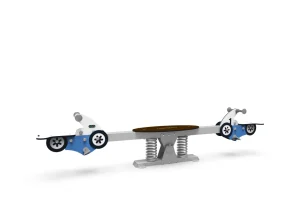
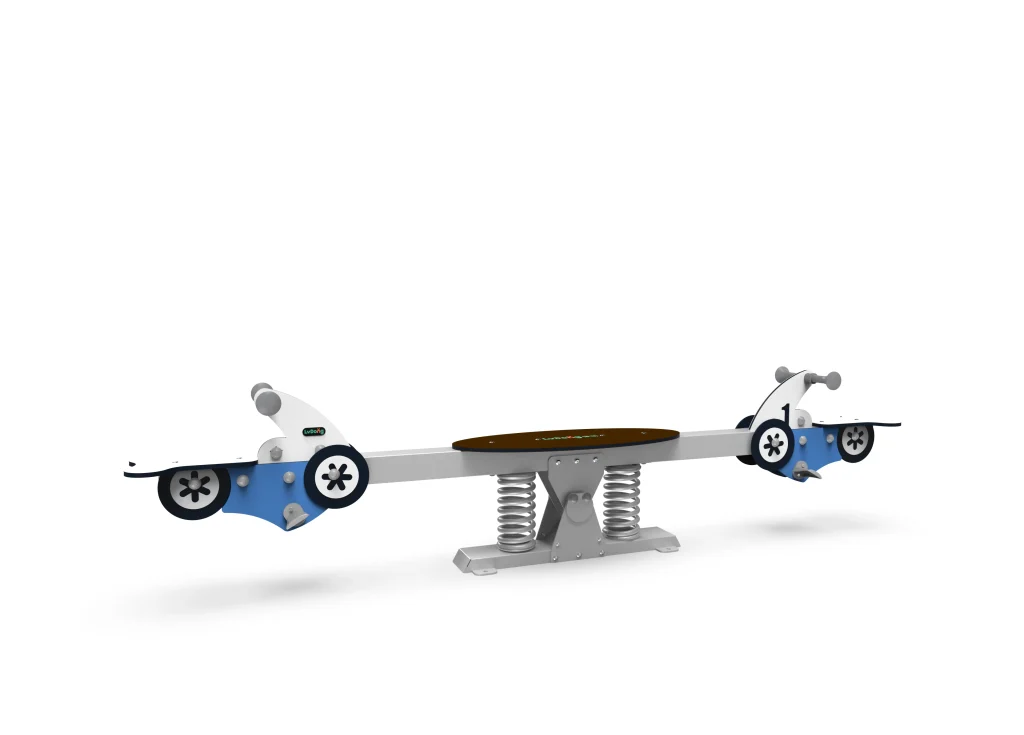
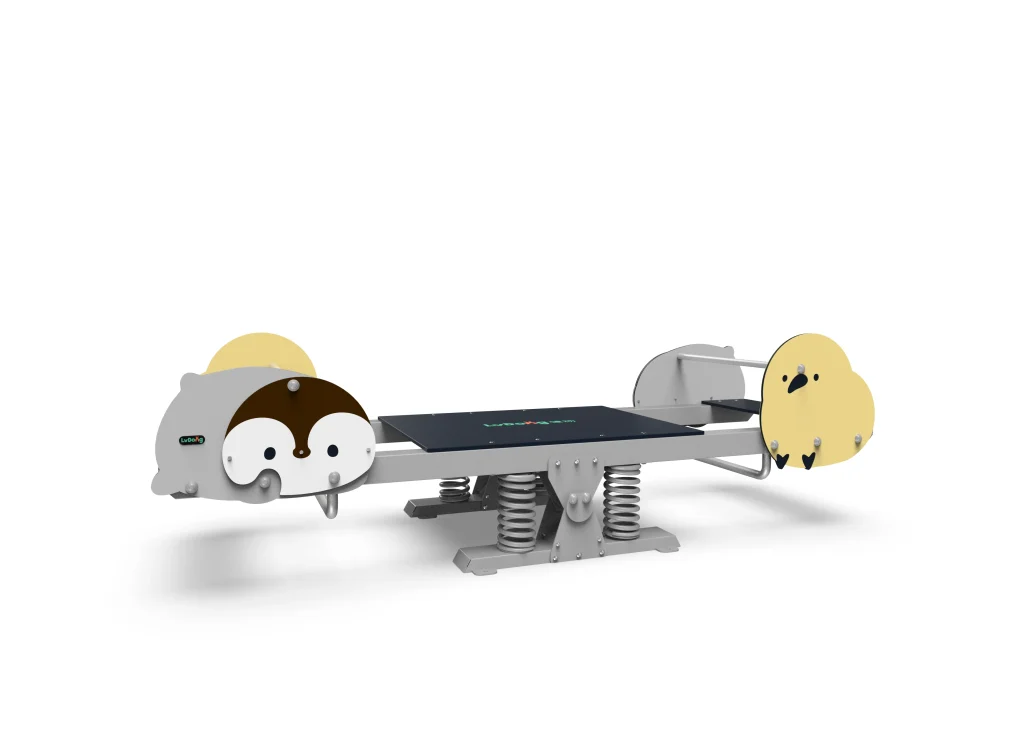
Seesaws and spring riders work well along transition edges because their motion play keeps children active without creating large shaded enclosures where standing water can collect. Spring riders should use high-strength spring steel with weather-resistant coating, smooth edges, and drainage channels at the base. Multi-person seesaw equipment should include damping or spring-assisted motion to prevent a hard stop when one child exits suddenly on a wet deck.
Interactive play panels can extend the dry-zone experience without adding a full wet play system. In a transition area, choose wall-mounted or ground-level panels with IP-rated enclosures, sealed seams, and non-slip user zones. These panels often serve visitors who have finished swimming, are waiting for family members, or are taking a break from the main pools.
If fatigue, corrosion, or anchorage concerns are already part of your review, the equipment supplier’s production and quality-control record should be checked before purchase. <Factory Visit Checklist Playground Equipment Supplier Evaluation> covers the points water park buyers should verify during a factory visit before committing to splash-adjacent equipment.
For a quick review of commercial-grade transition equipment, send the wet-to-dry boundary length and target age group to [email protected] or WhatsApp +8613915684545. The Lvdong design team can recommend the most water-tolerant product mix for your dry-zone footprint.
Safety Surfaces and Drainage in Transition Zones
The two most important safety factors in a water park dry zone are slip resistance and fall protection under wet conditions. A surface may pass impact tests when dry and still become unsafe when children carry water from a splash pad onto it. The transition path should be treated as a continuous wet zone, not as a dry playground that occasionally gets wet.
Specify a slip-resistant finish on platforms, steps, and ground panels. Perforated or slotted footplates help water pass through instead of pooling. Under equipment, use drainage slopes that direct water away from the play center to deck drains or landscape edges. Anchor placement should avoid creating low points. If the equipment sits partly over a drain, confirm that the drain cover is rated for pedestrian loads and does not create an entrapment or trip hazard.
The surfacing system should also extend beyond the equipment footprint far enough to cover the actual falling space and the expected splash tracking distance. The U.S. Access Board’s recreation accessibility guidance and local ADA-equivalent requirements should be checked for accessible routes into dry-zone play areas [3]. In many water parks, an accessible path from the wet deck to a dry play pocket is required, and the transition must not force a wheelchair or stroller through a narrow, slippery channel.
Site Planning and User Flow Around Water Park Dry Zones
Dry-zone equipment should be placed where it supports a logical circulation loop rather than creating a shortcut that leads wet children back through seating or locker areas. A common effective layout places the dry play pocket immediately after the main wet payoff, so children leaving the water can reduce stimulation gradually before rejoining parents or moving to food and retail zones.
Leave enough clearance between wet play discharge points and dry-zone equipment for water to drop off or be toweled away. Use visual cues—such as changing deck color, textured surfacing, or a low landscape border—to mark the transition for barefoot visitors. The equipment itself should be chosen for mixed barefoot and footwear use, which means smooth welds, rounded edges, and no small protruding items that become worse when wet.
The contractor and supplier responsibilities for drainage, fall surfacing, fall-zone clearance, and structural anchoring should be fixed before installation begins. <Annual Maintenance Calendar for Outdoor Play Equipment A Guide> covers the recurring tasks that keep splash-adjacent equipment safe and legible for operators across a full operating season.
Maintenance Planning for Water-Tolerant Play Equipment
Water park dry zones require a maintenance plan that treats equipment as part of a wet-adjacent environment. Daily opening checks should include a visual scan for standing water, blocked drains, loose components, and unusual bearing noise. Weekly checks should inspect fasteners, spring bodies, and any interactive seams for early corrosion or seal failure.
Quarterly preventive work should address lubrication, torque checks, and coating touch-up. Since many water parks operate seasonally, the shutdown procedure should include complete drying, drain clearing, and a post-season inspection before equipment is covered or left idle for winter. Do not assume that stainless steel means maintenance-free; it still needs cleaning and inspection, especially in chlorinated or salt-adjacent environments.
The goal is not to dry the equipment after every splash. It is to select and install the equipment so that routine moisture exposure does not become hidden damage. When maintenance records show the same part failing repeatedly in a specific zone, the problem is usually design or specification, not operator neglect.
If you are comparing options for a water park transition area, request a specific check of material compatibility, drainage detail, and warranty coverage for splash-adjacent use. Send the local governing code or surfacing requirement to [email protected] or WhatsApp +8613915684545, and the Lvdong team will help map equipment choices to the standard.
Put Together a Transition-Zone Plan for Your Water Park
A water park dry zone should not feel like a leftover space. When the equipment, surfacing, and drainage are specified together, the transition becomes a usable play asset that reduces pressure on wet zones and improves guest flow. The right specification focuses on corrosion-resistant materials, sealed motion parts, quick-drying surfaces, and accessible routes.
To get a transition-zone equipment checklist for your site, contact [email protected] or WhatsApp +8613915684545. Include a site plan or photo if available. The Lvdong team can mark suggested equipment locations, fall zones, drainage points, and the product types that will hold up best at the wet-to-dry boundary.
FAQ
What does “dry zone” mean in a water park?
A dry zone is any area near water attractions that is not intended to be continuously wet, such as seating areas, play pockets, walkways, lockers, or shaded rest zones. Equipment in these areas still needs water-tolerant design because visitors arrive wet and overspray or deck washing is routine.
Can playground equipment be installed near splash pads?
Yes, if the equipment is specified for intermittent moisture exposure. That means corrosion-resistant metal, UV-stabilized plastics, sealed bearings and electronics, slip-resistant surfaces, and proper drainage beneath and around the equipment. Standard indoor or dry-schoolyard equipment may not be appropriate.
What surfacing is best for wet-to-dry transitions?
Poured-in-place rubber or bound rubber surfacing is usually preferred because it can be sloped for drainage, provides impact attenuation, and remains walkable when wet or damp. Loose-fill materials are harder to manage at the immediate splash boundary unless a robust cleaning and replenishment program is in place.
How often should transition-zone equipment be inspected?
Daily for standing water, loose parts, and obvious damage; weekly for fasteners, seals, and corrosion; and quarterly for lubrication and more detailed structural checks. Seasonal water parks should also perform a complete shutdown inspection and drying procedure before winter.
Does Lvdong provide custom colors or water-park-themed equipment?
Yes. Lvdong supplies commercial unpowered playground equipment with custom themes, colors, and sizing options within an EN 1176-compliant manufacturing and quality management system. The design team can adapt animal, marine, or landscape themes to fit the surrounding water park identity.
References
[1] European Committee for Standardization. EN 1176-1:2017, Playground equipment and surfacing — Part 1: General safety requirements and test methods.
[2] ASTM International. ASTM F1487-21, Standard Consumer Safety Performance Specification for Playground Equipment for Public Use.
[3] U.S. Access Board. Americans with Disabilities Act Accessibility Guidelines for Recreation Facilities.
[4] International Electrotechnical Commission. IEC 60529, Degrees of protection provided by enclosures (IP Code).
[5] European Committee for Standardization. EN 1177:2018, Impact attenuating playground surfacing — Methods of test for determination of impact attenuation.
If you’re interested, check out these related articles:
Essential Checklist for Playground Equipment Safety Test Reports
Outdoor Playground Set Layout Strategic Design for Optimal Play
Global Import Regulations for Playground Equipment by Country
Hotel Kids Club Playground Equipment Configuration Guide 2
Factory Direct Playground Spring Riders Unbeatable Value Quality