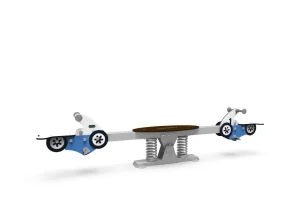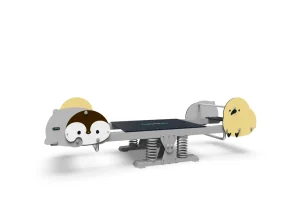
Vibration-resistant playground foundations decide whether equipment near subway lines stays level, safe, and quiet over a decade, not whether it merely survives installation. In our design reviews for parks beside transit corridors, we have seen standard concrete pads crack and anchor bolts loosen within two years because the specification treated the site as static. A playground close to a tunnel or elevated line is not static. Train-induced vibration enters through soil and structure, and every joint in the equipment responds. The right design starts with ground motion characteristics and works upward through base isolation, fastening, and maintenance, not with a generic footing detail.
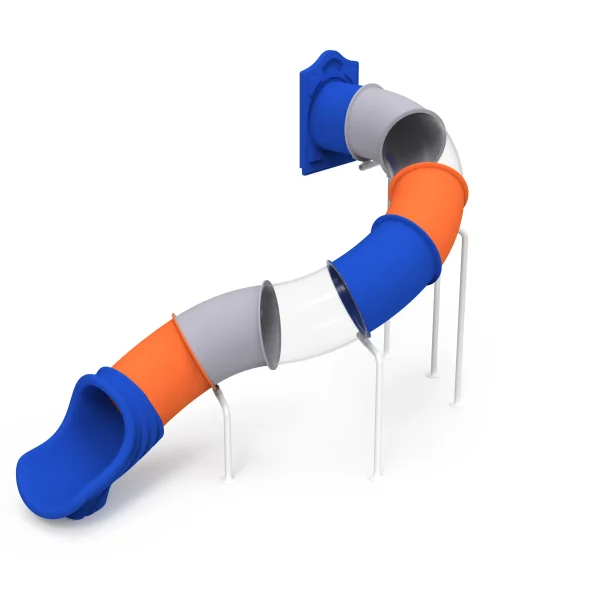
Vibration Transmission Paths into Subway Adjacent Playground Structures
Why Do Subway Lines Affect Equipment More Than Road Traffic?
A moving train does not just create noise; it sends a low-frequency pressure wave through the rail bed and surrounding soil. Road traffic produces short, sharp impulses at the surface. Subway vibration travels deeper and repeats at regular intervals, which gives a steel or aluminum playground frame time to sway in rhythm with the passing train. That repeated loading is the main problem. It loosens bolted connections, opens hairline cracks in concrete footings, and transfers movement into slides, spinners, and swing frames even when the equipment itself is built to static load standards. We have seen installations next to commuter rail lines where a spinner rotated slightly on its base within months, not because the bearing wore out, but because the foundation was moving under the anchor plate.
How Do Soil Conditions Change Vibration Behavior?
The same train line produces different ground motion in clay, sand, and fill. Clay transmits low-frequency vibration farther, while loose sand and poorly compacted fill reduce the amplitude at the surface but tend to settle over time. A site that mixes cut rock with imported fill, which is common in transit-adjacent parcels, can vibrate unevenly across a single play area. One section of a slide tower may remain stable while the opposite end works itself loose. For that reason, we do not treat the playground footprint as one soil condition. We divide the site by soil profile and place the more sensitive equipment on the more predictable ground.
Common Playground Foundation Failure Modes in Transit Zones
Standard playground footings fail near transit corridors in a predictable order. First, the bond between the concrete and the embedded anchor or post base weakens under repeated micro-movement. Next, water enters the small gap, corrosion starts, and the freeze-thaw cycle widens the crack. After that, a swing frame or slide tower develops visible lean. By the time maintenance staff notices the lean, the footing has already lost much of its bearing contact with the surrounding soil.
The second failure mode is anchor fatigue. A galvanized bolt that works fine for years in a quiet park can fail beside a subway line because vibration cycles add up quickly. The bolt may not snap, but it loses preload, and the equipment begins to rattle during train pass-bys. That rattle is not only a noise problem; it is an early warning that the connection is moving more than the design permits.
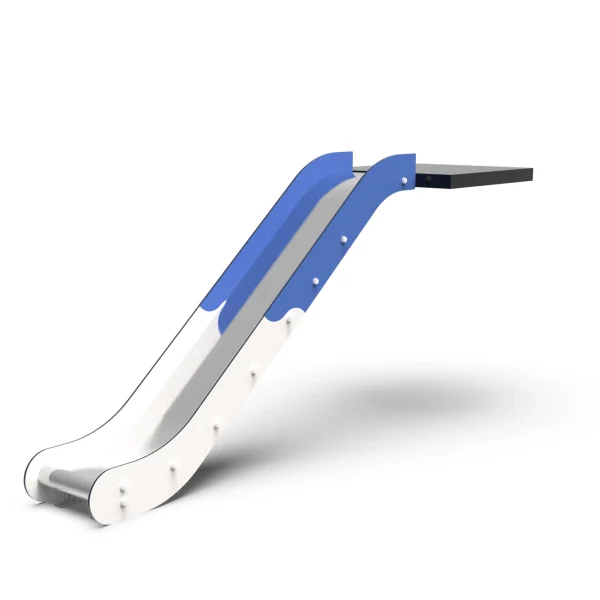
Vibration problems often interact with poor leveling and drainage. <Playset Ground Leveling and Drainage Solutions for Outdoor Slides> explains how water collected around footings softens the soil and amplifies movement set off by passing trains, a detail that standard playground drawings rarely address.
Vibration-Resistant Foundation Systems for Subway Adjacent Playgrounds
A vibration-resistant playground foundation does more than hold equipment upright. It reduces the amount of train-induced movement that reaches the structural connections. The right approach depends on the distance from the tunnel, the depth of the tunnel, the soil profile, and the equipment type. In most cases, one of the following systems works.
| Foundation System | What It Does | Best Application | Main Limitation |
|---|---|---|---|
| Full-depth concrete base with resilient isolation pads | Separates the equipment base from the concrete mass and absorbs high-frequency motion | Short footings, small spinners, ground-level panels | Less effective for tall towers on soft fill |
| Gravel isolation trench around the footing | Reflects surface vibration away from the structure | Sites with a known vibration direction from an open line | Requires maintenance after heavy rain |
| Steel base frame over multiple footings | Spreads repeated loads across a wider area and reduces rocking | Multi-user equipment, seesaws, large slide towers | Higher material and installation cost |
| Structural isolation slab with peripheral gaps | Creates a stable platform with a physical break from surrounding paving | Parks directly above cut-and-cover tunnels | Needs precise edge detailing to avoid tripping hazards |
Which Isolation Approach Works Best for Different Foundation Types?
Resilient pads are the most practical retrofit or upgrade for equipment already specified. They sit between the equipment base plate and the concrete plinth, and they work best when the equipment has a low center of gravity and a limited number of anchor points. Gravel trenches perform better for directional vibration from an open railway cutting. A continuous trench backfilled with clean, self-compacting gravel interrupts the surface wave path before it reaches the footing. A steel base frame suits large multi-station structures because it connects several footing points into one rigid assembly, which resists differential movement better than isolated pads.
When Is an Isolation Slab With Peripheral Gaps Required?
If the play area is directly over a cut-and-cover tunnel or a shallow bored section, the entire paved surface can move with each train. In that situation, isolated footings can still tilt because the surrounding ground moves independently. A continuous reinforced slab with a narrow gap at its edges separates the playground from the moving paving and gives the equipment a single, consistent foundation plane. The gap must be covered or detailed to remain accessible, but it is often the only way to stop recurrent leveling problems in this setting.
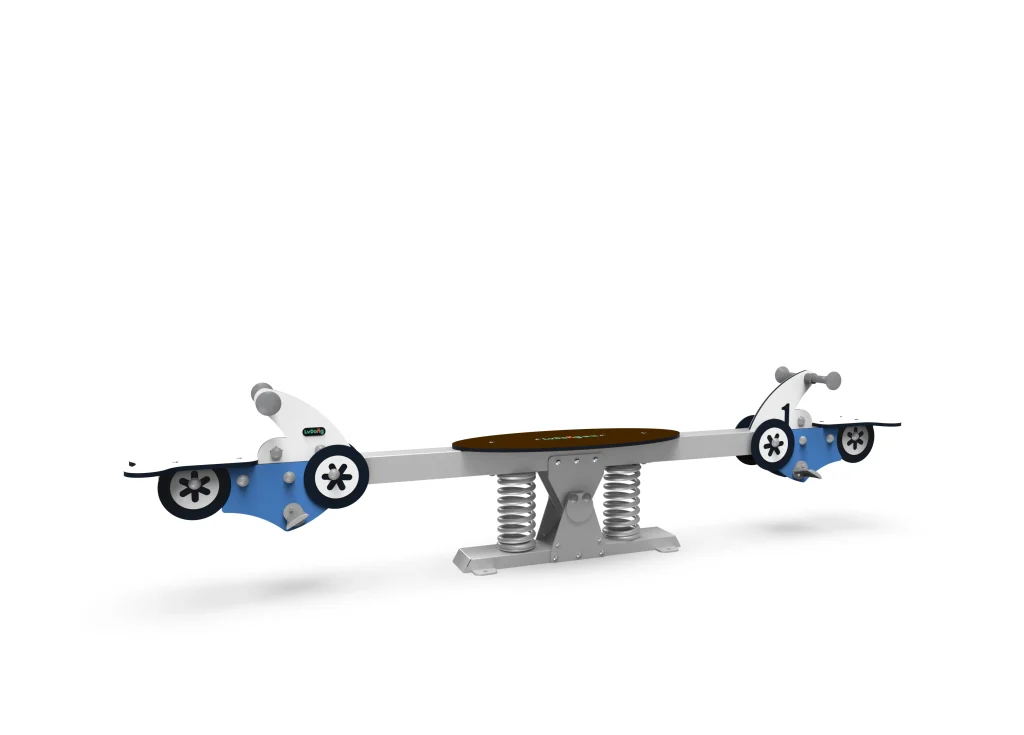
When transit vibration is present, equipment layout itself changes the risk profile. <Outdoor Playground Set Layout Strategic Design for Optimal Play> details how spacing, orientation, and circulation paths affect structural loading, which becomes more important on a site where foundations must also handle repeated ground-borne motion.
If your site sits directly over a cut-and-cover tunnel or crosses fill and undisturbed ground, the vibration pattern can change across a single equipment footprint. It is worth confirming the ground motion profile before finalizing your foundation detail. Send your site survey and equipment layout to [email protected], and we will advise whether resilient pads, isolation bases, or a structural slab makes the most sense for your specific condition.
Material and Fastener Selection for Vibration-Resistant Playground Installations
Material choice changes how a foundation absorbs repeated motion. Mild steel anchors can fatigue beside a transit line even when they meet static load calculations. We specify hot-dip galvanized anchors or stainless steel alternatives for equipment within vibration-affected zones, and we avoid mixed-metal contact at the base plate to limit galvanic corrosion. Where a spring rider or spinner transmits constant rocking into its plinth, a thicker base plate and additional anchor points reduce the force per point.
Fastener torque also needs more attention near subway lines. A correctly torqued anchor holds its preload, which keeps the connection tight without relying on thread adhesive alone. In our production reviews, the most common installation error we see is under-torquing followed by over-tightening on the next maintenance visit, which can strip threads and leave the equipment loose in the worst possible way. A calibrated torque setting, recorded for each anchor, is the only reliable baseline for later inspections.
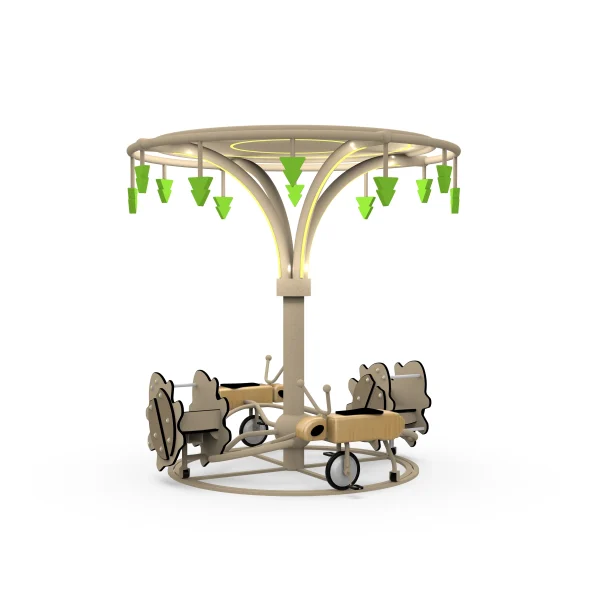
Once the isolation detail is chosen, installation quality decides whether it performs. <DIY vs Supplier Playground Equipment Installation Guide> covers why anchor torque, concrete cure time, and subcontractor sequencing create repeat failures around vibration-affected equipment, and why supplier-supervised installation often costs less than corrective repairs after settlement appears.
Equipment Ordering Considerations for Subway Adjacent Parks
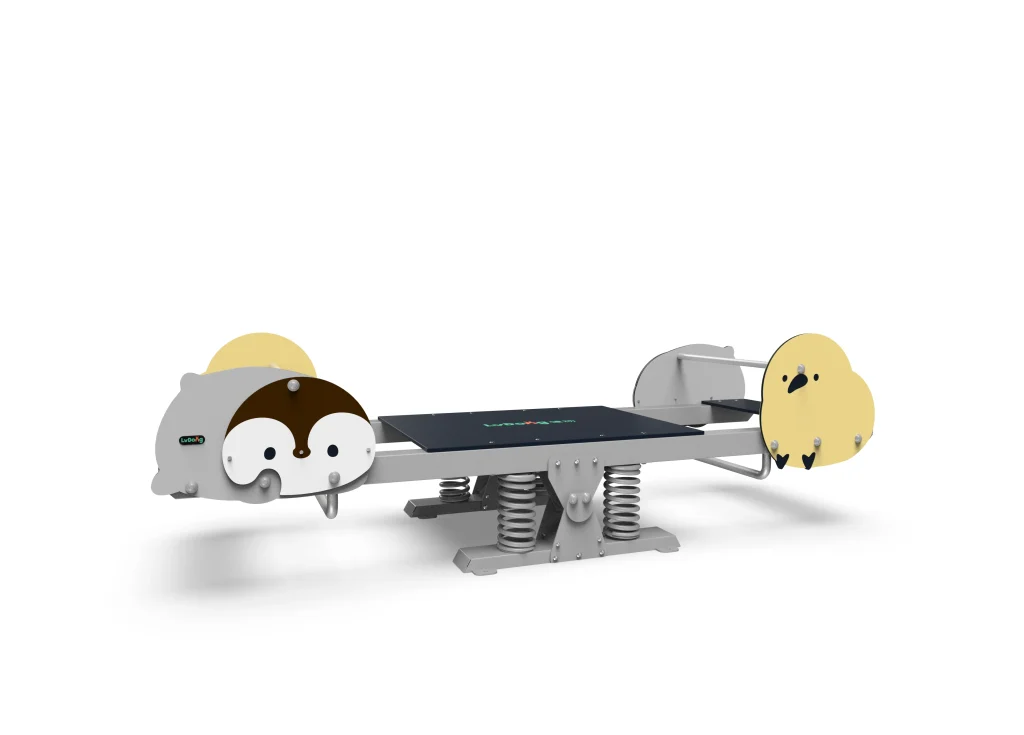
Siting play equipment next to a subway line adds vibration resistance, drainage coordination, and inspection obligations that a standard playground quote may not cover. Suzhou LvDong Amusement Equipment Co., Ltd. adjusts foundation details, anchor layouts, and material specifications during production so the equipment arrives matched to your geotechnical conditions. Share your site plan, soil report, and equipment list with [email protected] or WhatsApp +8613915684545, and we will confirm the vibration isolation approach before the order enters production.
Common Questions About Vibration-Resistant Playground Foundations
What report should a buyer request first for a subway-adjacent playground site?
A geotechnical survey with a ground vibration measurement is the first document to request. A standard soil boring alone tells you bearing capacity but not how the ground moves when a train passes. The survey should record vibration levels at the actual equipment footprint for at least one full service window, including peak and repeat frequencies. With that information, a foundation type can be selected instead of guessed. Without it, any isolation detail is based on assumptions that may not match the line’s actual behavior.
Will rubber mats under the equipment solve the vibration problem?
Rubber mats alone do not usually stop ground-borne vibration from a subway line. They reduce high-frequency surface noise and some impact transmission, but low-frequency motion passes through a thin mat into the anchor bolts and frame. A mat has value as part of a resilient pad system above a stable concrete base, particularly for small spring riders or ground-level panels. For taller slide towers or multi-user seesaws, mats are not a substitute for a foundation isolation system.
How much isolation is enough for a park next to an open subway line?
The required isolation level depends on whether the park sits directly above a cut-and-cover tunnel or beside an open line, and on the soil type. For a shallow cut-and-cover tunnel, the entire play surface may move together, and a structural slab with isolation edges is usually more effective than individual pads. For an open line separated by firm soil, a gravel trench and resilient pads may be enough for low equipment. The decision should follow from measured vibration data, not from a generic table.
Does playground certification cover vibration resistance?
The more precise question is not whether certification mentions vibration resistance, but whether the project team treats foundation isolation as part of the installation scope. Most playground safety standards, including EN 1176 and common national equivalents, address impact attenuation, entrapment, and structural strength, but they do not prescribe a subway-specific foundation detail. Equipment certification confirms that the product meets minimum safety requirements under its tested conditions. The foundation, anchorage, and vibration isolation remain a site-specific civil design responsibility layered onto that certified equipment.
What should be inspected after the first year of operation near a subway line?
In projects we have supported near transit corridors, the most common missed detail is a loss of anchor preload that does not show as visible damage. After the first year, we recommend checking each base plate for movement, re-torquing anchors to their recorded values, and checking for fine cracks around the concrete. These checks should happen at least twice a year because vibration cycles accumulate continuously. Share your site plan and vibration data with [email protected], and we will confirm the isolation approach for each equipment position.
If you’re interested, check out these related articles:
Choosing a Soft Play Specialist Indoor Playground Equipment Expertise
Playground Play Panels Material Selection and Secure Installation
Unlocking Developmental Growth Combining Outdoor Slides Playhouses
International Playground Equipment Procurement A Step by Step Guide
How Indoor Playground Equipment Manufacturers Customize Solutions
To discuss foundation planning for a site near transit, contact the LvDong team with your project requirements.