Selecting a school playground equipment supplier goes far beyond comparing catalog prices. It means verifying that a manufacturer can deliver a complete, certified, and durable playground—from initial design through safe installation—because a single weak link in the supplier chain can compromise child safety and project success. With over ten years in playground design and manufacturing, I’ve seen that schools which look for integrated in‑house capabilities, not just the lowest quote, consistently end up with playgrounds that are safer, last longer, and require fewer emergency repairs. This article walks through the key assessment points so your decision is grounded in facts, not just sales brochures.
Key Criteria for a Reliable School Playground Equipment Supplier
A supplier’s reliability rarely shows on a quotation. I look for three things first: does the company manufacture in its own factory, does it have an in‑house design team, and can it show a track record of completed school projects. When a supplier outsources production or design, quality control becomes harder to guarantee and lead times stretch.
Our facility spans more than 10,000 square metres and integrates R&D, production, installation, and after‑sales under one roof. That structure means we can trace every component and respond fast when a school needs something adjusted. For a school buyer, this translates into shorter communication loops and fewer surprises on site.
Look for a supplier who can name the schools and kindergartens they have served—and who can walk you through the specific challenges those projects involved. A real partner talks about site constraints, drainage, and age‑group zoning, not just product features.
Verification of Safety Certifications and Production Quality
Certificates hanging on an office wall are easy to display; what matters is whether the production floor lives up to them. Every school playground equipment supplier should provide current test reports that match the equipment you are ordering. The two standards I work with daily are EN 1176 and GB/T 34272‑2017, which together address structural integrity, entrapment risks, and impact attenuation.
Beyond the numbers, I recommend a factory visit or at least a virtual walk‑through. Pay attention to welding stations, material storage conditions, and how workers handle finishing. In a well‑run plant you will see orderly flow and batch traceability. That matters because when a part fails, you need to know why, not just replace it.
| Certification / Standard | What It Covers | Why It Matters for Schools |
|---|---|---|
| EN 1176 | Mechanical safety, entrapment, impact attenuation | The international benchmark; ensures equipment is tested for real‑world playground behaviour |
| GB/T 34272‑2017 | Chinese national standard for amusement equipment | Mandatory for Chinese‑manufactured equipment; mirrors many EN requirements and adds local regulatory depth |
| ISO 9001 | Quality management system | Signals consistent manufacturing processes, not just spot‑check testing |
| Third‑party reports (TÜV, SGS) | Independent verification of material, coating, and structural claims | Provides an extra layer of confidence that manufacturer data is accurate |
A school purchasing officer does not need to become an engineer, but they should feel comfortable asking how a supplier’s quality team documents non‑conformities and corrective actions. Real quality management leaves a paper trail.
In‑House Design and Customization Capability
Off‑the‑shelf catalogues work for simple sites; most schools have space constraints, multiple age groups, or specific curriculum goals that require tailored layouts. That is where an in‑house design team earns its value. I sit with our design group regularly, reviewing fall‑zone simulations, sight‑line studies, and equipment colour mock‑ups before a single beam is cut.
When a supplier offers free 3D design, ask who does the actual work. If it is outsourced, the designer may never see the final product, and the connection between drawing and fabrication can break. In our process, the same engineers who prepare the production files also participate in layout planning, which reduces measurement errors and unexpected site modifications.
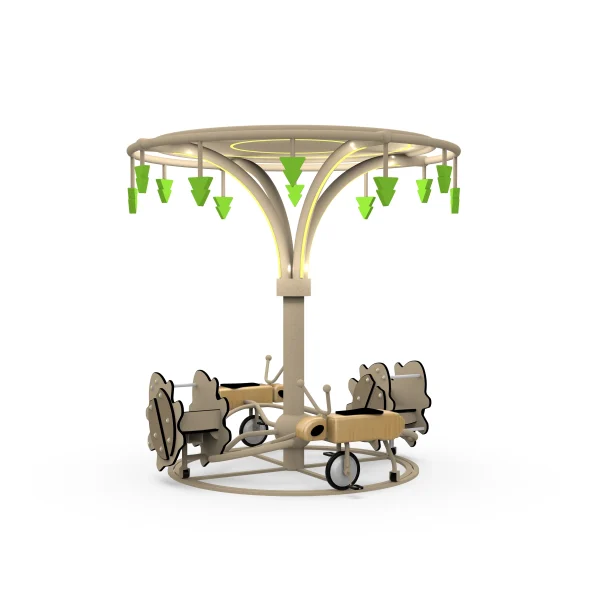
For a school, customized design means slide platform heights adjusted to the age range, challenging but safe climbing routes, and sight lines that let teachers supervise easily. This is not about making something “unique” for its own sake; it is about fitting equipment to the children who will use it every day.
Installation, Project Delivery, and Site‑Specific Planning
Even the best‑designed playground equipment becomes a liability if it is incorrectly anchored or erected on unprepared ground. I have seen schools accept rock‑bottom installation quotes only to later discover that the installer did not account for soil‑settlement or drainage slope, and water pooled under the swings after the first rainy season.
A supplier that manages the full project flow—from factory to site—will have installation supervisors who understand the interplay between surfacing, post‑hole concrete curing time, and safety‑zone clearances. Over 1,500 projects taught us that a checklist alone is not enough; the team on the ground needs the authority to pause work if substrate conditions differ from the plan.
If your school’s site has unusual slope or limited space, a supplier with real design expertise can save you thousands by avoiding costly on‑site adjustments—contact us at [email protected] or call +8613915684545 to discuss your layout before ordering.
Before signing a contract, ask who will be the single point of contact during installation and what their technical background is. In a smooth project, you will talk to that person more than to the sales representative.
After‑Sales Support, Warranty, and Maintenance Coverage
Long after the paint has dried, a school depends on a supplier for spare parts, maintenance advice, and occasional warranty claims. I urge schools to read warranty terms closely: a five‑year structural warranty that excludes moving parts or wear items leaves the most stressed components uncovered. Ask instead for a detailed spare‑parts price list and realistic lead times.
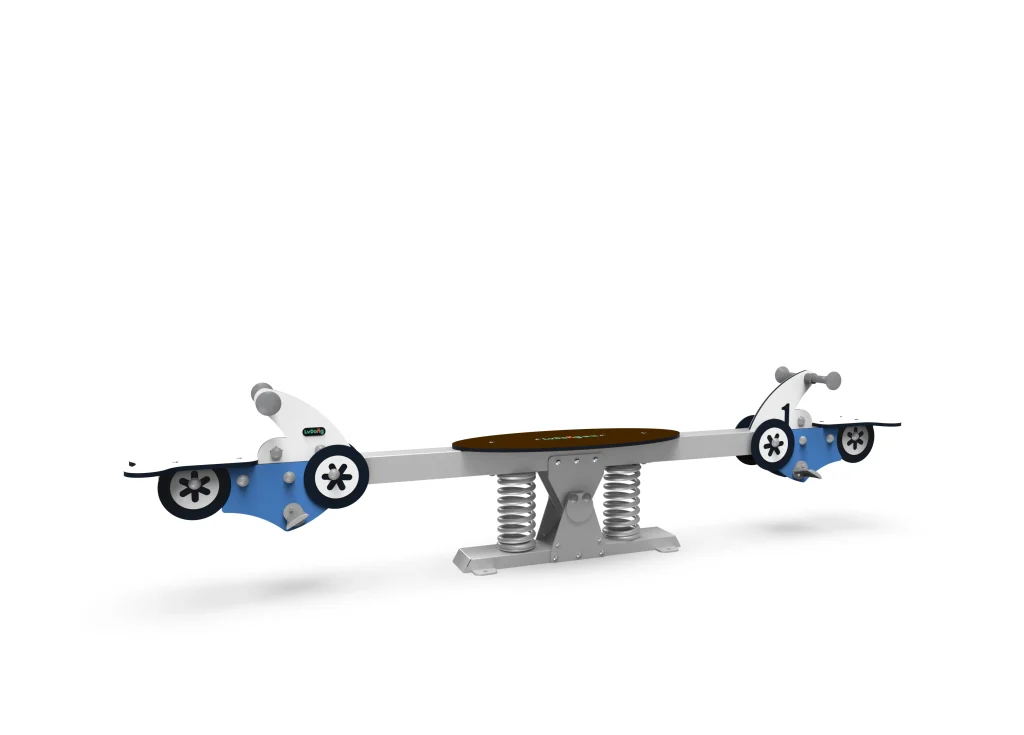
We keep component stocks for spring riders, swing hangers, bearings, and panel fasteners specifically because those parts see the most cycles. When a kindergarten calls because a spring base has loosened after two years of heavy use, sending a replacement within days keeps the play area open. That responsiveness is as much a safety feature as any test certificate.
An annual maintenance calendar—tightening bolts before winter, inspecting paint and welds after ice‑melt, lubricating rotating joints in spring—can double a playground’s service life. The right supplier will help you build that calendar, not just sell you a parts bag.
Making the Final Decision: From Quote to Partnership
Comparing quotes side by side is easier when you have reduced the field to suppliers who pass the integrated‑capability test. At this stage, look for what is not in the quotation: exclusions for ground‑works, unclear delivery windows, or vague statements like “installation by qualified personnel” with no named certification. The lowest price often hides the highest risk.
I advise school buyers to make one final call before awarding the project—talk to the person who would manage your account after the sale. If that person can explain how they handle a warranty claim and what the escalation path looks like, you are dealing with a partner, not just a vendor.
Your Next Step Toward a Safe School Playground
A school playground is a long‑term investment in children’s health, learning, and joy. The right supplier does not just deliver equipment; they help you navigate every decision from layout to long‑term care so that your playground stays safe, engaging, and compliant for years. If you are ready to talk through your school’s specific needs—whether you have a site plan in hand or are still exploring options—reach out to our team at [email protected] or call +8613915684545. Share your project details and we will walk you through a realistic timeline, provide relevant certifications, and propose a layout that fits your space and budget.
Common Questions About Selecting a Playground Supplier for Schools
What certifications should I look for beyond EN 1176?
The answer partly depends on where the equipment will be installed. In most markets, EN 1176 is the expected baseline, but I also look for GB/T 34272‑2017 compliance if the manufacturer is Chinese—it adds structural and material requirements that parallel the European standard. Third‑party test reports from bodies like TÜV or SGS confirm the manufacturer is not self‑certifying. For certain school programs, REACH and RoHS data may be requested to document chemical safety. If your funding body has specific procurement rules, ask the supplier to map their certificates to those requirements; a serious supplier will do this without hesitation.
Should I visit the supplier’s factory before ordering?
It is one of the most instructive moves a school can make. I have hosted many potential clients who, after walking our production floor, told me they understood quality in a way that photos alone cannot convey. A factory visit lets you see material storage, welding quality, worker safety practices, and how the company handles defects. If travel is not possible, request a live video walk‑through focused on the very equipment you are buying. If the supplier hesitates or only shows a showroom, treat that as useful information.
How long does a complete playground project take from order to handover?
Lead times vary by complexity, but for a typical school project with customized elements we plan on eight to fourteen weeks from design approval. Production takes the bulk of that, with installation usually lasting three to five days for a standard multi‑station playground, provided the ground‑works are ready. Delays most often happen when the site is not prepared—so coordinate early with your supplier on concrete curing times, drainage, and access for delivery vehicles.
What hidden costs catch schools off guard?
The ones I see most frequently are ground‑works not covered in the equipment quotation, missing safety surfacing, and crane hire for large slide units. Some quotes list delivery “to curb” but not placement at the installation point. Another common omission is after‑sales fees: one supplier includes the first annual inspection, while another charges for it separately. Ask for a line‑by‑line breakdown that includes every site‑side preparation cost, and if a supplier resists providing that level of detail, take a closer look at what else might be missing.
How can a supplier help with playground layout if our space is oddly shaped?
A capable supplier will treat a constrained site as a design problem to be solved, not a reason to sell a smaller version of a standard set. We regularly work with irregular boundaries, steep slopes, and sites shared with other facilities. The process starts with accurate measurements and a discussion about age groups and supervision lines, then moves into 3D renderings that respect safety zones and traffic flow. If your space is particularly challenging, sharing your dimensions and photos with us earlier rather than later avoids wasted design effort—send them to [email protected] and we will confirm what’s feasible before you commit to anything.
If you’re interested, check out these related articles:
Merry Go Round Spinners Traditional vs Modern Playground Evolution
Playground Spring Rider Foundations Expert Installation Guide
Why ISO Certification Elevates Commercial Playground Equipment Manufacturers
Buyers Guide to Spinning Playground Equipment in 2025
Eco Friendly Playground Equipment SGS REACH RoHS Standards Explained