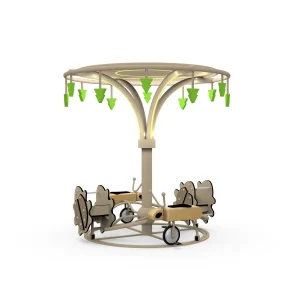
Choosing a playground manufacturer OEM partner is one of the most consequential decisions a buyer can make. The right choice locks in equipment that matches your site, budget, and safety requirements. The wrong one delivers compromises that may not surface until children are already using the equipment. Having coordinated over 1,500 playground projects from design through installation, I’ve seen how much the quality gap widens when a manufacturer’s design and engineering depth is shallow. The differences are not in glossy catalogs. They show up in how design files are handled, how materials are sourced and traced, and how carefully branding elements are woven into a structure without weakening it. This article walks you through the practical comparison points procurement teams and project planners need to test when evaluating playground OEM and branding services.
What Playground Manufacturer OEM Services Actually Cover
Most buyers start with a picture, a floor plan, or a list of equipment types. A real OEM engagement goes far deeper. The manufacturer takes those inputs and translates them into material specifications, structural calculations, and production drawings before a single tube is cut. This is where in-house design capability matters. Without it, the factory can only assemble from a catalog of existing parts. With it, the engineering team can alter frame geometries, adjust fall heights, or swap materials to meet specific site constraints while staying within EN 1176 or ASTM F1487 standards.
In our projects, the process begins with a 3D model that the client reviews before any commitment. We run structural load simulations, check critical fall zones, and verify that every joint and fastener spec matches the expected usage frequency. This step is not a luxury. It is the foundation that determines whether the final product will stand up to years of heavy use. After sign-off, production moves through a standardized quality management system, with in-line inspections at each stage — steel frame welding, plastic rotational molding, paint adhesion testing — before assembly and pre-shipment inspection. This layer of control is what separates a true manufacturing partner from a trading company that subcontracts work.
How Branding Services Go Beyond Logo Printing
Branding is often reduced to placing a decal or choosing a color. In practice, thoughtful branding changes the entire feel of a play space, and that demands engineering attention, not just a graphics file. A playground with a coherent visual identity — where the slide hood, panel graphics, and spring rider shell all share the same motif — tells a story that a collection of randomly colored equipment cannot.
We manage branding as a design parameter, not an afterthought. Color matching across different materials — LLDPE plastic, powder-coated steel, HDPE panels — requires controlled pigment blends to avoid fading mismatches after two summers outdoors. For custom shapes or themed elements, such as a marine-themed seesaw or a space-cage spinner, we adapt the tooling or hand-lay fiberglass under the same structural safety checks used for standard parts. This means the whale-shaped teeter totter’s decorative tail will not become a pinch point, and the oversized star decal on a slide hood will not peel and leave sharp edges within a season. When I visit a site years after installation, I can tell which manufacturers treated branding as a superficial layer and which ones designed it in from the first concept sketch.
Comparing OEM Capabilities Across Design, Materials, and Safety
When you sit down to compare suppliers, the three dimensions that expose real differences are design autonomy, material traceability, and safety compliance depth.
Design autonomy refers to whether the factory can originate a design or only modify templates. A plant with a full design team will have handled projects across a wide range of themes and age groups, producing evidence in the form of past case files. They can propose optimizations — suggesting a longer slide run-out for a water-play area, or recommending a heavier-gauge post for high-traffic public parks — rather than simply executing a given drawing. This is where the buyer gets true OEM value.
Material traceability is harder to verify from a brochure but matters more over the equipment’s service life. I insist on batch-level documentation for structural steel, polyethylene feedstock, and fasteners, because a single substandard lot can turn a ten-year design life into a five-year headache. The factory should be able to produce mill certificates and raw material test reports during a visit.
Safety compliance depth means the manufacturer understands not just the letter of the standard but how it applies to non-standard configurations. Anyone can stamp a generic certificate. The real test is whether their technical team can explain, for example, why the entrapment test passages in EN 1176 differ between toddler and older-child zones, and how that influences the spacing on a custom tunnel slide. I look for in-house capability to perform head and neck probe tests, rather than relying solely on an external lab, because that tells me safety is built into the development cycle, not checked at the end.
Evaluating Branding Integration Without Compromising Product Integrity
The moment a client asks for a branded canopy over a slide or a graphic wrap on a climbing structure, a new set of structural questions needs answering. Will the added weight shift the center of gravity? Does the surface finish reduce grip on a handrail? Is the ink formulation stable under UV and frequent cleaning? A manufacturer that takes branding seriously will produce a separate integration report that addresses these points.
In our quality process, any non-standard decorative addition triggers a design review. We check that no new protrusion falls within a head-entrapment zone and that the added weight does not push the overall structure outside its original stability margins. This is one of the areas where I see inexperienced manufacturers cut corners. They apply the branding and assume the original engineering still holds, which is a gamble no buyer should accept. Insist on documentation — not a verbal assurance — that the branded version has undergone the same structural review as the original.
Verifying a Manufacturer’s Claims Through Documentation and Factory Visits
Between a website and a signed contract lies the factory visit. This is not a formality. It is the single most reliable way to test whether the claims made in a proposal match the reality of the production floor.
During a visit, I recommend moving past the showroom and walking the actual production line. Observe whether quality checkpoints are staffed and operational, not just mounted on the wall. Ask to see a sample of in-process inspection records — not a blank template, but completed sheets with date stamps and inspector signatures from the past week. Request a real-time demonstration of the paint thickness measurement or weld strength testing they claim to perform. When discussing OEM projects, ask to see design files from a previous custom job, with client name redacted if necessary, to trace how a client’s initial brief became a final, installed structure.
Our facility in Suzhou is open to such visits, and we invite buyers to walk the entire chain from raw material storage through final assembly. We keep current test reports, calibration certificates, and project milestone files accessible. A supplier that welcomes this level of scrutiny is a supplier that has built its operation around consistent quality rather than last-minute tidying.
Critical Questions to Ask Before Signing a Contract
After the visits and the proposals, the final decision often hangs on a handful of questions that reveal how a manufacturer will behave once the order is placed. I suggest drilling into these with every candidate:
Who owns the design files and tooling modifications if your project includes custom parts? The contract should clarify that IP created for your project stays with you, and that tooling modifications are documented and preserved for future reorders.
What is the exact spare parts policy? Specifically, can you obtain replacement springs, bearings, or panel graphics within a guaranteed lead time, and is there a minimum order quantity for spares?
How are warranty claims handled across international borders? The answer should spell out who covers return shipping, labor, and site access costs, not just part replacement.
If installation is not included, what level of installation documentation and remote support is provided? A detailed installation manual with torque specifications, plus a video call walkthrough, can make the difference between a smooth commissioning and a site standstill.
Getting clear answers to these questions before a contract is signed prevents the kinds of friction that erode project timelines and budgets later.
What Buyers Often Overlook When Assessing Playground Manufacturers
How does a manufacturer handle design changes mid-project? A strong partner has a defined change-order process that keeps timeline and cost impact visible, rather than absorbing changes informally and delivering surprises at the invoice stage.
Do you need a full OEM project, or would a semi-custom configuration with branding deliver the same result at lower cost? Many projects achieve their goals by selecting a time-tested base product from the manufacturer’s range and applying custom colors, graphics, and accessory selections, without the longer lead times and higher engineering costs of a fully original design.
What role does age-appropriate zoning play in the overall design? A manufacturer with playground design experience will naturally structure the equipment layout so that 2-5 and 5-12 age groups have their own movement paths, avoiding high-speed traffic crossing toddler zones. This should be evident in the initial proposal layout.
Is the manufacturer prepared to support maintenance and spare parts for the full equipment lifecycle? A reliable partner maintains identified spare parts with stock availability and can ship them without a separate production run. Ask for a spare parts list with lead times before signing.
If your project involves custom theming or special materials, can the manufacturer share actual samples from previous similar projects? Not photographs, but physical samples that let you evaluate paint quality, joint smoothness, and graphic durability. A manufacturer confident in its work will not hesitate.
These points go beyond the typical checklist and surface the difference between a transactional supplier and a long-term playground partner.
If you are currently comparing playground OEM and branding proposals and want to test the points raised here against a concrete offer, share your site plan, equipment wish list, and any branding references with us at [email protected] or via WhatsApp at +8613915684545. We will respond with a technical review that addresses design feasibility, safety integration, and realistic lead times — without obligation.
If you’re interested, check out these related articles:
Pre Configured vs Custom Designed Playground Play Sets A Strategic Guide
Kindergarten Outdoor Play Equipment Strategic Upgrade Priorities
Old Playground Renovation Keep or Replace Decisions
Unlocking Developmental Growth Combining Outdoor Slides Playhouses