Hotel Kids Club Playground Equipment Configuration Guide
Family travelers book hotels differently than business guests. Parents scan amenity lists before they ever check room rates, and a visible, well-maintained playground often tips the decision. Hotels that understand this dynamic treat their kids club as revenue infrastructure, not an afterthought.
This guide walks through the practical steps of building a playground that actually works: one that keeps children engaged, meets safety requirements, and pays for itself through repeat bookings and stronger reviews.
Strategic Planning for an Engaging Hotel Kids Club Playground
The best hotel playgrounds start with honest questions. Who stays here? What ages show up most often? How much space can you realistically dedicate? Skipping this step leads to equipment that sits unused or crowds that overwhelm undersized areas.
Family tourism keeps growing, and parents have gotten pickier about where they spend vacation budgets. A playground that feels generic or neglected sends a message. A thoughtfully designed space signals that the hotel actually wants families there. That perception drives loyalty in ways that room upgrades rarely match.
The planning phase should nail down three things: the age range you’re designing for, the physical footprint available, and how the playground connects to your broader brand. A boutique resort and a convention hotel serve different families. Their playgrounds should reflect that.
Identifying Target Age Groups and Play Preferences
Children change fast. A three-year-old and an eight-year-old might as well be different species when it comes to play needs.
Toddlers need soft surfaces, low heights, and equipment they can explore without climbing skills. Think padded zones, sensory panels, and structures where a tumble means nothing worse than a soft landing.
Preschoolers want more challenge but still lack the coordination for complex climbing. Small slides, stepping stones, and imaginative play elements work well here.
Older kids, roughly six to twelve, need equipment that actually tests them. Climbing structures with multiple routes, spinning equipment, and group play options keep this age engaged. Anything that feels “babyish” gets ignored.
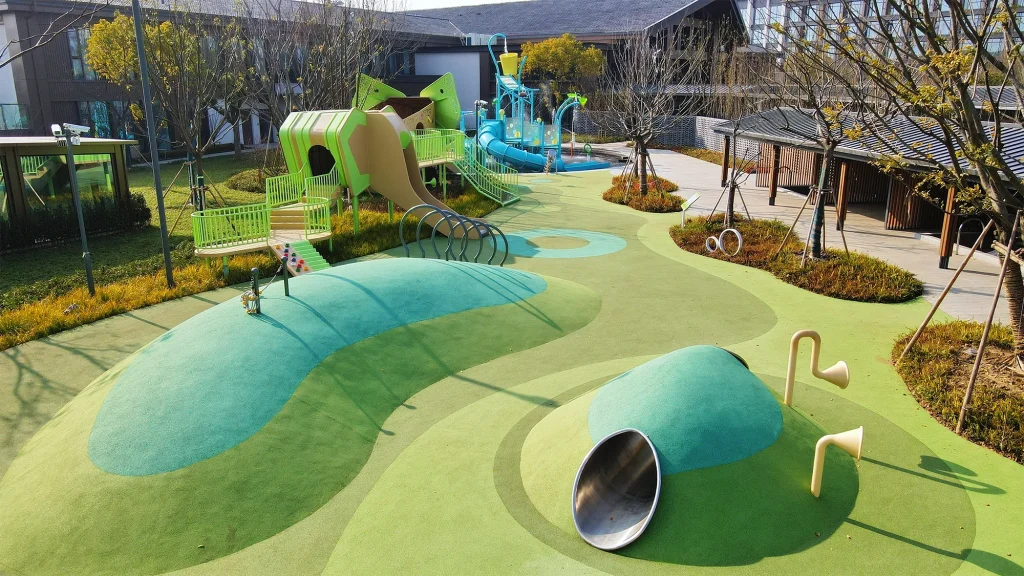
The smart approach segments the playground by age zone. This prevents bigger kids from accidentally bowling over toddlers and ensures every child finds something worth their attention. Inclusive design matters too. Children with mobility differences or sensory sensitivities should find accessible options throughout the space.
Essential Equipment Selection for Safety, Durability, and Play Value
Equipment choices make or break a playground. The wrong selections mean constant repairs, safety incidents, or children who lose interest after five minutes.
Safety compliance comes first. International standards like ASTM and EN 1176 exist because playground injuries happen, and hotels carry liability when they do. Every piece of equipment should meet these benchmarks before installation begins.
Durability matters almost as much. Hotel playgrounds see heavy, continuous use from guests who have no ownership stake in treating equipment gently. Materials need to handle that reality. Galvanized steel frames, UV-resistant plastics, and weather-appropriate finishes extend equipment life significantly.
Unpowered equipment deserves serious consideration. Spinning wheels, seesaws, spring riders, and balance structures encourage active play without electrical systems that can fail or require specialized maintenance. Children generate their own momentum, which tends to produce more genuine engagement than passive electronic features.
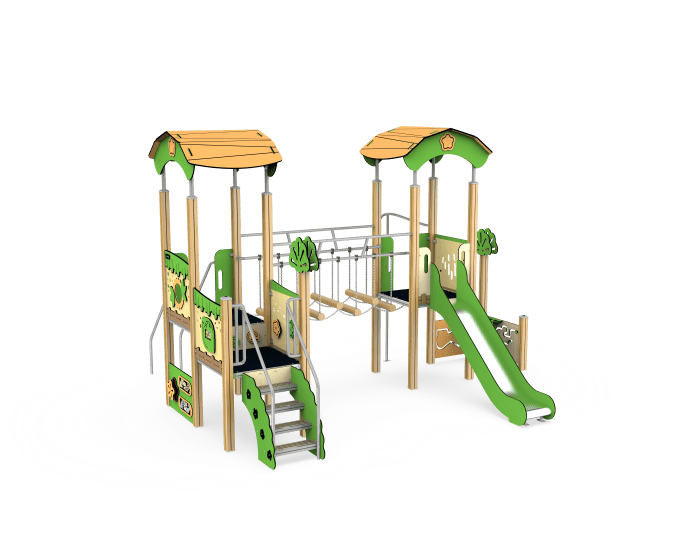
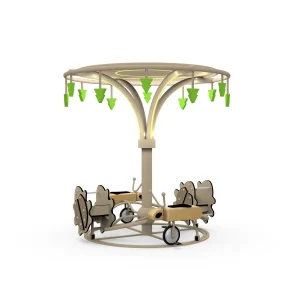
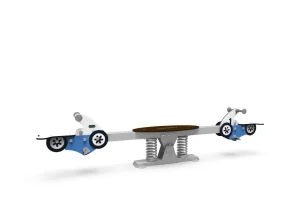
Several equipment types work particularly well in hotel settings. Multi-player spinning wheels accommodate six to ten children at once, making them efficient for busy periods. Single-player spinners develop balance and coordination in a compact footprint. Spring riders with playful themes appeal to younger children while building sensory awareness. Multi-person seesaws create natural social interaction, which parents appreciate when their kids make vacation friends.
| Equipment Type | Suitable Age Range | User Capacity | Max Fall Height | Key Features |
|---|---|---|---|---|
| Multi Player Spinning Wheel | 3-12 years | 6-10 children | 1.0m | Collaborative rotation, themed designs, stable base construction |
| Single Player Spinner | 3-10 years | 1 child | 0.6m | Balance development, smooth rotation mechanism, minimal space requirement |
| Spring Playground Equipment | 2-6 years | 1-2 children | 0.5m | High-strength steel springs, sensory stimulation, animal and vehicle themes |
| Multi Person Seesaw | 3-12 years | 2-10 children | 0.8m | Social interaction focus, adjustable balance points, durable pivot systems |
What Are the Essential Safety Standards for Hotel Kids Club Playgrounds?
Safety standards protect children and protect hotels from liability exposure. The two main frameworks are EN 1176 in Europe and ASTM F1487 in North America, though many countries have adopted variations of these.
These standards cover equipment design specifications, material requirements, installation procedures, and impact-absorbing surface requirements. They specify things like maximum fall heights, entrapment hazards to avoid, and spacing between components.
Compliance requires more than buying certified equipment. Installation must follow manufacturer guidelines precisely. Surfaces underneath equipment need appropriate impact absorption, typically rubber matting or engineered wood fiber at specified depths. Regular inspections catch wear before it becomes dangerous.
Hotels should request compliance documentation from equipment suppliers and keep records of all safety audits. This documentation matters if incidents occur.
Implementation and Operational Excellence for Hotel Play Areas
Installation day marks the beginning, not the end, of playground management. Operational practices determine whether equipment lasts five years or fifteen.
Installation should involve trained professionals following manufacturer specifications. Cutting corners here creates problems that compound over time. Improper anchoring, incorrect surface installation, or assembly errors lead to premature failures and safety risks.
Maintenance schedules need clear ownership. Someone on staff should conduct daily visual inspections looking for obvious hazards: loose bolts, damaged surfaces, foreign objects in the play area. Weekly checks should examine moving parts, connection points, and surface conditions more thoroughly. Professional audits on quarterly or annual cycles catch issues that daily observation misses.
Staffing decisions affect both safety and guest experience. Supervised play areas allow parents genuine relaxation time. Staff can also organize activities, manage conflicts between children, and respond immediately to any incidents.
What Is the Typical Lifespan and Maintenance Requirement for Commercial Playground Equipment?
Quality commercial equipment typically lasts ten to twenty years with proper care. The range depends heavily on material choices, usage intensity, and maintenance consistency.
Galvanized steel frames resist corrosion. UV-stabilized plastics maintain color and structural integrity despite sun exposure. Stainless steel fasteners prevent rust that weakens connections. These material choices cost more upfront but reduce replacement frequency.
Maintenance breaks down into tiers. Daily checks take five to ten minutes and focus on visible hazards. Weekly inspections examine moving parts, check fastener tightness, and assess surface conditions. Quarterly or annual professional audits provide thorough structural assessments and documentation for liability purposes.
Preventative maintenance pays dividends. Tightening a loose bolt takes minutes. Replacing a failed component after it causes an injury takes lawyers, insurance claims, and reputation damage.
Maximizing ROI Through Guest Satisfaction and Revenue Growth
Playground investments generate returns through multiple channels. Direct revenue increases come from families who choose your property specifically because of child amenities. Indirect benefits include longer stays, higher satisfaction scores, and review content that influences future bookings.
Family travelers often research hotels through a specific lens. They search for “family-friendly” properties, read reviews mentioning children’s experiences, and examine photos of play areas. A visible, well-maintained playground appears in booking photos, gets mentioned in reviews, and shows up in search filters.
Repeat bookings matter especially for resort properties. Children who have a great experience ask to return. Parents who enjoyed relaxed vacations while kids played safely remember that feeling when planning future trips.
How Can a Hotel Kids Club Playground Increase Guest Satisfaction and Revenue?
The satisfaction mechanism works simply: children who play happily have parents who relax. Parents who relax leave positive reviews. Positive reviews attract more families. The cycle reinforces itself.
Revenue impacts appear in several metrics. Occupancy rates often improve in family segments after playground upgrades. Average stay length can increase when children have reasons to remain engaged on property. Ancillary revenue from food and beverage may rise when families spend more time in common areas rather than leaving for off-site entertainment.
Some hotels generate direct playground revenue through supervised activity programs, themed events, or birthday party packages. These offerings require additional staffing but can offset operational costs while enhancing the guest experience.
Partnering for Success When Choosing Playground Equipment Manufacturers
Manufacturer selection affects every subsequent phase of a playground project. The right partner provides design expertise, quality assurance, installation support, and after-sales service. The wrong partner delivers headaches.
Evaluate manufacturers on several criteria. Research and development capabilities indicate whether designs will feel fresh or dated. Quality management systems, including certifications and testing protocols, predict equipment reliability. Production capacity affects lead times and customization options.
Service integration matters more than many buyers realize. A manufacturer who handles design, production, installation, and ongoing support provides accountability that fragmented vendor relationships cannot match. When problems arise, you want one phone number to call, not a chain of finger-pointing between suppliers.
Request references from similar projects. Hotel playgrounds face different demands than municipal parks or school installations. Experience with hospitality clients indicates understanding of aesthetic requirements, timeline pressures, and guest experience priorities.
Elevate Your Hotel’s Family Offering with LvDong Amusement Equipment
Suzhou LvDong Amusement Equipment Co., Ltd. brings over a decade of specialized experience in unpowered amusement equipment. Our integrated approach covers the full project lifecycle: innovative design, precision manufacturing, professional installation, and responsive after-sales support.
We understand what hotel playgrounds require. Safety compliance with EN 1176 and GB/T 34272-2017 standards comes standard. Durable materials withstand intensive hospitality use. Designs balance visual appeal with genuine play value.
Contact our team for a consultation tailored to your property’s specific needs. We can help you create a kids club playground that delights young guests, satisfies parents, and strengthens your competitive position in the family travel market.
WHATSAPP: +8613915684545 | [email protected]
Frequently Asked Questions About Hotel Kids Club Playgrounds
What factors should be considered when budgeting for a hotel kids club playground?
Budget planning requires balancing several variables. Space dimensions set baseline equipment quantities. Indoor versus outdoor installation affects material specifications and surface requirements. Age range coverage determines equipment diversity needs.
Quality materials cost more initially but reduce replacement and repair expenses over time. Safety surfacing represents a significant budget line that cannot be compromised. Installation by trained professionals adds cost but prevents problems that amateur installation creates.
Consider the revenue side of the equation too. A playground that attracts family bookings generates returns that offset initial investment. Properties with strong family segments often find playground upgrades pay for themselves within two to three years through increased occupancy and rate improvements.
How do I ensure the playground equipment is suitable for various age groups in a hotel setting?
Age-appropriate design requires physical separation and clear visual distinction between zones. Toddler areas should feel obviously different from spaces designed for older children. This prevents misuse and helps parents direct children to appropriate equipment.
Equipment selection should match developmental capabilities at each age level. Toddlers need low heights and soft surfaces. Preschoolers benefit from moderate challenges with forgiving consequences for mistakes. Older children require genuine physical and cognitive challenges to maintain interest.
Inclusive design principles ensure children with different abilities can participate meaningfully. This includes accessible pathways, sensory-rich elements for children with visual impairments, and equipment that accommodates mobility devices where possible.
What are the regulatory requirements for commercial playground equipment in hotels?
Regulatory frameworks vary by jurisdiction but generally reference international standards like ASTM or EN 1176. These standards address equipment design, material safety, installation requirements, and surface specifications.
Hotels should verify local requirements with municipal authorities before finalizing equipment selections. Some jurisdictions require permits for playground installation. Others mandate specific inspection schedules or professional certifications for maintenance personnel.
Documentation matters for liability protection. Maintain records of equipment certifications, installation procedures, inspection results, and maintenance activities. This documentation demonstrates due diligence if incidents occur and can significantly affect liability outcomes.