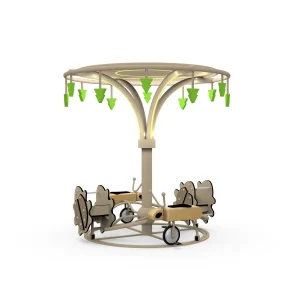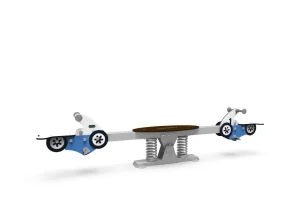
Tourist farm playground equipment fails differently from school or park equipment. A weekend agritourism site does not spread 1,000 visits evenly across a day; it loads them into two or three afternoon bursts, often with mixed age groups and caregivers standing close. That changes which parts wear first and which specifications matter. The most useful buying position is to plan for peak cycle fatigue, replaceable bearings, and surfaces that stay safe after repeated hard stops. We design for that pattern because a failed spinner on a holiday weekend costs more in closed access and guest frustration than any initial discount.
Wear Patterns That 1,000 Daily Users Create on Tourist Farm Equipment
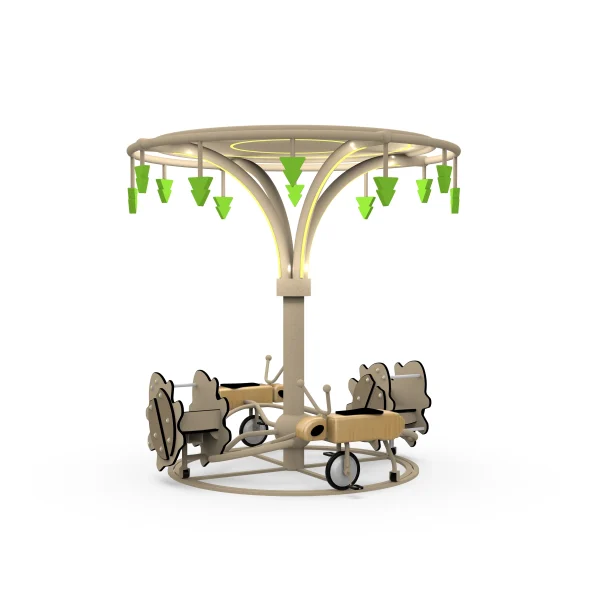
On a tourist farm, the busiest equipment is not always the largest. A 10 minute feeding or tractor tour ends and children hit the play yard in concentrated groups. In that pattern, a single multi-player spinner may start and stop 20 to 30 times in an hour. Each stop loads the central bearing, fasteners, and deck coating with more force than the rotation itself.
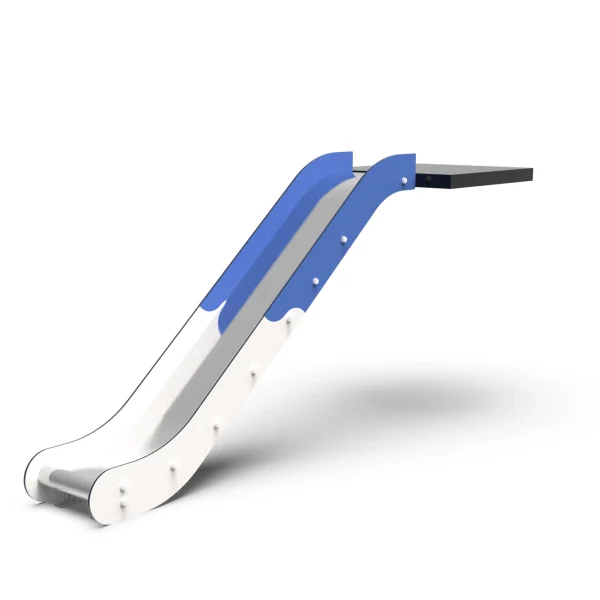
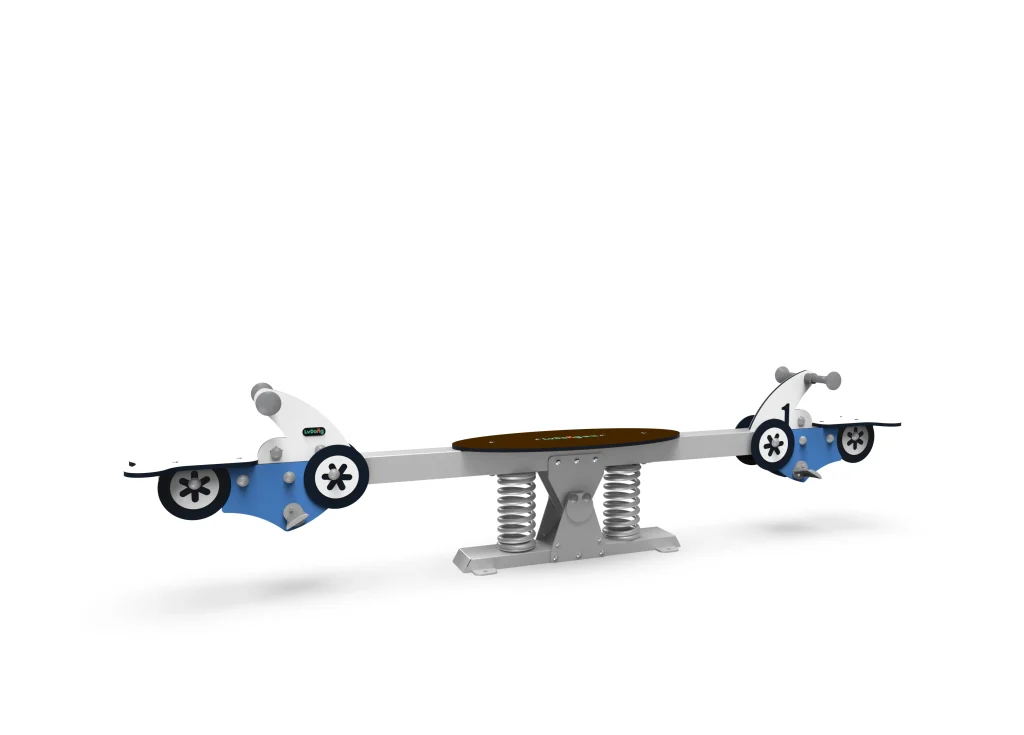
The stress moves differently by component. Spring riders see repeated high-force rebounds because adults push while children learn to pump. Seesaws collect pivot bushing wear when mixed age groups shift weight without staying seated. Tunnel slides and curved slides wear hardest at the lower curve, where speed and repeated foot contact transfer heat into the plastic. If the exit runout is too short, the next child enters before the previous child clears, and that pattern becomes an operational risk rather than a maintenance issue.
Repeated start-stop cycling puts more stress on spinner bearings than continuous rotation does. <Hurricane Spinner Load Testing Unpacking Playground Safety Standards> covers why 24-hour continuous rotation tests expose bearing tolerance and deck hold that matter for a farm playground, especially when adults step onto the deck to steady small children.
Component Choices That Survive Peak Season Cycling
High-frequency farm equipment should be chosen around the components that are cheapest to ignore and most expensive to replace. The central bearing, spring, pivot bushing, and deck surface determine whether a unit stays open through a season.
For spinners, specify a sealed bearing that can be removed without cutting the frame. A unit that looks balanced in a vendor video may still transfer uneven load to the deck when 6 to 10 children shift from one side to the other. The deck coating matters more in a farm setting than in an urban park because boots carry gravel, soil, and straw into the texture.
| Equipment type | Peak-use capacity | Primary wear point | Specification to check |
|---|---|---|---|
| Multi-player spinner | 6 to 10 children | Central bearing and deck coating | Sealed replaceable bearing, EN 1176 compliance |
| Spring rider | 1 child | Steel spring and base anchor | High-strength steel spring, through-anchored base |
| Multi-person seesaw | 2 to 10 children | Pivot bushing and damping | Spring-assisted damped pivot |
| Play panel | Stationary activity | Fasteners and printed surface | Stainless fasteners, UV-stable panel |
For spring riders, the spring itself is only half the decision. The base plate and anchor bolts carry the real load when a child rocks hard or an adult steadies the handle. In our design reviews, we prefer through-anchored bases over surface mounting for high-cycle sites because surface bolts gradually loosen from repeated rocking. That is a failure mode operators notice only after the gap opens enough to catch soil.
Panel hardware is another weak point on farms. <Weatherproof Play Panels Material Durability Comparison> covers stainless fastener choices and UV-stable panel materials that survive seasonal sun and outdoor cleaning without fading or loosening.
Layout and Capacity Decisions for High-Traffic Agritourism Play Areas
Capacity on a tourist farm is not about how many children fit on a unit. It is about how quickly children circulate and how many can play without waiting long enough to climb fences or press into unsafe zones. A multi-player spinner with a design capacity of 6 to 10 children may physically hold that many, but if every ride lasts five minutes and two families are waiting, the queue becomes the problem.
We plan agritourism sites with two exit conditions in mind. First, every slide exit needs a runout buffer of at least 1.5 meters before the next play surface or fence. Second, age-separated zones need a clear sight line from the main seating area. On a farm, parents often sit farther from equipment than they would in a dedicated playground, so the layout has to reduce blind corners.
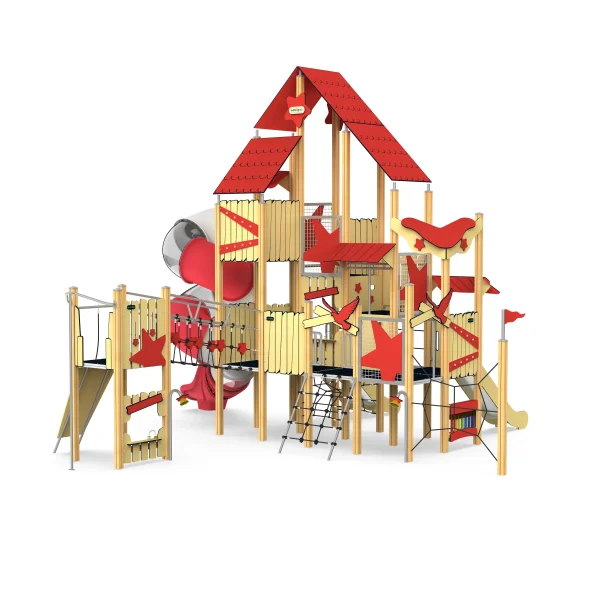
Layout mistakes often begin before equipment is shipped, when buyers select a unit for its appearance and not its clearance, capacity, and entry path. <7 Mistakes to Avoid Buying Commercial Playground Equipment> covers the early decisions that create bottlenecks and unsafe use zones, and how a site plan review before ordering prevents most of them.
If your farm brings school groups or festival crowds above 200 children in a single slot, share your gate counts and site dimensions at [email protected] before you lock the layout. We can confirm the spinner to spring rider ratio that carries the peak without creating idle zones.
Maintenance Routines That Keep a Tourist Farm Playground Open
High-traffic equipment does not break suddenly in most cases. It gives warning through movement, sound, and looseness. A tourist farm needs shorter inspection intervals than a school because the same parts cycle more in a weekend than a school playground sees in a month.
We recommend a five minute opening check before the first guests arrive:
- Walk every spinner and seesaw through one full movement cycle.
- Check spring rider handles and seat bolts for side-to-side play.
- Check slide exit paths and remove gravel or straw.
- Check play panel fasteners for exposed threads or lifted edges.
- Record any odd sound or motion in a log tied to that piece of equipment.
Weekly checks should include torque on anchor bolts and visual inspection of bearing seals. Quarterly checks should take the deck or seat covers off where possible and inspect the internal pivot for wear. For spinners, bearing replacement is a scheduled event. It should be ordered as a spare part before the season starts, not after the first hard stop of the summer.
Sourcing Tourist Farm Playground Equipment That Holds Up
High-traffic farm operators are often stuck between residential-grade pricing and theme-park complexity. The practical middle is supplier documentation: EN 1176 compliance, coating test reports, maximum fall height data, and replacement part lead times.
At Suzhou LvDong Amusement Equipment Co., Ltd., we include replacement bearings, spring assemblies, and matching hardware as part of the order because a farm cannot afford to wait for a small part during the season. Send your site plan, peak visitor counts, and the two or three equipment types you are replacing to [email protected] or WhatsApp +8613915684545. We will return a shortlist with capacity and maintenance recommendations matched to your operating calendar, not a generic quote.
Common Questions About Tourist Farm Playground Durability
How many hours can a commercial spinner run before bearing replacement?
A sealed bearing on a well-maintained commercial spinner can typically last three to five seasons under high-traffic farm use, but the maintenance log matters more than the hour count. If the unit is left outdoors in rain and soil, the bearing can wear in less than two seasons. We tell operators to schedule inspection at the start of each season and to order a spare bearing set with the original purchase. A change in sound or a new horizontal wobble is the signal to replace, not a calendar date.
Is powder coating enough for a farm playground that stays outdoors year round?
Powder coating alone is not the main corrosion barrier on frame welds. The real protection comes from pretreatment and, for high-moisture or coastal farms, galvanized steel underneath. A powder coat can look intact while moisture moves through a scratch at a bolt hole. For welded joints, specify hot-dip galvanized frames or a documented pretreatment and coating sequence. For plastic parts, UV stabilization matters more than paint because farm sites remove shade and expose equipment to full-day sun.
Should a tourist farm separate toddler and school-age play areas?
It depends on the site’s supervision model. If the farm has dedicated staff monitoring the play yard during peak hours, a single shared area can work with clear age zones and barrier-free sight lines. If parents supervise from a nearby picnic shelter, separate the 2 to 5 and 5 to 12 zones physically. The more mixed the groups are, the more important low fall heights and damped motion become. We usually recommend a separate toddler corner with spring riders and low play panels within sight of the main structure.
Can spring riders handle adult-assisted use without breaking?
In high-traffic farm settings, adults steady a child by holding the handle or seat while the child rocks. The spring rider itself is designed for child loads, but the anchor and handle connection bear extra force when an adult leans in. For that reason we specify through-anchored bases and hand grips with internal metal reinforcement. The unit should not be marketed for adult ride loads, but it can tolerate assisted use if the anchor bolts are treated as a maintenance item. Share your site plan and expected rider loads with [email protected] and we will confirm the right mounting detail and replacement cycle.
If you’re interested, check out these related articles:
20 Essential Questions Choosing a Playground Equipment Supplier
Evaluate Commercial Playground Manufacturers 8 Critical Selection Factors
School Playground Equipment Zoning for Grade Based Development