Small hotel operators often assume they need to buy a full playground set to access genuine factory pricing. A three-unit spring rider order sits in a practical middle ground: large enough to improve a kids’ corner, pool deck, or courtyard play area, but small enough to trigger retail markups if the quote is not handled deliberately. Spring riders are one of the most compact motion pieces in a hotel play setting, but the savings come from how the order is specified, grouped, documented, and reviewed—not from the sticker price alone.
Why Three Spring Riders Fit a Small Hotel Kids’ Corner
A spring rider is a single-user piece with a low fall height and a small footprint. Typical models run roughly 60–99 cm in length, 35–39 cm in width, and 79–110 cm in height, with a maximum fall height of about 50 cm. That makes three units far easier to place than a slide tower or a multi-person spinner, especially in a landscaped courtyard, a covered terrace, or a narrow strip beside a restaurant.
The play value is also practical for hotels. One rider serves a single child, so three units allow a small group to play at the same time without requiring the supervision intensity of a climbing structure. Because spring riders rely on body movement rather than chains, belts, or rotating bearings, daily maintenance is generally simple: check the spring anchor points, wipe down the seat and handles, and confirm the base remains stable.
The same compact planning used for small playground additions applies here.
For a hotel, the benefit is not just entertainment. It is also risk control. Equipment built to EN 1176-1 and GB/T 34272-2017 [1], [2] gives a property a clearer documentation trail if a guest injury or insurance review occurs. The lower fall height also reduces the surfacing depth required under each unit, although the final safety surface still needs to follow the supplier’s installation drawing.
How Spring Rider MOQs Are Set — and Why Three Units Is a Negotiation Point
Spring rider MOQs are usually not a single universal number. A supplier may set the minimum by model count, total carton volume, order value, or a combination. For large playgrounds, ordering 10 or 20 spring riders is straightforward because the pieces consolidate well in a container. For a small hotel, three units may fall below the published model-level MOQ, but that does not mean the order must automatically be priced at retail.
Most factories would rather accept a small order that is clean, clearly documented, and low-complexity than lose the relationship over an artificial minimum. The most workable arguments are operational: standard colors, standard handles, a single model, no split shipping, and no urgent production deadline.
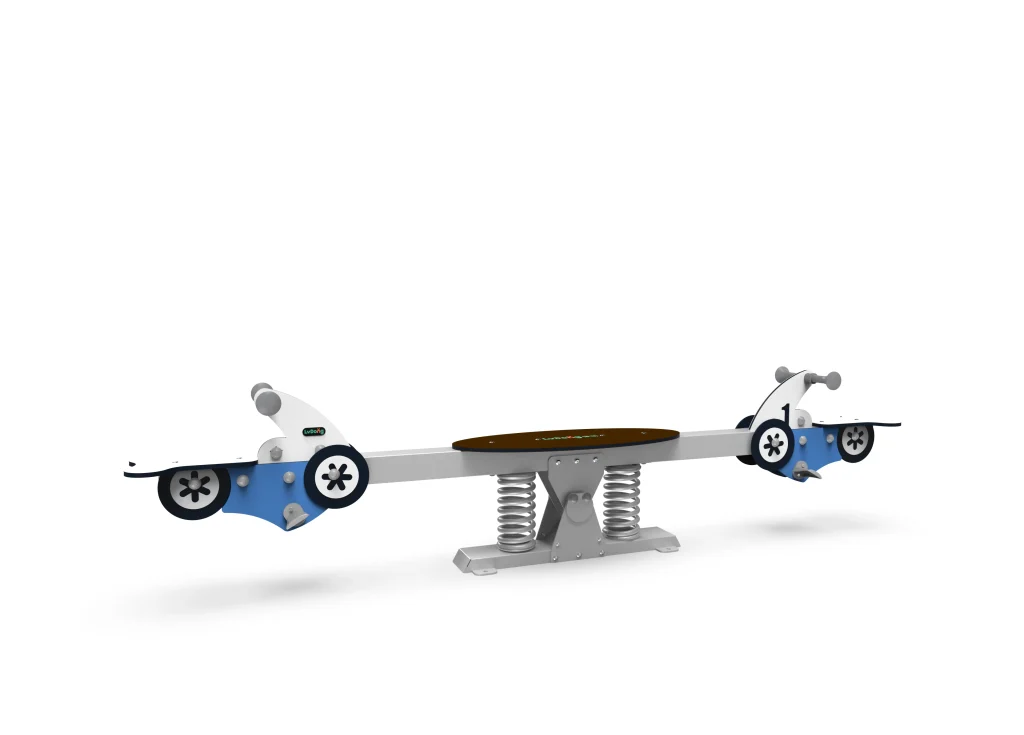
The key is to separate what is genuinely expensive for the supplier from what is merely an internal sales target. Custom colors, custom logos, mixed models, partial shipments, or a strict holiday deadline add cost. A three-unit order in standard configuration with a flexible loading date is far more negotiable.
The table below shows common levers a small buyer can use without weakening product quality.
| Lever | What to request | Why it helps |
|---|---|---|
| Combined order | Group three spring riders with other small playground items already being purchased | Reaches a workable volume without buying unnecessary units |
| Standard configuration | Accept a stock animal or vehicle design and standard finish | Reduces production setup and color-matching time |
| Flexible production window | Offer a non-urgent loading or delivery range | Allows the supplier to fit the order into an existing schedule |
| Clear documentation | Provide the site size, age range, and preferred port early | Reduces back-and-forth cost and makes the quote easier to approve |
Negotiation Moves That Protect a Small Order
A small hotel should not negotiate from weakness. Three spring riders may be a low-value order, but the buyer controls several things suppliers care about: clean communication, realistic expectations, and the possibility of repeat purchases or future equipment updates.
One effective move is to define the order as a pilot or trial for a planned family-area upgrade. If the property has multiple outlets, a management group, or a renovation pipeline, mention that future volume may follow. This should be stated factually—not as an exaggerated promise—because suppliers value a credible expansion path.
Another move is to ask for a price-protected repeat order. For example, the first three units may carry a small-lot adjustment, while the next order receives the standard rate for the same configuration. This is more realistic than demanding full volume pricing immediately and often gives the hotel a manageable first spend.
Material choice also affects how strongly the hotel can negotiate on total value. Anti-rust treatment, galvanized springs, and UV-stable seat materials may raise the unit price slightly but reduce maintenance and replacement cost over time [1].
Material choice changes long-term maintenance and can become a negotiation lever. <Playground Spring Rider Materials Steel vs Anti Rust> covers steel and anti-rust options small buyers should compare before locking a quote.
If the property is in a humid coastal area, salt spray resistance should be part of the negotiation rather than an afterthought. The goal is not to ask for the cheapest possible spring, but for the most defensible specification at a small-order price.
Need a firm three-unit quote without retail assumptions? Email [email protected] with your site dimensions, age range, preferred port, and installation deadline. Include a few site photos so the quote can be prepared around the real foundation and delivery conditions.
Reading a Spring Rider Quote Line by Line
A low unit price means little if the quote does not state what is included. Small buyers should review the quote with the same discipline as a large municipal procurement.
The first item to check is the delivery term. EXW, FOB, CIF, and DDP create very different cost responsibilities [3]. FOB gives the buyer control over ocean freight but requires arranging a freight forwarder. CIF looks simpler, but the buyer still clears import and pays local duties. DDP is the easiest for a hotel receiving goods directly, but the supplier includes more risk and cost in the unit price.
The safest approach is to request the quote in two forms: unit price at EXW or FOB, and an estimated landed cost to the destination port. That separates manufacturing cost from freight and makes it easier to compare alternate suppliers without confusing a cheap product with cheap shipping.
The quote should also break out packaging, palletizing, fumigation if required, documentation, and any small-lot surcharge. If the line items are not clear, ask for a revised version before paying a deposit. Hidden charges often appear later as “destination handling,” “export documentation fee,” or “customs inspection assistance.”
Installation preparation affects the total landed cost even when the unit price looks low. <Playground Spring Rider Foundations Expert Installation Guide> covers base requirements that prevent surprise site work after delivery.
Verification Documents and Payment Triggers
A small hotel should not tie payment solely to an invoice. The procurement should move in stages: quotation, proforma invoice, production confirmation, pre-shipment inspection, and only then final balance.
Before payment begins, request the relevant compliance statement and test documentation. For spring riders, the core references are EN 1176-1 for European or Caribbean projects and GB/T 34272-2017 for the manufacturing standard [1], [2]. If the product will be installed in a market with its own certification regime, confirm whether additional local testing is required.
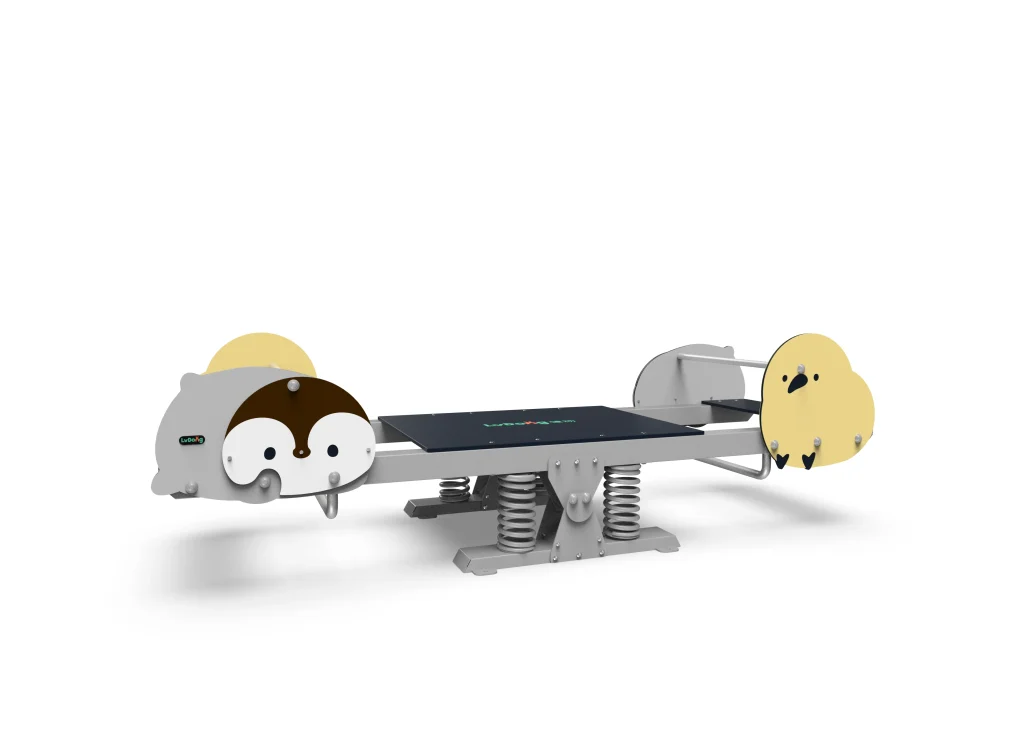
The deposit is normally 30% with the balance before shipment, but a first-time small buyer may negotiate a staged structure: deposit, pre-shipment photo or video verification, then balance. Payment terms should follow the contract, not a social media message.
Price is only one clause in a safe procurement. <Key Contract Clauses for Commercial Playground Equipment Purchase> covers warranty, delivery, and inspection terms small buyers should not skip.
Request a Three-Unit Spring Rider Quote
For a project-specific proposal, contact Suzhou LvDong Amusement Equipment Co., Ltd. directly. Send the hotel site dimensions, target age range, delivery city and port, and the preferred installation date. The inquiry should include the number of units needed, whether the order is for a single location or multiple sites, and any humidity, salt exposure, or shade constraints so the proposal addresses the actual operating environment.
Email: [email protected]
WhatsApp: +8613915684545
A clear three-unit inquiry is often enough to move from retail pricing to a proper small-order quote. The negotiation becomes easier when the buyer shows that the site is ready, the specification is realistic, and the delivery terms are understood.
FAQ
Can a small hotel really order only three spring riders without paying retail?
Yes, in most cases. The final price depends on model selection, finish, shipping terms, and whether the order can be grouped with other equipment. A small-order surcharge may still apply, but it is usually lower than a consumer retail markup.
What deposit is normal for a three-unit spring rider order?
A 30% deposit with the balance before shipment is common for first-time orders. Some suppliers agree to a photo or video verification before the balance payment. The key is to have the payment stages written into the proforma invoice.
Should a small hotel choose FOB, CIF, or DDP?
It depends on the hotel’s freight experience. FOB gives more control but requires a forwarder. CIF is convenient but still leaves import clearance to the buyer. DDP is the simplest for direct-to-site delivery, though the supplier builds more risk into the price. Ask for both EXW and estimated landed cost so the comparison is clear [3].
How long does a small spring rider order take?
Standard models with no custom finish may be produced within a few weeks, but loading and sea freight add time. A realistic expectation is to confirm the production window and vessel schedule before committing to an installation date. Flexible timing often improves pricing for a small order.
What documents should arrive with the shipment?
The shipment should include the packing list, commercial invoice, bill of lading, installation drawing, spare parts or anchor hardware list, and the relevant compliance statement. For hotel procurement files, retain the EN 1176-1 or GB/T 34272-2017 documentation [1], [2] with the insurance and maintenance records.
References
[1] European Committee for Standardization, EN 1176-1:2017, Playground equipment and surfacing — Part 1: General safety requirements and test methods, CEN, Brussels, 2017.
[2] Standardization Administration of the People’s Republic of China, GB/T 34272-2017, National Standard of the People’s Republic of China, Beijing, 2017.
[3] International Chamber of Commerce, Incoterms 2020: ICC Rules for the Use of Domestic and International Trade Terms, ICC Publication No. 723E, Paris, 2019.
If you’re interested, check out these related articles:
Essential Checklist for Playground Equipment Safety Test Reports
Playground Equipment Paint Refresh Optimal Surface Prep Recoating