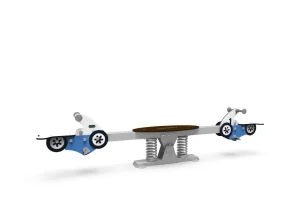
Seesaw handrail height for 3-year-olds is more than a grip detail; it decides whether a child can hold on with elbows slightly bent while both feet stay planted at the bottom of the stroke. Most manufacturers quote overall equipment height and leave the seat-to-handrail relationship unstated, so buyers approve drawings that look correct but force a three-year-old to stretch upward or grip behind the body line. Our design team treats this dimension as a posture requirement, not a secondary safety note. The workable window is 420-520 mm above the seat surface for most preschool seesaw configurations, but the final number must follow seat depth, foot platform position, and the child’s seated shoulder height.
Seesaw Handrail Height for 3-Year-Olds as a Sizing Decision
The first mistake in seesaw purchasing is treating handrail height as a fixed code number. Standards set performance and safety limits, but they do not remove the need for a sizing decision. EN 1176:2017 and ASTM F1487-21 address grip dimensions, entrapment openings, and fall protection. Neither standard assigns one universal handrail height to every seesaw because seat type, pivot arc, and foot positioning change the effective reach point.
That leaves the buyer with a problem. When a supplier lists a seesaw as 80-95 cm tall, the figure may refer to the highest point of the frame, the top of the handrail, or the seat back. None of those numbers tells you whether a three-year-old can reach the grip without locking the elbows. The dimension that matters is the vertical distance from the seat surface to the handrail top, measured with a seated child’s posture in mind. If that number is missing from the quote, the drawing is not yet ready for approval.
This is why the handrail question belongs in the specification stage, not in the installation checklist. A preschool seesaw can pass every structural test and still be wrong for the intended user group. The handrail height sets the child’s shoulder position, elbow angle, and forward lean at every stroke. Getting it wrong usually shows up as children leaning backward, releasing the grip, or sliding their hands inward toward the pivot where pinch points are more concentrated.
Grip Position and Posture for Three-Year-Old Seesaw Users
A three-year-old is not a scaled-down five-year-old. WHO Child Growth Standards place most 36-month-old children between roughly 90 and 105 cm tall, but the more useful measurement for seesaw design is seated shoulder height. When a child sits on a low seesaw seat, the hands should fall naturally in front of the chest, not above the shoulders or behind the body line.
If the handrail is too high, the child extends the elbow fully and lifts the shoulder. That position reduces grip strength and encourages the child to lean back into the seat, which shifts balance away from the feet. Over several plays, the child may compensate by moving forward on the seat or wrapping the arms around the handrail. Those postures create exactly the kind of unpredictable movement that leads to slips and mid-stroke releases on a pivot seesaw.
The correct handrail position keeps the grip inside a comfortable forward reach. For most preschool seesaw seats, the handrail should sit 420-520 mm above the seat surface. That range lets a three-year-old keep the elbows bent while the feet stay on the foot platform or rest support. The handrail should also be close enough horizontally that the child does not need to pitch forward to reach it. When the seat is deep or reclined, the measurement changes because the child’s torso is already tilted.
Our design reviews treat the handrail as a posture anchor. If the seat and foot platform force a child to sit with knees higher than the hips, the handrail height may need to come down. If the foot platform is low and the child’s legs dangle, the handrail becomes the primary balance point and the upward reach becomes more demanding.
Seesaw Handrail Height Numbers to Check in a Specification
Most specification sheets do not include the right reference point. The table below shows the three numbers that matter when a buyer is checking a seesaw for three-year-old users. The target values are our design review ranges, not fixed code minimums.
| Measurement reference | Typical drawing statement | What to verify for a 3-year-old |
|---|---|---|
| Ground to handrail top | Total height only | Ask for seat surface to handrail top |
| Seat surface to handrail top | Often omitted | Confirm a 420-520 mm target range |
| Seat edge to grip centerline | Rarely stated | Check 200-320 mm forward reach |
The ground-to-handrail figure is useful for fall height and surfacing calculations, but it is not a reach dimension. Two seesaws with the same overall height can have very different handrail positions depending on seat position, spring height, and frame design. The seat surface to handrail top measurement removes that ambiguity.
When the handrail is set correctly, a three-year-old should be able to grip it with the elbows slightly bent while sitting against the seat back. The forward reach should not require the child to lean far beyond the seat edge. That horizontal check is often missing from quotes, yet it matters as much as the vertical height because children slide forward when the grip is too far away.
Since manufacturers often state handrail height differently depending on whether they measure from the ground or the seat surface, comparing quotes becomes difficult. <Effectively Compare Playground Equipment Suppliers Services> covers how to align specification formats across suppliers before you compare pricing.
Handrail Height by Seesaw Type and Seat Design
Not every seesaw uses the same handrail position. Traditional pivot seesaws tend to have higher seats and longer travel arcs, so the handrail needs to stay close to the child’s natural forward reach. Spring-balanced seesaws often sit lower, but the seat may have more recline, which changes the effective handrail height even when the raw measurement looks acceptable.
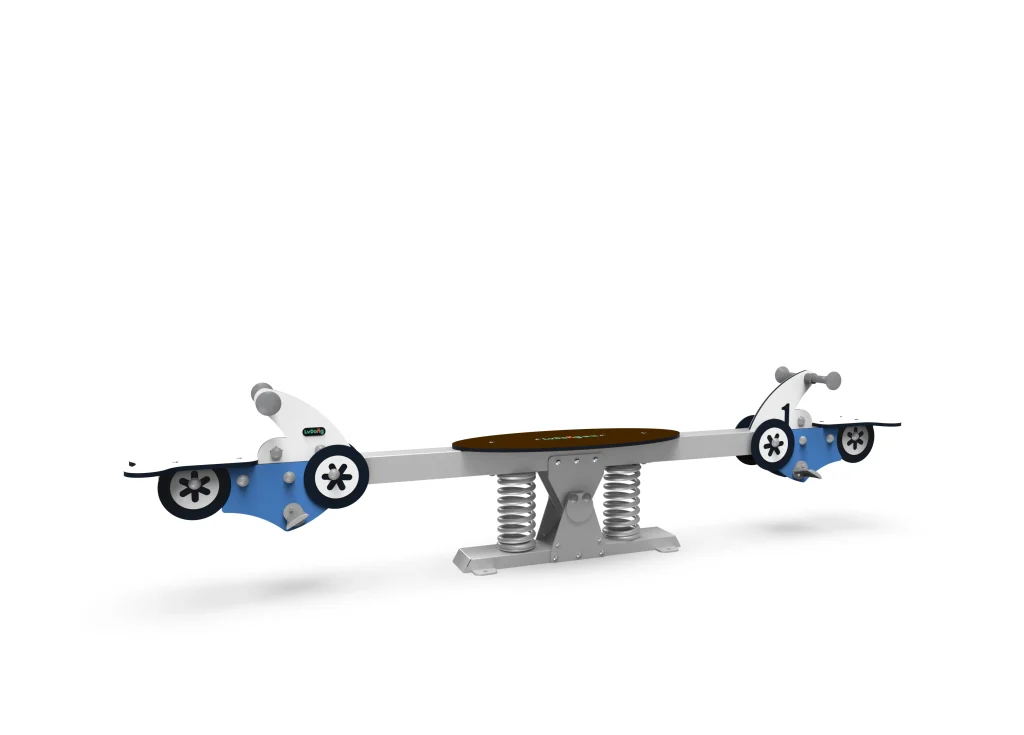
On our multi-person seesaw line, the overall equipment height runs 72-97 cm and the maximum falling height is 60 cm. That overall height window is useful for fall surfacing, but it does not tell you where the child’s hands land. The handrail must be set from the seat surface after the seat angle and foot platform are fixed. Our multi-person seesaws are built to EN 1176 and GB/T 34272-2017, which cover structural requirements while still leaving the sizing judgment to the manufacturer and buyer.
Two-person seesaws for three-year-olds need special attention because the child may sit closer to the pivot where the handrail arc is shorter. If the handrail is mounted too far from the seat edge, the child reaches across the body to hold it. That inward reach can bring fingers close to moving joints. The handrail should be positioned so the grip is directly in front of the child’s shoulder, not toward the center pivot.
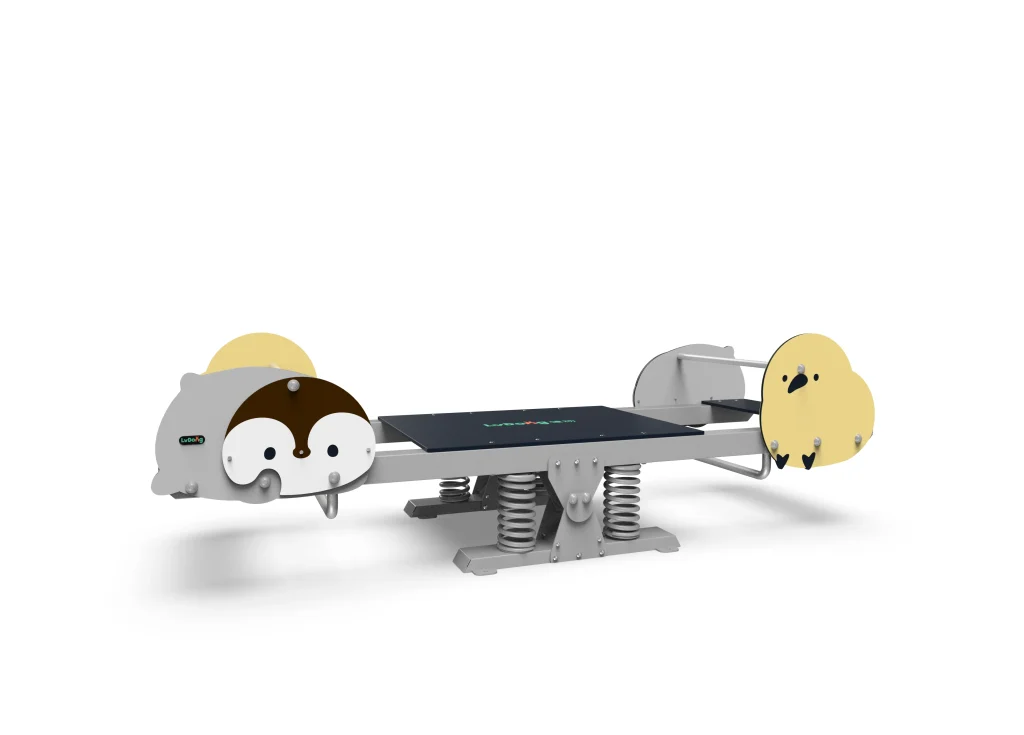
For multi-user seesaws, a single handrail height cannot fit every rider. A three-year-old and a five-year-old on the same unit have different seated shoulder heights. Adjustable foot platforms, multiple grip heights, or clearly marked age ranges solve part of the problem, but the buyer still needs to confirm which seat configuration the handrail was designed around.
Before you accept a supplier’s dimension sheet, the handrail height needs to be confirmed at the seat reference point rather than accepted as a total height note. <Evaluate Playground Equipment Samples Before Buying A Guide> covers what to measure when a seesaw sample arrives at your warehouse, including grip diameter and seat-to-handle relationship.
Confirming Handrail Height Before You Finalize the Seesaw Order
Handrail height becomes a real procurement risk when the order includes mixed age groups, custom seat layouts, or accessible seat inserts. A drawing that passes a visual review can still produce a seesaw that is too tall for three-year-olds and too shallow for older children. The safest way to close that gap is to confirm the measurement reference before production, not after the equipment arrives.
If your preschool program involves mixed 2-5 age zoning or an unusual seat arrangement, it is worth confirming the handrail height against your surfacing and seat depth before finalizing the BOM. Share the seat reference height, handrail target, and intended age range with our design team, and we will confirm the handrail placement against the selected seesaw model.
Send your seat reference height and handrail target to [email protected] or WhatsApp +8613915684545, and we will check the measurement before the order enters production. That single confirmation step is usually faster than correcting an installed seesaw after the playground opens.
Common Questions About Seesaw Handrail Height for Three-Year-Olds
What is the correct seesaw handrail height for a 3-year-old?
For most preschool seesaw configurations, set the handrail 420-520 mm above the seat surface, not from the ground. This range keeps the grip in front of the child’s chest and allows a comfortable elbow bend. The exact number inside that range depends on seat depth, seat angle, and foot platform height. If the child sits with knees above the hips or the seat reclines, the handrail may need to be placed lower. The key check is whether a three-year-old can hold on without extending the arms fully or leaning forward beyond the seat edge.
Is handrail height measured from the ground or the seat?
A common mistake is to read the handrail height from the ground to the top of the grip. That number describes overall height, not reach. The correct measurement for sizing is seat surface to handrail top. A seesaw that is 850 mm tall at the frame may have a handrail only 380 mm above the seat, or it may be 600 mm above the seat depending on the design. Without the seat reference, the overall height cannot tell you whether the grip is appropriate for a three-year-old.
Can the same seesaw work for 3-year-olds and 5-year-olds?
The answer depends on whether the seesaw has fixed seats or adjustable features. A fixed handrail height usually suits a narrower age band because three-year-olds and five-year-olds have different seated shoulder heights. For mixed-age preschool groups, choose a seesaw with multiple grip heights, adjustable foot platforms, or a spring-balanced motion that reduces the need for a high handrail. If the program serves both age groups on one unit, confirm with the manufacturer which seat configuration the handrail height was designed around before ordering.
What happens if the handrail is too high for a three-year-old?
In preschool projects we have reviewed, an overly high handrail shows up as children leaning backward, releasing the grip, or sliding forward on the seat. The child has to extend the elbows fully and lift the shoulders, which reduces grip strength. When the seesaw changes direction, that awkward posture makes it harder to keep the hands in place. The result is not always a visible fall; often it is a slow shift toward the pivot where moving parts and pinch points are concentrated. Lowering the handrail or adding a secondary lower grip usually corrects the problem.
How do I confirm handrail height before production?
A better question is not just what height to print on the drawing, but what reference point the factory uses. Ask the supplier to state the seat surface to handrail top measurement and the seat edge to grip centerline distance. Then compare those numbers against the 420-520 mm vertical range and 200-320 mm forward reach for preschool riders. If the drawing only shows overall height, request a revised specification before approving production. Share your seat reference height and handrail target with our team, and we will confirm the measurement before the order enters production.
If you’re interested, check out these related articles:
Sensory Play Panels Inclusive Design for Special Needs
Unlocking Developmental Growth Combining Outdoor Slides Playhouses
Indoor Playground Design Consultation Your Project Blueprint
Outdoor Playground Set Layout Strategic Design for Optimal Play
Playground Play Panels Material Selection and Secure Installation