Portable play equipment for camping and glamping sites has to satisfy two conflicting demands: it needs to feel permanent enough for safety, yet movable enough to disappear when the season ends. I have spent much of my design work reconciling that tension. The biggest mistakes we see are not product failures; they are choosing equipment that cannot be anchored repeatedly, stored compactly, or moved without damaging the frame. The cleanest approach is to treat the whole setup as a modular system, with site inspection and off-season handling planned from the first sketch.
Site Conditions That Decide Portable Equipment Choices
I start seasonal site work with the ground, not the equipment catalog. Grass, compacted gravel, sand, and decking each behave differently when a spring rider or spinner is installed and removed each year. Loose sand spreads load poorly, so a narrow anchor can tilt after a few weeks of rocking. Compacted gravel holds shape better, but repeated installation can loosen the top layer. Grass is usually the easiest surface if drainage moves water away from the base plates.
Wind exposure matters more on open camping fields than in urban courtyards. A lightweight single-player spinner can shift if it relies on surface contact alone, so we prefer pinned base plates or ground sleeves in exposed locations. I also mark wear zones early. If a site owner tells us the play area will move between summer and autumn layouts, the equipment needs to be light enough for two staff members to reposition without a crane.
The buyer can then match equipment to the actual maintenance and inspection rhythm. That produces a shorter product list and a cleaner seasonal setup.
Portable Play Equipment Types Compared by Space and Capacity
Portable play equipment for camping and glamping sites usually comes down to four categories: spring riders, single-player spinners, multi-player spinners, and seesaws. The table below compares the main selection factors from our product data, which complies with EN 1176 and GB/T 34272-2017.
| Equipment Type | Typical Fall Height | User Capacity | Seasonal Setup Note |
|---|---|---|---|
| Spring rider | 50 cm | 1 child | Lightest option; anchor with four points and store flat on a rack |
| Single-player spinner | 34 cm | 1 child | Compact footprint; low fall height suits small grass clearings |
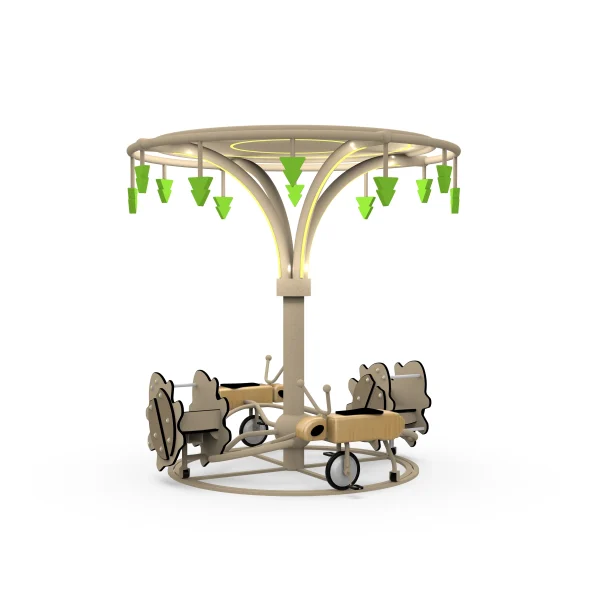
| Multi-player spinner | 55-77 cm | 6-10 children | Needs level ground and a larger clear safety zone |
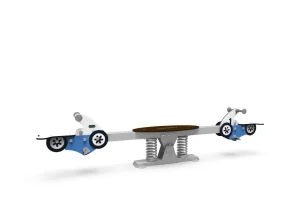
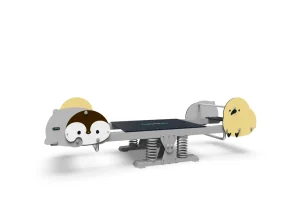
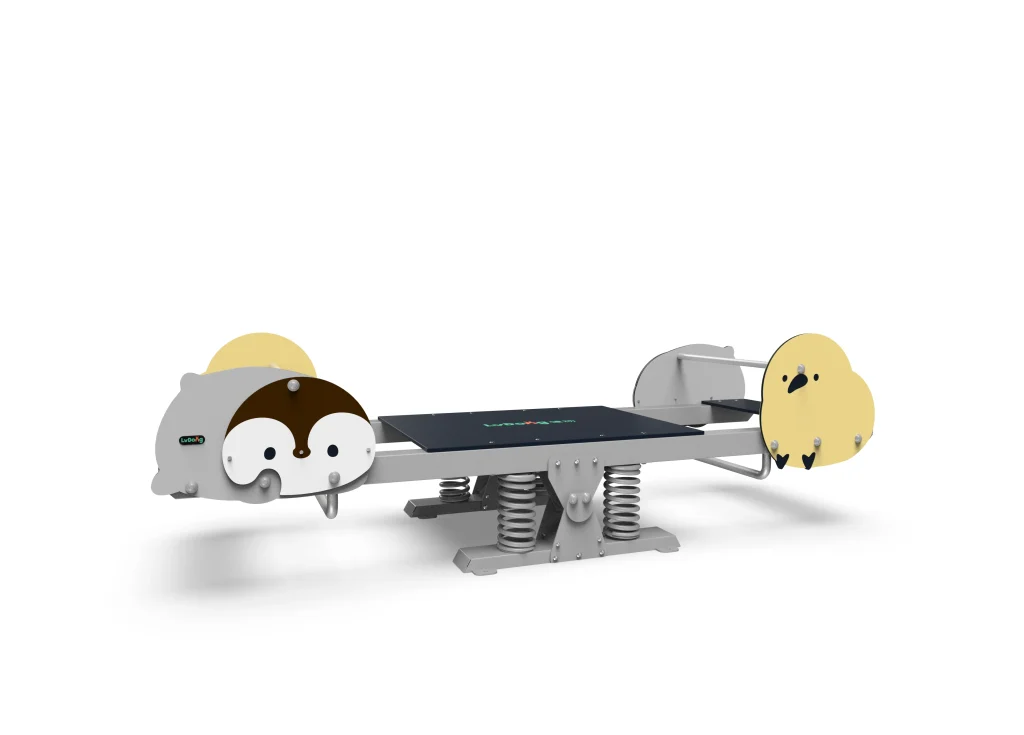
| Multi-person seesaw | 60 cm | 2-10 children | Long frame; check truck or container length before ordering |
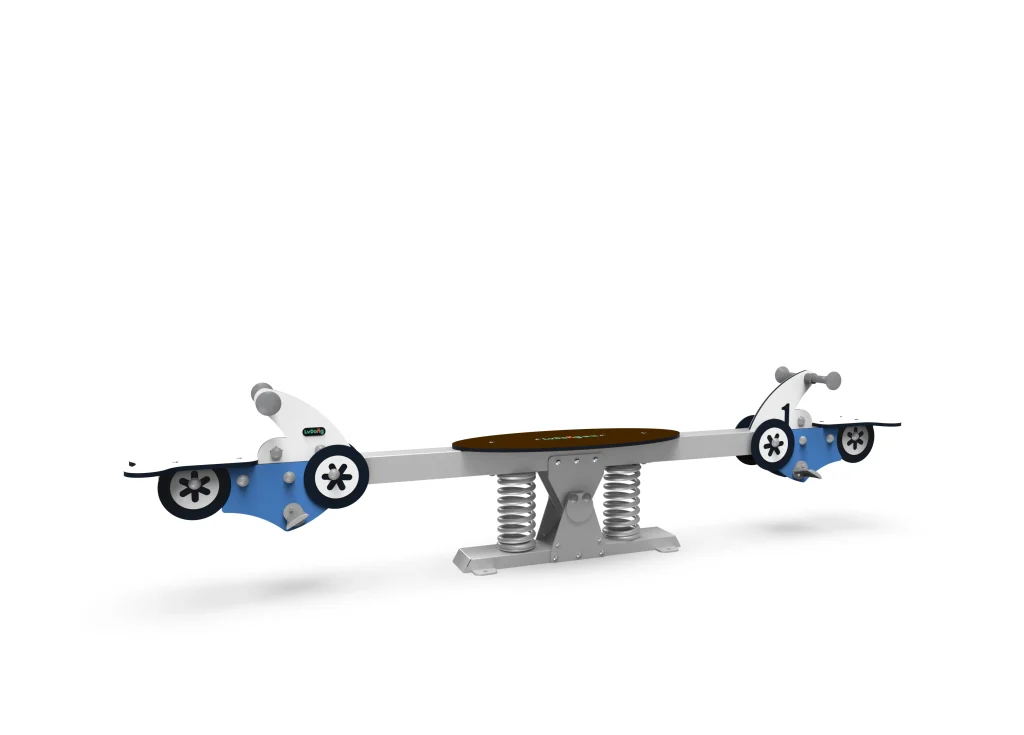
A spring rider is the most flexible starting point because its fall height is limited and its base is compact. Multi-player spinners deliver more capacity per installation, but their larger diameter drives the clear zone. Seesaws are useful where two or more children are expected at the same time, yet the frame length is the critical transport check.
When soil is uneven, spring riders are the easiest seasonal option because their load path stays compact. <Factory Direct Playground Spring Riders Unbeatable Value Quality> covers finish options and packaging choices that matter when equipment spends part of the year in storage.
Modular Frames and Reversible Anchoring Methods
The seasonal setup should avoid pouring a new concrete pad under every leg. Ground sleeves, screw anchors, and weighted frames can anchor low fall height equipment while keeping the site easy to restore. A ground sleeve sits below grade and stays in place between seasons. The post slides out when the equipment is packed down. Screw anchors work well in firm soil and leave a small hole that turf fills in quickly. Weighted portable frames are the right choice when the ground cannot be disturbed.
On compacted surfaces, recessed base plates reduce trip hazards. On grass, a slightly raised plate avoids water pooling against the frame. We also standardize bolted joints on portable sets. Bolted connections are easier to inspect than welds after transport, and a damaged bolt can be replaced locally without cutting the frame.
Seasonal setup breaks down most often when buyer installed anchors drift from the manufacturer’s torque and level tolerances. <DIY vs Supplier Playground Equipment Installation Guide> covers the inspection points that keep repeated installations from turning into frame stress.
If your site crosses between compacted gravel, grass, and decking, the anchor selection changes. Send a few ground photos or a short video with your quote request to [email protected] or WhatsApp +8613915684545. We will confirm whether you need ground sleeves, screw anchors, or a weighted portable frame.
Storage and Transport Costs Over Repeated Seasons
Packing down a play area is not a one-time afterthought; it is a recurring labor and storage cost. I treat it as part of the purchase calculation. A spring rider can be unbolted and racked in a small equipment room, while a multi-person seesaw needs a longer storage bay and a vehicle or trolley that can handle its frame length. Before quoting, we ask how the equipment will be stored, moved, and protected during the closed season.
Steel and coated parts survive repeated handling best when they are cleaned, dried, and stacked without metal-to-metal contact. We recommend keeping hardware kits labeled by equipment type, because the first reinstallation is where missing pins and washers appear. Galvanized frames handle moisture well, but scratches from transport should be touched up before storage. Plastic and rubber parts need to be kept out of direct sunlight when not in use.
The off season is harder on steel than the operating season when storage is damp. <Optimal Seasonal Care for Outdoor Metal Swing Sets> covers cleaning, drying, and touch-up steps before frames go back into service.
A Quote Process Built Around Your Operating Season
Operators sometimes start with a permanent park package and then struggle to store or move it. That creates avoidable cost. A seasonal site should begin with a site-specific list: peak child count, available clear area, off-season storage location, and whether equipment moves between pitches. We use those details to shortlist models from our spinner, spring rider, seesaw, and activity panel ranges. We have delivered more than 1,500 projects across municipal parks, cultural tourism sites, and educational settings, so we see the same seasonal failure points repeatedly. Send a rough site sketch, the number of children at peak, and your storage method to [email protected] or WhatsApp +8613915684545. We will respond with a compact equipment set and a pack-down plan, not a generic park package.
Common Questions About Portable Play Equipment for Camping Sites
Can seasonal play equipment be installed without pouring concrete?
Yes, most small items can use ground sleeves, screw anchors, or weighted frames instead of concrete. Spring riders and single-player spinners have low fall heights and modest load paths, so a pinned base plate on compacted ground or a sleeve set below grade is often enough. Concrete is still useful for high load multi-player spinners or loose sandy soil, but it can be contained in prefabricated footings that stay beneath the surface. For seasonal sites, we specify anchors first and add concrete only when the ground requires it.
What equipment holds up best through repeated setup and takedown?
Many buyers assume plastic parts are the weak point. The real wear point is hardware. Bolts, pins, and joints loosen every time equipment is dismantled. Stainless or galvanized fasteners and torque checks before every reinstall make a measurable difference. We standardize bolted joints on portable sets so damaged fasteners can be replaced locally. Powder coated steel should be inspected for chips, touched up, and left to dry before stacking. Near salt air, choose 304 stainless components or rinse frames before storage.
How much space do we need around movable equipment?
It depends on fall height and local safety standards. A spring rider with a 50 cm fall height has a compact impact area, while a multi-player spinner with a 77 cm fall height needs a larger cleared zone in every direction. Temporary mats or well maintained grass can work as safety surfacing, but the full zone should be marked with removable posts so the same layout returns each season. If the play area shifts between tents and rides, keep equipment grouped rather than scattered. That reduces fencing, surfacing, and supervision strain.
Can we start with three or four pieces and add more later?
In small campsite orders I have worked with, starting with two spring riders, a small spinner, and a seesaw gives a visible play offer without crowding the site. The key is choosing a manufacturer that keeps hardware and color formulations consistent across years, so later additions match. Some sites start with a single multi-player spinner as the anchor because it delivers high play value from one installation. If you are unsure where to begin, send your seasonal timeline and expected child count to [email protected] or WhatsApp +8613915684545, and we will suggest a start set that fits your pack-down plan without pushing you into a full-size park order.
If you’re interested, check out these related articles:
Optimal Seasonal Care for Outdoor Metal Swing Sets
Annual Maintenance Calendar for Outdoor Play Equipment A Guide
Tornado Playground Spinner Strategic Installation Site Planning
Multi Function Playhouse with Slide and Swing Commercial Solutions
Child Development Benefits Playground Spinning Toy Impact