Upgrading a kindergarten playground is not simply a purchasing decision; it is a commitment to the daily safety and developmental experience of children aged two to six. The manufacturer you select determines whether equipment arrives with proper certifications, whether installation proceeds without delays, and whether replacement parts remain available five years from now. Most procurement guides focus on price comparisons and product catalogs, but the real differentiator lies in understanding how a manufacturer’s production capabilities, quality management systems, and after-sales infrastructure translate into a playground that performs reliably under daily use. This article addresses the specific evaluation criteria that kindergarten administrators and procurement officers should prioritize when comparing playground equipment manufacturers, drawing from over a decade of experience coordinating design, production, and installation for early childhood facilities across China.
Why Manufacturer Selection Matters More Than Product Selection
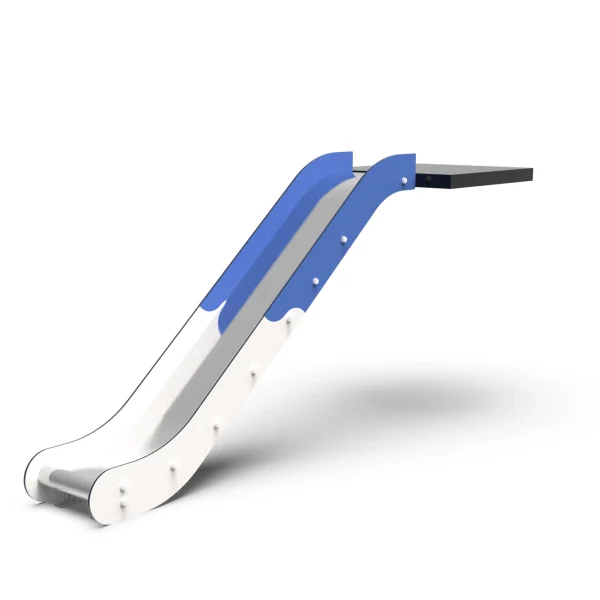
Kindergarten playgrounds face conditions that commercial or residential installations rarely encounter. Equipment serves children in the most physically vulnerable age group, operates under supervision ratios that vary throughout the day, and must withstand use patterns that combine high frequency with unpredictable force distribution. A slide that performs adequately in a community park may fail prematurely in a kindergarten setting where the same exit zone receives hundreds of landings daily.
The manufacturer’s understanding of these conditions shapes every design decision. When I review project specifications from kindergartens, the recurring failures trace back to manufacturers who designed for general outdoor use rather than early childhood education environments. Platform heights set at 100cm work for mixed-age parks but create unnecessary risk for two-year-olds. Spring riders rated for general playground use may lack the controlled rebound characteristics that prevent toddlers from losing grip during peak deflection.
Selecting the right manufacturer means selecting a partner who has solved these problems before. The product catalog matters less than the manufacturer’s demonstrated experience with kindergarten-specific requirements, their willingness to modify standard designs for your space constraints, and their capacity to deliver installation support that accounts for the operational realities of an active school.
Certification Requirements for Kindergarten Playground Equipment
Safety certifications function as the baseline filter for manufacturer evaluation. Without proper certification, no amount of attractive pricing or design flexibility compensates for the liability exposure and genuine safety risk.
| Certification | Scope | Why It Matters for Kindergartens |
|---|---|---|
| EN 1176 | European playground equipment safety standard | Covers fall height limits, entrapment hazards, and structural integrity; widely recognized internationally |
| GB/T 34272-2017 | Chinese national standard for unpowered amusement equipment | Mandatory for domestic installations; specifies age-graded requirements |
| ASTM F1487 | US playground equipment safety standard | Required for export projects; addresses impact attenuation and use zone dimensions |
| ISO 9001 | Quality management system certification | Indicates systematic production controls rather than batch-by-batch inspection |
Request certification documents directly from the manufacturer, not from sales materials. Verify that certifications apply to the specific product categories you are purchasing, not just to the manufacturer’s general operations. A manufacturer certified for steel climbing structures may not hold equivalent certification for LLDPE slides or spring riders.
The certification landscape creates a practical decision point: manufacturers who maintain multiple international certifications demonstrate investment in quality systems that extends beyond minimum compliance. This investment correlates with better documentation, more reliable production consistency, and stronger after-sales support infrastructure.
Production Capability Assessment: What to Verify During Factory Evaluation
Factory visits reveal information that catalogs and certifications cannot. The production environment directly affects product quality, lead time reliability, and the manufacturer’s capacity to handle custom requirements.
Facility scale and specialization. A production base spanning 10,000 square meters or more indicates capacity for concurrent project handling without quality degradation. More importantly, observe whether the facility specializes in playground equipment or produces playground items as a sideline to other manufacturing. Specialized facilities maintain tooling, jigs, and quality checkpoints designed specifically for playground equipment tolerances.
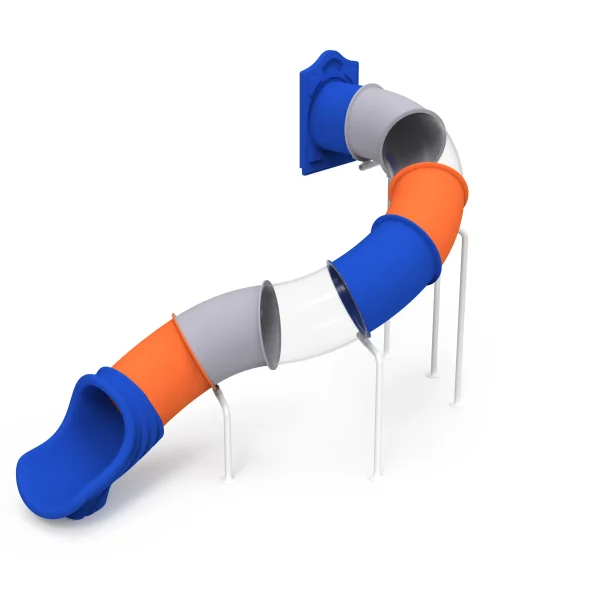
Material handling and storage. LLDPE rotational molding requires specific material storage conditions to prevent moisture absorption that causes surface defects. Steel fabrication areas should show organized workflow with clear separation between cutting, welding, and finishing stations. Disorganized material handling correlates with inconsistent quality and extended lead times.
Quality control integration. Look for in-process inspection points rather than end-of-line testing only. Manufacturers who catch defects during production rather than after assembly demonstrate mature quality management. Ask to see rejection records and rework procedures; manufacturers confident in their quality systems will share this information.
Customization capability. Kindergarten projects frequently require non-standard configurations. Assess whether the manufacturer maintains in-house design engineering or relies entirely on standard product modifications. The presence of 3D modeling capability and prototype fabrication equipment indicates genuine customization capacity rather than catalog-only offerings.
After-Sales Support Structure: The Overlooked Selection Criterion
The true cost of playground equipment extends far beyond the purchase price. Maintenance requirements, spare parts availability, and warranty responsiveness determine whether your investment delivers value over its expected service life.
Spare parts inventory and lead times. Before finalizing any manufacturer selection, request specific information about spare parts availability for the equipment you are considering. Springs, bearings, chain links, and seat components wear under normal use. A manufacturer who cannot supply replacement parts within two weeks creates operational disruptions that affect your program.
Warranty terms and coverage scope. Standard warranty periods range from one to five years, but coverage scope varies dramatically. Some warranties cover structural components only, excluding wear items and finish degradation. Others include on-site service for the first year, then shift to parts-only coverage. Understand exactly what the warranty covers, what it excludes, and what conditions void coverage.
Installation support options. Kindergarten administrators rarely have staff qualified for playground equipment installation. Evaluate whether the manufacturer provides installation teams, installation supervision, or detailed installation documentation with technical support access. Improper installation voids warranties and creates safety hazards that may not become apparent until equipment failure occurs.
Technical documentation quality. Request sample maintenance manuals and installation guides before purchase. Manufacturers who invest in clear, comprehensive documentation demonstrate commitment to long-term customer success rather than transaction completion.
If your kindergarten serves children across multiple age groups and you need equipment configurations that accommodate both toddler and pre-K developmental stages, it is worth discussing age-graded zoning options with your manufacturer before finalizing specifications. Send your site dimensions and age distribution to [email protected] and we can confirm which configurations match your space constraints.
Comparing Manufacturer Service Models: Full-Chain vs. Component Suppliers
The playground equipment industry includes manufacturers operating under fundamentally different service models. Understanding these differences prevents misaligned expectations and procurement complications.
Full-chain manufacturers handle design, production, installation, and after-sales support through integrated operations. This model offers single-point accountability, consistent quality standards across project phases, and simplified communication. When problems arise, responsibility is clear and resolution authority exists within one organization.
Component suppliers manufacture equipment but rely on third-party installers and independent service providers for field work. This model may offer lower initial pricing but distributes responsibility across multiple parties. Warranty claims become complicated when the manufacturer blames installation quality and the installer blames product defects.
| Service Model | Advantages | Risks |
|---|---|---|
| Full-chain manufacturer | Single accountability, integrated quality control, consistent communication | May have higher initial pricing |
| Component supplier | Potentially lower equipment cost, flexibility in installer selection | Divided responsibility, warranty complications, coordination burden on buyer |
For kindergarten projects, I consistently recommend full-chain manufacturers despite potentially higher initial costs. The coordination burden of managing separate equipment and installation vendors falls on administrators who already face demanding operational responsibilities. The risk of finger-pointing during warranty claims creates stress that exceeds any initial savings.
Equipment Selection Aligned with Kindergarten Developmental Goals
Manufacturer selection and equipment selection are interdependent decisions. The right manufacturer offers equipment configurations that serve your specific developmental and operational objectives.
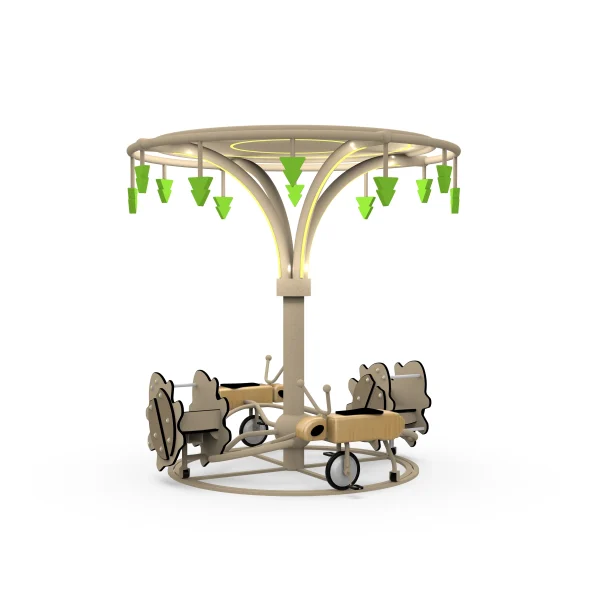
Age-appropriate challenge progression. Kindergartens serving children from age two through six need equipment that offers appropriate challenge levels across this developmental range. Single-player spinning equipment with maximum fall heights under 35cm serves younger children safely. Multi-player spinning wheels with 6 to 10 child capacity and fall heights up to 77cm provide appropriate challenge for older preschoolers while maintaining EN 1176 compliance.
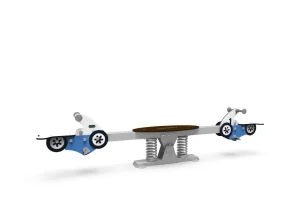
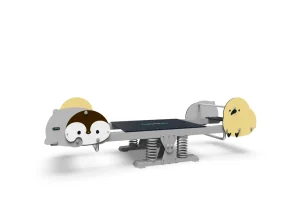
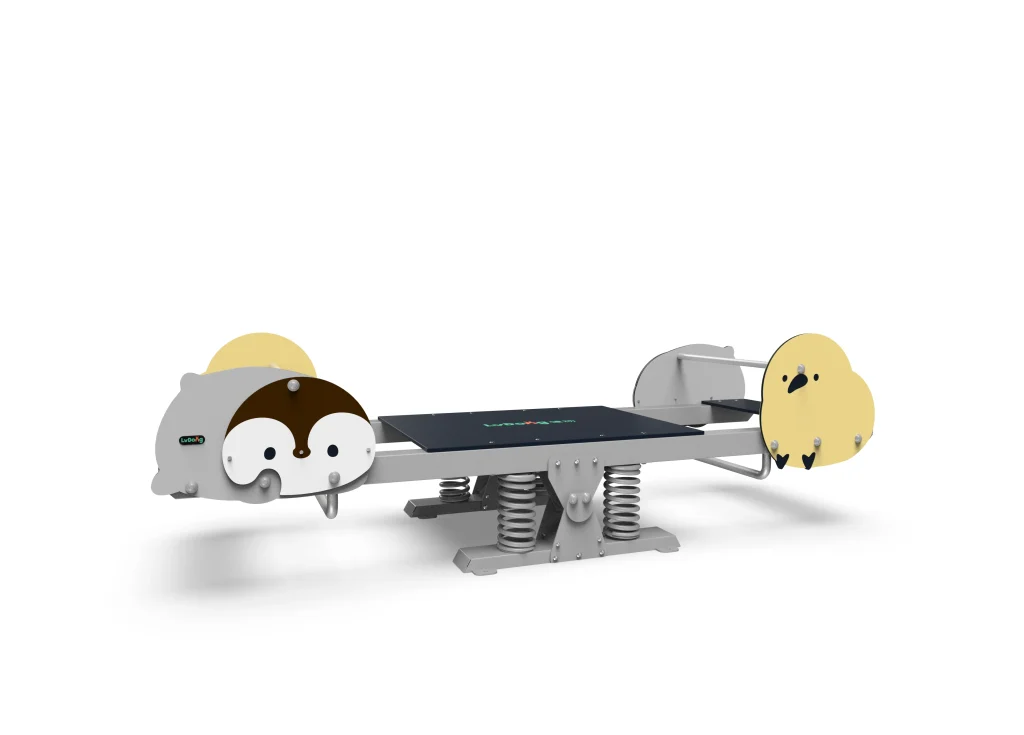
Social interaction support. Multi-person seesaws and spinning equipment support cooperative play development. Spring riders in single-seat configurations develop individual balance and coordination. Your equipment mix should reflect your program’s developmental priorities, and your manufacturer should understand how to configure combinations that serve those priorities.
Space efficiency. Kindergarten outdoor areas face competing demands from multiple program activities. Equipment footprints, required use zones, and circulation paths must fit within available space while maintaining safety clearances. Manufacturers experienced with kindergarten projects understand these constraints and can propose configurations that maximize play value within limited areas.
Questions Kindergartens Should Ask Every Playground Manufacturer
Before requesting formal quotations, gather information that reveals manufacturer capability and fit for your specific project.
Project experience questions:
– How many kindergarten playground projects have you completed in the past three years?
– Can you provide references from kindergarten administrators willing to discuss their experience?
– What age-specific modifications do you typically recommend for kindergarten installations?
Production and quality questions:
– What certifications apply specifically to the equipment categories I am considering?
– What is your current production lead time for orders of this scope?
– How do you handle quality issues discovered after delivery?
After-sales questions:
– What spare parts do you stock, and what are typical lead times for non-stocked items?
– Who provides warranty service, and what is the typical response time?
– What maintenance training or documentation do you provide?
Commercial questions:
– What payment terms do you offer?
– What is included in your quoted price, and what items are priced separately?
– How do you handle change orders after production begins?
The manufacturer’s willingness to answer these questions thoroughly, and the specificity of their answers, reveals more about their suitability than their marketing materials ever will.
Common Questions About Kindergarten Playground Manufacturer Selection
What certifications should kindergarten playground equipment have?
At minimum, equipment should comply with EN 1176 for international recognition or GB/T 34272-2017 for domestic Chinese installations. These standards address fall height limits, entrapment hazards, impact attenuation, and structural integrity specific to children’s playground equipment. ISO 9001 certification for the manufacturer’s quality management system indicates systematic production controls. For export projects or international schools, ASTM F1487 compliance may be required. Request certification documents directly and verify they apply to your specific equipment categories, not just the manufacturer’s general operations.
How can I verify a playground manufacturer’s quality before ordering?
Factory visits provide the most reliable verification. Observe material handling practices, in-process inspection points, and facility organization. Request references from completed kindergarten projects and contact those administrators directly. Ask for sample maintenance documentation and installation guides; documentation quality correlates with overall operational maturity. If factory visits are impractical, request detailed production photos and video of your specific equipment categories being manufactured. Manufacturers confident in their quality welcome this scrutiny.
What warranty terms are standard for kindergarten playground equipment?
Warranty periods typically range from one to five years, but coverage scope varies significantly. Structural component warranties often extend longer than finish or wear item coverage. Clarify whether warranty includes on-site service or parts-only replacement, what conditions void coverage, and who performs warranty repairs. The warranty’s practical value depends on the manufacturer’s spare parts inventory and service response capability. A five-year warranty means little if replacement parts require three-month lead times from overseas suppliers.
Should I choose a local manufacturer or import playground equipment?
The decision depends on your project timeline, budget constraints, and after-sales support requirements. Local manufacturers typically offer faster lead times, easier communication, and more accessible after-sales support. Imported equipment may offer different design aesthetics or specific certifications, but creates longer supply chains for spare parts and warranty service. For kindergartens, where equipment operates daily and maintenance response time matters, local or regional manufacturers with established service networks often provide better long-term value despite potentially higher initial costs.
How do I compare playground equipment quotes from different manufacturers?
Direct price comparison requires normalizing specifications across quotes. Verify that quoted equipment meets equivalent safety standards, uses comparable materials, and includes the same scope of delivery and installation services. Request itemized quotes that separate equipment cost, shipping, installation, and any site preparation requirements. Compare warranty terms and after-sales support commitments as part of total cost evaluation. The lowest equipment price often correlates with reduced service scope or shorter warranty coverage that increases long-term costs. If you have quotes from multiple manufacturers and need help understanding specification differences, share your comparison at [email protected] or call +8613915684545 and we can clarify what the technical differences mean for your specific installation.
If you’re interested, check out these related articles:
Outdoor Playground Set Layout Strategic Design for Optimal Play
Bike Spring Riders Realistic Design Safety Engineering
Playground Equipment Warranty Comparison 1 3 or 5 Years