Every school playground carries an unspoken promise: that children can explore, move, and laugh in an environment designed for their safety. For facility managers and procurement officers, selecting a school playground equipment supplier is more than a purchasing decision — it is a commitment to child wellbeing. Yet with so many suppliers promising compliance and quality, drawing the line between a trustworthy partner and a superficial vendor takes careful, hands‑on evaluation. Drawing from over a decade of designing and delivering unpowered playground equipment for schools, I want to share the specific checks that matter — beyond the standard price quotes and glossy brochures.
Define Your School’s Playground Needs and Safety Requirements
Before comparing suppliers, the school’s own requirements must be clear. Start with the basics: the age range of the children, the available outdoor space including fall zones, and the play activities the playground should support. A kindergarten needs low‑height, exploratory equipment such as spring riders and small slides, while a primary school benefits from more complex climbing structures, swings, and interactive panels. The layout must respect the school’s daily routines and emergency access paths, and every piece of equipment must sit on a surface that meets impact attenuation standards. Documenting these needs in writing — with rough dimensions and a list of desired equipment types — gives you a solid foundation for supplier discussions and prevents being steered toward what a supplier has in stock rather than what your students actually need.
Audit the Supplier’s Safety Certifications and Testing Procedures
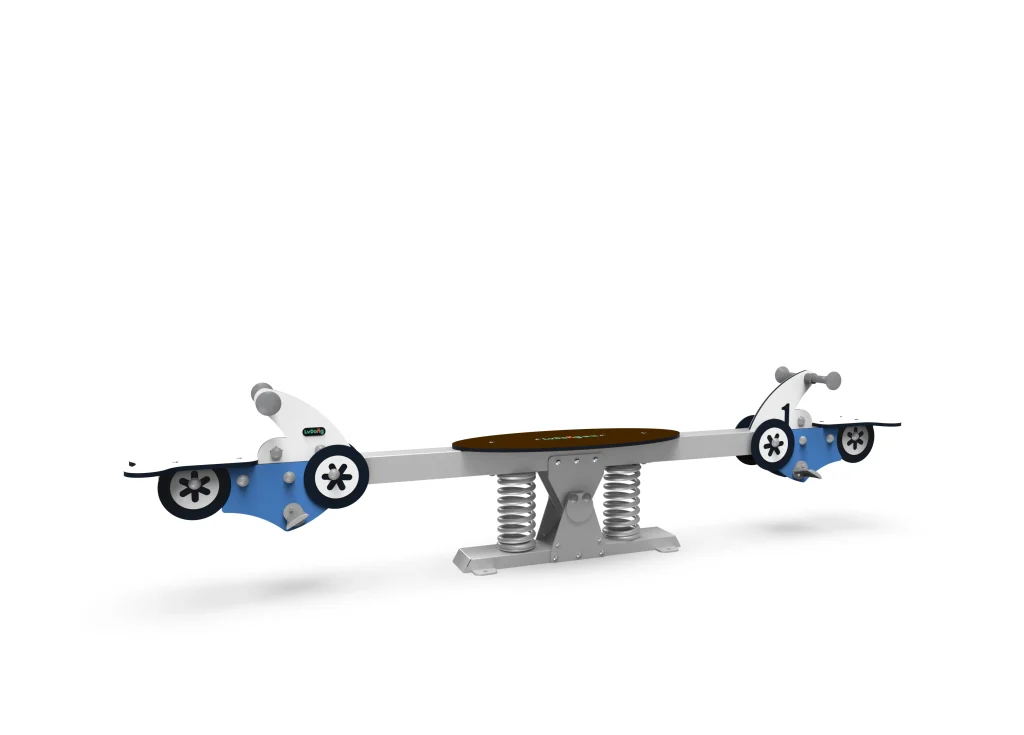
Safety certifications are the baseline, not the differentiator. A school playground equipment supplier should hold current certificates such as EN 1176 or ASTM F1487, but the real question is what backs those certificates. Ask for third‑party test reports from a recognized laboratory, not just a declaration of conformity. These reports should detail the specific tests performed — static load, dynamic load, entrapment, and fall height — on the exact models you are considering. For example, a multi‑person seesaw 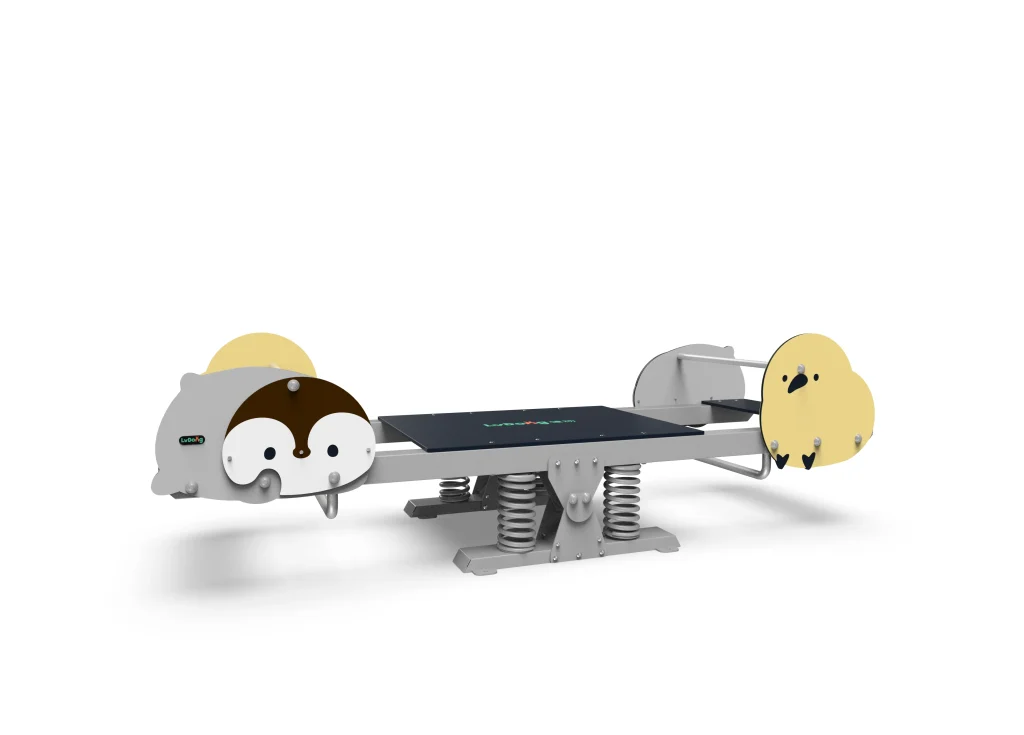 should have documented test values for its spring mechanism and seat capacity. In our own quality management system, we maintain a complete test archive for every batch, because a certificate without the corresponding test data tells you very little about the equipment that will actually arrive at your school. During factory visits, watch how the supplier handles non‑conformities: a transparent corrective‑action process is far more revealing than a wall of framed certificates.
Assess Equipment Design and Manufacturing Quality
Design quality becomes visible in the details. Look at the materials: structural steel posts should carry a specified wall thickness and anti‑corrosion treatment suited to your climate. Rotational molded plastic components, such as slides and panels, need UV‑stabilized formulation — otherwise they fade and become brittle within a few seasons. For example, a curved playground slide 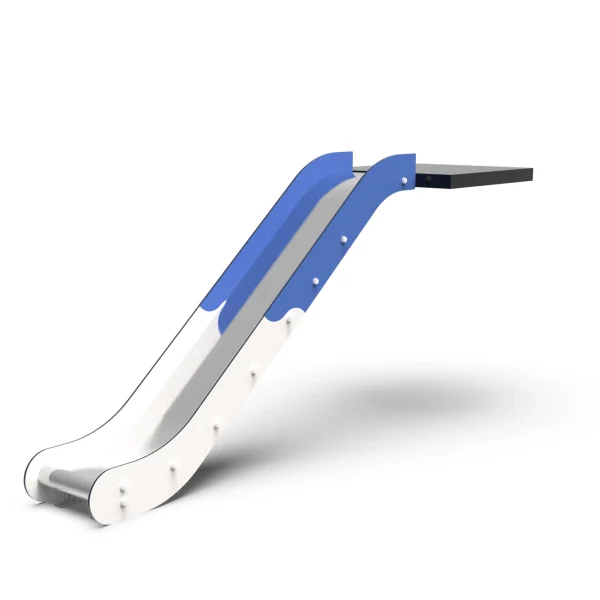 exposed to direct sun must retain its color and structural integrity for years. Beyond materials, examine how joints are designed to avoid finger traps, whether fasteners are recessed or capped, and whether moving parts like bearings can be serviced without dismantling the entire structure. A supplier whose design team asks detailed questions about your site conditions and age grouping — rather than simply forwarding a catalog — is one that thinks beyond the sale.
Evaluate After‑Sales Support and Warranty Terms
Schools operate on long timelines, often using the same playground for a decade or more. After‑sales support therefore matters as much as the initial product. A meaningful warranty should name a clear period — typically three to five years for structural components — and spell out what is covered, including paint, plastic parts, and moving elements. Ask about spare‑parts availability: a supplier that keeps a stock of commonly replaced items like swing bearings and spring elements can save your school from extended downtime. In our own after‑sales practice, we maintain a parts inventory for every project we deliver, because a broken swing seat in a school playground is a safety concern that cannot wait weeks. Clarify whether on‑site service or remote guidance is offered for installation and subsequent maintenance checks.
Compare Project Delivery Capability and Client References
A supplier’s capacity to deliver a complete project — from design through installation — needs concrete verification. Request a timeline that maps each stage: design approval, production, quality inspection, packaging, shipping, and on‑site installation supervision. Confirm the supplier’s production facility size and whether they fabricate core structures in‑house or outsource; in‑house control of steel welding, plastic molding, and finishing typically leads to better oversight. Then, speak with references. When contacting other schools that have worked with the supplier, ask about hidden costs, whether the equipment held up after two or three years of heavy use, and how the supplier responded when something went wrong. A strong reference list with recent school projects is a quiet but powerful signal of reliability.
Make the Final Supplier Selection and Plan Installation
At this stage, bring together everything you have gathered: the site‑specific proposal, the test reports, the warranty terms, and the reference feedback. Price remains a factor, but it should be weighed against the long‑term cost implications of material quality and after‑sales reliability. Once a school playground equipment supplier is selected, work with their technical team on a detailed installation plan that includes ground preparation, foundation sizing, and a post‑installation inspection checklist. The supplier should provide assembly drawings and on‑site supervision; a final handover report that documents all equipment serial numbers, test certificates, and maintenance schedules will be invaluable for your school’s annual safety audits.
Ensuring Your Playground Serves Children for Years
Choosing a school playground equipment supplier is a decision shaped by careful verification rather than optimistic assumptions. When a supplier’s safety documentation, design process, and after‑sales commitment all align, the result is a playground that supports active, imaginative play and stands up to daily use year after year. If your school is currently planning a playground project and you would like a design conversation grounded in your specific space and age group, we are happy to help. Send your site dimensions, age range, and preferred play activities to [email protected] or reach us on WhatsApp at +8613915684545, and we will prepare a preliminary layout and a transparent quotation with the supporting compliance documentation you need to make an informed choice.
Common Questions About Selecting a Playground Equipment Supplier
What certifications should a school playground equipment supplier absolutely have?
A supplier must hold product certificates aligned with the destination country’s standards — EN 1176 for Europe, ASTM F1487 for North America, or GB/T 34272‑2017 for China. However, the certificate alone is insufficient. Request the underlying test reports that detail the specific loads and entrapment checks performed on the equipment model you are buying. These reports confirm that the certificate is backed by actual testing, not just a paperwork exercise.
How can I tell if the materials will hold up in our local climate?
Ask for material specifications and weathering test data. Steel components should be hot‑dip galvanized or powder‑coated after fabrication, and plastic parts should carry UV‑stabilization documentation. In programs we’ve supported, schools in high‑humidity coastal areas have often benefited from specifying 304 stainless steel for fasteners and hardware to avoid rust streaks. If the supplier hesitates to share material datasheets, that hesitation is worth noting.
What is a realistic timeline from order to installation?
Expect a full project cycle of four to eight weeks for standard equipment, depending on customization and production queue. Custom designs with new molds add several weeks. Shipping time depends on distance and freight method — sea freight to remote regions can take four to six weeks extra. A reliable supplier provides a clear schedule with milestones and notifies you immediately if any delay occurs.
Does the supplier need to visit our school site?
A physical site visit is ideal but not always practical for international projects. In its place, the supplier should request detailed site photos, measurements, and soil information, and produce a CAD layout showing fall zones and clearances. In our experience, we have successfully completed school projects across multiple countries by working from thorough site data, with on‑site installation supervision provided remotely or through a local partner. If your school’s terrain is irregular or drainage is a concern, ask the supplier how they will address those specific conditions in the layout plan. Share your requirements and we’ll confirm how we can adapt the design for your site.
If you’re interested, check out these related articles:
Playset Ground Leveling and Drainage Solutions for Outdoor Slides
Buyers Guide to Spinning Playground Equipment in 2025
Key Contract Clauses for Commercial Playground Equipment Purchase