Container loading is where freight cost, damage risk, and installation readiness all converge. A 40HQ high-cube container offers enough room for dense slide-set packing, but only when each set is broken into its logical modules and sequenced for weight, access, and protection. This guide walks through the loading plan Suzhou LvDong Amusement Equipment Co., Ltd. uses to prepare 15 mid-size slide sets for a single 40HQ shipment.
Why Container Loading Changes the Playground Import Equation
Playground slides are bulky before they are heavy. A tunnel section, a curved bed, a platform with guardrails, and a set of steel posts can occupy far more volume than their actual weight suggests. When buyers ship loose or partially assembled components, the result is unused air space, higher freight per set, and more surfaces that can rub, flex, or snap during ocean transit.
For public playground projects, damage is not only a repair cost. A cracked tunnel section or a bent platform frame can delay the entire installation and force a replacement part to travel by air or a separate courier. That is why container loading optimization for slide sets is treated as part of the product specification, not as an afterthought.
What a 40HQ Actually Holds
The 40HQ, or 40-foot high-cube container, is defined by its internal space rather than by the description on the booking confirmation. The key reference dimensions are listed below [1].
| 40HQ reference point | Typical value |
|---|---|
| Internal length | 12.03 m |
| Internal width | 2.35 m |
| Internal height | 2.69 m |
| Usable payload | Approximately 26,500 kg |
That internal space is large enough to fit a dense slide-set cargo, but it is not infinite. Packaging depth, blocking material, and the need to leave an inspection corridor all consume volume. A practical loading plan therefore starts with the packaged envelope of each slide set, not with the assembled playground image.
How Lvdong Breaks Down a Slide Set for Dense Packing
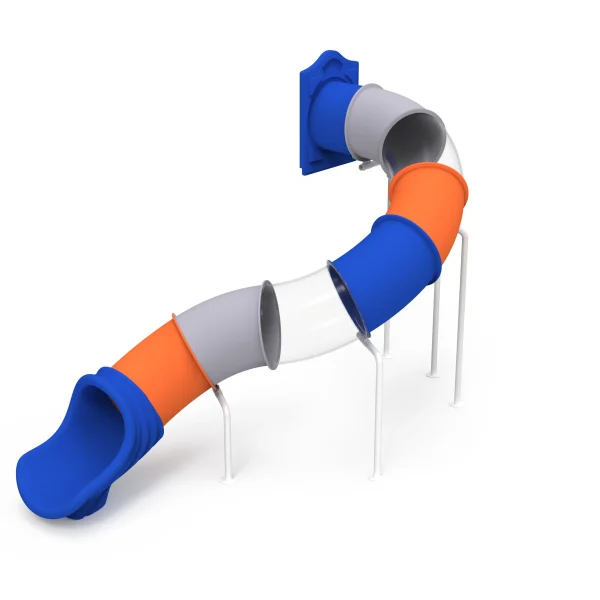
The first decision in container optimization is to stop shipping a slide as one object. Lvdong splits each set into three main groups: the platform and support frame, the slide bed or tunnel sections, and the fasteners and small connection parts.
Platforms and frames are strapped as flat, stackable units. Slide beds are separated by type and nested wherever the curve allows. Tunnel sections receive internal bracing so they do not deform under stack pressure. Small parts are sealed in labeled steel mesh or corrugated cartons and placed where customs inspection can reach them without dismantling the main load.
Each set is marked with a unique shipment code, a part count, and a weight label. This makes the destination warehouse able to stage one complete set at a time instead of sorting mixed components from every set simultaneously.
The 15-Set Loading Sequence
Lvdong’s 15-set plan follows a simple sequence: heavy material low and forward, long flat pieces against the walls, fragile tunnel sections in the protected center, and inspection-sensitive cartons near the door.
The platform frames are loaded first because they are the heaviest and least crush-sensitive. Long slide bed sections are then stood vertically along the container walls, separated by corrugated board or foam. Curved sections are nested in matched pairs to reduce empty pockets. Tunnel sections are placed in the remaining central channel with plywood dunnage at the base and side blocks to prevent lateral movement.
At the door end, Lvdong leaves a narrow inspection corridor and places the small-parts cartons and packing list there. This supports customs examination and lets the receiver verify part counts before the full container is unpacked.
Damage Prevention: Blocking, Bracing, and Moisture Control
The loading plan is only part of the protection system. A slide set can be placed perfectly and still arrive with corrosion, condensation staining, or friction wear if the container environment is ignored.
Lvdong uses vapor-phase corrosion inhibitor bags around steel connection parts, desiccant packs inside enclosed boxes, and breathable film coverings that prevent direct contact between coated surfaces. The goal is to avoid trapped moisture and galvanic contact between different metals.
Blocking follows the principles in the IMO/ILO/UNECE CTU Code for packing cargo transport units [2]. Load-bearing lashings are positioned to resist forward movement during vessel acceleration and braking. Wood dunnage is used to distribute pressure across the widest available contact surface.
The same structural logic that protects a tunnel slide in transit also affects how it performs after assembly. <Advanced Tunnel Slide Support Structure and Ventilation Design> covers support spacing, connection points, and ventilation details worth confirming before delivery.
After unpacking, every slide set should be checked against the original order and the safety test report before installation begins. A pre-delivery packing checklist reduces the chance that a transit issue becomes an undiscovered safety issue on site [3].
Cost and Freight Impact: Why 15 Sets Per 40HQ Matters
When a buyer orders enough slide sets to fill a high-cube container, the freight cost is distributed across more saleable units. The per-set freight amount drops because the same vessel slot, terminal handling charge, and documentation set are shared more broadly.
This also changes the procurement discussion. A buyer who can state a clear carton count, gross weight, and packed volume before quoting is in a stronger position to compare landed cost rather than ex-works price. Volume rebates, production scheduling, and freight consolidation all become easier when the supplier has a repeatable container plan.
A poorly loaded container erases the savings you assumed from a lower unit price. <Playground Equipment Quotes Spotting Hidden Costs Explained> covers the line items that reveal packing, crating, and port-side charges before you sign.
Once you know the carton count and stacking plan, freight and unit cost become negotiable in a different way. <Negotiating Bulk Playground Equipment Orders Expert Strategies> covers how buyers turn volume and repeat shipments into concrete concessions.
For smaller buyers who cannot fill a 40HQ immediately, mixed loading with swings, spring riders, or activity panels is common. The same packing logic applies: heavy frames low, flat panels vertical, and fragile or inspection-sensitive items accessible at the door.
Pre-Shipment Inspection and Documentation
Before the container is sealed, Lvdong records the load with staged photographs and marks each section on the packing list. The documentation includes the container number, seal number, itemized carton count, total gross weight, and an internal loading diagram.
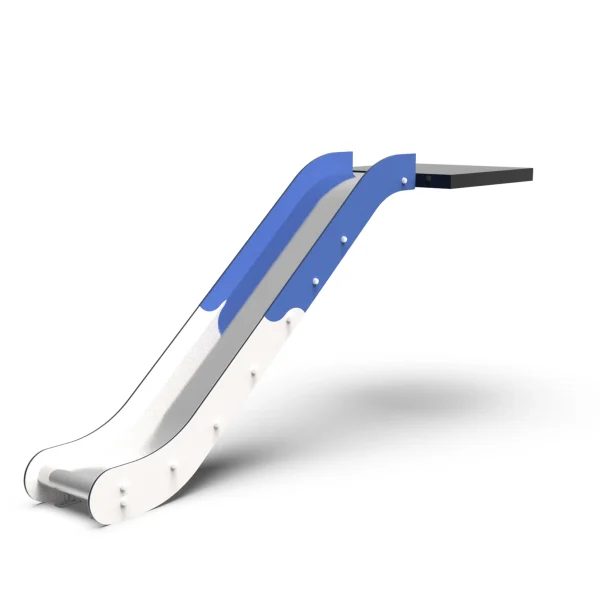
Buyers should request that the loading diagram show the position of each set code. This simple record saves hours later when the destination team needs to find one set among fifteen without unpacking the entire container.
Container Loading Review for Your Order
A container plan is most useful when it is prepared before production is finalized. If you are evaluating slide sets for a 40HQ or mixed playground shipment, request a loading simulation based on the exact models and quantities. This catches conflicts between tunnel slide length, platform width, and container door clearance before production begins.
For direct assistance with a loading plan, order-specific packing, or landed-cost calculation, contact [email protected] or WhatsApp +8613915684545.
Plan a Shipment That Arrives Ready to Install
A full container should not be the point where playground quality becomes a risk. With sequenced packing, blocked and braced modules, and clear set-by-set documentation, the same 40HQ that carries 15 slide sets can also carry the confidence that each set will arrive complete, dry, and ready for certified installation.
For a loading simulation, container utilization review, or a detailed quotation, contact Suzhou LvDong Amusement Equipment Co., Ltd.:
- Email: [email protected]
- WhatsApp: +8613915684545
- Include: product models, quantities, port of destination, and any site delivery restrictions.
Frequently Asked Questions
Does a 40HQ always fit 15 slide sets?
Not necessarily. Fifteen mid-size slide sets is a planning target for the modular packing method described in this guide. Larger platforms, longer tunnel segments, custom themes, or extra packaging requirements can reduce the count. Lvdong confirms the final number only after reviewing the production drawings and packaged dimensions.
What packaging should I confirm before ordering ocean freight?
Confirm that platform frames are stackable, curved slide beds are nested, tunnel sections are internally braced, and small parts are packed in labeled, accessible cartons. For steel parts, request corrosion-protection film or VCI bags. For coated surfaces, specify separation material that prevents face-to-face rubbing.
How do you stop moisture from damaging slides inside the container?
Moisture damage is controlled by reducing trapped humidity and preventing direct contact between wet air and vulnerable surfaces. Lvdong uses desiccant packs in enclosed boxes, corrosion-inhibiting film on steel parts, and breathable separation materials. The loading sequence also leaves air paths that reduce condensation pooling.
Can Lvdong mix slides with swings, spinners, or spring riders in one container?
Yes. Mixed containers are common for playground projects. The same rules apply: heavy bases and frames at the bottom, long flat parts against the container walls, small parts accessible near the door, and fragile components protected in the center. The exact layout changes with the product mix.
What documents should I receive before the container is sealed?
Request a packing list with item-level set codes, a loading diagram, staged photographs, the container and seal number, and the gross weight certificate. These documents help with customs clearance and make destination unloading faster and less likely to damage parts.
Does container optimization affect product warranty?
It should not. The purpose of the loading plan is to protect the product within the agreed transit conditions. If damage occurs despite correct packing and documentation, the normal warranty review process begins with photos, the seal number, and the location of the affected component inside the load.
References
[1] ISO 668:2020, Series 1 freight containers — Classification, dimensions and ratings, International Organization for Standardization.
[2] IMO/ILO/UNECE, Code of Practice for Packing of Cargo Transport Units (CTU Code), 2014.
[3] EN 1176-1:2017, Playground equipment and surfacing — Part 1: General safety requirements and test methods, European Committee for Standardization.
If you’re interested, check out these related articles:
Large Playground Slide Transport and Crane Planning
Essential Checklist for Playground Equipment Safety Test Reports