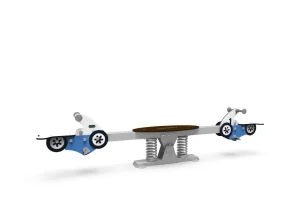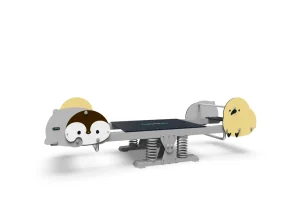
Refugee camp playgrounds fail when they are specified like equipment for a shaded municipal park. In displacement settings, the priorities are dust, extreme temperature swings, heavy daily use, and maintenance teams with almost no spare capacity. I have reviewed enough camp installations to know that the real selection work is filtering out components that look acceptable in a catalog but cannot survive the site. The right approach is not to add more equipment; it is to choose fewer, tougher systems and anchor them for the ground conditions actually present. This article covers material selection, low maintenance design, foundation choices, spare planning, and the procurement checks that keep playground equipment in service rather than turning it into another repair backlog.
Refugee Camp Playground Equipment Starts With the Right Material Strategy
Dust, strong sun, and rough handling punish playground surfaces faster than normal use. In our design reviews, we start by eliminating materials that require frequent repainting or replacement after the first relocation cycle. Powder coated carbon steel frame looks clean in a product photo, but chips on the first truck transfer or sandstorm, and then rust starts at the exposed edges. For camp environments, I prefer hot dip galvanized steel for structural frames, stainless steel for fasteners and high wear joints, and rotational molded LLDPE for seats, panels, and slide bodies. This combination costs more than a basic powder coated package, but it avoids repeated maintenance visits that aid budgets cannot absorb.
| Material | Harsh condition behavior | Maintenance consequence |
|---|---|---|
| 304 stainless steel | Corrosion resistance is strong in salty, humid, and frequently washed areas | Initial cost is higher; repainting is rarely needed |
| Hot dip galvanized steel | Zinc coating protects edges and scratches if cut ends are touched up | Periodic inspection and touch up at wear points is enough |
| Rotational molded LLDPE | UV stabilized color resists sun fading, moisture, and impact | Wash with mild detergent; replace panel only if cracked |
| Powder coated carbon steel | Coating chips under impact and sand abrasion, then hidden corrosion starts | Sanding and recoating cycles become frequent in windy sites |
| Treated timber | Absorbs moisture and dust, splinters quickly under heavy use | Requires sealing and frequent replacement, not recommended for camps |
Above all, UV exposure in desert and high altitude camp locations breaks down cheap plastics within two seasons. The faded color is not the real problem; the material becomes brittle and can crack around bolted joints.
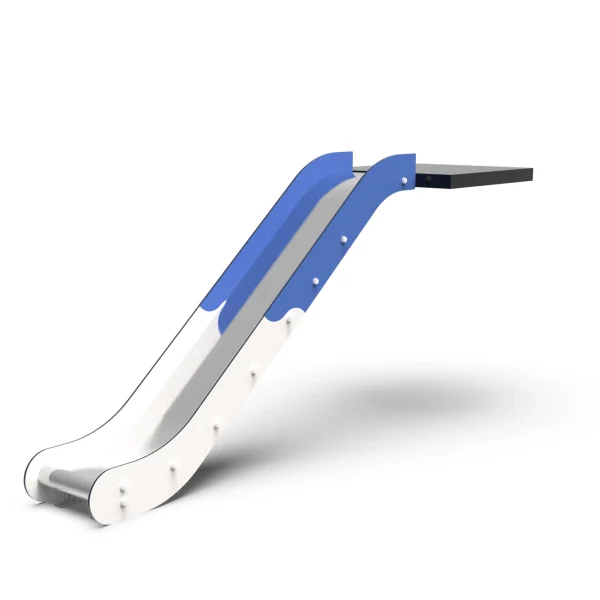
Above all, UV exposure in desert and high altitude camp locations breaks down cheap plastics within two seasons. <UV Resistance Testing Protecting Outdoor Playground Spring Riders covers how accelerated aging cycles separate stabilizer rich rotational molded compounds from recycled blends that chalk and crack after one season.
Why hot dip galvanized steel is the safer baseline in aid settings
Hot dip galvanizing goes into the steel rather than sitting on top of it. If a camp crew drags a slide a few meters or a sandstorm hits the frame, the zinc layer takes the damage. Powder coating is a separate skin; once breached, moisture works along the steel and lifts the coating from the edge. In coastal or high humidity camps, we specify galvanized frames with stainless steel fasteners as the baseline.
When rotational molded LLDPE earns its place
Rotational molded LLDPE is not a cheaper version of steel. We use it where the shape needs to hold dirt, heat, and impact without paint. Slide bedways, seat shells, and panels made from this material stay warmer than metal under direct sun but do not burn the same way dark coated steel can. The important check is that the compound includes an adequate UV stabilizer package, not simply that the color looks bright in the sample.
Low Maintenance Playground Design Removes Wear Points Before Installation
Maintenance hours are the scarcest resource in a refugee camp. A piece of equipment that works without grease fittings, exposed springs, and complicated linkages has a better chance of staying in use. When I evaluate a design for a humanitarian site, I look for coated chains, sealed bearings, and pivot points that do not need daily attention. This is not about making equipment boring; it is about protecting the play value from being shut down by a missing bolt or a worn bearing no one has time to replace.
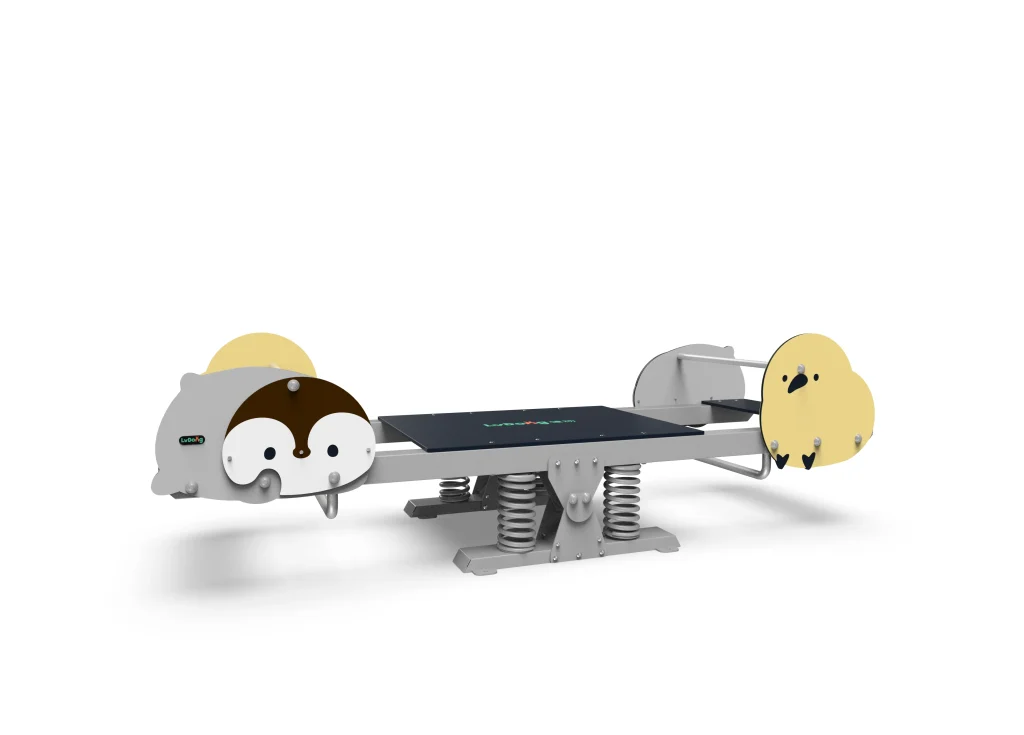
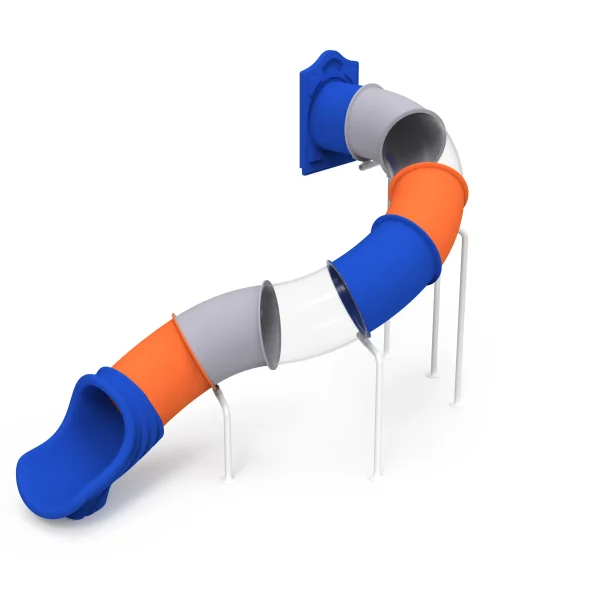
Single piece rotational molded slide sections reduce leakage and seam failure, but they must be carried by a structure that does not flex under heavy daily use. Spring riders can work well for young children in camps, but the spring must be high strength steel with a stable zinc finish, and the base must resist loosening. Where possible, we recommend equipment with fewer individual parts: multi user spinners, low height seesaws, and compact slide structures that do not depend on electronic panels or moving water.
The same logic applies to swing frames, where the first failure point is rarely the main tube. <Swing Set Components Advanced Material Selection for Durability covers why chain alloy, bearing seals, and connection detailing matter more than frame thickness on sites with high daily use and limited maintenance access.
Foundations and Anchoring Must Match Temporary and Hard Ground Conditions
Foundation failures in camps usually show up as tilted equipment, exposed anchors, or structures that loosen within months. Two factors drive the decision: whether the playground is temporary or semipermanent, and whether the ground is sand, rock, packed earth, or an existing concrete slab. For temporary layouts, surface mounted ground anchors or ballasted frames may be the only workable option because the camp may relocate. For semipermanent installations, concrete footings at the correct depth prevent movement but require site access for mixing and curing.
The most common mistake I see is taking a standard park anchor drawing and using it on loose sand or rocky soil without checking bearing capacity. In loose sand, a small concrete plug can rotate under repeated dynamic load. In rocky ground, excavating to full depth may be slow and damage the site. We usually request soil photos or a simple bore log before recommending an anchor system. That single step reduces the chance that a slide tower needs re leveling after the first heavy rain.
What to specify for sand, rock, and concrete pads
Sand sites need wider pads or helical anchors. Rocky sites may need shallower excavations with chemical or mechanical anchoring depending on rock integrity. Existing concrete pads can accept drilled anchors if the slab thickness and rebar layout are known, but guessing invites cracked edges. We also check drainage: water pooling under steel posts accelerates corrosion even on galvanized frames.
Foundation planning is only part of the site layout decision. <Outdoor Playground Set Layout Strategic Design for Optimal Play covers how fall zones, circulation, and drainage fit together in constrained sites, and why equipment placement changes long term maintenance patterns.
If your site includes loose sand, rocky ground, or an existing concrete pad with unknown rebar spacing, it is worth confirming the foundation detail before finalizing the equipment list. Send a few site photos and the expected relocation interval to [email protected], and we will check whether surface anchors, helicals, or concrete footings fit the site.
Maintenance and Spares Should Fit the Camp Staffing Reality
A maintenance plan that assumes daily greasing, monthly torque checks, and a trained playground inspector will not survive contact with a camp operation. The question we ask is not what ideal maintenance looks like, but what a site manager can actually do with existing personnel. We document a five minute weekly visual check: look for loose anchors, cracked seats, exposed threads, and blocked slide exits. The monthly check adds hand tool tightening and surface inspection. More detailed checks can wait for quarterly or semi annual visits from a supplier or partner.
Spare parts need to be in the container, not in a catalog. For each project, I recommend shipping replacement chains, fasteners, spring covers, bearing units, and a small color matched touch up kit. The exact list depends on the equipment mix, but if a camp cannot hold at least the parts most likely to wear, a single missing component can idle a piece of equipment for months. That is often worse than not installing it at all.
Why spring riders and seesaws need different maintenance attention
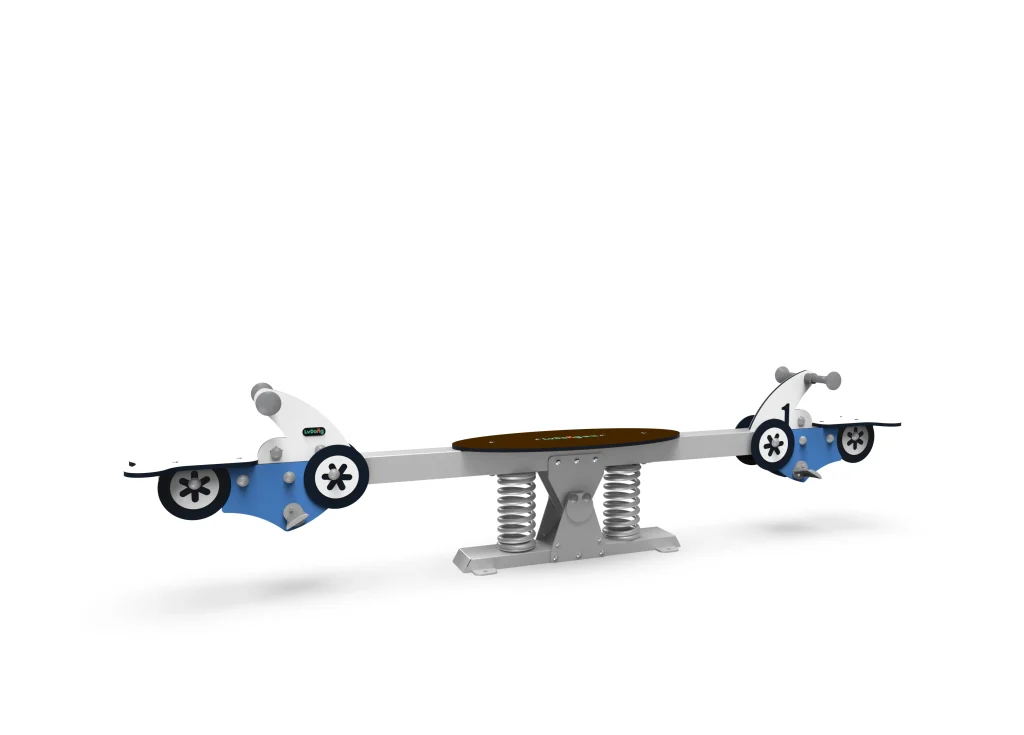
Spring riders in camps are often ignored until a spring snaps or a handrip comes loose. We specify high strength spring steel and dome covers over the spring connection so dust and sand do not accumulate in the coil. Seesaws need pivot inspection because lifting one side unevenly wears bushings. Both should be anchored so that rocking does not open the concrete edge over time.
Confirming the Specification Before You Commit to a Supplier
Ordering from a catalog without confirming the site conditions and the installation path is the main reason refugee camp playground equipment fails early. We ask buyers to send three things early: site photos showing ground and drainage, the planned user age range, and the intended duration of the installation. From those inputs, we recommend materials, anchors, and a layout that matches the camp maintenance capacity. This process takes less time than most buyers expect and prevents expensive assumptions.
We manage design, production, installation, and after sales service directly, with more than 1,500 installations completed across parks, communities, schools, and public facilities. For camp projects, the same quality system applies, but the specification has to start from the site rather than from a standard product page. Send the camp location, surface condition, user age range, and preferred delivery window to [email protected] or WhatsApp +8613915684545. We will return a material and anchor recommendation with a reference layout, and we will not pad the bill with maintenance heavy extras that the camp cannot maintain.
What Aid Agencies Ask About Refugee Camp Play Equipment
How long does equipment last in a refugee camp?
Most well specified steel and rotational molded systems can remain serviceable for more than ten years, but the useful life depends on anchors and maintenance. In a camp context, we design for relocation cycles and rough handling rather than for a static urban park. The first three years will show whether anchors were sized for the soil and whether moving parts were sealed correctly. Replace consumed wear parts on schedule and the structure itself can outlive the installation window.
Is plastic or steel better for desert camp sites?
A common assumption is that plastic always fails in the sun. That is true for cheap recycled blends, not for rotational molded LLDPE with a proper UV stabilizer package. Desert sites shift the decision toward light colored plastic or metal with heat reflection. Dark coated steel gets hot and can burn, while bare metal slides can also become too hot. We usually specify light colors and shade structures for seats and touch surfaces.
Can the playground be moved when the camp relocates?
It depends on the foundation. Surface mounted frames with ballast can move more easily, but they may need re leveling after transport. Concrete footings are better for semipermanent sites, but they are harder to relocate. If the camp has a realistic relocation window, we recommend semipermanent anchors at main structures and surface anchors for lighter riders, so the playground can be dismantled without cutting too many foundations.
What documentation is available for donor and compliance review?
In the documentation packages we prepare for donor funded projects, we include EN 1176 and GB/T 34272 certificate references, material data sheets, installation drawings, and a simplified inspection log. Buyers sometimes ask for third party testing or factory audit documentation. We can arrange documentation for SGS or TUV Rheinland review before shipment, and we keep the design records for future spare part matching. Share your donor compliance list and we will confirm documentation availability.
If you’re interested, check out these related articles:
Eco Friendly Playground Equipment SGS REACH RoHS Standards Explained
Slide Platform Height and Exit Safety Guidelines for Playgrounds
Mastering Age Inclusive Outdoor Play Equipment Solutions