For military family housing, playground equipment has to do more than meet safety standards. It has to survive a relocation cycle that many commercial products never see: disassembly, transport, reassembly, and recertification every three years or less. Relocatable playground equipment for military housing needs modular connections, surface-friendly anchoring, and materials that keep structural integrity after repeated moves. In my experience coordinating playground design and production, the difference between equipment that lasts one relocation and equipment that lasts the housing cycle comes down to a few specification choices made before purchase.
The Problem With Fixed Foundations on Military Housing Playgrounds
Most commercial playground equipment is designed for permanent installation. Posts are set in concrete footings that stay buried for 10 to 20 years. On a military housing site, that approach creates a hidden cost at the next relocation cycle. Removing cast-in-place footings usually means breaking concrete, hauling debris, restoring the ground, and then paying for new footings at the next base. It also limits where the equipment can go, because every new layout depends on fresh excavation.
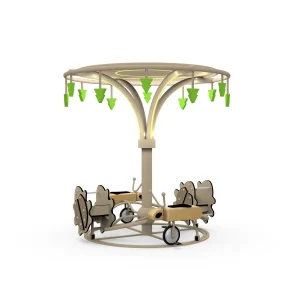
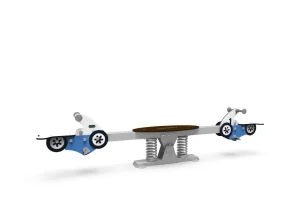
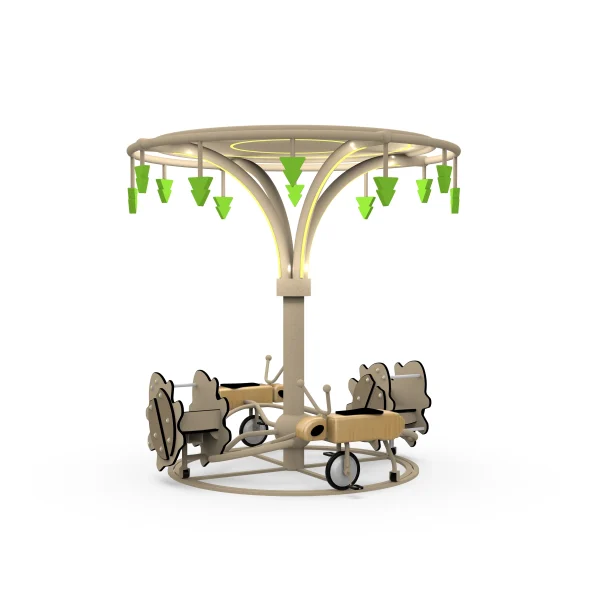
Equipment with low fall heights and stable base plates avoids much of this work. Our multi-player spinners have maximum falling heights from 55 to 77 cm, and spring riders stay around 50 cm. Lower fall heights reduce the surfacing depth required under EN 1176, which makes relocation simpler even when the new site has not been fully prepared.
Materials That Hold Up Across Multiple Relocations
Relocation exposes weak points that permanent installations never face. Bolted joints are loosened and retightened, panels are lifted and shifted, and surfaces rub against transport strapping. Galvanized steel frames with stainless steel fasteners handle this better than plain carbon steel, especially on bases near coastlines where salt air accelerates corrosion. UV-stabilized plastics matter for the same reason: a component that becomes brittle after three years of sun will crack during the next disassembly. We specify wear-resistant materials for outdoor sun and rain exposure precisely because relocated equipment spends extra time in storage yards and on flatbed trucks, often without shade.
UV resistance is not only about keeping colors bright. A spring rider body that fades is usually starting to lose impact strength, and that weakness appears first at bolt holes and grip points during reassembly. <UV Resistance Testing Protecting Outdoor Playground Spring Riders> covers how accelerated UV aging tests identify plastic formulations that survive years of exposure without cracking.
On bases where equipment may be stored outside between assignments, this extra material discipline reduces the chance that a ride is out of service when housing turns over.
Anchoring Systems Designed for Removal and Reuse
Anchoring is the first point of conflict on a relocation project. Permanent concrete footings are difficult to reuse, while some surface-mounted systems can be unbolted, moved, and reinstalled with hand tools. The right choice depends on the site surface. Grass and compacted soil can accept galvanized ground spikes as long as the subsoil is stable. Paved areas often require surface plates or ballast weights that do not penetrate the pavement. The same equipment model can serve both conditions if the base plate and anchor kit are specified up front.
| Anchor type | Best for | Relocation impact | Notes for military housing |
|---|---|---|---|
| Concrete footing | Permanent sites | High removal cost | Avoid unless the site will remain unchanged for the equipment life |
| Ground spike | Grass or soil | Low removal cost | Reusable if spaced and torqued correctly after each move |
| Surface plate | Paving or hardscape | Moderate | Requires non-slip underlay and regular torque checks |
| Ballast or weighted base | Rooftop or paved areas | Low | Adds weight and may need crane handling; check wind load |
If your site mix includes both paved and unpaved areas or your installation team changes between relocations, it is worth confirming the anchor kit and fall zone surfacing before finalizing the order. Email [email protected] with your site drawings and we will match the anchoring system to your next relocation.
Modular Equipment Layouts That Reduce Installation Time
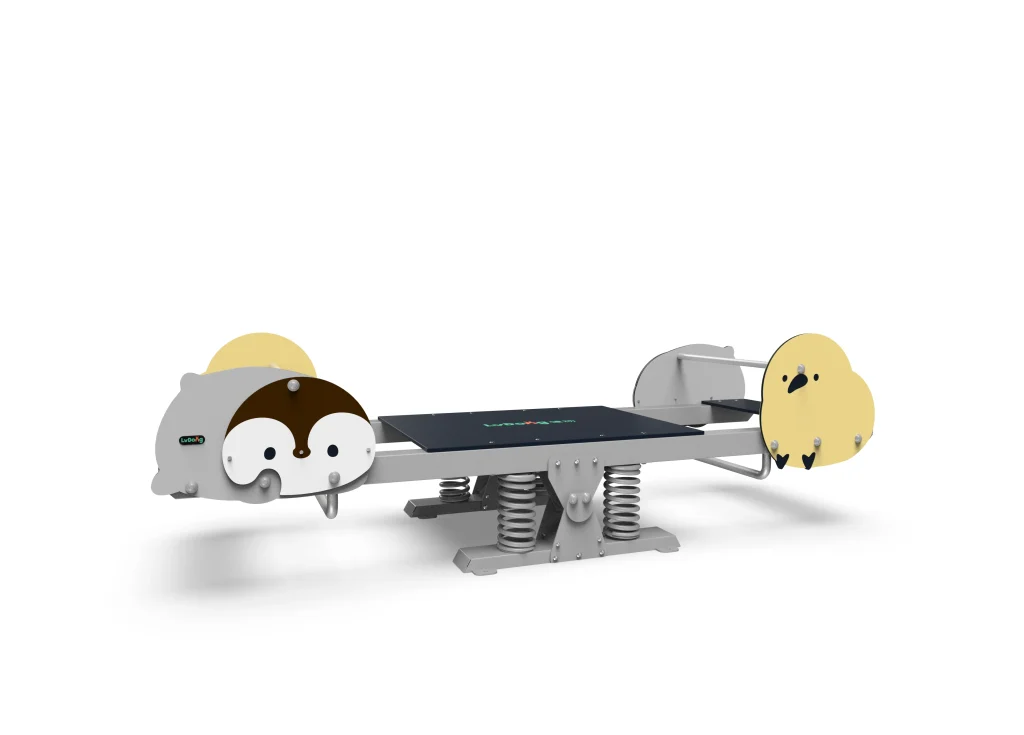
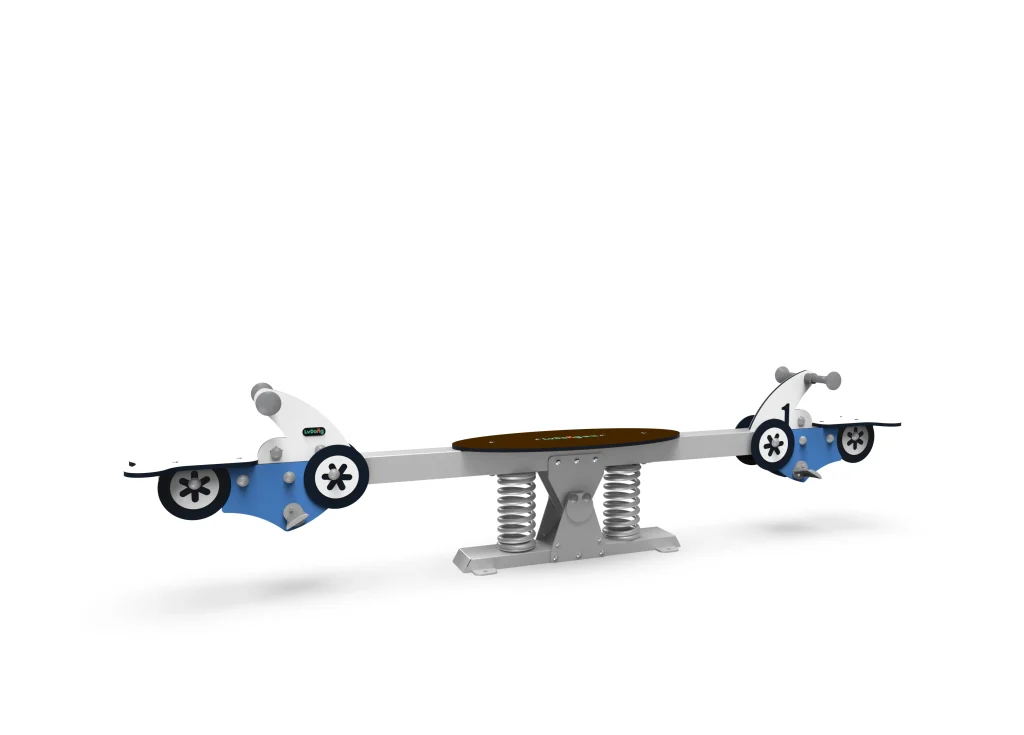
Large composite structures with multiple attached decks look efficient on a footprint drawing, but they move poorly. Individual equipment pieces such as spring riders, spinners, and seesaws can be loaded, unloaded, and positioned by small crews. They also make it easier to reconfigure the playground when the next housing site has a different shape or smaller fall zone. Modular play units with bolt-together platforms work when the manufacturer supplies clear disassembly drawings and labeled components. Without labeling, the second relocation can take longer than the first because crews spend time matching brackets and fasteners.
| Equipment type | Relocation advantage | Installation note | Fall height range |
|---|---|---|---|
| Spring rider | Single-unit, hand carry | One person, about 0.5 person-hours | 50 cm |
| Spinner | Compact base, quick anchor | 1 to 2 people, about 2 person-hours | 55 to 77 cm |
| Seesaw | Simple pivot assembly | Moderate length, small crew | 60 cm |
Military family housing playgrounds serve large numbers of children after school and on weekends, often in short bursts. <High Traffic Durability Tips for Airport Playground Equipment> covers the same durability approach we apply to relocation-prone sites: wear-resistant surfaces and component-level access so repairs do not require replacing an entire unit.
Vetting a Supplier for Relocatable Military Playground Equipment
Not every manufacturer can handle equipment that moves every three years. The supplier should be able to produce disassembly drawings, spare part lists, and anchor specifications before shipment. Ask how long discontinued components are kept in stock, because a relocation may happen after a model has been replaced. Our production team keeps standardized steel and fastener sizes wherever possible, which means common bolts, springs, and bearing assemblies can be sourced or supplied years after the original order.
A relocation cycle also puts more pressure on the original contract terms. <Key Contract Clauses for Commercial Playground Equipment Purchase> covers contract language for spare parts, warranty transfer, and third party inspection, all of which matter when equipment will be disassembled and reinstalled by different crews over time.
Relocation-ready equipment is easier to specify when the supplier can supply disassembly drawings, anchor options, and spare part lists up front. If your military housing project requires equipment that will be moved on a three year cycle, send your site plan and equipment list to [email protected] or WhatsApp +8613915684545. We can confirm anchor configurations and produce a line item breakdown matched to your housing maintenance and relocation schedule.
Common Questions About Military Housing Playground Equipment
How often should relocatable playground equipment be inspected after reassembly?
After every reassembly, a certified playground inspector should complete a post-installation audit before the play area reopens. Relocation loosens fasteners, shifts surfacing, and changes fall zone clearances even when the same crew installs the equipment. The post-installation check should cover anchor torque, bearing movement, entrapment gaps, and fall height measurements against the new surfacing depth. Between formal inspections, a weekly visual check for loose bolts or damaged surfacing is reasonable for high-use military housing sites. If any component was replaced during the move, keep the replacement part number and installation date in the maintenance log so the next relocation team has a complete history.
Can the same playground equipment be reinstalled on both grass and paved surfaces?
A common misunderstanding is that grass sites always make relocation simpler. In practice, grass can hide soft subsoil, drainage problems, and uneven settlement that require more preparation than a stable paved surface. The same equipment can work on both surfaces if the anchor kit is matched to the ground condition. For grass and compacted soil, galvanized ground spikes usually hold adequately without permanent concrete. For paving or hardscape, surface plates or weighted bases avoid penetrating the pavement. Before reinstallation, confirm the fall zone surfacing and anchor top height, because a slightly higher base plate can change the effective fall height on one side.
What documentation should military housing contractors keep for safety compliance?
In the technical files we prepare for resellers and contractors, we include material certificates, EN 1176 compliance statements, installation manuals, and anchor specifications. For relocatable equipment, the most useful documents are disassembly drawings with labeled components and a spare parts list for wearable items like bearings, springs, and seats. Keep a relocation log that records each installation date, site address, anchor type, and inspector sign-off. That log becomes the evidence base if a safety claim or recertification question comes up after a move. Ask the manufacturer whether third party test reports can be supplied in English before the first shipment, because translating or reissuing documents later adds delay.
How does repeated relocation affect moving parts like bearings and spring connections?
The concern is less the move itself and more the repeated loosening and retightening of fasteners. Each disassembly cycle gives dirt and moisture a chance to enter bearing seats and spring connections, especially if components sit in storage between sites. For spinners and seesaws, we recommend using sealed or shielded bearings and checking for side play after every reassembly. Spring rider connections should be torqued to the manufacturer’s value and inspected for coil wear where the spring meets the base plate. Share your relocation schedule with [email protected] and we will confirm which moving parts need replacement intervals or spare part kits before the next move.
If you’re interested, check out these related articles:
Evaluate Commercial Playground Manufacturers 8 Critical Selection Factors
Age Appropriate Playground Sets for Child Development
Single vs Double Seat Playground Horse Spring Riders A Comparison
To discuss a relocatable playground equipment brief, contact the LvDong team with your project requirements.