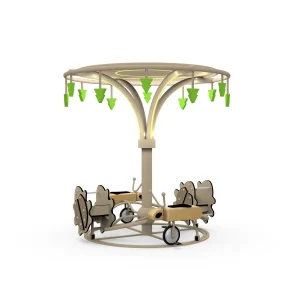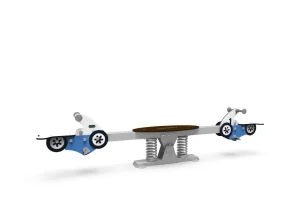
High capacity school break area equipment rarely fails because children stop playing. It fails when 200 students arrive at the same time and every queue blocks access to the next activity. Over ten years of designing unpowered playgrounds, I have learned that break time does not reward variety alone; it rewards short entry cycles, wide use zones, and equipment that moves children through without bottlenecks. The right mix pairs multi-user spinners, seesaws, and low waiting slides with layout choices that spread traffic. This article covers the capacity planning, material details, and procurement checks that keep a 15 minute break window safe, active, and calm.
Throughput Planning for School Break Area Equipment
With 200 children released at once, the first three minutes of a break window shape the whole session. If a popular multi user spinner holds six children and takes four minutes to clear, the queue grows while children wait. Capacity planning starts with simple arithmetic: 200 users across 15 minutes is about 13 entries per minute. Recess does not spread evenly, so the opening wave may run closer to 25 or 30 children per minute before it settles. I size school break area equipment for that peak, not for the average.
Counting play positions instead of equipment pieces is the more useful habit. A single spring rider adds one position, while a ten child seesaw adds ten. The difference shows up immediately when children move in waves. The first design question is not how many pieces fit in the yard, but how many children can occupy equipment within the first five minutes without crossing safety zones.
High Capacity Equipment That Keeps 200 Children Moving
Multi user spinners, multi person seesaws, and wide slides absorb the largest part of a 200 child rush. A spinner built for 6 to 10 children creates a group activity, so a class cluster can move in together rather than standing in a single file line. A two to ten child seesaw does the same for mixed age groups. The equipment below shows the capacity split that has worked best in school projects I have reviewed.
| Equipment type | Capacity per unit | Typical entry cycle | Best role in a break area |
|---|---|---|---|
| Multi user spinner | 6 to 10 children | 2 to 4 minutes | Absorbs groups; children step on together |
| Multi person seesaw | 2 to 10 children | 1 to 3 minutes | Fast social turnover for mixed ages |
| Wide or double slide | 1 to 2 children at a time | 15 to 30 seconds | Continuous line flow with low dwell time |
| Spring rider | 1 child | 30 seconds to 2 minutes | Fills small pockets; not a primary surge absorber |
| Climbing or tunnel structure | 4 to 12 children depending on deck | 3 to 8 minutes | Absorbs climbing energy but clears more slowly |
Spinner selection has an outsized effect on break time flow. Three multi user spinners can hold 18 to 30 children at once and let children join without a wait line, which is why they often become the core of the layout. 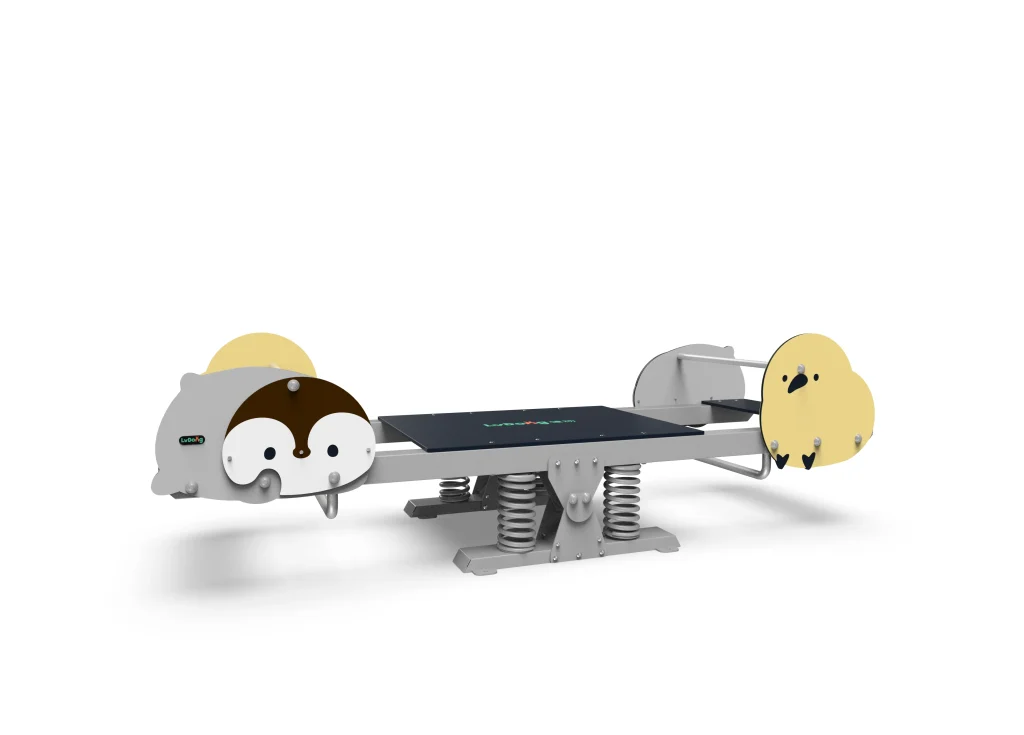
Spinner capacity is one of the fastest ways to absorb a 200 child surge, and configuration choices affect both cost and delivery time. <Buying Playground Spinners Pricing Discounts and Supplier Insights> covers how bulk orders and model choices change unit pricing, which matters when a school needs three or four units for a single break yard.
Layout Choices That Prevent Queues in 15 Minute Windows
Where equipment sits matters as much as what it is. If the highest capacity spinner is placed at the narrow end of the yard, children crowd the same entrance path and the equipment cannot clear. I separate high turnover stations from slow moving climbing structures and keep at least two circulation routes open. Break time traffic moves like water: it finds the widest path, and it backs up wherever two flows meet.
High traffic airport play areas share the same burst arrival pattern as a school break yard. <High Traffic Durability Tips for Airport Playground Equipment> covers how wider entry zones and grouped equipment reduce wear and queue conflicts when many children arrive at once.
Place ground level activities near the entry edge so children can see open positions and move toward them without trying doors or gates. Elevated decks and tunnel slides work better along the perimeter where they do not split the yard into islands. 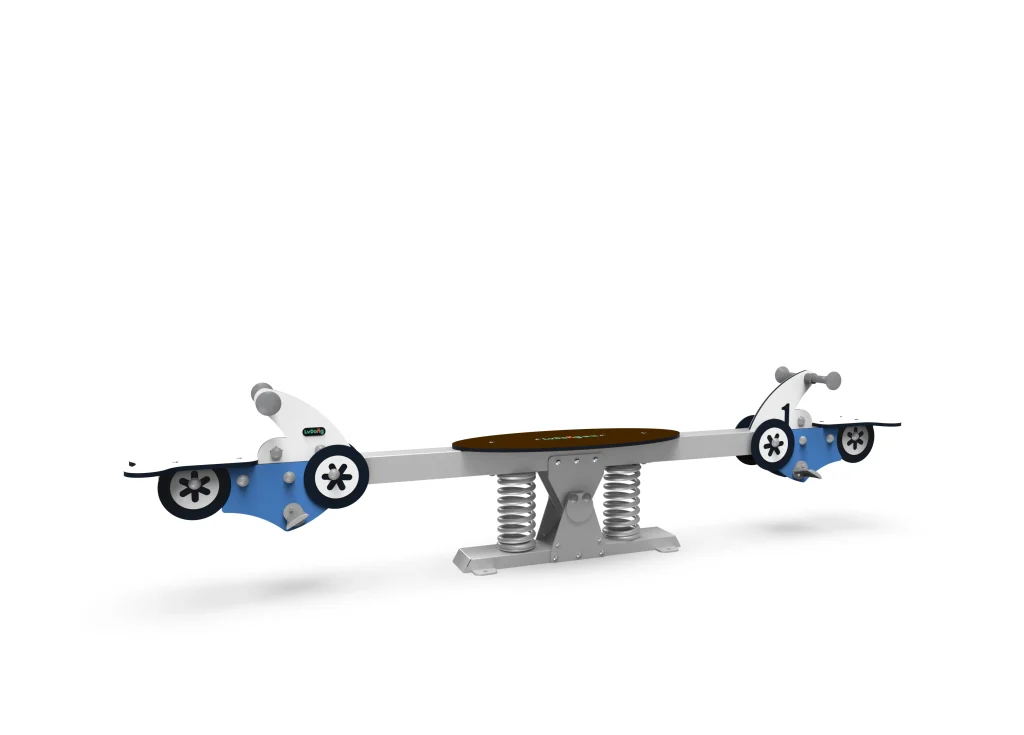 The goal is not to scatter equipment evenly; it is to keep dense queues from forming in front of one popular unit.
If your school site has less than 60 square meters per 100 children or a narrow access gate, it is worth confirming the required safety zone for each unit before finalizing the layout. Share your site dimensions and user count at [email protected] or +8613915684545, and we will map the fall zones and circulation paths.
Material and Safety Standards for Continuous Daily Use
Five days a week of 200 child surges will show material weaknesses faster than a shaded community park ever will. I specify galvanized steel frames for coastal or humid school sites because the zinc layer protects against rust where powder coating alone tends to fail at joints and welds. Moving parts such as seesaw pivots and spinner bearings need sealed or shielded designs so dust and grit from daily play do not shorten the service interval.
Fall height and surfacing go hand in hand. Many multi user spinners carry a maximum falling height of 55 to 77 cm, while multi person seesaws are often around 60 cm and spring riders around 50 cm. The surface below must match those figures, and it must stay intact through wet season and heavy use. 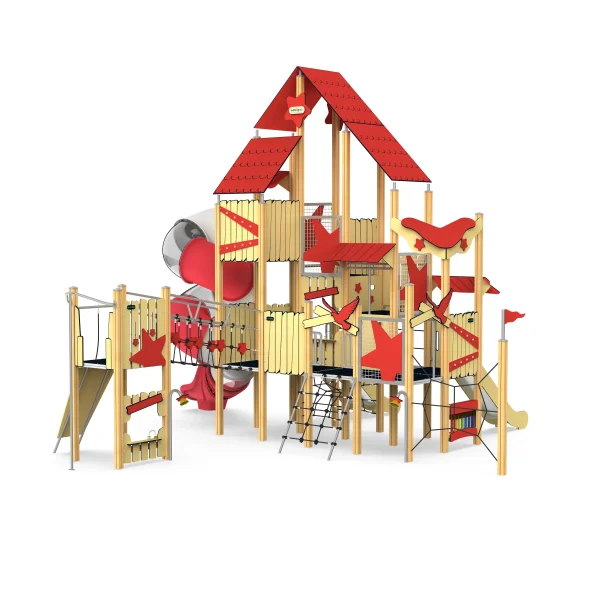 A distressed rubber tile with a broken edge is a tripping hazard long before it stops attenuating falls.
All equipment I recommend for school use should comply with EN 1176 and GB/T 34272-2017. These standards cover entrapment openings, protrusion hazards, and dynamic load paths. They do not replace a disciplined daily check of fasteners and moving joints, but they give the safety envelope a verifiable baseline.
High frequency wear points to check weekly:
- Spinner bearing covers and bolt torque
- Seesaw pivot stops and rubber bumpers
- Swing chain links at attachment points
- Slide exit runout and retaining edges
Durable Break Area Equipment Choices That Control Long Term Cost
Schools do not buy playground equipment once and forget it. The real cost shows up in replacement parts, surface repairs, and time spent clearing a unit that fails during the busiest minute of the day. I ask buyers to compare not just the initial purchase price, but the ten year cost of keeping the equipment running at full capacity. A cheaper powder coated frame may need repainting after two or three years in strong sun, while a galvanized frame keeps its protective layer much longer. 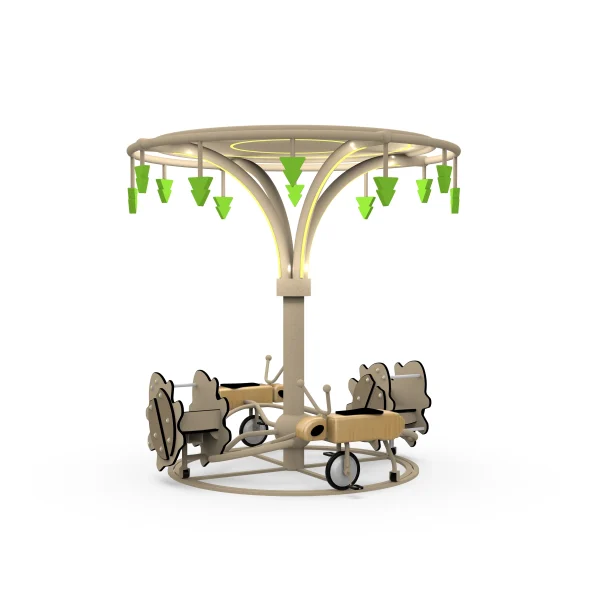
Quotes are not always easy to compare. <Playground Equipment Quotes Spotting Hidden Costs Explained> covers the line items that get left out of a first price, such as surfacing, delivery, and spare part kits, all of which affect the true cost of a high capacity break area.
A break yard that cannot clear 200 children safely in 15 minutes will create supervision problems every day, whether from queuing, pushing, or children climbing on equipment that is not meant for standing. That is the problem we solve at Suzhou LvDong Amusement Equipment Co., Ltd. by matching equipment capacity to your student count and site plan before you spend. Send your site dimensions, number of break time users, and any regional certification requirements to [email protected] or call WHATSAPP +8613915684545, and we will propose configurations with fall zones, surfacing, and lead times confirmed.
Common Questions About School Break Area Equipment
What is the best equipment for a school with only 15 minute breaks?
The best setup combines multi user spinners, wide slides, and multi person seesaws because these units keep many children occupied at once and clear quickly. A spinner holding six to ten children and a slide line with a 15 to 30 second cycle both avoid long queues. Spring riders and single user climbers can fill small spaces, but they should not anchor the break area. For 200 children, I would begin with three high capacity spinners, two wide slides, and two multi person seesaws before adding anything else.
How much space does a 200 child break area need?
It depends on the equipment mix and fall zones. A compact layout with four multi user spinners and two slides can fit within 250 to 350 square meters if the safety zones overlap cleanly and circulation paths stay clear. If the school wants climbing towers and large swings, the same user count needs more room and a wider entry corridor. The useful starting point is not total area but the number of simultaneous play positions you can open within the first five minutes.
Do high capacity spinners and seesaws wear out faster than standard playground equipment?
Many schools assume high capacity equipment wears out faster. In practice, the opposite often happens when the unit is built for the load. The factors that matter are bearing sealing, pivot stops, and frame material. A multi user spinner with a shielded bearing and galvanized steel frame can run for years in daily break periods, while a light duty unit in the same yard fails early. We recommend weekly checks on moving parts because small adjustments prevent the big failures.
Can we install this equipment over asphalt or concrete?
In school projects I review, the most common revision is not the equipment count but the surfacing plan. Asphalt and concrete do not satisfy the impact attenuation expected for equipment with a falling height above 60 cm under EN 1176 and GB/T 34272-2017. Rubber tiles, poured in place rubber, or engineered wood fiber over a prepared base are the usual choices, and drainage must slope away from the equipment. Share your surface plan and user count with [email protected] if you are comparing quotes, and we will confirm the surfacing and drainage details before your order is finalized.
If you’re interested, check out these related articles:
Factory Visit Checklist Outdoor Playground Equipment Quality
How Indoor Playground Equipment Manufacturers Customize Solutions
Slide Platform Height and Exit Safety Guidelines for Playgrounds
Key Contract Clauses for Commercial Playground Equipment Purchase