In hot, sunny climates, nothing ages a playground faster than faded spinner discs. Bright reds dull to chalky pink, deep blues turn patchy, and equipment that looked vibrant at installation can appear tired within two seasons. We have seen this pattern repeat across projects in the Gulf region, where intense UV radiation and relentless heat attack plastics and pigments day after day. Emerald-green spinner discs with proper UV stabilization break that cycle. The colour stays deep and consistent because the stabilizer chemistry and pigment selection work together to resist photodegradation. For buyers in Dubai, Doha and similar markets, understanding why this one colour lasts can change how you specify every spinner in your next tender.
How Sun Exposure Breaks Down Playground Spinner Colours
Outdoor spinners live under constant attack from ultraviolet light. The UV component of sunlight carries enough energy to break polymer chains inside rotational‑moulded polyethylene seats and platform discs. When those chains fracture, the material loses plasticisers, becomes brittle and develops micro‑cracks. Pigments trapped in the plastic matrix are exposed, and the molecules that give the disc its colour start to degrade.
What you see as fading is actually chemical destruction. Red and yellow organic pigments are particularly vulnerable because their molecular bonds absorb high‑energy wavelengths. Once the colour shifts, the surface often chalks and the disc feels rough. That chalky layer is the plastic itself breaking down. In one installation we supported in Riyadh, original red spinner seats turned brittle and lost their gloss within 14 months. The playground remained safe, but the visual impact drove a complete refurbishment two years earlier than planned.
Fading is rarely just cosmetic. <Playground Slides Buying Guide Height Slope and Critical Safety> explains how surface degradation on high‑use equipment accelerates structural wear, making early replacement a real budget line item.
What UV Stabilization Does Inside a Spinner Disc
UV stabilization puts a chemical shield between the sun and the polymer. Additives fall into two groups. UV absorbers catch high‑energy photons and release the energy as harmless heat before they can snap a polymer chain. Hindered amine light stabilisers (HALS) trap free radicals that form when a chain break does occur, preventing the damage from spreading.
In rotational‑moulded LLDPE discs, the stabiliser package is blended into the resin before the moulding cycle. The additives are distributed through the entire wall thickness, so surface wear does not immediately expose unprotected material. Painted metal discs rely on UV inhibitors in the coating layer, which can be scratched or chipped, creating a path for moisture and further UV ingress.
The difference shows up in accelerated ageing tests. Xenon arc chambers compress years of Dubai‑level sun exposure into weeks. A well‑stabilised LLDPE disc shows minimal colour shift after 1,500 hours of testing, while an unprotected one is visibly bleached. EN 1176 does not prescribe a pass‑fail colourfastness figure, so buyers who need long‑term colour stability must ask for the test report directly.
| Material type | UV protection method | Expected colourfastness (Dubai‑equivalent years) | Typical maintenance need |
|---|---|---|---|
| LLDPE with full UV stabiliser package | Through‑material additive blend | 5–7 years before noticeable fading | Occasional cleaning; no recoating |
| Standard LLDPE (minimal stabiliser) | Low‑cost base resin | 1–2 years | Surface quickly chalks; frequent touch‑up |
| Powder‑coated steel plate | UV inhibitors in topcoat | 3–4 years if coating intact | Chips expose bare metal; spot repainting required |
| Stainless steel with coloured insert | Pigment in replaceable polymer panels | 5–8 years (panels replaceable) | Panel swaps every few years if fading occurs |
If your project involves direct, year‑round sun exposure, confirming the exact UV stabiliser package in the disc material can prevent costly early replacement. Reach out at [email protected] to discuss the right material spec for your location.
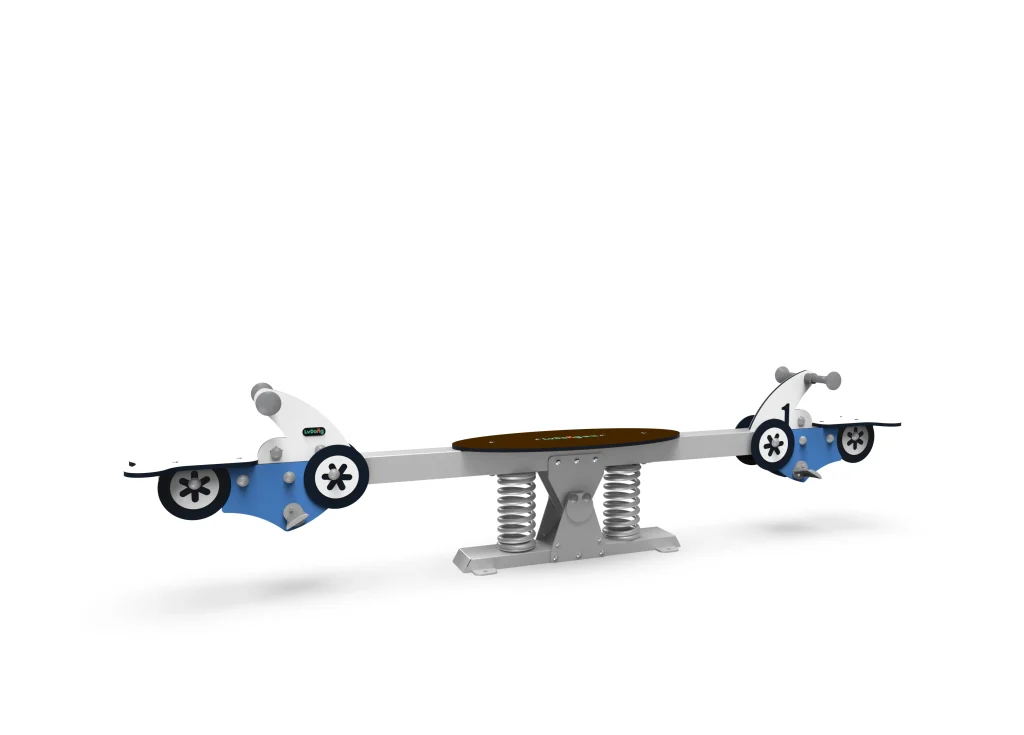
Why Emerald‑Green Outperforms Other Colours in High‑Sun Climates
Not all pigments are equal under UV light. Copper phthalocyanine green, the pigment family behind most emerald‑green discs, has a molecular structure that is inherently resistant to photodegradation. It absorbs light in the visible spectrum without breaking down, unlike many reds and yellows that use less stable organic chromophores.
There is a practical heat balance at work as well. Dark colours absorb more solar radiation and can make seats uncomfortably hot. Very light colours reflect more energy but show dirt and scuff marks faster. Emerald‑green sits in a middle band: it is dark enough to hide minor wear from shoes and sand while reflecting enough infrared to stay cooler than black or dark blue discs.
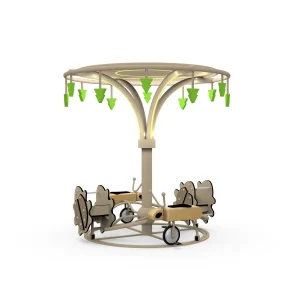
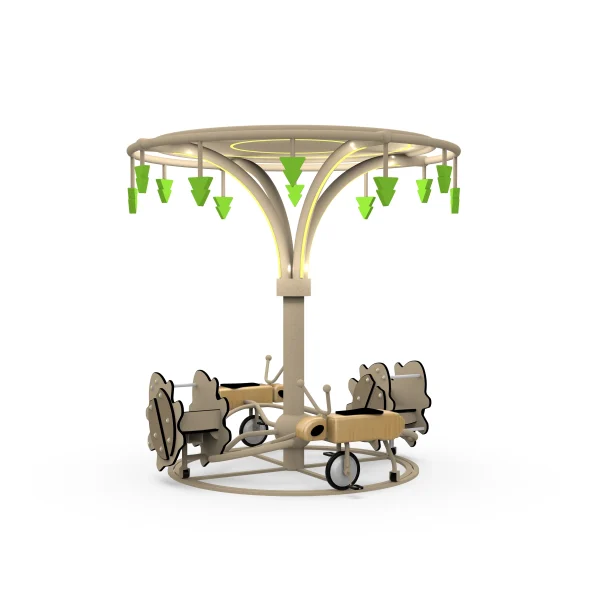
We chose this colour for the disc panels on our multi‑player spinning wheels after tracking field reports from several Middle Eastern sites. The green panels held their depth longer, generated fewer hot‑surface complaints and blended well with the landscaping that most resort and municipal clients prefer.
A spinner that keeps its colour under harsh sun is only part of the durability equation. <High Traffic Durability Tips for Airport Playground Equipment> looks at how material choices and surface treatments hold up against constant use and climate extremes in busy public spaces, the same challenge faced by a beachfront playground.
Choosing Spinner Disc Materials for Long‑Term Colour Retention
The base material sets the ceiling for colour performance. Rotational‑moulded LLDPE with a high‑quality masterbatch gives through‑colour that cannot peel. Even if the surface microscopically erodes over thousands of cycles, the material underneath carries the same pigment. Powder‑coated steel looks sharp on day one, but every scratch, bolt head and welded joint becomes a pathway for corrosion and colour loss once the coating is breached.
Stainless steel plates with replaceable coloured polymer inserts offer a different solution. The metal structure handles loads without colour dependency, and the inserts can be swapped if fading eventually occurs. However, the part count and assembly labour push upfront cost higher than a one‑piece moulded disc.
When comparing supplier samples, look at the colour under magnification. A uniform dispersion of pigment particles without clumping indicates a well‑compounded masterbatch. Clumps create stress concentrations and can accelerate local cracking. We test every new colour batch under UV lamps for 72 hours before approving it for production, a step that catches dispersion problems before a single spinner ships.
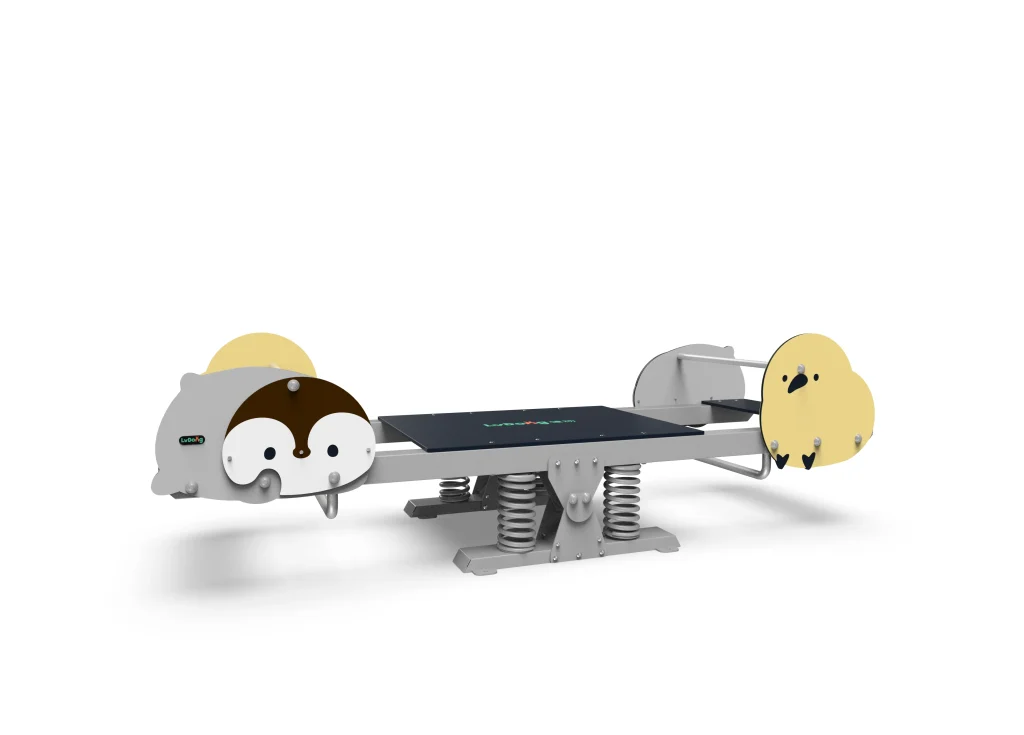
Specifying UV Resistance in Your Spinner Procurement
Few standard playground equipment contracts mention colourfastness in measurable terms. That silence leaves the buyer carrying the risk. A few lines in your specification sheet change that.
Request a QUV or xenon arc test report showing delta‑E colour difference after at least 1,000 hours of exposure. A delta‑E under 3 is imperceptible to most observers; under 5 is acceptable for outdoor equipment. Ask which pigment chemistry the manufacturer uses for their green shades, because phthalocyanine green and chrome oxide green have different UV behaviours and prices. Confirm whether the stabiliser package is concentrated at the surface or dispersed through the whole wall section.
Warranty language matters too. A standard structural warranty may cover cracking but exclude colour change. If your playground will be photographed for marketing materials or sits in a high‑profile resort, negotiate a separate colour‑retention clause tied to a specific test method. We have found that buyers who supply their own site UV data receive more accurate performance estimates than those relying on generic catalogue statements.
Matching Spinner Colours to the Life of Your Playground
Faded spinners drain maintenance budgets and pull down the overall look of a playground long before the equipment becomes unsafe. Emerald‑green UV‑stabilized discs address that problem by combining a naturally robust pigment with a stabiliser package engineered into the material from the start. The result is a spinner that earns its keep over five years of Dubai sun, not one that needs a cosmetic refresh every second season.
If you are purchasing spinners for a sunny site and want to confirm which disc material and colour will hold up best, send your project location and a target lifespan. We test colour retention aggressively and can share field data from completed installations. Contact Liu Ming and the team at [email protected] or on WhatsApp at +8613915684545 with your requirements, and we will recommend a configuration backed by performance data, not marketing claims.
Questions Buyers Ask About UV‑Stabilized Spinner Colours
How long will emerald‑green spinner discs actually last in direct sun before fading becomes obvious?
In high‑UV environments like Dubai, a fully UV‑stabilized LLDPE disc with phthalocyanine green pigment typically holds its colour for five to seven years without a visible shift. After that, a very gradual lightening may occur, but it does not turn chalky or patchy the way unstabilized colours do. The exact timeline depends on installation angle, whether the disc is under partial shade and how much abrasive sand is in the air, all factors we review against a site’s local data before quoting a performance window.
Can I order other colours with the same UV protection, or does only emerald‑green work?
Other colours can be stabilized, but the starting pigment chemistry drives the result. Blues and dark greens using phthalocyanine‑type pigments perform nearly as well. Bright reds and yellows require heavier stabiliser loads and still fade faster. We offer a colour range tested under accelerated weathering, and we can provide delta‑E data for each shade so you can choose based on measured performance rather than guesswork.
Is UV‑stabilized material significantly more expensive than standard spinner discs?
The cost difference sits mainly in the resin grade and the masterbatch quality. For a multi‑user spinner, adding a full UV package typically increases the disc component cost by 10 to 15 percent. That premium pays for itself within the first avoided repainting or early replacement, especially for clients in the Gulf who would otherwise face a colour refresh every two to three years.
Does the spinner’s orientation on the playground affect how fast the colour fades?
Yes, and it is a variable many overlook. A disc that faces the midday sun at a near‑horizontal angle absorbs more total UV energy over a year than a vertical panel. Spinner platforms with a slight tilt can sometimes receive more concentrated exposure on one edge. When we lay out equipment for a site, we note the prevailing sun path and, where possible, position spinners so that the largest disc surfaces do not act as solar collectors. Even with excellent stabilization, small siting adjustments extend colour life.
Should I expect the same colour performance from a powder‑coated spinner frame as from the disc?
No. Powder‑coated frames have a hard, UV‑resistant skin, but they rely on that skin staying intact. Once the coating is scratched at a bolt hole or from repeated shoe contact, the underlying steel begins to oxidize and the colour degrades from the edge inward. Moulded plastic discs carry the colour through the full part thickness, so surface wear does not create a sharp colour break. For frames, we recommend stainless steel wherever the budget allows, then colour is never the limiting factor. We can walk through the cost trade‑offs for your specific site if you share your equipment layout; reach out at [email protected] and we will map the best material mix against your climate and usage forecast.
If you’re interested, check out these related articles:
Double Slide Playground Design for Optimal Traffic Flow Strategies
Custom Playground Slide Design From Vision to 3D Reality
Evaluate Playground Equipment Samples Before Buying A Guide
Large Playground Slide Transport and Crane Planning