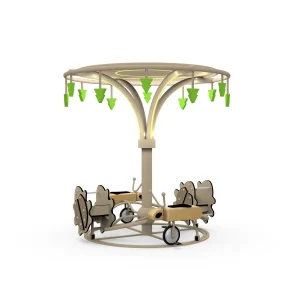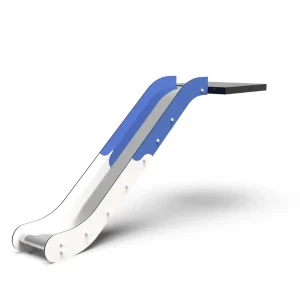
Selecting a school playground equipment supplier involves more than comparing costs or brochure images. Over ten years in this industry have shown me that the long-term safety and daily usability of a school playground depend on a manufacturer’s production integrity and commitment to after-sales support. This article distills that experience into five concrete criteria, covering safety certifications, factory quality, service infrastructure, design expertise, and cost evaluation, to guide school decision-makers away from the most common procurement mistakes.
What Safety Certifications Should a School Playground Equipment Supplier Have?
Safety certifications are the first filter. A supplier selling into international markets should hold certificates for EN 1176 (European Standard) or ASTM F1487 (U.S. Standard), and for the Chinese domestic market, GB/T 34272-2017. The certificate must cover the specific equipment types (swings, slides, spinners, spring riders), not just general management systems. Ask for copies of recent third-party test reports, especially impact attenuation test data for surfacing and structural loading analysis for climbing frames.
We at Suzhou LvDong maintain certification files for every project. When you request documentation, we supply a compliance packet that matches the exact equipment list for your order — not a generic brochure page.
| Certification Standard | Coverage | What It Validates |
|---|---|---|
| EN 1176 | European market | Structural integrity, entrapment risks, impact absorption for unpowered equipment |
| ASTM F1487 | U.S. market | Public playground equipment safety performance |
| GB/T 34272-2017 | China market | General safety requirements for children’s playground equipment |
| ISO 9001 | Quality management | Production consistency, process control, and continuous improvement |
A supplier that avoids sharing these documents or offers only an ISO 9001 certificate without product-specific standards should raise a red flag.
How to Evaluate a Manufacturer’s Production Capability and Quality Control
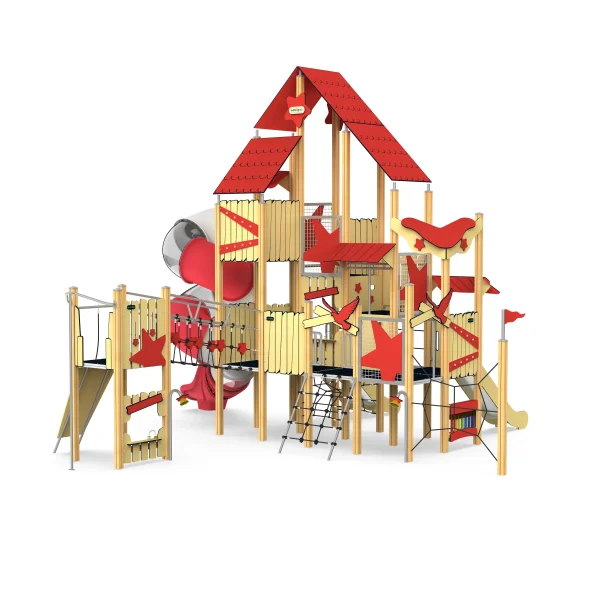
A factory visit reveals more than any catalog. When I walk clients through our 10,000-square-meter production base, I point to three things: material traceability from raw steel to finished product, standardized welding stations with jig fixtures that limit human variance, and the sequence of surface treatment — sandblasting, zinc-rich primer, and electrostatic powder coating — that determines whether a spring rider or slide platform will survive years of sun, rain, and daily use.
Look for a supplier that operates under a documented quality management system and can show inspection records at each production stage. Ask to see the raw material certificates (for steel, HDPE, and fasteners) and inquire about their in-house testing equipment. In our facility, every weld is visually inspected, and random samples undergo load testing to confirm they meet the factor of safety required by the applicable standard.
A table summarizing what to observe:
| Aspect | What to Observe | Red Flag |
|---|---|---|
| Material traceability | Batch tracking from raw material to outbound | No records or reluctance to show certificates |
| Welding and assembly | Jig fixtures, consistent weld beads, rust prevention | Hand-held welding with no inspection stamps |
| Surface finishing | Automated painting line with at least two base coats | Single coat, visible rust on stored components |
| In-house testing | Load test rigs, impact test records | No testing equipment or only verbal assurance |
After-Sales Support and Spare Parts: Why It Matters for Schools
School playgrounds see concentrated, supervised use. A slide platform bolt that loosens, a spring that fatigues, or a bearing that seizes can go from nuisance to safety hazard within a semester. A supplier’s after-sales capability is what prevents that from happening.
Confirm the supplier’s average spare parts lead time, availability of common wear items (swing bearings, spring elements, slide bedways), and whether they offer a structured maintenance schedule. At Suzhou LvDong, we keep a safety stock of high-wear parts for all active models and supply a printed maintenance logbook with each installation, so the school’s facility team knows what to inspect and when.
If your school operates in a high-humidity coastal area or expects heavy traffic, discuss a customized maintenance agreement before ordering. You can reach us at [email protected] to see a sample maintenance calendar and parts inventory list tailored to a school setting.
Customization and Design Expertise: Getting the Right Layout for Your School
School playgrounds are not one-size-fits-all. A kindergarten’s climbing structure must limit fall height to 1.5 meters and avoid upper-body strength challenges that frustrate 3-year-olds, while an elementary school needs multi-activity sets that separate grades into distinct zones to reduce congestion.
A capable supplier will produce a 3D layout based on your site survey, aligning equipment with student age groups, traffic flow, and existing landscaping. Ask for previous project renderings, especially for schools with similar enrollment sizes. At Suzhou LvDong, our R&D team delivers a customized 3D design proposal as part of the pre-sales process, and we adjust it based on your feedback until it suits your educational objectives.
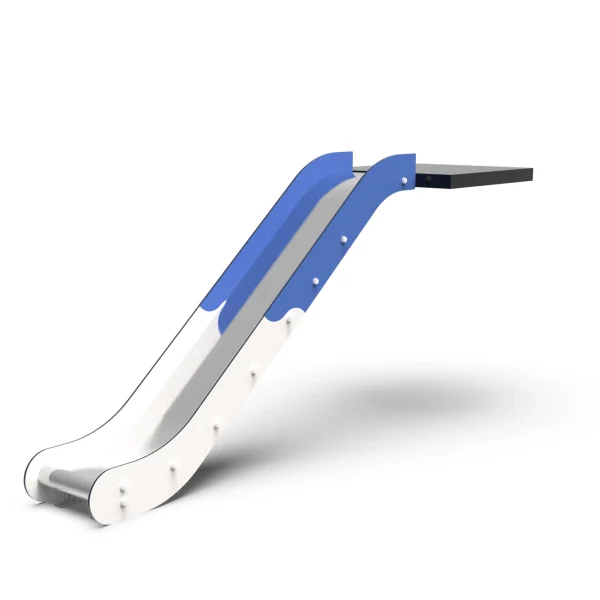
If a supplier proposes only pre-configured sets without asking about your site dimensions or student age distribution, the resulting playground may fail to meet safety spacing requirements or deliver the play value your students need.
Comparing Costs Without Compromising Long-Term Safety
Price comparisons are inevitable, but the lowest quote often omits costs that surface later: export packaging, foundation concrete, professional installation supervision, and surfacing. Request a detailed quotation that separates equipment cost, shipping, installation, and surfacing, so you can compare line by line.
Our experience with over 1,500 projects shows that equipment built with thicker-walled steel tube, UV-stabilized HDPE slides, and hot-dip galvanized hardware carries a higher upfront cost but eliminates most repair and repainting line items over the first five years. Below is a summary of features that influence long-term cost.
| Cost Driver | Lower Initial Cost Approach | Higher Initial, Lower Lifetime Cost |
|---|---|---|
| Steel tube wall thickness | 1.5 mm | 2.0 mm or above, depending on load |
| Slide material | Standard PE | UV-stabilized LLDPE with thick wall |
| Hardware | Electroplated steel | Hot-dip galvanized or 304 stainless |
| Surface coating | Single-layer paint | Zinc-rich primer + polyester powder topcoat |
| Installation | Local labor only | Manufacturer-supervised crew with acceptance testing |
Decisions on these details determine whether the playground still looks and functions well after five years of daily use. When you compare quotes, focus on the technical specifications of the materials and the scope of installation support, not just the total number at the bottom.
Your Next Step Toward a Safe School Playground
Choosing the right supplier protects your students and your budget. For a no-obligation consultation on your school’s playground requirements, including a 3D design preview and a detailed compliance report, contact Suzhou LvDong Amusement Equipment at [email protected] or via WhatsApp at +8613915684545.
Common Questions About School Playground Equipment Procurement
How long does a typical school playground installation take?
Installation timelines depend on project scope and site readiness. A standard set with 5 to 7 play structures on prepared ground usually takes 3 to 5 working days with a professional crew. Custom-designed projects that require concrete foundations or specialty surfacing can extend to 2 to 3 weeks. We always confirm a schedule during the design phase so the school can plan around term dates.
Can we see a 3D model before making a commitment?
Yes. We produce a detailed 3D rendering based on your site dimensions and age group requirements as part of our pre-sales service. The model shows equipment placement, fall buffer zones, and circulation paths. You can review it and request modifications before any payment is made. This visual planning prevents later surprises with spacing or sightlines.
What if equipment needs repair after the warranty period?
Even outside the warranty term, schools should have access to replacement parts and technical guidance. We keep a safety stock of high-wear items and can ship standard parts within a few days. For complex repairs, we offer remote video support or can dispatch a technician if local labor is not qualified. When evaluating suppliers, confirm that they maintain spare parts for models older than five years.
Do you supply playground surfacing as well?
We focus on play equipment and do not manufacture surfacing, but we specify the required impact attenuation surfacing for your project according to the equipment’s fall heights and the relevant safety standard. We can recommend certified local surfacing contractors or include a surfacing allowance in your project budget so you have a complete financial picture.
What is the first step to start a school playground project?
Share your site dimensions, the age range of the students, and any specific play or educational goals. We will prepare a concept layout and a preliminary equipment recommendation at no charge, giving you a tangible starting point. Reach out at [email protected] or WhatsApp +8613915684545, and we can have a first draft ready within a few days.
If you’re interested, check out these related articles:
Playground Slide Materials LLDPE vs 304 Steel Performance
Buying Playground Spinners Pricing Discounts and Supplier Insights