Selecting a school playground equipment supplier is not a transaction; it is a partnership that shapes children’s safety and play experience for years. School administrators face pressure to balance budget, compliance, and durability, but the lowest quoted price rarely delivers the support schools actually need. Over a decade of designing and delivering playgrounds for educational institutions, we’ve seen how the difference between a supplier and a reliable partner comes down to integrated project management, not just product catalogs. This article walks through the factors that matter most when evaluating playground equipment suppliers for schools, from initial design to long-term maintenance.
Defining Your School’s Playground Needs and Constraints
The first step is to define exactly what your school requires. Different age groups need different equipment—for example, preschoolers ages 2-5 benefit from low platforms and spring riders, while elementary students ages 5-12 thrive on climbing structures and taller slides. Consider the available play area, including safety surfacing and required fall zones. I’ve seen schools order a large multi-play unit only to find it doesn’t fit the intended space once safety distances are applied. Also think about inclusive play for children with disabilities, and whether the playground will serve only students or also community groups, because this affects durability expectations. Document the number of users at peak times, any existing equipment to integrate, and your budget ceiling before approaching suppliers.
Assessing Supplier Capabilities Beyond the Product Catalog
A glossy catalog or website does not guarantee that a supplier can deliver a safe, functional playground on time. Look for a company that controls the entire chain: in-house design, manufacturing, installation, and after-sales. When a supplier handles everything internally, accountability is clearer and communication is faster. I recall a school project where the client chose a supplier who only sold equipment and outsourced installation. The result was a three-month delay because the installer had never worked with that product before. Ask for detailed project portfolios, especially school-specific references.
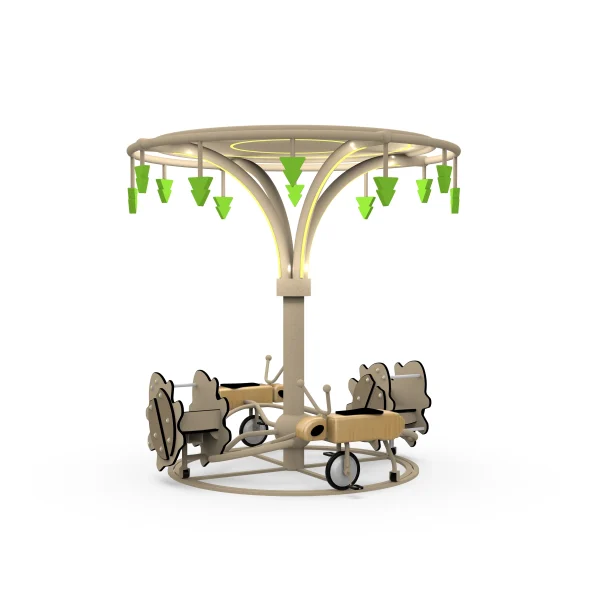
A reliable supplier should provide a 3D layout early in the process, helping you visualize traffic flow, age zones, and sight lines. Below are key questions to pursue.
Does the supplier offer integrated design and project management?
An integrated service model matters because it eliminates the blame-shifting that often occurs between separate vendors. A single team designs to the site’s real conditions, manufactures to the design, and installs with firsthand product knowledge. This cuts miscommunication and typically shortens the timeline by weeks. Ask whether the supplier’s design team visits the site or works from a detailed site survey; a remote-only design can miss critical ground-level issues.
How to verify a supplier’s track record with school projects?
Request a list of completed school installations, preferably with contactable references. Look for projects that match your scale and climate, not just impressive large parks. If a supplier has delivered over 1,500 installations as we have, the pattern of reliability is clearer. But also ask about problem resolution: how did the supplier handle installation setbacks or post-delivery issues? The answer tells you more than the portfolio.
| Service Model | Integrated Supplier | Fragmented Supplier |
|---|---|---|
| Design | In-house team, 3D site planning | Third-party designer, possible gaps |
| Manufacturing | Direct factory control, quality consistency | Might source from unknown factories |
| Installation | Company crew trained on the product | Local contractors, variable skill |
| After-sales | Spare parts in stock, direct warranty support | Long lead times, coordination with manufacturers |
Verifying Supplier Safety Certifications and Quality Standards
Safety standards exist to protect children, and a school must demand full compliance. The core certifications for outdoor play equipment include EN 1176 (Europe), ASTM F1487 (US), and GB/T 34272-2017 (China). Beyond the label, ask for third-party test reports that cover structural integrity, entrapment, toxic substances like lead and phthalates (REACH, RoHS), and fire resistance for indoor components.
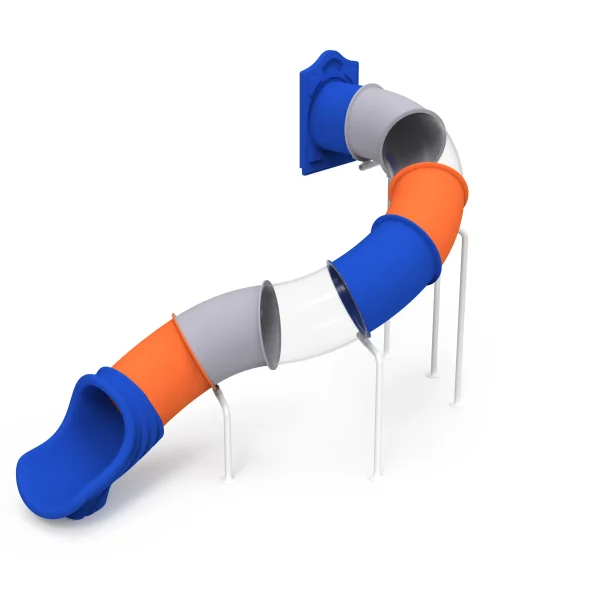
I’ve personally reviewed test reports where products passed basic structural tests but failed on head-entrapment clearances—details that get overlooked if you only check the certification list. A trustworthy supplier will share full documentation without hesitation. For example, our spinning wheel equipment specifies a maximum fall height of 55-77 cm and clearly states age suitability, so you can match it to your school’s insurance requirements and safety surfacing depth. The table below summarizes key standards to check.
| Standard | Scope | What It Covers |
|---|---|---|
| EN 1176 | Europe | General safety requirements for playground equipment |
| ASTM F1487 | USA | Public playground equipment safety performance |
| GB/T 34272-2017 | China | National standard for children’s play equipment |
| ISO 9001 | Worldwide | Quality management system, ensures consistent processes |
What certifications are mandatory for school playground equipment?
Mandatory requirements vary by country. In most cases, your equipment must meet the national or regional standard of the installation location. For imported equipment, additional local certification may be needed. Always check with your insurance provider and local education authority before finalizing a purchase. An experienced supplier will already know the required compliance for your region and can guide you through the paperwork.
How to interpret a playground equipment safety test report?
A test report should reference the specific standard clause, the test method, and the result (pass/fail) with measurements. Pay attention to fall height, head and torso probes, finger entrapment, and structural load tests. If a report only states “conforms to standard” without detailed data, ask for the full test laboratory analysis. Reputable labs like TÜV, SGS, or Intertek provide transparent documentation.
If your school project involves multiple play zones with mixed age groups, ensuring the correct fall heights and safety clearances demands precise layout work. Before committing to a purchase, it is worth sharing your site plan with a supplier who can provide a 3D design overlay; contact us at [email protected] for a free preliminary layout.
Evaluating Supplier Project Delivery and After-Sales Support
The best equipment means little if it arrives damaged, late, or isn’t installed correctly. Clarify the supplier’s lead time from order to shipment, and ask about their packaging standards, especially for long-distance transport.
For school projects, on-site installation supervision is valuable because it ensures correct assembly and post-installation safety testing. I recall a project in a coastal city where the installer ignored the manufacturer’s corrosion-protection specifications for anchor bolts; within two years, the bolts rusted, and the swing set became unstable. The supplier had no installation oversight, and the school bore the repair cost. After-sales support is equally critical: ask about the spare parts inventory, typical lead time for replacements, and whether the supplier provides maintenance training for school custodial staff. A supplier committed to schools will offer an annual maintenance checklist and a clear warranty structure, typically covering welds, structural integrity, and surface finish for a defined period while excluding wear items like swing seats.
What does a realistic installation timeline look like for a school playground?
From order confirmation, expect 4-8 weeks for production, then shipping time depending on destination. Installation with a professional crew can take 3-10 days for a typical school playground, but site preparation such as ground leveling and drainage may add another week. Always account for weather delays and schedule installation during school breaks to avoid disruption. A supplier with project management experience will help you plan a timeline that aligns with your academic calendar.
What after-sales support should a school expect from the supplier?
At a minimum, a supplier should provide a written maintenance plan, spare parts availability, and a warranty response time. Good suppliers maintain a stock of common wear parts and can ship internationally within a week. For major structural issues, they should arrange technician visits. Ask whether the supplier has a dedicated customer service contact, not just a salesperson. This ensures that a year after installation, you can still get help quickly.
Comparing Supplier Quotes and Securing a Sustainable Partnership
When quotes arrive, resist the temptation to pick the lowest number without breaking it down. A comprehensive quote should itemize equipment costs, freight, customs, on-site installation or supervision, safety surfacing, and taxes.
Some suppliers quote only the equipment ex-works, leaving you to discover later that shipping and installation add 30-40% to the budget. I’ve seen school purchase orders where the supplier excluded safety surfacing entirely, and the school had to source it separately, delaying opening by two months. Ask each bidder to follow the same line-item format so comparisons are honest. Beyond price, evaluate the contract clauses about warranty exclusions, late-delivery penalties, and force majeure. And consider the long-term: a supplier who understands your school’s needs can help expand the playground over time, providing matching design and spare parts continuity. Treating the relationship as a partnership rather than a one-off transaction often yields faster service and priority support in emergencies.
| Line Item | Typical Range (%) | What to Check |
|---|---|---|
| Equipment | 50-70% | Specify exact models and quantities |
| Freight & Insurance | 5-15% | Mode (sea/air), incoterms |
| Installation/Supervision | 10-20% | Includes site prep? |
| Safety Surfacing | 10-15% | Type (EPDM, wood chips) and depth |
| Taxes & Duties | variable | Based on destination, often ignored |
Your School’s Next Steps
A school playground is a multi-year investment that directly affects children’s development and safety. Shortcuts in supplier selection can lead to expensive repairs, downtime, and compliance risks. We’ve built our company’s 1,500-project record on the principle that integrated design, manufacturing, and after-sales service is the most reliable way to deliver playgrounds that last. If you are ready to move forward with a specific plan, share your school’s playground requirements and site dimensions with us. Our design team will create a free 3D layout and provide a transparent, line-item quote within five business days. Reach us at [email protected] or on WhatsApp at +8613915684545.
Common Questions About School Playground Equipment Procurement
What is the minimum order quantity for custom playground equipment from a supplier?
Most integrated manufacturers have a minimum project value rather than a strict piece count, because custom design and production setup require a certain scale. For school playgrounds, the typical minimum is a complete play set, not individual items. Smaller orders may still be accommodated but at higher unit costs. Discuss your scope upfront; a supplier may consider combining your order with others to reach production efficiency.
How can we ensure the playground will withstand heavy daily use by hundreds of children?
In programs we’ve supported, schools that prioritized 304 stainless hardware and thick LLDPE slides saw minimal structural wear even after five years of heavy use. Durability also depends on proper installation and regular maintenance. Check the supplier’s maintenance recommendations and warranty coverage. A well-designed playground with correct foundations and annual inspections can handle high traffic; ask for load-test certificates from the manufacturer to confirm structural performance.
What is the typical warranty period for school playground equipment, and what does it cover?
It depends on the component: structural welds and posts often carry a 5-year warranty, while wear parts like swing hangers and plastic grips typically have 1-2 years. Powder coating may be covered for fading but not for chipping from impact. Carefully read the warranty clause; some warranties require documented annual maintenance. A supplier confident in their quality will offer at least three years on structural components.
Can the supplier help with playground layout and compliance for a specific school site?
Many school administrators assume that the supplier’s standard design package automatically accounts for their site’s compliance, but generic layouts can miss critical safety clearances. A professional supplier will tailor the layout to your specific dimensions and local regulations. Provide accurate dimensions, any existing structures, and soil conditions if possible. The supplier’s design team should understand fall zones, age separation, and sight-line requirements, ensuring the final installation passes inspection.
What happens if equipment parts break after installation? Is spare parts availability a concern?
Reputable suppliers keep common spare parts in stock—bearings, swing hangers, panel connectors—and can ship within days. For custom or less common components, lead times may be longer, so it pays to purchase a small spare-parts kit with the initial order. Establish a direct contact with the supplier’s after-sales team so you aren’t routed through a salesperson in an emergency. Share your equipment list with us at [email protected], and we can recommend a spare-parts package tailored to your playground.
If you’re interested, check out these related articles:
Age Appropriate Playground Sets for Child Development
Essential Checklist for Playground Equipment Safety Test Reports