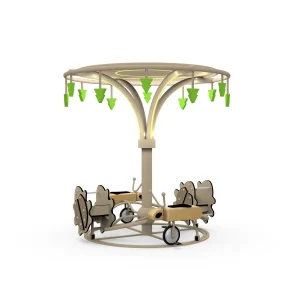
Selecting a school playground equipment supplier demands prioritizing safety certifications, age-appropriate design, and integrated project support, as these directly determine long-term child safety and equipment durability. I have guided numerous schools through supplier evaluation, and the difference between a well-planned playground and a costly mistake often comes down to a few overlooked details. This guide walks through the essential steps, from defining your requirements to signing the contract.
Define Your School’s Playground Requirements
Before comparing suppliers, start by clarifying what your school actually needs—grade levels, available space, and educational goals. A preschool playground for ages 2-5 will look entirely different from a primary school playground for ages 5-12, and mixing the two without proper zone separation can lead to safety failures and user frustration.
Consider curriculum integration and how outdoor play complements your school’s philosophy. Do you need equipment that encourages cooperative play, physical challenges, or sensory stimulation? I have worked with schools that initially wanted a generic playground set, only to discover later that their students needed specific elements like climbing structures or interactive panels to support motor skill development. Map out your space, check drainage, and decide whether you need a fenced play area. This early planning prevents costly redesigns later.
What age groups and curriculum goals should guide your design?
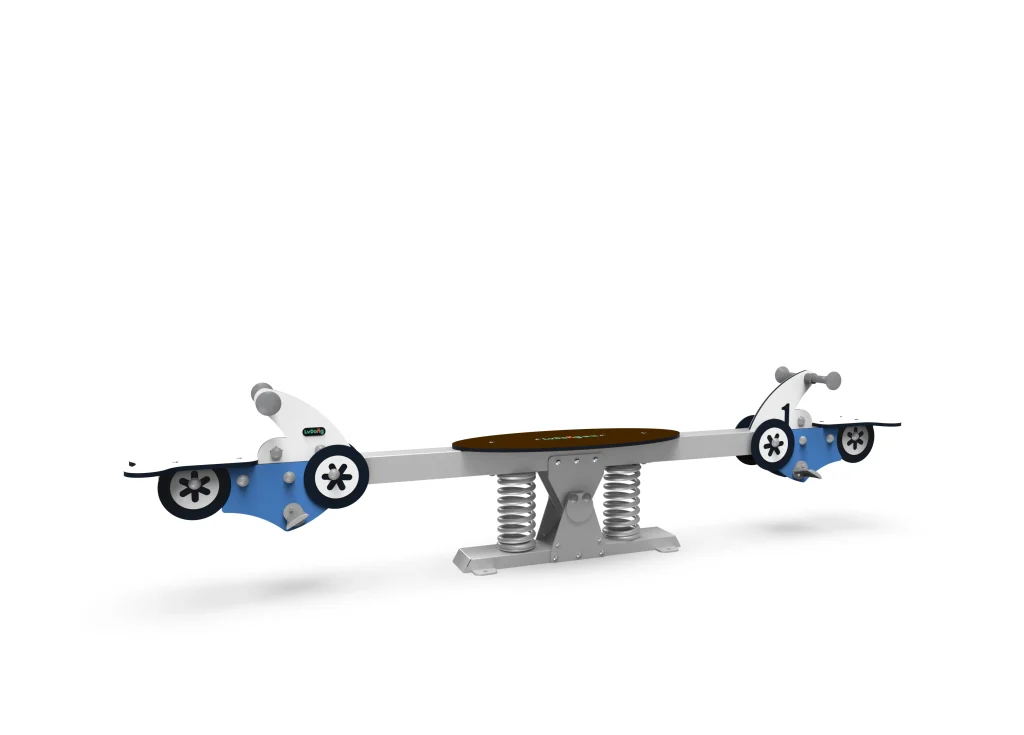
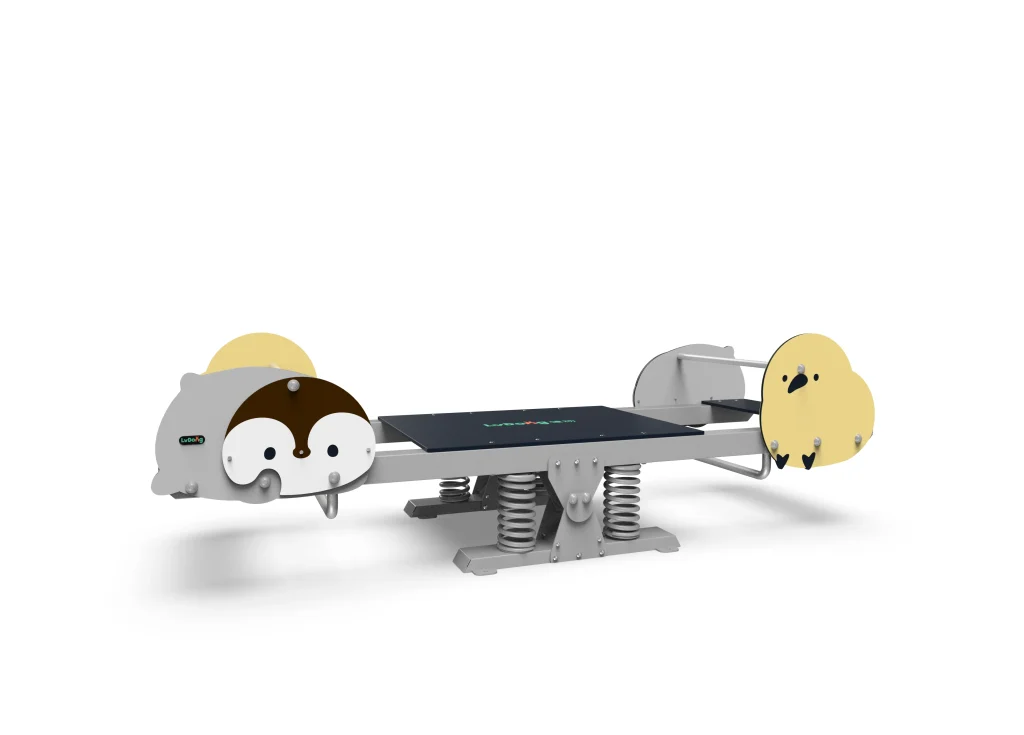
Define the primary age cohort first. For ages 2-5, focus on low platforms, shallow slides, and spring riders with a maximum fall height under 60 cm. For ages 5-12, you can introduce higher slides, multi-user swings, and spinning equipment. I always suggest grouping equipment into clear zones—active play, quiet discovery, and social gathering—so that children of different ages can play safely without crossing into risky areas. This zoning also satisfies many safety standards and helps teachers supervise effectively.
Check Supplier Safety Certifications and Compliance Records
Safety certifications are the single most critical evaluation criterion for a school playground. A supplier without independent test reports risks exposing your students to preventable hazards and your institution to liability. I always ask potential suppliers to provide valid certificates for EN 1176 (European) or ASTM F1487 (U.S.), plus any national standards like GB/T 34272-2017 for China. These documents demonstrate that the equipment has undergone structural integrity, entrapment, and impact attenuation tests.
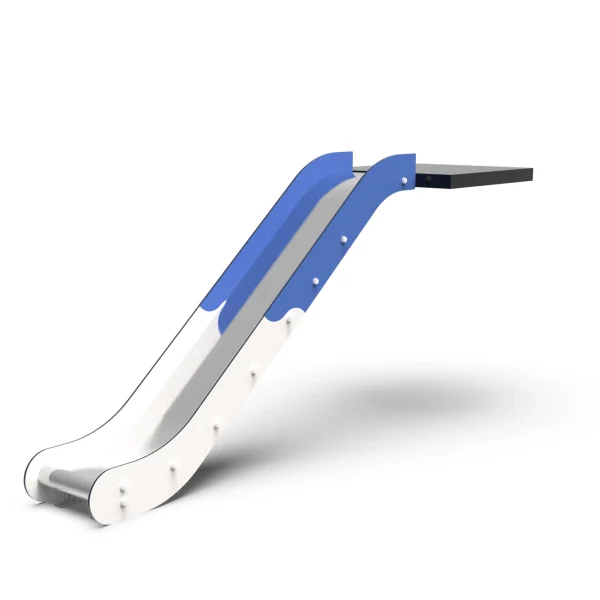
Over the years, I have encountered suppliers who display only a single test report for a single unit, but that is insufficient. For a school project, insist on serialised test reports covering each piece of equipment and the overall installed layout. This ensures the specific configuration going into your yard complies with the standards. The supplier should also explain how they address critical risks such as head entrapment zones and surfacing depth.
What certifications are essential for school playground equipment?
At a minimum, look for EN 1176 or ASTM F1487 compliance. Additional marks like TÜV GS certification add extra confidence. For schools aiming for eco-friendly procurement, SGS, REACH, and RoHS reports confirm that materials are non-toxic and free from heavy metals. I tell school administrators that if a supplier cannot produce these documents within a few days, walk away. It is one of the fastest ways to filter out unreliable options.
If your school requires equipment that meets a specific national or regional standard beyond the common ones—for example, Korean KC or GCC for Middle East—confirming compatibility early avoids customs delays. Reach out at [email protected] with your local requirements, and we can verify which of our products carry the necessary documentation.
How to verify EN 1176 and ASTM compliance reports
Ask for the test report number and verify it directly on the certification body’s online database. Reputable suppliers will not hesitate to share this information. Also request a manufacturing date and traceability code: reports must correlate with the production batch you will receive, not a decade-old prototype. I once reviewed a supplier’s documents and discovered the test was for a different model entirely. A few minutes of verification can save a school from installing non-compliant equipment that later fails an inspection.
Evaluate Product Quality and Age-Appropriate Design
Material quality largely determines how long a school playground will last and how safe it remains over years of heavy use. I examine three main areas: steel specifications, plastic grades, and fasteners. For outdoor structures, welded steel posts with a pipe wall thickness of at least 2.5 mm and hot-dip galvanised coating prevent rust in humid or coastal environments. Plastic components like slides and panels should be rotationally moulded LLDPE with UV stabilisers, not cheap recycled blends that crack after one summer.
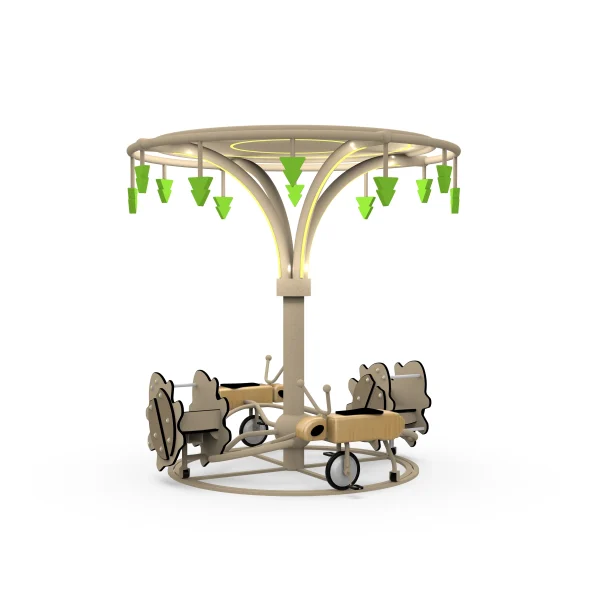
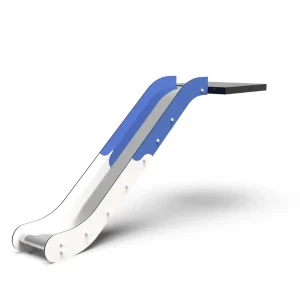
Product designs must be age-appropriate. A slide with a platform height of 150 cm suits older children, but for kindergarteners, a 76 cm exit height is the maximum I recommend. Check how the supplier addresses transitions: the gap between a platform and slide entry should be less than 4 mm to avoid fingers getting caught. The following table compares common materials and their recommended use in school environments.
| Material | Typical Use | Recommended for Schools? | Notes |
|---|---|---|---|
| LLDPE (linear low-density polyethylene) | Slides, panels, roofs | Yes, if UV-stabilised | Durable, easy to clean, colourfast |
| 304 stainless steel | Hardware, posts in wet areas | Yes, with passivation | Resists corrosion, higher cost |
| Galvanised steel (hot-dip) | Posts, frames, platforms | Yes, minimum 80 µm coating | Standard for outdoor structures |
| Powder-coated steel | Panels, decorative elements | Only in covered areas | Chips and rusts quickly outdoors |
| HDPE (high-density polyethylene) | Some panels | Yes, but check thickness | Less impact-resistant than LLDPE |
I base these recommendations on over a decade of seeing equipment wear patterns. For school usage, which often involves 200 or more children per day, you cannot afford to choose materials meant for occasional home use. Ask the supplier about their own factory testing procedures: do they salt-spray test their metal components? Do they run accelerated UV aging tests on plastics? A supplier who can describe their quality control process in detail is far more trustworthy than one who simply says “we use good materials.”
Compare Services: Installation, Warranty, and After-Sales Support
Many school projects fail not because of faulty equipment, but because of poor installation or missing spare parts later. I have observed that the best suppliers offer a defined scope of installation services, including ground preparation, concreting, and on-site supervision by trained technicians. This prevents the common mistake of having equipment installed by local workers who lack the specific safety-critical knowledge required for play structures.
Warranty terms should be clearly documented. Look for a minimum of 3 years on structural components and 1 year on wear parts like swing hangers and spring mechanisms. A supplier who offers a 5-year structural warranty demonstrates confidence in their fabrication, but always read the exclusions. Some warranties do not cover corrosion or damage from “normal use”, which for a school means precisely the heavy use you expect.
After-sales support is just as important. Ask how quickly spare parts can ship after you report a breakage. For a school playground, a down period of more than two weeks creates frustration among students and pressure from parents. I recommend working with a supplier that maintains an inventory of common consumable components so that replacements can be dispatched within days.
Request Quotes, Visit Factories, and Finalize Contracts
When you have narrowed down to two or three candidates, request detailed quotations that itemise each line item: equipment, surfacing, delivery, installation, customs clearance (if importing), and any optional accessories. A transparent quote helps you spot hidden costs such as packing fees or inland transport surcharges. I have seen schools surprised by extra charges because the initial quote omitted installation drawings or ground anchor kits.
Arranging a factory visit, whether in person or via video call, gives you far more insight than a polished catalogue. During the visit, check the production workflow, raw material storage, and sample testing area. At Suzhou LvDong, we welcome school delegations to walk through our 10,000-square-metre facility, observe the R&D process, and review real-time quality inspection records. This level of openness separates manufacturers who are proud of their work from middlemen who cannot speak to the production details.
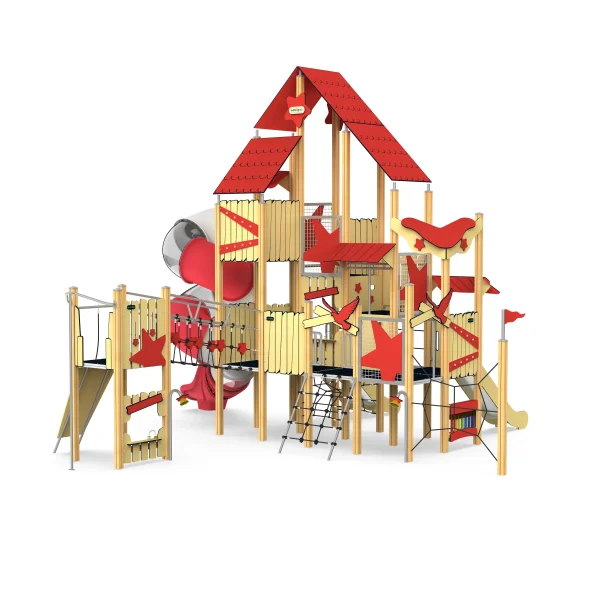
Before signing, verify the contract clauses. Ensure the delivery timeline includes a penalty for delay, confirm that the warranty start date is the installation completion date, not the shipping date, and clarify who bears the cost for any replacement parts during the warranty period. If importing, check whether the supplier will provide the necessary documentation for customs clearance, including the certificate of origin and test reports. Taking these steps before payment protects your school’s investment.
A playground supplier that can deliver on site, on time, and with full documentation is not easy to find. At Suzhou LvDong, we combine in-house design, manufacturing, and installation to give schools a single accountable partner. To discuss your project, including a custom 3D layout and a line-by-line quotation, contact us at [email protected] or WhatsApp +8613915684545.
Common Questions About Choosing a School Playground Supplier
Can we visit the supplier’s factory before placing an order?
Yes, and I strongly recommend it. Whether you travel to China or request a live video tour of the production floor, seeing the actual manufacturing environment helps validate the supplier’s claims. During the visit, ask to see raw material certificates, welding stations, and the packing process. A supplier that refuses a factory visit should raise immediate concerns.
How long does it take to produce and install a school playground?
Production typically takes 30 to 45 days from design confirmation, depending on complexity. Ocean shipping adds another 15 to 30 days, plus installation. For a standard set of 5 to 6 play units, our installation team can complete the work in 3 to 5 days, including ground preparation and safety surfacing. However, if you have a tight deadline, ask the supplier about expedited production or air freight options early in the conversation.
What ongoing maintenance is required for outdoor school playground equipment?
A simple monthly visual inspection of welds, fasteners, and moving parts, plus a more thorough quarterly safety audit, keeps equipment in good condition. I provide schools with a tailored maintenance calendar. The most common issues are loose bolts on swings and wear on plastic bushings, both of which can be fixed in under an hour if caught early. Budget for a spare parts kit that includes swing hangers, bearing sets, and touch-up paint.
How do you handle spare parts and support for schools overseas?
We maintain a full stock of spare parts in our warehouse and ship urgently when a school reports a breakage. For overseas clients, we advise including a small stock of consumable parts in the initial order, so that you do not have to wait for an international shipment in the middle of the school term. Share your maintenance requirements with us, and we can confirm which parts historically need replacement most often for your specific equipment mix. [email protected].
If you’re interested, check out these related articles:
Playground Equipment Quotes Spotting Hidden Costs Explained
20 Essential Questions Choosing a Playground Equipment Supplier
Maximizing Space Strategic Designs for Mall Indoor Playgrounds
Playground Slide Materials LLDPE vs 304 Steel Performance
Optimal Seasonal Care for Outdoor Metal Swing Sets