The decision to install new playground equipment at a school will shape children’s daily physical activity, social interaction, and safety for years. When you’re responsible for selecting a supplier, price is only one piece of the picture. The real work lies in identifying a manufacturer that can deliver age-appropriate design, documented safety compliance, and dependable after-sales support. School playground projects have a different set of demands than community parks or commercial play areas, and the supplier’s ability to understand those differences directly determines whether the equipment stays safe, engaging, and easy to maintain over time.
How Do You Begin Screening School Playground Equipment Suppliers?
Start by narrowing the field to manufacturers with demonstrated experience in school settings. A supplier that only works on residential backyards or light commercial installations may not be familiar with the usage intensity, supervision patterns, or educational goals that shape a school playground. I always recommend asking for a list of completed school projects and, when possible, visiting a fully installed site. At Suzhou LvDong, we’ve delivered over 1,500 projects across municipal parks, communities, and schools, which gives you a broad reference base.
During this early screening, pay attention to whether the supplier voluntarily shares safety documentation. If a manufacturer hesitates to provide test reports or compliance certificates upfront, that’s a signal worth noting. Schools need to demonstrate due diligence, and a supplier that understands this will have clear, ready-to-share records.
What Key Criteria Should You Use to Evaluate a School Playground Equipment Supplier?
Four evaluation pillars tend to separate reliable school suppliers from the rest.
Safety Compliance – Verify that the manufacturer’s equipment meets EN 1176 or ASTM F1487, and that they can supply third-party test reports for the specific products you’re considering. Ask whether the supplier performs internal quality audits and if they hold ISO 9001 certification. These are not just paper; they reflect a systematic commitment to consistent safety.
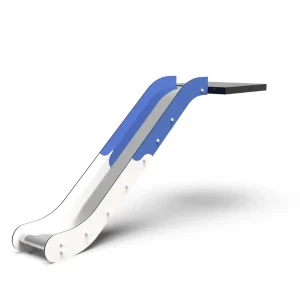
Material and Build Quality – For unpowered playground equipment, material selection directly affects longevity. Look for suppliers that use LLDPE for slides, 304 stainless steel for metal components, and weather-resistant coatings. For example, our spring riders use high-rebound steel springs with anti-rust treatment, and our spinning equipment frames are built to handle high-frequency use without developing play-eroding wobbles.
Age-Appropriate Range – A school playground typically serves multiple age groups, from kindergarten to upper primary. The supplier should offer equipment sized and designed for clear age grading—smaller grip diameters, lower platform heights, and gentler motion for younger children, with more challenging elements for older students. A supplier with a narrow catalog may try to stretch a single product across inappropriate age ranges.
Service Integration – The quote should clarify who handles ground preparation, installation, and what happens after handover. If the supplier’s responsibility ends at factory dispatch, you will need to manage multiple sub-contractors, which adds risk. I’ve seen projects derail because the installation team was unfamiliar with the equipment’s anchoring requirements, leading to delays and extra costs. A supplier that manages the full chain—design, production, installation, and after-sales—keeps accountability in one place.
Why Does a Supplier’s Design Capability Matter for Age-Appropriate Playgrounds?
Design capability is the factor most school buyers overlook. It’s easy to assume that as long as the equipment carries a safety certificate, the layout will work. But certification only confirms that the equipment itself meets structural and entrapment standards; it doesn’t guarantee that the assembled playground will suit your school’s specific age distribution, space, or educational goals.
A supplier with in-house design expertise can assess your site dimensions and propose zoning that separates active play from quiet areas, positions high-use swings away from slide exits, and creates natural supervision sightlines for teachers. For kindergartens, I often recommend low-height playhouses with gentle slides and interactive panels, while for primary schools, we might propose multi-function structures that combine climbing, sliding, and spinning challenges at appropriate heights. This isn’t generic work; it’s a balance of child development knowledge and engineering.
The design process should also include 3D renderings that let school administrators visualize the final layout before any steel is cut. When we work with school clients at LvDong, the design team produces a full 3D site plan showing equipment placement, fall zones, and circulation flow. This step catches conflicts early and gives stakeholders a concrete image of the outcome.
If your school has curriculum-linked goals—say, sensory play for early years or STEM-oriented activity panels for upper primary—discuss those early. A supplier that can propose equipment configurations aligned with educational objectives demonstrates depth that goes beyond simple manufacturing.
How Does the Project Delivery Process Work from Manufacturing to Installation?
Once the design is approved and production begins, the project delivery phase tests the supplier’s organizational discipline. A school timeline is often tied to summer breaks or a specific term, so delays can cascade into disruptions. I’ve learned to value suppliers that provide a clear production schedule, notify you of milestones, and coordinate logistics with the installation team directly.
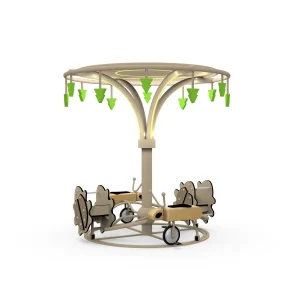
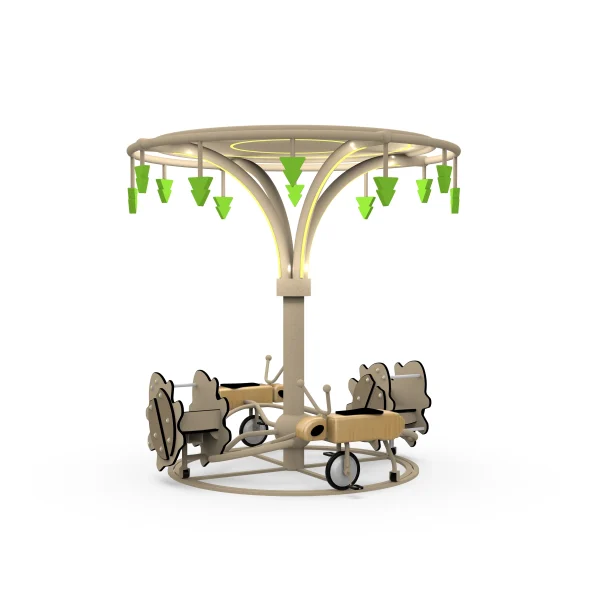
The installation itself requires more than just fastening bolts. Proper ground anchoring, fall-zone surfacing, and drainage all affect both safety and equipment life. For example, when we install spinning equipment like our multi-player spinning wheel, we ensure the base is leveled precisely and the fall height zone is free of obstacles. Our installers are trained on the specific models, which reduces the chance of error.
If your school is located outside the supplier’s home country, ask about their export packaging and logistics experience. Equipment protection during sea freight, customs clearance support, and whether they provide remote installation guidance or on-site supervision matter a great deal. Suzhou LvDong’s team has shipped to multiple regions, and we include detailed installation manuals plus a dedicated point of contact during the setup phase.
What After-Sales Support Should a School Playground Equipment Supplier Provide?
After the last bolt is tightened, the relationship with the supplier shouldn’t end. School equipment sees heavy, daily use, and eventually parts will need replacement or surfaces will need repainting. I advise checking three things before signing:
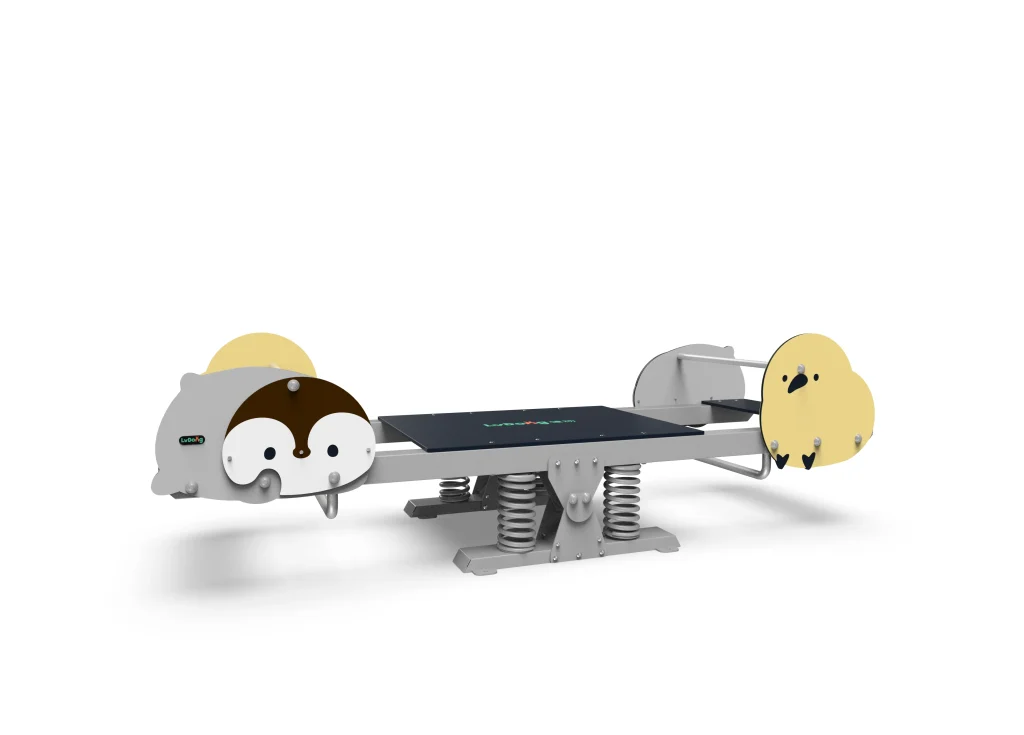
Spare Parts Availability – Confirm how long the supplier commits to stocking spare parts and typical lead times for items like swing bearings, spring assemblies, or slide connectors. A supplier that can’t supply a replacement spring rider spring within a few weeks can leave an unusable unit in the playground for months.
Warranty Terms – Compare not just the length but what’s covered. Does the warranty include structural integrity, rust-through, and fading? Is there a clear process for making a claim? We offer warranties that cover manufacturing defects, and we maintain an inventory of high-wear components to keep response times short.
Maintenance Support – A good supplier provides a seasonal maintenance checklist, advice on cleaning, and guidance on when to repaint or replace safety surfacing. For schools, I also recommend scheduling an annual professional inspection to catch loose fasteners or worn parts before they become hazards. Some suppliers, including ours, can arrange these inspections as part of an ongoing service agreement.
At the bare minimum, the supplier should be reachable by phone or message when questions arise once the equipment is in use. The WhatsApp number or email you had during purchasing should still connect you to a person, not a dead address.
How to Match a Playground Equipment Supplier with Your School’s Specific Needs
The decision to invest in a school playground isn’t a small one, and the right supplier partnership protects that investment across its full life. If you’re working through a procurement process, consider sharing your site dimensions, age groups, and any special requirements—such as inclusive access or curriculum-linked design—with a few shortlisted manufacturers and asking them to submit a preliminary layout concept. Their responsiveness and the thoughtfulness of their proposal often tell you more than a price list can.
We welcome the chance to discuss your project. You can share your requirements with us at [email protected] or reach our team via WhatsApp at +8613915684545. We’ll provide a design consultation, answer your compliance questions, and help you assess the options.
Common Questions About Choosing a School Playground Equipment Supplier
What safety certifications are essential for a school playground supplier?
A supplier should provide EN 1176 or ASTM F1487 test reports for the specific equipment models they are quoting, not just generic company certificates. Additionally, ISO 9001 quality management certification indicates systematic production oversight. Ask for recent test reports from an accredited lab, and confirm they cover moving parts, entrapment points, and structural load.
How long does it take from design approval to a fully installed school playground?
Timelines vary by project complexity, but a typical school playground with custom design and multiple equipment types takes around 6 to 10 weeks from design sign-off to installation completion, assuming no unusual site preparation. This includes production, quality checks, packaging, shipping, and on-site assembly. Discuss your target completion date early so the supplier can plan production slots accordingly.
Can a supplier customize playground equipment to match our school’s educational theme?
Yes, many experienced school suppliers offer custom design services. This could mean incorporating school colors into panel graphics, designing a themed playhouse that ties into a science or nature curriculum, or adjusting platform heights to suit a particular age mix. Provide examples or mood boards early, and evaluate the supplier’s past custom projects to gauge their flexibility.
What should we look for in a supplier’s warranty for school playgrounds?
Look beyond the duration. Structural warranties against manufacturing defects matter, but also check provisions for surface finish (rust, fading) and moving parts. Some warranties cover parts but not labor for replacement, which can be significant for large equipment. Our warranties address manufacturing defects, and we stock spares for common high-wear items like spring mechanisms and bearings to reduce downtime.
How do we handle maintenance after the warranty period ends?
Start by requesting a seasonal maintenance schedule from the supplier during handover. We supply a calendar for inspections, cleaning, and lubrication. If your school lacks maintenance staff, ask whether the supplier can arrange periodic inspection visits—even if it’s an additional service. Keeping up with small fixes early avoids larger repairs later. For any maintenance concerns or to request spare parts, you can always reach us directly.
If you’re interested, check out these related articles:
Free 3D Design for Community Park Playground Equipment Solutions
Safe Quiet Cleanable Playground Equipment for Hospitals