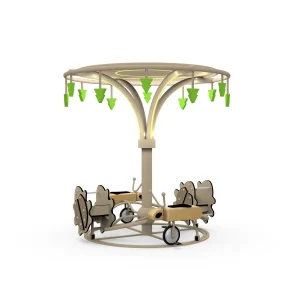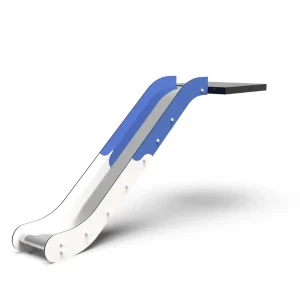
Choosing the right playground equipment supplier for a school is a decision that goes far beyond comparing quotes. Over the past decade, I have seen how a supplier’s in-house design and manufacturing capability—or the lack of it—directly affects safety, durability, and long-term cost. A school playground is a high-use environment where children’s well-being depends on precise engineering, certified materials, and reliable after-sales support. A trading company that simply resells equipment cannot give you the same assurance as a factory that controls every stage from raw material to final installation. This article explains what to look for in a supplier so you can avoid the hidden risks that surface months after the playground opens.
Key Criteria for a School Playground Equipment Supplier
Before you request a single quote, get clear on what a school environment actually demands. Unlike a residential setup, a school playground must withstand daily use by dozens of children, comply with institutional safety protocols, and support age-appropriate physical development curricula. That means your supplier evaluation must prioritize a few non-negotiable factors.
First, confirm that the supplier has verifiable in-house production. A supplier that designs and manufactures its own equipment can provide full-chain traceability of materials, welding joints, and finishing processes. If you are dealing with a third-party reseller, you lose that visibility. Second, look for documented safety testing. The most reliable manufacturers test their products to EN 1176 or equivalent national standards and can provide test reports on request. Third, ask about the supplier’s track record in educational projects. Municipal playgrounds and school playgrounds have different usage patterns, and a supplier that understands the school context will recommend equipment that balances physical challenge with supervised safety.
When I speak with school administrators, I often find that they have been burned by a supplier who delivered equipment that looked fine in the catalog but showed rust or loose parts after a single rainy season. That kind of failure usually traces back to skipped quality control steps at the production level—something a factory-direct supplier with on-site quality teams can prevent.
Verifying Safety Certifications and Quality Control
Safety certification is the area where many school procurement teams accept superficial reassurances and later regret it. A supplier may claim “EN compliance,” but unless you can see the test report, the claim is empty. You need to verify that the actual equipment model you are ordering has passed dynamic load tests, stability tests, and entrapment checks—not just a similar product from the same factory.
Start by requesting the supplier’s third-party test reports from an accredited laboratory. These reports should reference specific standards like EN 1176, GB/T 34272-2017, or ASTM F1487 depending on your region. Review the report’s scope: does it cover exactly the slide platform height, swing frame geometry, and fall zone configurations you are buying? If the supplier hesitates or offers a generic certificate, take that as a warning sign.
In our own factory, every product batch undergoes in-process inspection and final testing before shipment. Welded joints are checked for penetration and finish. Rotational components are tested for smoothness under load. Surface coatings are tested for weather resistance and heavy-metal content. This level of detail is only possible when quality control is embedded in the manufacturing workflow, not outsourced to a distant subcontractor.
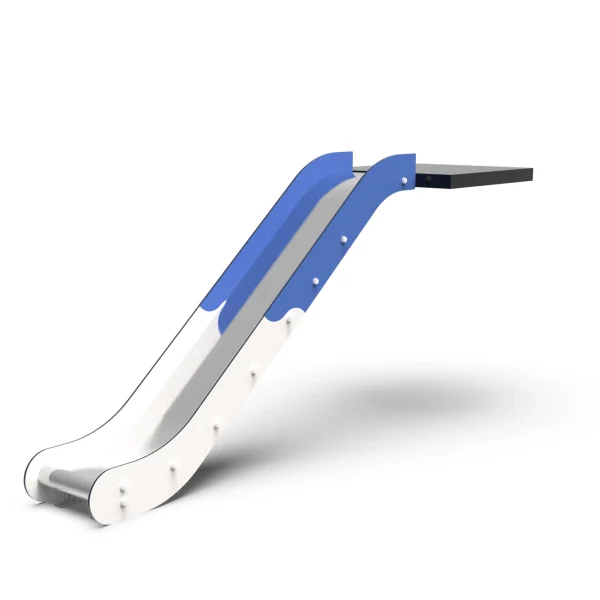
A simple checklist for safety verification:
| Check Item | What to Look For | Red Flags |
|---|---|---|
| Test reports | Reports from ILAC-accredited labs, referencing the exact product model | Generic certificate with no model number, or only a CE mark without lab report |
| Fall height data | Maximum fall height clearly stated for each component; surrounding safety surface specification provided | Supplier cannot provide fall height measurements or expected surface depth |
| Age grading | Equipment labeled with the intended age range, verified by the test report | Equipment marketed for “all ages” without specific grading |
| Structural warranty | Warranty that covers structural integrity for at least 3–5 years | Warranty limited to 1 year or with exclusions for “normal wear” that should be covered |
Design Customization and Age-Appropriate Solutions
A school playground is not a collection of random pieces; it should be a coherent environment that supports different age groups and educational goals. The best suppliers do not just sell you a catalog item—they work with you on layout, equipment selection, and theme integration.
What makes a supplier’s design service valuable is its grounding in real production knowledge. When our team creates a 3D playground proposal for a school, we immediately know whether a given layout is physically buildable because the same team will manufacture it. That integration eliminates the gap between a beautiful rendering and an installable structure. We also factor in age-appropriate zoning: for example, a kindergarten area might require lower platform heights (under 60 cm) and spring riders, while a primary school zone can incorporate multi-user seesaws and spinning wheels with higher challenge levels.
Ask the supplier how they approach age grading. Do they simply apply a label, or can they explain the developmental reasoning behind the equipment selection? A supplier that can connect equipment choices to gross motor skill development, social play patterns, and safety supervision sightlines demonstrates a deeper understanding of what a school needs.
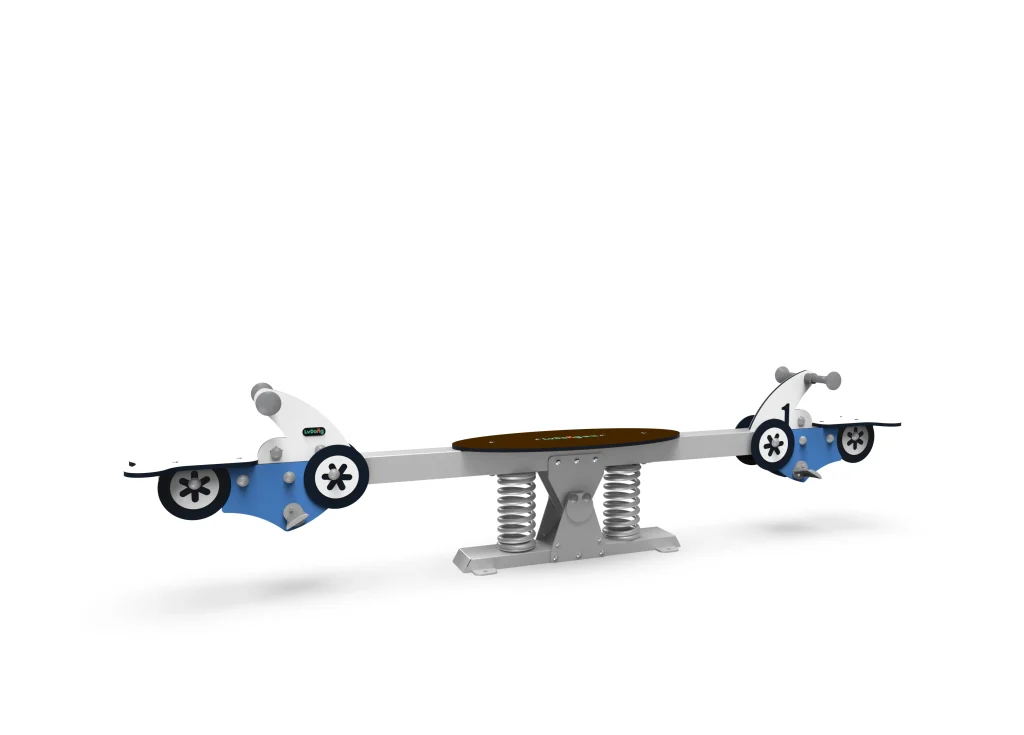
If your school has a particular theme or educational objective—say, a nature-based sensory play area—the supplier should be able to customize colors, panel designs, and even structural elements without compromising safety compliance. That level of customization is typically only available from factories with in-house design teams and CNC fabrication capability.
Production Capability and Installation Service
A beautifully designed playground becomes a liability if the installation is rushed or the components arrive damaged. Understanding the supplier’s production and installation workflow helps you predict how smoothly your project will go.
Start by asking about the production facility. A supplier with a dedicated, organized factory—like our 10,000-square-meter intelligent production base—can control lead times and quality more reliably than one that outsources manufacturing. During the quoting phase, request photos or videos of the production line for the specific equipment you are ordering, not just a showroom display.
Installation is another critical checkpoint. Many school projects run on tight summer renovation windows, and a delay of even two weeks can push the playground opening into the school year. The supplier should provide a clear installation timeline, the number of technicians they will send, and a post-installation testing checklist. In our projects, we allocate a dedicated installation supervisor for each site and conduct a 12-point acceptance test before handing over the keys. This includes checking all fasteners, verifying fall zone surfacing depth, and confirming that moving parts operate without abnormal noise.
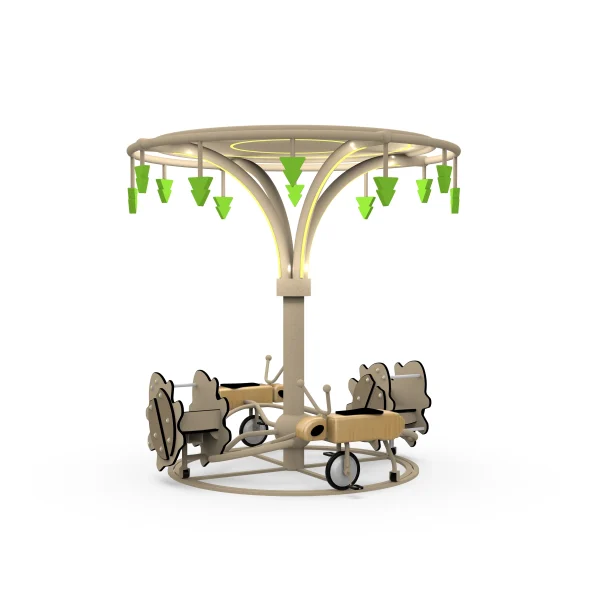
A common mistake is assuming the local general contractor can handle playground installation. The equipment’s structural integrity often depends on precise torque specifications for fasteners and correct ground anchoring methods that are specific to each manufacturer. If the supplier does not offer trained installation crews, factor in the risk of improper installation into your cost-benefit analysis.
After-Sales Support and Warranty Evaluation
The true test of a supplier is how they behave after the final payment clears. School playgrounds need ongoing maintenance: paint touch-ups, replacement of worn bearings or spring elements, and sometimes post-installation adjustment of moving parts. Without a reliable spare parts supply, even a high-quality playground can become idle.
Ask the supplier to specify their spare parts stock policy and typical delivery time for common wear components—springs, bearings, swing chains, and seat elements. A factory-direct supplier can maintain a warehouse of spare parts and ship them within days. A trading company often must go back to the original manufacturer, which can add weeks to your downtime.
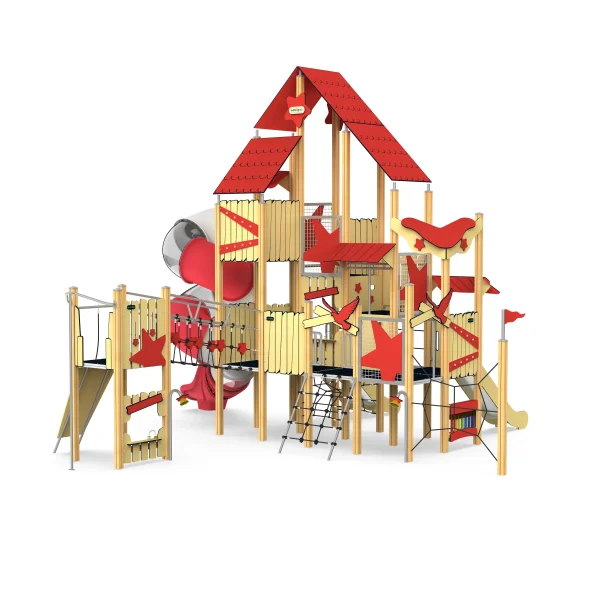
Warranty terms also reveal how much confidence the supplier has in their product. Look beyond the warranty period. A meaningful warranty provides clear coverage for structural failure, surface coating degradation, and parts replacement. It should also state the process for making a claim and the expected response time. In our contracts, we distinguish between structural warranty (typically 5 years), coatings warranty (3 years), and wear parts warranty (1 year), because each component has a different lifecycle. This transparency helps schools budget for long-term ownership.
Comparing Quotes and Making the Final Choice
When you have quotes from several suppliers, the temptation is to sort by price and pick the lowest. But a playground that costs less upfront can become far more expensive over five years if it requires frequent repairs, lacks spare parts, or forces you to replace entire units because individual components are not available separately.
I recommend building a total-cost-of-ownership comparison. Add up the quoted price, estimated installation costs if separate, projected maintenance costs over a 5-year period based on the warranty and spare parts availability, and any cost of delayed delivery. A slightly higher equipment price that includes on-site installation supervision, a generous spare parts kit, and a 5-year structural warranty often works out cheaper than a bare-bones low bid.
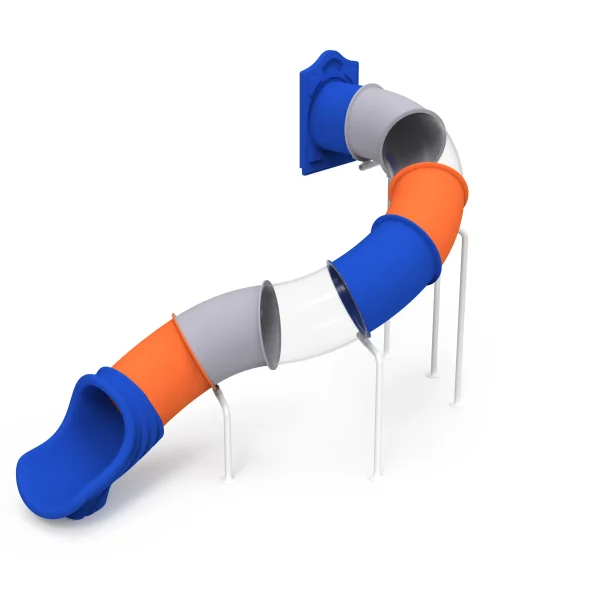
Also consider the supplier’s willingness to share references from school projects similar to yours. Contact those references and ask specific questions: Did the installation stay on schedule? Were there any safety issues during the first year? How responsive was the supplier when a problem arose? Answers to those questions are more revealing than any glossy brochure.
Move Forward with a Supplier Who Delivers the Full Picture
Choosing a playground equipment supplier for your school is ultimately about trust—trust in their quality control, their safety documentation, and their willingness to stand behind their work. A reliable supplier will not hide behind a sales agent who vanishes after the deal closes. They will give you a clear design proposal, verifiable test reports, a detailed installation plan, and a transparent warranty.
If you are ready to discuss your school playground project, we can provide a custom 3D design layout, full safety compliance documentation, and a detailed quotation that includes installation and after-sales support. Send your site dimensions and age-group requirements to [email protected], or reach us via WhatsApp at +8613915684545. We will respond with a practical, buildable proposal that matches your educational goals and safety requirements.
Common Questions About Choosing a Playground Equipment Supplier
What safety certifications should I insist on when evaluating a playground equipment supplier?
At a minimum, the supplier should provide third-party test reports that reference EN 1176 or your country’s equivalent standard for the specific product model you are buying. A CE declaration alone is not enough—you need the lab report. For school projects, also verify that the equipment meets any local education authority safety guidelines, and ask for chemical safety certifications like RoHS or REACH if the equipment includes plastics or rubber components.
How can I tell if a supplier is a factory or a trading company?
Ask for a recent photo or video of the production floor that shows the equipment you are ordering being manufactured, not just a showroom display. A factory will readily provide this; a trading company will make excuses. You can also request a factory visit, either in person or via a third-party inspection service. If the supplier cannot arrange this, treat it as a significant risk factor.
How long does playground equipment typically last in a school environment?
With proper maintenance, a well-built school playground should function safely for at least 8 to 10 years. The main structure (steel frames, heavy-duty plastic components) often lasts longer, while wear parts like swing bearings, spring elements, and chains may need replacement every 2 to 3 years depending on usage intensity. A supplier who provides clear component lifespan estimates and maintains spare parts inventory gives you a realistic long-term plan.
What if I need spare parts for playground equipment that is several years old?
A reputable factory retains design files and tooling for its product lines, and can manufacture or retrieve parts for equipment that is no longer in current production. If your supplier is a reseller, they may not be able to source parts when the original factory changes its catalog. Confirm the spare parts policy before you commit—ask for a written statement of parts availability duration.
What is the best way to evaluate a supplier’s installation capability before signing a contract?
Ask the supplier to walk you through their standard installation process and provide a post-installation acceptance checklist. They should identify the number of technicians, the expected installation duration, and the specific tests they will perform before handover (e.g., fastener torque checks, fall surface depth measurements, moving-part cycle testing). If they cannot articulate these details, they are likely relying on a third-party crew with no specialized training on their equipment. Share your project requirements and we can provide a detailed installation plan that addresses your site conditions and school calendar constraints.
If you’re interested, check out these related articles:
Space Saving Cantilever Swing Set Design for Urban Play Environments
Annual Maintenance Calendar for Outdoor Play Equipment A Guide
Playground Slide Materials LLDPE vs 304 Steel Performance
Playground Equipment Warranty Comparison 1 3 or 5 Years