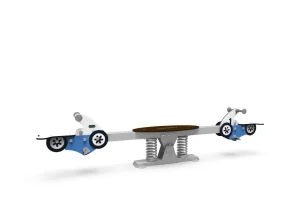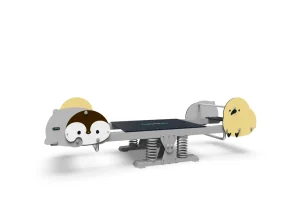
Keeping children safe on playground equipment matters more than any other design consideration. Balanced weight distribution in teeter totters addresses this directly by creating stable, predictable motion that children can anticipate and control. The technology reduces sudden impacts and uneven forces, which means children of different sizes can share the same teeter totter without one side slamming down unexpectedly. Equipment built around this principle meets safety standards while making play accessible to a broader range of children.
How Balanced Weight Distribution Actually Works in Teeter Totters
Traditional teeter totters rely on a simple lever: a long board balanced on a central fulcrum. The problem shows up immediately when two children of different weights sit on opposite ends. The heavier child drops, the lighter child rises abruptly, and the motion becomes unpredictable. I have seen playgrounds remove teeter totters entirely because of this issue.
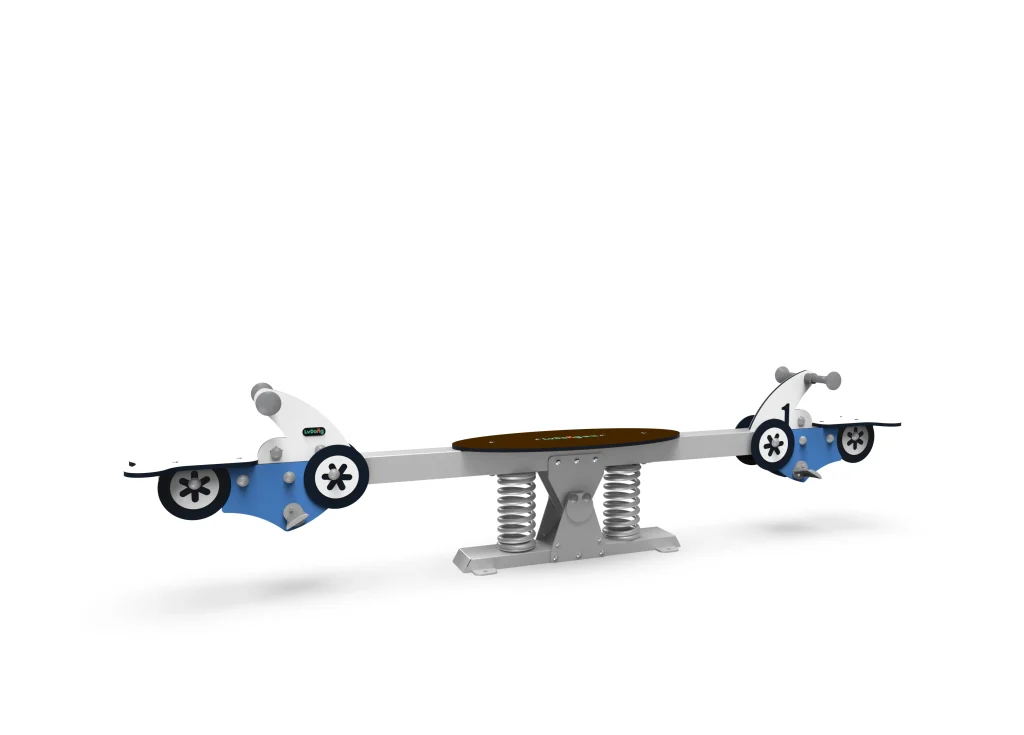
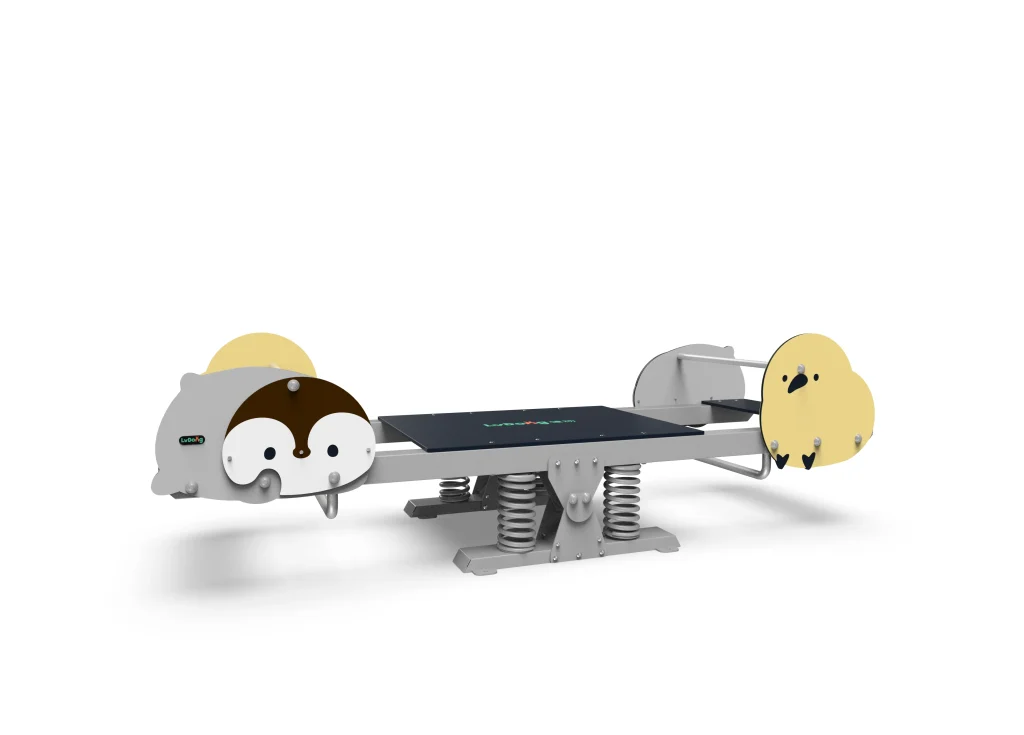
Balanced weight distribution systems change the mechanics. Spring-assisted bases absorb excess downward force, so even when one child weighs significantly more than the other, the descent stays controlled. Internal dampeners work similarly, slowing the motion rather than letting gravity take over. The pivot point itself can be calibrated to account for typical weight disparities in the target age group.
The result is motion that children can predict. A child sitting on the high end knows roughly how fast they will descend and can brace accordingly. This predictability is what separates a safe teeter totter from one that causes injuries.
Why Advanced Weight Distribution Systems Matter for Playground Planning
The benefits extend beyond preventing accidents, though that remains the primary consideration.
Controlled descent means fewer emergency room visits from children who were jarred off the seat or caught a foot under the descending board. It also means fewer complaints from parents and less liability exposure for facility managers.
Inclusivity improves measurably. A traditional teeter totter effectively requires two children of similar weight. Advanced systems accommodate a wider range, so a six-year-old and a nine-year-old can play together, or siblings with a significant age gap can share the equipment. This changes how children interact on the playground. They spend more time on equipment they can actually use together.
Robust engineering in unpowered amusement equipment reflects a commitment to quality that shows up in inspection reports and service life data.
| Feature | Traditional Teeter Totter | Advanced Balanced Teeter Totter |
|---|---|---|
| Weight Disparity Handling | Prone to sudden drops | Smooth, controlled descent |
| Impact Absorption | Minimal | Integrated dampening/springs |
| User Inclusivity | Limited by weight match | Accommodates wider weight range |
| Safety Risk | Higher potential for jarring/falls | Reduced risk of injury |
| Play Experience | Can be abrupt and less predictable | Stable, predictable, and enjoyable |
Material Selection That Determines Teeter Totter Longevity
The choice of materials affects both safety and total cost of ownership over a ten-year installation period.
Heavy-gauge galvanized steel for structural components resists corrosion in outdoor environments. I have inspected installations where cheaper steel showed significant rust within three years, compromising structural integrity and creating sharp edges. Galvanized frames in similar conditions showed minimal degradation after a decade.
Seats and handles require different considerations. High-density polyethylene (HDPE) resists UV degradation, which matters in any installation with significant sun exposure. The material stays smooth, reducing splinter and abrasion risks. It also maintains structural properties across temperature extremes, from summer heat to winter cold.
Springs and pivot mechanisms take the most stress. High-strength, fatigue-resistant alloys handle the repetitive loading cycles that accumulate over years of daily use. Specifying the right alloy grade here prevents the gradual loosening and eventual failure that characterizes cheaper components.
If your playground serves children with diverse physical abilities, discussing material specifications with your supplier before ordering can prevent accessibility problems later.
Installation and Maintenance Practices That Preserve Safety
Proper implementation and consistent maintenance determine whether the equipment performs as designed.
Select models rated for the specific age range and user capacity of your playground. A teeter totter designed for ages 5-12 has different specifications than one designed for ages 2-5. Mismatched equipment creates exactly the safety problems balanced weight distribution is meant to prevent.
Follow manufacturer guidelines for anchoring and assembly. Shortcuts during installation create long-term problems. Inadequate anchoring allows the entire unit to shift under load, which throws off the calibrated balance.
Conduct inspections on a routine schedule. Check for loose bolts, worn parts, and signs of material fatigue. The frequency depends on usage intensity. A playground serving 200 children daily needs more frequent inspection than one serving 20.
Keep pivot points and spring mechanisms lubricated. Dry mechanisms bind, creating jerky motion that defeats the purpose of balanced weight distribution. They also wear faster, increasing replacement costs.
Replace damaged components promptly. A worn spring or cracked dampener cannot provide the controlled motion the system was designed to deliver.
Different Approaches to Weight Distribution in Seesaw Design
Several distinct systems exist, each with different characteristics.
Heavy-duty springs at the base absorb impact and provide a gentler return stroke. This approach works well for high-traffic installations where durability matters most. The springs require periodic replacement but are relatively inexpensive components.
Hydraulic or pneumatic dampeners control descent speed more precisely. They provide smoother motion than springs but require more maintenance and cost more to replace. Facilities with dedicated maintenance staff often prefer this approach.
Adjustable fulcrums allow operators to shift the pivot point based on typical user weights. This works well in settings where the user population is consistent, such as a preschool playground where all children fall within a narrow age and weight range.
Counterweight systems add mass to the lighter side automatically. These are mechanically complex but provide the most seamless user experience.
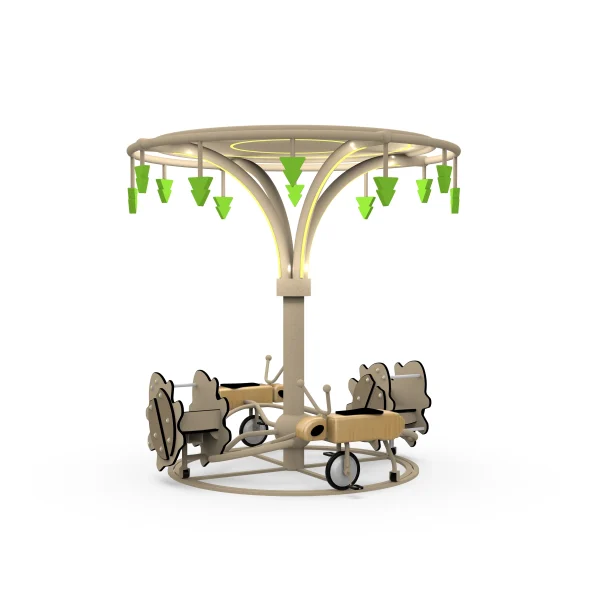
Where Unpowered Playground Equipment Development Is Heading
Design priorities continue shifting toward dynamic, interactive equipment that supports physical and cognitive development simultaneously.
Weight distribution technology in teeter totters represents one thread of this broader evolution. Spinning mechanisms now incorporate speed governors that prevent dangerous rotational velocities. Climbing structures use materials and geometries that reduce fall severity. Sensory elements integrate into traditional equipment types, providing stimulation for children who benefit from varied textures and sounds.
The underlying principle remains consistent: equipment should support children’s development while minimizing injury risk. Integrated R&D and innovative approaches drive the development of premium unpowered amusement solutions that achieve both goals. Continuous refinement of engineering and design principles creates richer and safer play experiences for the children who will use this equipment daily.
Frequently Asked Questions
How does balanced weight distribution impact the lifespan of a teeter totter?
Balanced weight distribution extends equipment lifespan by reducing stress concentrations on structural components. Traditional teeter totters experience repeated high-impact loading when one side slams down. This cycling fatigues metal, loosens fasteners, and cracks plastic components. Balanced systems spread forces more evenly across the structure and absorb peak loads through springs or dampeners designed for that purpose. The pivot point experiences less wear because motion stays controlled rather than jerky. Facilities typically see 30-50% longer service life compared to traditional designs, with corresponding reductions in maintenance costs and replacement frequency.
Is balanced weight distribution technology suitable for all age groups on a teeter totter?
The technology accommodates a wider range of ages and sizes than traditional designs, though specific models still have rated age ranges. A teeter totter designed for ages 5-12 with balanced weight distribution handles the weight differences typical in that range, which can be substantial. A 50-pound five-year-old and an 80-pound twelve-year-old can play together safely. The same equipment would not be appropriate for toddlers, who need different seat heights, handle sizes, and motion characteristics. Manufacturers produce balanced teeter totters for different age groups, and selecting the right model for your user population matters as much as the balancing technology itself.
What are the regulatory requirements for teeter totters with advanced weight distribution?
Teeter totters with advanced weight distribution must comply with the same standards as traditional designs. In the United States, ASTM F1487 covers public playground equipment, specifying requirements for entrapment hazards, fall heights, structural integrity, and material safety. European installations must meet EN 1176. These standards do not mandate specific balancing technologies but do require that equipment perform safely under expected use conditions. Balanced weight distribution systems help meet requirements for controlled motion and impact absorption. Certification testing verifies that the specific design complies with applicable standards regardless of the balancing mechanism used. To discuss how specific models meet your regulatory requirements, contact Suzhou LvDong at [email protected] or WhatsApp +8613915684545.
If you’re interested, check out these related articles:
Annual Maintenance Calendar for Outdoor Play Equipment A Guide
8 Essential Certifications for Playground Equipment Manufacturers