Creating a safe playground environment demands attention to every detail, especially for equipment like teeter totters. These classic pieces offer dynamic play, but their movement requires specific ground surfacing and buffer zone considerations to prevent injuries. Understanding and implementing these safety measures goes beyond compliance—it protects children and keeps their play experiences free from avoidable harm. My focus as a designer is always on balancing the thrill of play with the highest safety standards.
How Safety Zones Shape Teeter Totter Placement
Effective playground design starts with a clear understanding of safety zones. These designated areas around equipment minimize the risk of injury from falls or collisions. Regulatory bodies like the American Society for Testing and Materials (ASTM) and the Consumer Product Safety Commission (CPSC) provide comprehensive guidelines that form the foundation of our design and installation practices. Adhering to these standards allows children to play freely within a protected environment.
The use zone is the area where a child might land after falling from or exiting a piece of equipment. For teeter totters, this zone extends beyond the equipment’s footprint to account for the dynamic motion of the fulcrum arm. A child dismounting at the low point of the arc travels a different trajectory than one stepping off at the high point, and the use zone must accommodate both scenarios.
| Standard Body | Focus Area | Key Requirements |
|---|---|---|
| ASTM F1487 | Playground Equipment | General safety, structural integrity, materials |
| ASTM F1292 | Impact Attenuation | Performance of surfacing materials for fall heights |
| CPSC Handbook | Public Playgrounds | Comprehensive guidelines for design, installation, maintenance |
| EN 1176 | European Standard | Safety requirements for playground equipment and surfacing |
Which Ground Surfacing Materials Absorb Impact Best
Choosing the right ground surfacing material is paramount for teeter totter safety. The primary goal is to provide adequate impact attenuation, meaning the surface must absorb enough energy to reduce the severity of injuries from falls. This selection links directly to the equipment’s critical fall height, defined as the vertical distance between the highest designated play surface and the protective surfacing below.
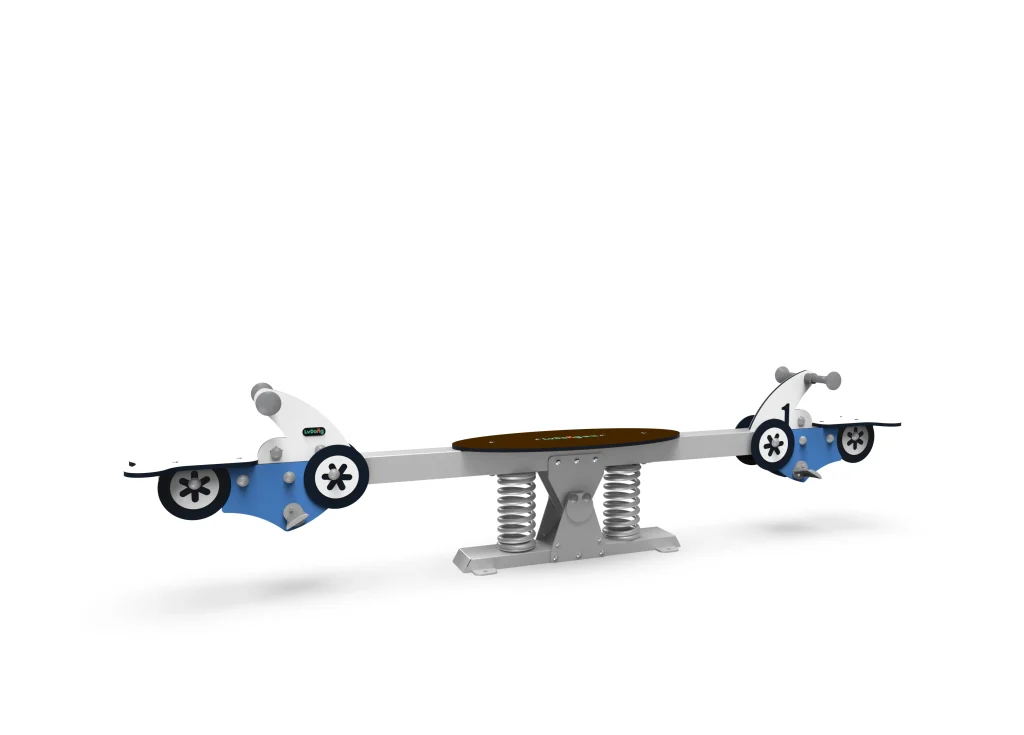
Our team at Suzhou LvDong Amusement Equipment Co.,Ltd designs equipment with specific critical fall heights in mind, allowing us to recommend the optimal safety surfacing for each project. The Multi-Person Outdoor Playground Seesaw has a maximum fall height of 60 cm, requiring surfacing that meets or exceeds this rating.
When I design a playground, I always consider the specific equipment and its potential fall height. For a project in a community park last year, we installed several teeter totters. The client initially considered only basic wood chips. After reviewing the critical fall height of the teeter totters, I recommended a deeper layer of engineered wood fiber to achieve the required impact attenuation, which we measured at 30 cm. This decision ensured compliance with ASTM F1292 and provided a safer play surface for the children.
| Material Type | Pros | Cons | Recommended Fall Height |
|---|---|---|---|
| Engineered Wood Fiber | Cost-effective, good drainage | Requires regular raking, can compact | Up to 12 feet |
| Poured-in-Place Rubber | Accessible, low maintenance | Higher initial cost, professional install | Up to 12 feet |
| Rubber Mulch | Durable, aesthetically pleasing | Can be displaced, higher cost | Up to 12 feet |
| Sand/Pea Gravel | Inexpensive, good drainage | Requires maintenance, can hide debris | Up to 5 feet |
The recommended depth for playground surfacing materials depends directly on the critical fall height of the equipment. For loose-fill materials like engineered wood fiber or rubber mulch, CPSC guidelines often suggest a minimum depth of 6 inches for fall heights up to 4 feet, with an additional 3 inches for every subsequent foot of fall height. Poured-in-place rubber systems are typically installed to specific thicknesses certified to meet ASTM F1292 for the equipment’s critical fall height.
What Buffer Zone Dimensions Keep Children Safe
Beyond the immediate ground surfacing, buffer zones and proper equipment spacing prevent collisions between children on different pieces of equipment or those entering and exiting the play area. A buffer zone is a clear space around each piece of equipment, free from obstacles, other equipment, or hard surfaces. For teeter totters, this clear space must accommodate the full range of motion of the equipment and the children using it.
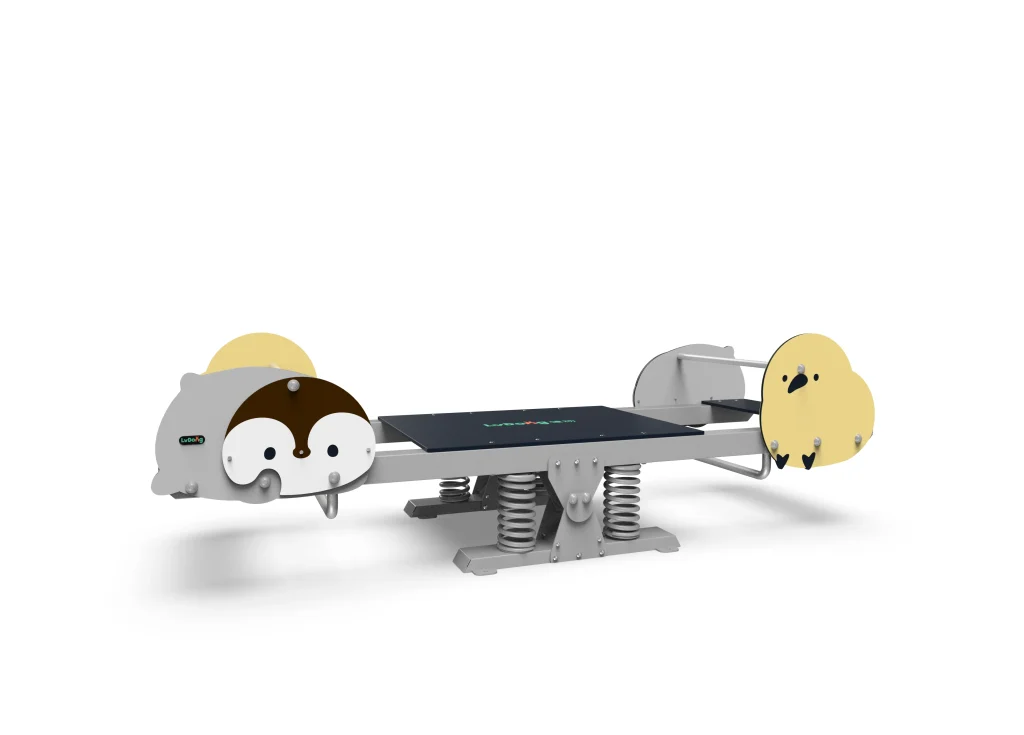
The CPSC Public Playground Safety Handbook provides specific recommendations for minimum clearances. A teeter totter requires a use zone that extends at least 6 feet from the perimeter of the equipment in all directions, or more if the equipment’s motion extends further. This ensures that a child falling off the teeter totter does not land on another piece of equipment or a hard surface. Adjacent equipment must be spaced far enough apart so that their respective use zones do not overlap.
A teeter totter should be positioned so its use zone does not overlap with the use zones of other playground equipment. The CPSC guidelines recommend a minimum of 6 feet of clear space around the perimeter of stationary equipment. For equipment with a defined perimeter of movement, like a teeter totter, the use zone extends 6 feet from the farthest point of the equipment’s arc of travel. This prevents collisions and ensures children have ample room to play safely. Our comprehensive design services at Suzhou LvDong Amusement Equipment Co.,Ltd ensure precise buffer zone implementation and optimal equipment spacing for all our amusement structures, including teeter totters.
How to Install Teeter Totter Ground Systems Correctly
Proper installation of teeter totters and their surrounding ground systems is fundamental to long-term safety and compliance. This process involves several critical steps to ensure the equipment is secure and the safety surfacing performs as intended.
- Site Preparation: Clear the site of any debris, rocks, or uneven terrain.
- Sub-Base Preparation: Establish a stable and well-drained sub-base. This often involves compacting soil and adding a layer of crushed stone to facilitate drainage and prevent water accumulation, which can degrade surfacing materials over time.
- Equipment Anchoring: Securely anchor the teeter totter according to manufacturer specifications. This typically involves concrete footings or other robust anchoring systems to prevent tipping or shifting during use. The Multi-Person Outdoor Playground Seesaw requires robust anchoring to ensure its stability for multiple users.
- Install Edging/Containment: For loose-fill materials, install a perimeter containment system, such as plastic or timber borders, to keep the surfacing material within the designated use zone.
- Apply Safety Surfacing: Distribute the chosen safety surfacing material evenly across the entire use zone to the recommended depth. For loose-fill materials, ensure consistent depth and periodically check for compaction or displacement. For poured-in-place rubber, ensure professional installation to achieve uniform thickness and impact attenuation properties.
- Leveling and Accessibility: Ensure the surfacing is level and, where applicable, provides accessible routes for children with disabilities, complying with ADA standards.
What Maintenance Keeps Teeter Totter Surfacing Compliant
The commitment to playground safety does not end with installation. It requires continuous oversight and proactive maintenance. Regular inspections and timely repairs sustain safety standards and regulatory adherence throughout the playground’s lifespan. Weather, usage patterns, and natural degradation can compromise the integrity of both the equipment and the safety surfacing.
We recommend a structured maintenance schedule to address potential issues before they become hazards. This includes checking for proper surfacing depth, inspecting equipment for wear and tear, and ensuring all fasteners are secure.
| Item to Check | Frequency | Action Required |
|---|---|---|
| Surfacing Depth | Weekly/Monthly | Rake and replenish loose-fill materials as needed |
| Equipment Structure | Monthly | Inspect for cracks, rust, loose bolts, sharp edges |
| Drainage System | Quarterly | Clear debris, ensure proper water flow |
| Use Zone Clearance | Weekly | Remove obstacles, ensure clear buffer zones |
| Signage/Labels | Annually | Verify legibility and presence of safety signs |
| Anchoring Systems | Annually | Check for stability and corrosion |
Daily visual checks are recommended for loose-fill materials to assess depth and identify foreign objects. More detailed weekly or monthly inspections should evaluate wear, compaction, and potential hazards to ensure critical fall height compliance. Annual comprehensive inspections by a certified playground safety inspector identify structural issues and verify overall regulatory adherence. If your facility has specific maintenance questions or needs guidance on inspection protocols, discussing your situation with a specialist can clarify the best approach for your equipment and site conditions.
Suzhou LvDong Amusement Equipment Co.,Ltd offers after-sales support and expert guidance on maintaining safety standards and regulatory compliance for the playgrounds we install.
FAQ
Are there different safety standards for public vs. private playgrounds?
The core principles of playground safety remain consistent, but differences exist in enforcement and liability standards between public and private playgrounds. Public playgrounds are typically subject to more stringent regulatory oversight, often mandated to comply with CPSC guidelines and ASTM F1487 standards. Private playgrounds, such as those at daycares or apartment complexes, may not always be legally required to meet the same level of compliance. Adherence to these standards is always recommended for child safety and liability protection regardless of ownership type.
Can existing playground surfacing be upgraded to meet new standards?
Many existing playground surfacing materials can be upgraded to meet current safety standards. This often involves adding more loose-fill material to achieve the required depth for impact attenuation, installing new layers of poured-in-place rubber, or replacing degraded sections. Upgrades should always consider the equipment’s critical fall height and comply with ASTM F1292 to ensure adequate shock absorption. A site assessment can determine whether your current surfacing needs supplementation or full replacement.
What is the minimum use zone size for a standard teeter totter?
The minimum use zone for a standard teeter totter extends at least 6 feet from the perimeter of the equipment in all directions. For teeter totters with longer beams or higher pivot points, the use zone must extend 6 feet from the farthest point of the equipment’s arc of travel. This measurement accounts for the full range of motion and the potential trajectory of a child dismounting or falling from any position on the equipment. To discuss specific requirements for your playground project, contact us at [email protected] or WHATSAPP:+8613915684545.
Small Space Solutions for Restaurant Childrens Play Areas
UV Resistance Testing Protecting Outdoor Playground Spring Riders