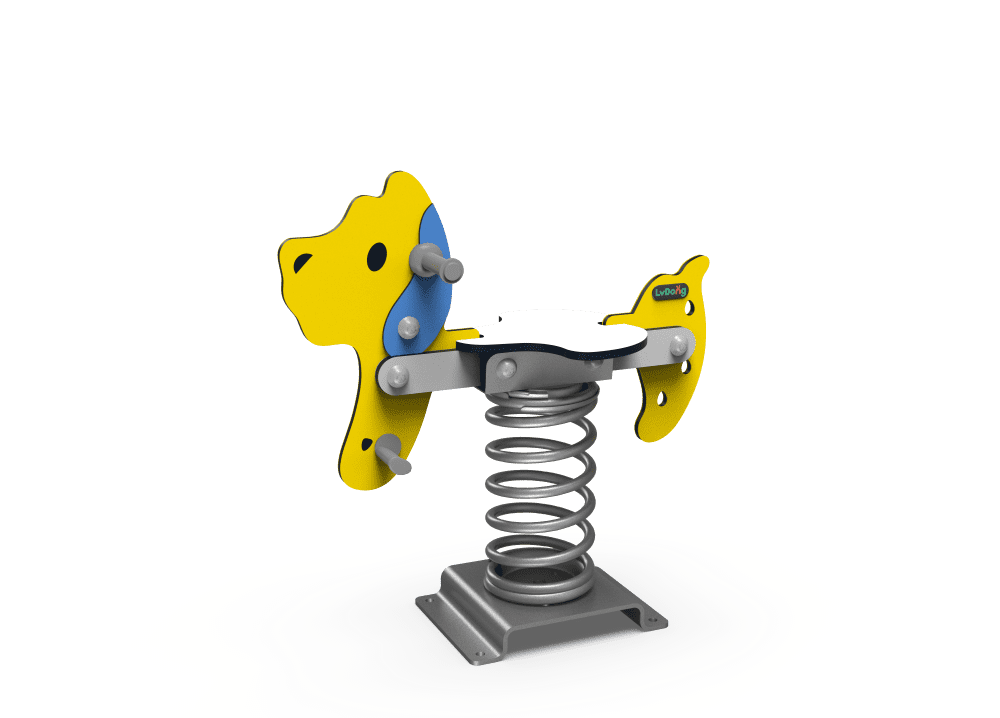
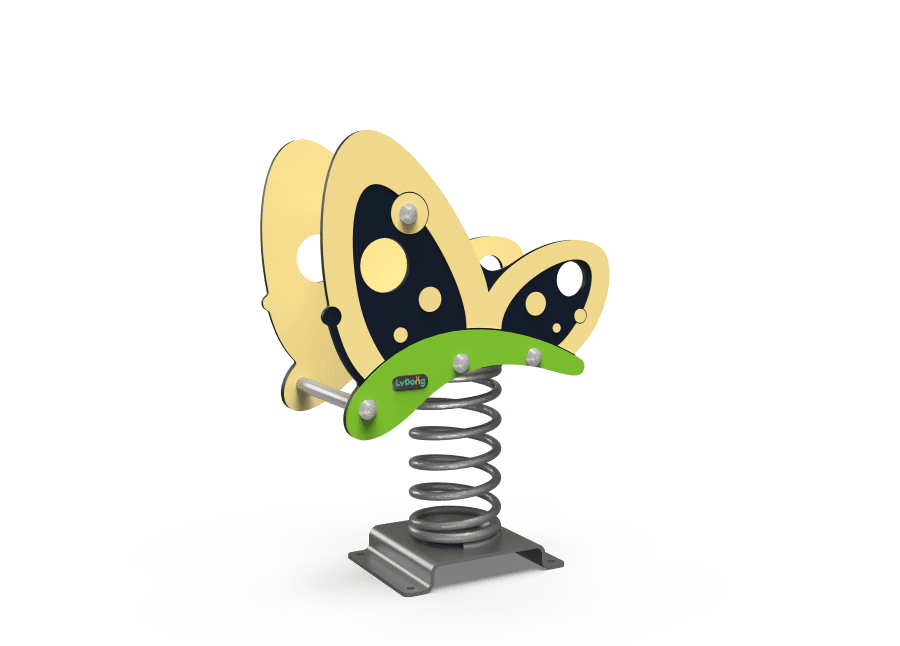
Getting the right spring rider for a toddler play area involves more than picking a cute animal shape. The equipment needs to fit small bodies, meet safety codes, and hold up through years of outdoor use. After working with parks and childcare centers on countless installations, certain patterns emerge about what actually works for the 2-to-5 age group. This piece walks through the dimensions, materials, and compliance details that matter most when specifying pony spring riders for commercial playgrounds.
Why Age-Specific Design Matters for Spring Rider Safety
Children between two and five years old move differently than older kids. Their center of gravity sits higher relative to their body size, their grip strength is still developing, and their reaction times are slower. These physical realities shape every aspect of how a spring rider should be built.
The relevant safety frameworks come from ASTM F1487 and the CPSC Handbook for Public Playground Safety. Both documents establish requirements for head and neck entrapment prevention, handhold sizing, and base stability. ASTM F1487 specifically addresses protrusion hazards and openings that could trap small fingers or clothing. The CPSC guidelines add recommendations for use zone clearances and fall height limits appropriate to different developmental stages.
For spring playground equipment targeting this age range, these standards translate into specific design constraints. Seats must be shaped to prevent sliding, handholds need to accommodate small hands without creating pinch points, and the spring mechanism itself requires enough resistance to prevent violent motion while still providing satisfying movement.
| Standard | Focus Area | Key Requirements for Spring Riders |
|---|---|---|
| ASTM F1487 | General Safety | No head/neck entrapment, proper handholds, stable base |
| CPSC Handbook | Age-Appropriate Design | Low fall height, clear use zones, no pinch points |
Dimensional Specifications That Fit Young Riders
The numbers matter when sizing spring riders for toddlers and preschoolers. Equipment that works for a five-year-old may be completely wrong for a two-year-old, and vice versa. Single-user spring playground equipment for this age bracket typically measures between 60 and 99 centimeters in length, 35 to 39 centimeters in width, and 79 to 110 centimeters in height.
These dimensions accomplish several things at once. The seat height allows children to mount and dismount without adult assistance while keeping the maximum fall height at 50 centimeters. That low fall height is significant because it reduces the severity of potential injuries and simplifies surfacing requirements. A child falling from 50 centimeters onto properly installed impact-absorbing material faces minimal injury risk.
Weight capacity also factors into the specification process. Spring animal riders need to support not just the child’s weight but the dynamic forces generated during vigorous rocking. Most commercial units are rated for 50 kilograms or more, providing adequate margin for the target age group plus some buffer for the occasional older sibling who climbs aboard.
Calculating the Proper Fall Zone
The fall zone around a spring rider defines the area where impact-absorbing surfacing must be installed. This zone extends outward from the equipment’s perimeter based on the maximum fall height and the potential trajectory of a falling child.
For spring riders with a 50-centimeter fall height, the standard recommendation calls for at least 1.8 meters of clear space in all directions. This clearance must be free of other equipment, fencing, benches, or any hard surfaces. The entire zone requires appropriate surfacing material.
Engineered wood fiber and poured-in-place rubber are the most common choices for fall zone surfacing. Both materials can achieve the necessary impact attenuation when installed at proper depths. Engineered wood fiber typically needs 15 to 30 centimeters of depth depending on the critical fall height, while rubber surfacing thickness varies by manufacturer specifications. The installation process must include proper drainage and containment borders to prevent material migration.
Material Selection for Long-Term Performance
Commercial spring riders face brutal conditions. Sun exposure, temperature swings, rain, snow, and constant use by energetic children all take their toll. Material choices determine whether equipment lasts five years or fifteen.
The spring mechanism itself is typically constructed from heavy-duty galvanized steel. Galvanization provides corrosion resistance that prevents rust formation even when the protective coating gets scratched during normal use. The spring’s gauge and coil pattern determine both the ride feel and the structural longevity. Thicker gauge steel and tighter coil patterns generally indicate higher quality, though the specific design must balance durability against appropriate motion resistance for young children.
Seats and body components are usually made from roto-molded polyethylene or linear low-density polyethylene. These plastics offer several advantages for playground applications. The roto-molding process creates seamless, hollow forms without sharp edges or weld points. UV stabilizers added during manufacturing prevent the color fading and material brittleness that would otherwise occur from sun exposure. The material is also inherently smooth, reducing abrasion injuries from falls or slides.
Hardware represents another critical consideration. Bolts, nuts, and mounting brackets should be stainless steel or similarly corrosion-resistant materials. Tamper-resistant fasteners prevent unauthorized disassembly and reduce maintenance visits. All hardware should be recessed or covered to eliminate protrusion hazards.
Evaluating Materials for Commercial Durability
When specifying spring playground equipment for commercial installations, the material evaluation process should consider several factors beyond initial cost. Galvanized steel springs resist corrosion better than painted steel, which eventually chips and rusts. The galvanization process creates a zinc coating that sacrificially protects the underlying steel even when damaged.
Polyethylene body components should be tested for UV resistance and impact strength. Quality manufacturers provide material certifications showing compliance with relevant standards. The plastic should maintain its structural integrity and color for at least ten years under normal outdoor conditions.
Non-toxic formulations are essential for any material that children will touch. Lead-free paints, phthalate-free plastics, and finishes that meet food-contact safety standards provide appropriate margins for equipment that young children may mouth or lick. These material specifications align with broader playground safety standards while ensuring the equipment remains safe throughout its service life.
How Spring Riders Support Early Childhood Development
The developmental value of spring riders extends beyond simple entertainment. The rocking motion engages multiple physical systems simultaneously. Children must maintain balance while the seat moves, which strengthens core muscles and improves proprioceptive awareness. The vestibular system, which controls balance and spatial orientation, receives significant stimulation from the rhythmic back-and-forth movement.
Grip strength develops as children hold the handles during vigorous rocking. The need to coordinate leg movements with upper body positioning builds motor planning skills. These physical benefits accumulate over repeated play sessions, contributing to overall motor development during a critical growth period.
The imaginative dimension of spring rider play is equally valuable. A simple pony-shaped rider becomes a galloping horse, a race car, or a rocket ship depending on the child’s mood and creativity. This type of symbolic play supports cognitive development by requiring children to hold mental representations of objects and scenarios that differ from physical reality.
Social learning happens when multiple spring riders are grouped together. Children practice turn-taking, negotiate play scenarios, and observe each other’s movements. These interactions build the social skills that become increasingly important as children enter formal educational settings.
If you are interested in learning more about how to select the right equipment for different age groups, consider reading 《Age Appropriate Playground Sets for Child Development》.
Placement Strategies for Playground Integration
Spring riders work best when positioned thoughtfully within the larger playground layout. Grouping several riders together creates a social play zone where children can interact while riding. This arrangement also simplifies supervision since caregivers can monitor multiple children from a single vantage point.
The compact footprint of spring playground equipment makes these pieces useful for filling gaps in playground layouts. A spring rider can occupy space that would be too small for a climber or slide while still providing significant play value. Corner areas, spaces between larger structures, and transition zones between different age-appropriate areas all represent good placement opportunities.
Thematic consistency enhances the overall playground experience. Animal-themed spring riders complement nature-inspired playgrounds, while vehicle shapes fit transportation or adventure themes. Custom options allow designers to match specific aesthetic requirements or create unique branded experiences for particular facilities.
Surfacing transitions require attention during placement planning. The fall zone around each spring rider must connect seamlessly with adjacent surfacing areas. Abrupt changes in surface height or material can create trip hazards. Proper grading and border installation prevent these problems while maintaining the required impact attenuation throughout the play area.
Meeting Certification Requirements
Commercial playground equipment must meet specific certification standards before installation in public spaces. For spring riders, the relevant certifications include EN 1176 for European markets and GB/T 34272-2017 for Chinese installations. North American projects typically reference ASTM F1487 and CPSC guidelines.
These standards address overlapping but not identical requirements. EN 1176 includes specific test methods for spring rider stability and motion characteristics. The standard requires that equipment remain stable under specified load conditions and that the spring mechanism provides controlled motion without sudden stops or excessive acceleration.
Quality assurance processes should verify compliance at multiple stages. Material certifications confirm that raw inputs meet specified standards. In-process inspections catch manufacturing defects before assembly completion. Final testing validates that finished products perform as designed under realistic use conditions.
Documentation matters for liability and maintenance purposes. Certificates of compliance, test reports, and installation instructions should be retained throughout the equipment’s service life. This documentation demonstrates due diligence in equipment selection and supports warranty claims if defects emerge.
Partner with LvDong for Premium Play Solutions
As a pioneering enterprise in unpowered amusement equipment, Suzhou LvDong Amusement Equipment Co., Ltd. combines over a decade of craftsmanship with intelligent production to deliver premium, safe, and engaging play solutions. For expert consultation on age-appropriate spring rider selection, custom designs, or to discuss your next project’s specific requirements, contact our specialists today. Leverage our integrated R&D, design, production, installation, and after-sales support to ensure your playground meets the highest standards of safety and play value. Email us at [email protected] or call +8613915684545.
What safety standards apply to spring riders for children aged 2 to 5?
Spring riders for this age group must comply with ASTM F1487 and CPSC guidelines in North America, EN 1176 in Europe, or GB/T 34272-2017 in China. These standards establish requirements for dimensions, fall height limits, use zone clearances, material safety, and entrapment prevention. Compliance ensures that the equipment provides appropriate challenge levels while minimizing injury risk for toddlers and preschoolers.
How should fall zones be calculated for spring rider installations?
Fall zone calculations start with the maximum fall height of the equipment. For spring riders with a 50-centimeter fall height, a minimum of 1.8 meters of clear space is required in all directions from the equipment perimeter. This entire area must be covered with impact-absorbing surfacing such as engineered wood fiber or rubber tiles installed to appropriate depths per ASTM standards.
What materials provide the best durability for commercial spring riders?
Heavy-duty galvanized steel springs offer the best combination of strength and corrosion resistance for commercial applications. Roto-molded polyethylene or LLDPE plastic with UV stabilizers provides durable, color-fast body components that resist weathering. Stainless steel or similarly corrosion-resistant hardware with tamper-resistant features completes the material specification for equipment that will maintain safety and appearance over many years of outdoor use.
Why should playgrounds include spring riders for young children?
Spring riders provide developmental benefits that complement other playground equipment. The rocking motion builds balance, coordination, and core strength while stimulating the vestibular system. The equipment encourages imaginative play as children transform simple shapes into horses, vehicles, or other objects. When grouped together, spring riders also support social skill development through turn-taking and cooperative play scenarios.
Does LvDong offer custom spring rider designs?
Yes, Suzhou LvDong Amusement Equipment Co., Ltd. provides comprehensive custom spring rider solutions through integrated R&D, design, and production capabilities. Custom options include modified dimensions, unique themes, and specific safety feature configurations to meet particular project requirements. All custom designs maintain compliance with relevant safety standards while achieving unique aesthetic goals for municipal parks, communities, or educational facilities.