Airport playgrounds take a beating that most play equipment never sees. Thousands of families pass through daily, kids with pent-up travel energy, parents killing time between flights, and the equipment absorbs it all. Getting these installations right means thinking differently about materials, design, and maintenance from the start.
Material Choices That Actually Hold Up Under Airport Conditions
The material conversation for airport playground equipment starts with understanding what “high traffic” really means in this context. We’re talking about usage rates that can exceed typical municipal playgrounds by three to five times, combined with climate control challenges and the constant presence of rolling luggage and foot traffic nearby.
High-density polyethylene earns its place in commercial playground equipment materials for good reason. The molecular structure resists impact without cracking, and UV stabilizers prevent the fading and brittleness that plague lesser plastics. For slides and panels, HDPE maintains its surface integrity even after hundreds of thousands of uses.
Structural components demand galvanized steel with powder coatings. The galvanization process creates a zinc barrier that prevents corrosion protection play equipment needs, while powder coating adds both aesthetic durability and an additional protective layer. Standard treated metals simply cannot match this performance in environments where cleaning chemicals and humidity fluctuate constantly.
Wood composites have evolved significantly as weather-resistant materials for decking and platforms. Modern formulations eliminate the splintering and rot concerns of traditional lumber while maintaining the warm aesthetic that makes play spaces inviting. These heavy-duty play structures justify their higher initial cost through dramatically reduced replacement cycles.
Our installations since 2015 consistently demonstrate that premium materials extend playground equipment lifespan by forty to sixty percent compared to budget alternatives in public playgrounds.
| Material Type | Key Benefit for Airport Playgrounds | Common Application |
|---|---|---|
| HDPE | High impact resistance, UV stability, low maintenance | Panels, slides, decorative elements |
| Galvanized Steel | Superior strength, corrosion resistance, structural integrity | Support posts, frames |
| Powder-Coated Metal | Enhanced weather resistance, aesthetic retention, scratch resistance | Handrails, ladders, accents |
| Wood Composites | Natural appearance, splinter-free, moisture-resistant | Decks, platforms, themed elements |
| Stainless Steel | Extreme corrosion resistance, hygiene, premium finish | Fasteners, specialized components |
Building Resilience Into Every Design Decision
Resilient airport playground equipment doesn’t happen by accident. Every design choice either contributes to longevity or creates a future maintenance headache.
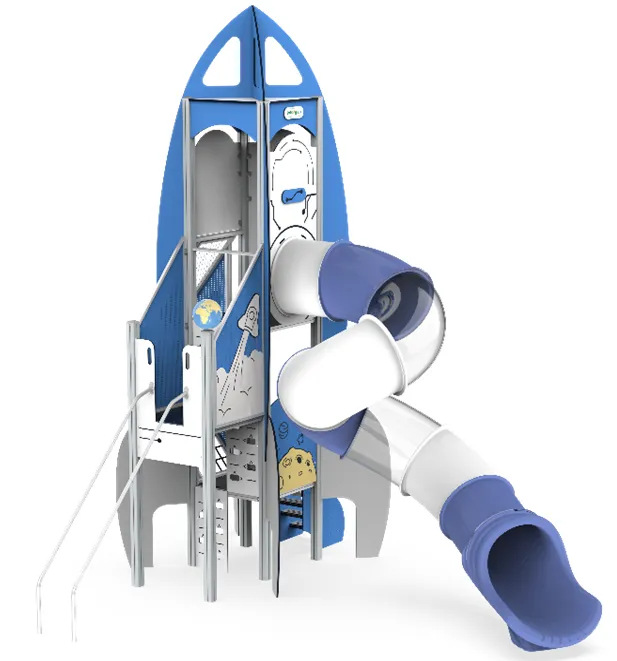
Fully enclosed slides eliminate the pinch points and exposed edges that accelerate wear in open designs. The continuous surface also discourages the climbing and misuse that damages equipment faster than normal play. Vandal-resistant playground features extend beyond obvious security measures. Tamper-proof fasteners prevent casual disassembly, while graffiti-resistant coatings allow cleaning crews to remove markings without damaging underlying surfaces.
Impact attenuation surfaces deserve careful consideration for airport installations. Poured-in-place rubber offers the most consistent protection and easiest cleaning, though engineered wood fiber provides excellent shock absorption at lower cost. The choice depends on maintenance capacity and aesthetic preferences, but both options protect children and reduce the structural stress that heavy-duty construction play equipment experiences from constant landings.
Extreme weather playground design principles apply even in climate-controlled terminals. Temperature differentials between interior spaces and exterior loading areas create condensation challenges. Sloped surfaces prevent water pooling, and material selections must accommodate the expansion and contraction that temperature swings cause.
Consider reviewing 《Custom Playground Slide Design From Vision to 3D Reality》 for insights into tailoring designs for specific environmental challenges.
Meeting Safety Standards Without Compromise
Airport play zones operate under intense regulatory scrutiny, and rightfully so. The combination of high traffic, diverse user populations, and liability exposure demands rigorous attention to safety and compliance.
ASTM F1487 standards establish the baseline for playground equipment in the United States, covering everything from entrapment hazards to structural load requirements. European installations must meet EN 1176 specifications, which address similar concerns through different testing protocols. ADA compliance playgrounds requirements ensure accessibility for children with disabilities, affecting everything from transfer platform heights to surfacing gradients.
Critical fall height calculations determine the required depth and type of safety surfacing solutions beneath each piece of equipment. These calculations account for the maximum height a child could fall from, with appropriate safety margins built in. Getting this wrong creates both injury risk and regulatory exposure.
Risk assessment playground procedures should begin during initial design and continue through installation verification. We conduct multiple review stages to identify potential hazards before they become problems. Post-installation inspection protocols confirm that assembly matches specifications and that all safety features function as intended.
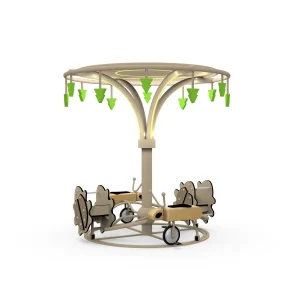
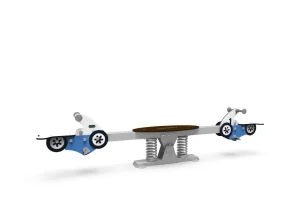
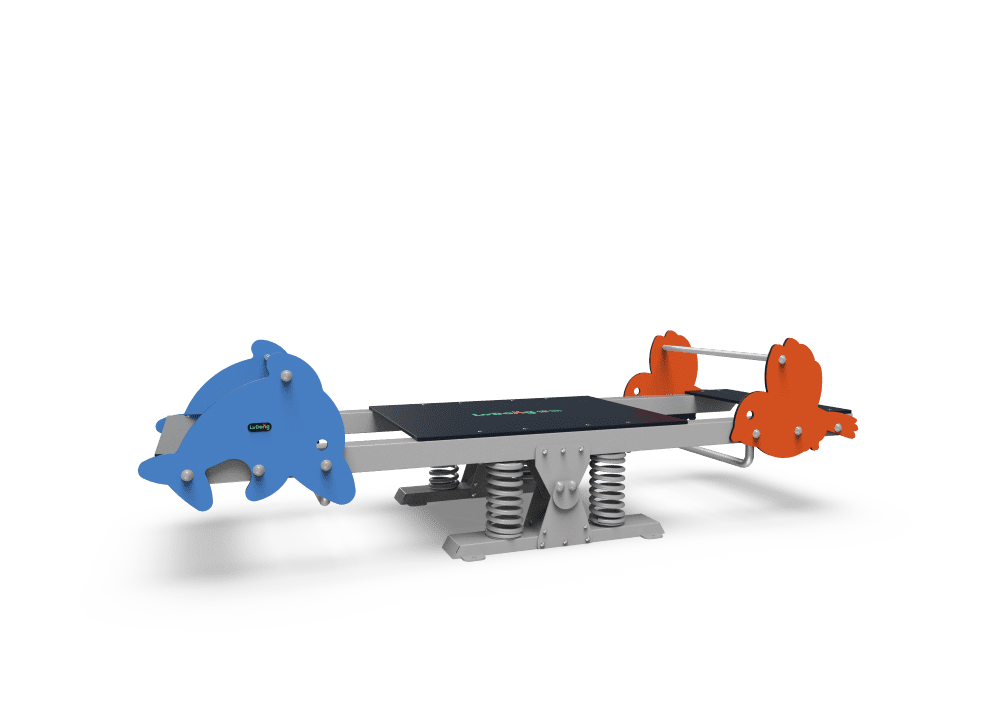
Commercial playground certification from recognized testing bodies provides documentation that airport operators need for insurance and regulatory compliance. Every component, from a Multi Player Playground Spinning Wheel to a Spring Playground Equipment, must meet these playground safety regulations before installation.
Maintenance Strategies That Extend Equipment Life
The difference between airport playground equipment that lasts eight years and equipment that lasts fifteen often comes down to maintenance practices. Proactive approaches cost less over time and prevent the safety incidents that reactive maintenance invites.
Routine maintenance schedules should include daily visual checks by terminal staff and monthly operational inspections by trained personnel. Daily checks catch obvious problems like loose fasteners, damaged surfaces, or debris accumulation. Monthly inspections examine moving parts, structural connections, and surfacing condition in greater detail.
Preventative maintenance playground strategies address wear before it becomes failure. Lubricating moving parts reduces friction damage. Tightening fasteners prevents the loosening that accelerates under vibration. Repairing minor surface damage stops moisture intrusion that causes larger problems. These simple steps minimize downtime and reduce long-term investment play equipment costs significantly.
Lifecycle cost analysis playgrounds reveals the true economics of maintenance investment. Equipment replacement costs include not just the new equipment but also removal, disposal, installation, and the operational disruption during changeover. Consistent airport playground maintenance delays these costs while maintaining safety and appearance standards.
For more on maintaining equipment, consider 《Optimizing Playground Equipment Spare Parts Lead Time and Stock》.
Technology That Makes Durability Measurable
Smart playground technology has moved beyond novelty into practical utility for high-traffic installations. The data these systems generate transforms maintenance from guesswork into precision.
IoT playground monitoring systems track usage patterns through sensors embedded in equipment. These systems count interactions, measure force loads, and detect vibration patterns that indicate developing problems. Real-time alerts notify maintenance staff when readings exceed normal parameters.
This data-driven playground management enables predictive maintenance that addresses issues before they cause failures. Rather than replacing components on fixed schedules, operators can target interventions based on actual wear. The approach optimizes both safety and cost efficiency.
Advanced repair techniques playground maintenance teams use benefit from sensor data as well. Knowing exactly where stress concentrates allows targeted reinforcement. Understanding usage patterns helps predict which components will need attention next. These innovative playground solutions represent the future of playground durability in demanding environments.
Working With Suzhou LvDong on Your Airport Playground Project
Since 2015, Suzhou LvDong Amusement Equipment Co.,Ltd has focused on premium unpowered amusement equipment for demanding applications. Our 10,000 square meter intelligent production base supports an integrated full-industry-chain service covering R&D, design, production, installation, and after-sales support.
Airport playground projects require partners who understand both the technical requirements and the operational realities of high-traffic environments. We bring that understanding to every consultation, helping airport authorities and developers create play spaces that perform reliably for years.
Contact us to discuss your specific requirements and explore how durable, engaging airport playground equipment can enhance your terminal experience.
WHATSAPP: +8613915684545 | [email protected]
Frequently Asked Questions About Airport Playground Durability
What materials offer the best durability for airport playground equipment?
Galvanized steel with powder coatings provides the structural backbone that airport playground equipment needs. The galvanization creates a zinc barrier against corrosion while powder coating adds scratch resistance and color retention. For play surfaces, HDPE delivers the impact resistance and UV stability that high-traffic environments demand. Both materials resist the cleaning chemicals and humidity fluctuations common in terminal environments.
How often should airport children’s playgrounds be inspected for safety and wear?
Daily visual inspections catch obvious problems before they escalate. Monthly operational inspections by trained staff examine structural connections, moving parts, and surfacing condition more thoroughly. Annual comprehensive inspections by certified professionals provide documentation for regulatory compliance and insurance purposes. This frequency reflects the accelerated wear that safety checks commercial playgrounds in airport settings must address.
What are the key safety standards for commercial playgrounds in high-traffic areas?
ASTM F1487 standards govern playground equipment in the United States, establishing requirements for structural integrity, entrapment prevention, and fall protection. European installations follow EN 1176 specifications. ADA compliance playgrounds requirements ensure accessibility regardless of physical ability. These playground safety regulations collectively address design, materials, installation, and ongoing maintenance to protect children in demanding environments.