Sensory panels and ground-level riders serve a different purpose in a special needs school than they do in a public park. They are repeatable sensory and motor inputs that therapists can grade, schedule, and document as part of a child’s program. When a school selects these units, the decisions affect fall zones, transfer space, wheelchair clearance, visual cuing, and daily maintenance. A panel mounted too high or a rider with inadequate back stability fails as a therapy tool even when it looks like play. I treat these projects as clinical support specifications, not catalog orders, because the equipment must perform consistently across many small bodies with widely different needs.
How Do Sensory Panels Support Therapy Goals in Special Needs Schools?
Panels are specified by the sensory systems they target. A tactile panel with rotating discs, textured tracks, and a mirror surface gives a child repeated proprioceptive and visual input at a stationary station. An audio panel gives cause-and-effect feedback that a therapist can log. The panel’s value depends on more than the activities on the face. Mounting height, surface temperature, finish hardness, and the size of any moving element determine whether a child can use it without adult hand-over-hand help.
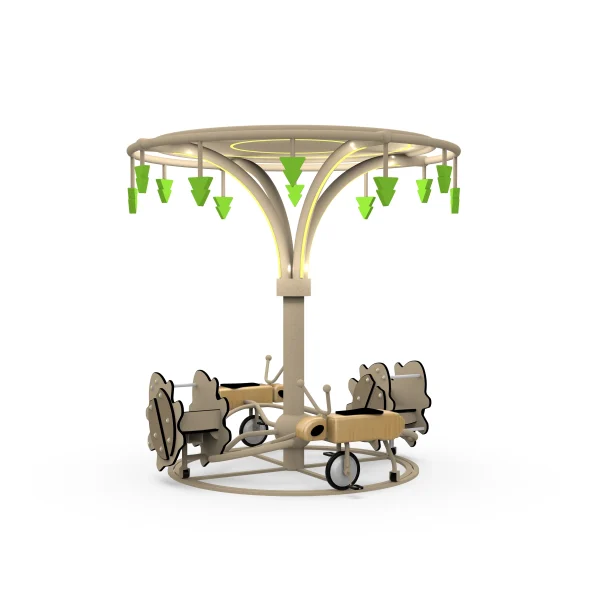
For wheelchair access, the lowest activation point should sit within reach of a child seated in a typical 400 mm chair or mobility base. I usually place the primary touch zone between 700 mm and 1100 mm from the finished surface, with a secondary tactile band at 450 mm to 600 mm for children who play from a floor position. Panel frames need clear side clearance of at least 900 mm so a staff member can position themselves beside the child without stepping into a neighboring activity. The panel also should not echo into an open-plan classroom area. I prefer models with subdued mechanical feedback or adjustable volume for schools where sound triggers distress.
One point that rarely appears in generic buyer guides is contrast. A child with low vision or visual processing challenges may ignore a beautifully detailed graphic panel because the background and switch colors bleed together. Specifying high contrast between the moving element and its base, such as a yellow rotating cylinder on a dark blue field, does more for independent use than adding another activity. That difference separates buying a panel from specifying a therapy surface.
Why Do Ground-Level Riders Matter for Children With Mobility Delays?
Ground-level riders matter because they bring movement close to the surface. A spring rider with a maximum fall height of 50 cm and a seat near ground level reduces the consequence of a missed transfer or sudden loss of grip. In a special needs school, where a child may be learning to sit independently, tolerate movement, or hold a handgrip, that lower fall height changes how staff supervise the activity. It also changes how often a child can attempt the movement without needing a transfer lift.
The rider’s seat geometry is more important than the animal shell. I check back support, hip width, grip position, and whether the foot platform stays within the child’s visual field. For a child with low muscle tone, a seat with a high back and a curved front edge prevents sliding forward during rocking. For a child with sensory seeking patterns, a spring that returns slowly reduces overstimulation. The spring’s rated resistance must match the child’s weight and strength because a spring tuned for a 25 kg child behaves very differently from one tuned for a 60 kg child.
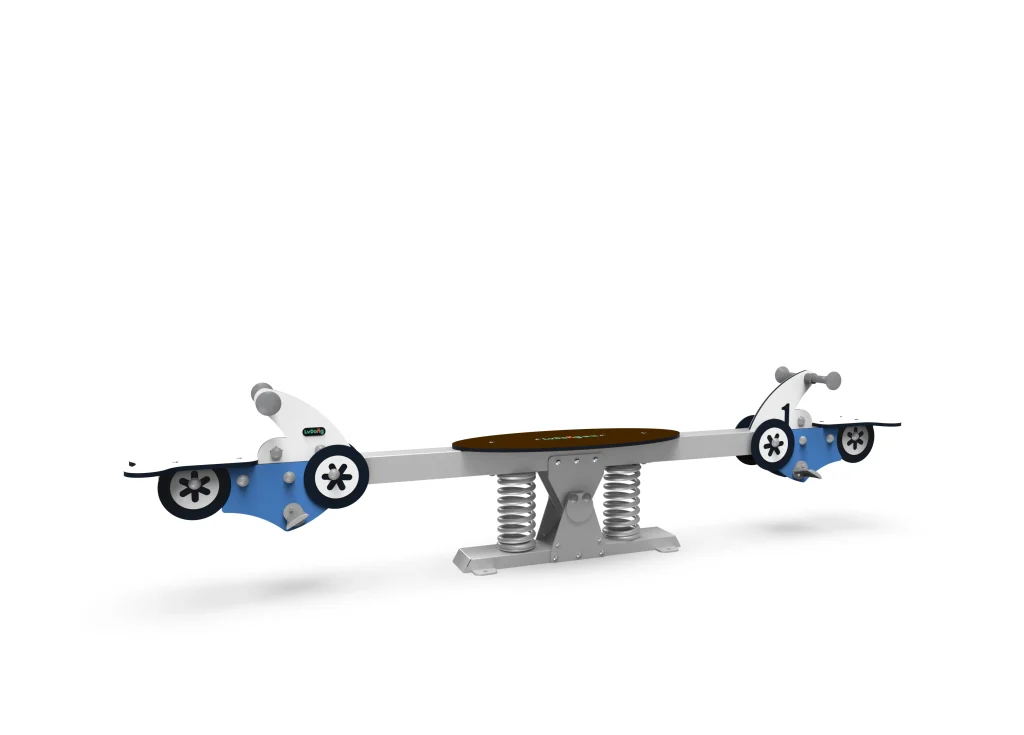
Ground-level rider selection often starts with the theme, but the functional details decide whether the unit gets used. <Top 10 Animal Spring Rider Designs for Modern Playgrounds> covers how different animal forms change grip position, seating posture, and the type of rocking movement available, so the theme should be selected with the rider’s motor demand in mind.
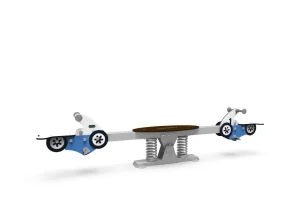
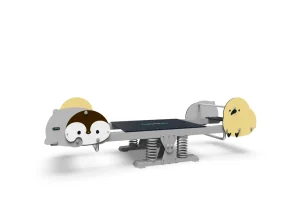
The spring rider from our product line illustrates why both age range and dimensions matter. It seats one child at a time, with overall dimensions around 60 to 99 cm long, 35 to 39 cm wide, and 79 to 110 cm high depending on model. Its low fall height and controlled rebound make it suitable for early mobility work. However, for some special needs programs a static ground-level rocker may be easier to position around than a spring rider. We review that distinction with the therapy team before the layout is fixed.
How Should Schools Match Equipment to Specific Therapy Goals?
Therapy goals fall into a few patterns: vestibular input, proprioceptive grounding, fine motor practice, social turn taking, and communication through cause and effect. A single piece of equipment rarely covers all five, so the school needs a priority list before comparing models. I ask the therapist to rank whether the child needs alerting or calming input first. That distinction determines whether a spring rider, spinner, tactile panel, or push-pull feature is the appropriate first purchase.
Vestibular and proprioceptive goals
Ground-level riders, rotating spinners, and wide-base teeter totters produce movement through the inner ear and joints. A child who seeks rocking may do well on a spring rider with medium resistance. A child who avoids motion may need a static tactile panel placed adjacent to the rider so the movement can be observed before it is attempted. For schools using vestibular equipment, I recommend one unit per defined zone so staff do not have to move children far between alerting and calming activities.
Fine motor, visual tracking, and communication goals
Panels with rotating discs, gear pairs, and high contrast targets give therapists a controlled station for visual scanning and finger isolation. These surfaces are most useful when mounted at two heights, one for seated reach and one for standing work. Avoid panels with many simultaneous sounds and lights in a classroom-adjacent space. A single cause-and-effect feature is easier to document and less likely to trigger sensory overload.
| Therapy goal | Equipment type | Key specification to verify | Why it matters in a special needs setting |
|---|---|---|---|
| Vestibular input | Ground-level spring rider | Maximum fall height 50 cm or lower, spring resistance matched to user weight | Lower fall height allows independent attempts with less supervision strain |
| Proprioceptive grounding | Wide-base spinning wheel, six to ten users | Stable round base, controlled rotation, EN 1176 compliance | Predictable joint movement gives body awareness input for sensory integration needs |
| Fine motor and visual tracking | Tactile and visual sensory panel | Mounting heights from 450 mm to 1100 mm, high contrast moving parts | Seated and standing users can reach the same task without losing visual contact |
| Communication and cause and effect | Mechanical or audio activity panel | Mechanical feedback, adjustable volume or subdued sound | A single clear response reduces sensory overload and keeps task focus |
One mistake I see in project inquiries is trying to satisfy every goal with one large multi-station unit. That often forces therapists to work around crowded traffic patterns and conflicting sensory inputs. If a school is ordering within a compact therapy garden, I prefer two carefully selected smaller stations over one busy hub. A spring rider and a visually simple tactile panel are easier to staff, easier to sequence into a session, and easier to remove from the room when a child is having a difficult day.
For schools that want more detail on vestibular equipment, <Child Development Benefits Playground Spinning Toy Impact> covers how controlled spinning affects balance, attention, and sensory regulation, which is useful context when a therapy team reviews new equipment categories.
If your program includes students who use wheelchairs, positioning systems, or specialized seating, it is worth confirming seat width, foot clearance, and panel reach before the specification is finalized. Send the age range, primary therapy goals, and any access constraints to [email protected].
What Installation and Maintenance Details Protect Daily Therapy Use?
Installation is where many therapy specifications lose their value. A rider mounted too close to a fence offers no transfer space for a wheelchair or a second adult. A panel installed over loose-fill surfacing with an uneven base makes a forward reach different every day. For special needs schools I specify a level, firm path at least 1200 mm wide to the equipment, clear space around the ground-level rider for a wheelchair to turn beside it, and surfacing that does not shift under a walker or cane. Public playground standards may permit certain clearances, but a therapy setting often needs more.
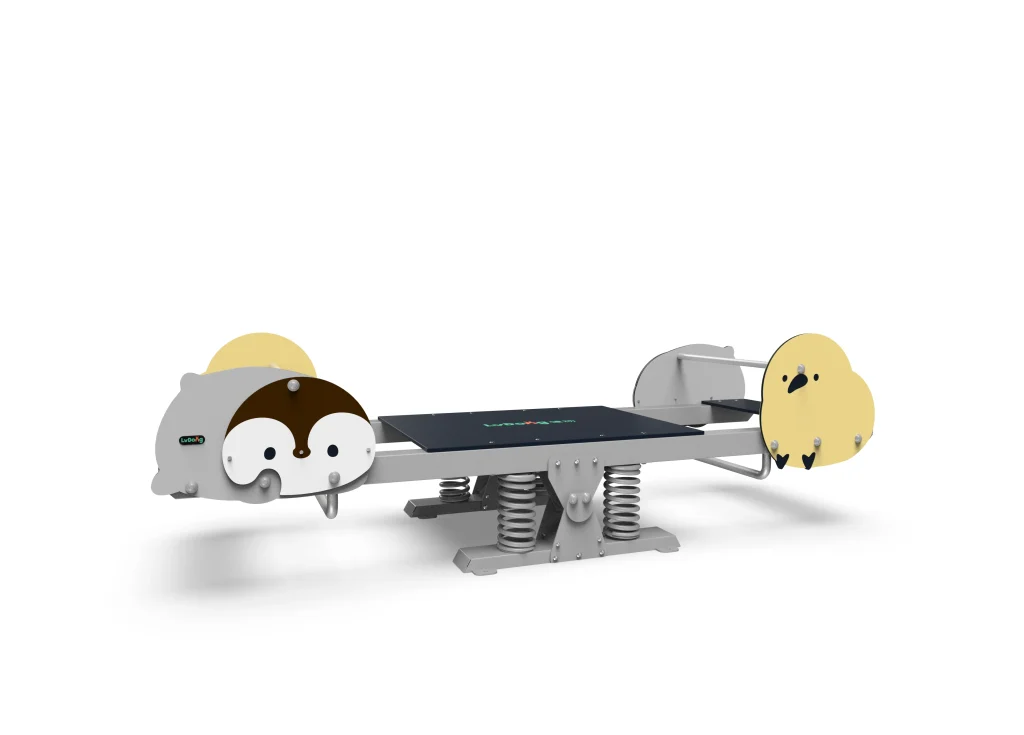
Maintenance is not a background task in this environment. Small changes create large behavioral and safety effects. A weather-worn panel edge or a squeaking rider spring can become a repetitive complaint for a child with heightened sound sensitivity. I recommend a monthly check for moving part wear, surface temperatures, and loose fixings, with a more detailed quarterly inspection covering the spring mount, foot platform, bearer connections, and tactile panel fasteners. The records matter because therapy teams may need to trace whether equipment condition affected a child’s participation on a specific day.
For a practical check sequence that can be adapted to school staff, <Playground Equipment Safety Your Essential Self Inspection Checklist> covers the daily and weekly inspection points that catch most failures before they interrupt a therapy schedule.
For a spring rider with maximum fall height 50 cm, the installed surfacing must meet or exceed that figure. If the school places the rider on poured rubber, the test certificate should match the installed depth, not the product brochure.
How Can Schools Turn Therapy Goals Into a Procurement Specification?
Moving from a therapist’s goal list to a purchase order is often where special needs playground projects stall. Different staff members hold different assumptions about seat depth, panel height, surfacing depth, and whether the equipment will be used for therapy, recreation, or both. We review the program requirements and return a specification that includes fall height, accessible pathing, panel activation zones, rider seat dimensions, and a maintenance schedule. Send the site plan, user age range, key therapy goals, and any access requirements to [email protected] or WhatsApp +8613915684545 for a specific equipment list.
What Do Facility Teams Ask Before Ordering Sensory Play Equipment?
Can sensory panels and ground-level riders be installed outdoors in all climates?
Yes, but the specification changes by climate. Powder-coated steel and UV-stabilized plastic are standard for outdoor sun and rain, and the spring rider’s high-strength steel spring is designed for warm and humid environments. In coastal or very cold regions we specify additional corrosion resistance or low-temperature material checks before production. For indoor sensory rooms, finishes lean toward cleanable surfaces and quieter mechanical feedback. State the environment early, because outdoor powder coat, marine-grade hardware, and indoor acoustic requirements affect different parts of the bill and the lead time.
Do ground-level riders meet accessibility requirements for wheelchair users?
No, a spring rider is not a wheelchair transfer device, and claiming it is would oversell the product. What a ground-level rider can do is sit beside a wheelchair-accessible path so a student with limited ambulation can approach without a high step, or a student using a walker can reach the seat from a low position. The school still needs transfer space and staff support for children who cannot self-transfer. For wheelchair users, sensory panels with multiple mounting heights are usually the better primary station, with the rider used as a supported movement break only when the therapy team confirms it is appropriate.
How many panels and riders should a small special needs school order first?
It depends on the class size and whether therapy is one-to-one or small group. A program with eight to twelve students in one room often starts with two panels, one ground-level rider, and one wide-base spinner, arranged so each station is visible from a single supervision point. A smaller program may do better with one high quality panel and one rider that matches the dominant therapy goal. Ordering fewer units with correct mounting, surfacing, and documentation gives staff more usable therapy time than spreading the same budget across multiple poorly matched stations.
What documentation should a school keep for inspections and insurance?
In school projects we prepare, the most useful file is not the catalog sheet. It is a combined record of the product EN 1176 certificate, the installed surface certificate, and the monthly inspection log. Keep photos of frame labels and serial numbers, and note any surface repair, fastener replacement, or spring adjustment with a date and a staff initial. If a child’s participation changes, the record shows whether the equipment condition changed first. Send your equipment list to [email protected] and we will confirm which test reports and warranty documents ship with the units.
If you’re interested, check out these related articles:
Buying Playground Spinners Pricing Discounts and Supplier Insights
High Traffic Durability Tips for Airport Playground Equipment
Free 3D Design for Community Park Playground Equipment Solutions
To discuss access requirements for sensory panels and ground-level riders, contact the LvDong team with your project requirements.