Importing playground equipment into the Middle East is rarely a simple purchase order. Most markets require the importer of record—not the manufacturer—to hold the right trade license, customs registration, and conformity documents before the container arrives. That distinction shapes the entire clearance timeline, and it is the main reason buyers treat import licensing as the first procurement gate rather than a final formality. This guide explains the license environment, document package, certification chain, and the clearance steps that keep a shipment moving.
Why Import Licensing Is the First Middle East Procurement Gate
In most Middle East markets, import licensing is not one document issued to a foreign supplier. It normally consists of a local importer-of-record appointment, a valid commercial registration, a customs client code, and product-level conformity approval. A manufacturer can support the file with test reports and certificates, but the legal importer remains the local entity named on the bill of lading and customs declaration [5].
Treat the license check as a destination-specific exercise. Free zones, mainland companies, government tenders, and private developers can face different document requirements even within the same country. The safest early step is to ask the buyer’s customs broker to confirm the exact HS code and regulated-product status before production is locked.
GCC-Wide Framework and National Variations
The GCC does not replace national controls with a single import license, but it does create shared conformity routes for certain products. Children’s toys and play-related products can fall under GSO technical regulations [2], while larger commercial playground structures are usually assessed against international safety standards selected by the buyer, such as EN 1176 [3].
Below is a high-level map, but the importer of record should confirm current platform requirements for the specific HS code.
| Market | Commonly involved authority or platform | Typical import control focus |
|---|---|---|
| Saudi Arabia | SASO / SABER | Conformity certificate, product registration |
| UAE | Customs, municipality, ECAS/ESMA where applicable | Importer customs code, regulated product approval |
| Qatar | General Authority of Customs, relevant ministry | Local importer license, conformity documents |
| Kuwait | Customs, Public Authority for Industry | Local importer registration, product approval |
| Bahrain / Oman | Customs affairs and standards bodies | Importer registration, standards compliance |
The important point is that the foreign supplier cannot usually replace the local importer. The buyer must have an entity that can receive clearance, pay duties, and be accountable to the destination authority.
Documentation Package That Keeps Clearance Moving
A complete Middle East import file generally includes:
- Commercial invoice with HS code, unit value, and incoterm
- Packing list by container, carton, and item
- Bill of lading or air waybill
- Certificate of origin, often chamber-certified
- Product test reports and conformity certificate
- Importer trade license and customs registration
- Arabic or bilingual labels and technical file where required
- Installation and safety data if requested by the municipality
Many clearance delays are not caused by missing licenses but by documents that disagree with each other. The equipment description on the invoice, test report, and packing list should match the HS classification [1]. If a product is described as a “play structure” in one place and a “sports apparatus” in another, customs may reclassify it and request additional duties or approvals.
HS classification errors still rank among the most common Middle East clearance delays. <Factory Visit Checklist Playground Equipment Supplier Evaluation> covers how to confirm that the supplier’s technical file and factory records match the documents you will submit to customs.
Certification, Testing, and Standards
Middle East buyers increasingly ask for test reports aligned to EN 1176 or equivalent standards for public playground equipment [3]. Some children’s products may also require GCC conformity marking or national approval [2]. The importer usually does not need to duplicate tests if the manufacturer provides a complete test file from an accredited laboratory, but the documents must be traceable to the exact model, material, and batch reference.
Ask early whether the destination requires a national overlay such as SASO approval in Saudi Arabia [4]. A certificate of conformity is only the visible end of an evidence chain: design calculations, material specifications, weld inspection, surfacing compatibility, and age-grading data all support the file [2][3].
Certification is an evidence chain, not a single logo on a packing list. <20 Essential Questions Choosing a Playground Equipment Supplier> covers what to request before you rely on a supplier’s certificate package.
Need a document checklist for a specific destination port? Send your equipment list, HS code, and destination country to [email protected] or WhatsApp +8613915684545 and request a pre-shipment document review.
Step-by-Step Import Clearance Workflow
A practical clearance path usually follows this order:
- Classify the equipment under the correct HS heading and subheading, then confirm regulated status.
- Confirm that the importer of record has a valid trade license and customs registration for the destination.
- Match the certification route: GCC conformity, national scheme, or buyer-specified standard path [2][4].
- Prepare shipment documentation with consistent descriptions and obtain the certificate of origin.
- Submit pre-arrival clearance documents and arrange duty payment or guarantee.
- Coordinate site-level approvals such as municipal permits or project inspection before installation.
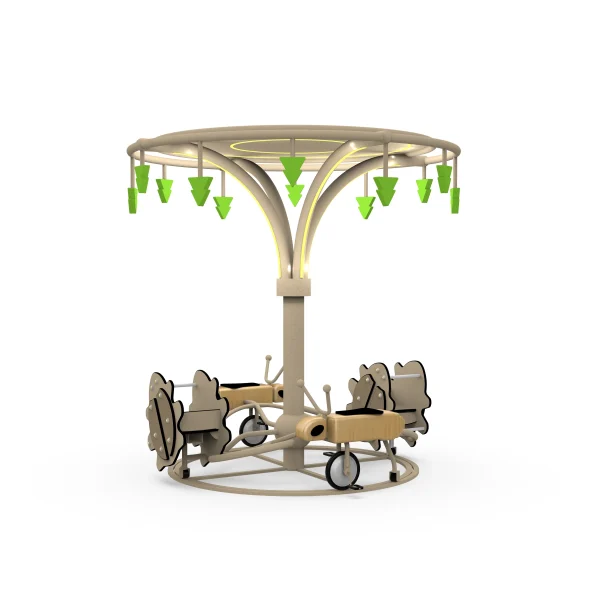
The workflow works best when planned backward from the installation date. That makes the importer registration and conformity process part of the procurement schedule rather than a last-minute port problem.
Common Clearance Issues and How to Avoid Them
Repeated problems in Middle East playground equipment imports include:
- HS code inconsistency between invoice and test reports [1]
- Foreign supplier named as importer without local registration [5]
- Test report model names that do not match the packed equipment
- Missing or incorrectly authenticated certificate of origin
- Labeling or language requirements discovered after arrival
- Free zone delivery mixed with mainland project site requirements
Most of these issues are addressable at quotation stage. If the supplier can produce a document map showing which certificate supports each model, the clearance process becomes far more predictable.
Clearance delays are not the only downstream risk in a public playground project. <Playground Equipment Warranty Comparison 1 3 or 5 Years> covers how warranty terms should line up with the operating life expected by your buyer and maintenance team.
Plan Your Middle East Import with the Right Documentation
Suzhou LvDong Amusement Equipment Co., Ltd. works with exporters and buyers to align equipment specifications with the documentation required at destination. If you are preparing a Middle East import file, contact us early with the destination country, HS code, equipment list, and project timeline. Email [email protected] or WhatsApp +8613915684545.
You can also review our <Playground Slide Manufacturer OEM>, <Playground Spring Rider Manufacturer OEM> or <Interactive Playground Equipment Manufacturer OEM> pages to confirm specification details before applying for conformity documents.
Frequently Asked Questions
Do I need a local importer to bring playground equipment into Saudi Arabia?
Yes. Clearance is tied to a local entity with a valid commercial registration and access to the SABER or applicable conformity platform [4].
Is EN 1176 enough for Middle East customs?
EN 1176 is often the safety benchmark [3], but customs approval may also require national or GSO conformity registration depending on product classification [2]. The buyer should confirm this with the customs broker before shipment.
How should I classify a playground slide or spinner on the customs declaration?
Most conventional playground equipment falls broadly within Chapter 95 of the Harmonized System [1], but the exact subheading depends on materials, whether the item is a complete play structure or a component, and the destination’s national tariff schedule.
What document mistake causes the most delays?
Description mismatches between the invoice, packing list, and test reports are the most common controllable delay [1][5]. Certificate of origin authentication and model-name consistency follow closely.
When should I start import document preparation?
Before production. Waiting until goods are at the port is the most expensive time to discover a missing conformity or importer registration requirement.
References
[1] World Customs Organization, Harmonized System Nomenclature, 2022 Edition, Chapter 95, Brussels, 2022.
[2] GCC Standardization Organization, Gulf Technical Regulation for Children’s Toys, GSO, Riyadh.
[3] European Committee for Standardization, EN 1176: Playground Equipment and Surfacing — General Safety Requirements, CEN, Brussels.
[4] Saudi Standards, Metrology and Quality Organization, SABER Product Conformity Program, Riyadh.
[5] United Arab Emirates Federal Customs Authority, Customs Clearance and Import Requirements, Abu Dhabi.
If you’re interested, check out these related articles:
Merry Go Round Spinners Traditional vs Modern Playground Evolution
Playground Equipment Safety Your Essential Self Inspection Checklist