A playground is a brand environment before it is a play environment. When a school, resort, or family entertainment center specifies its logo green, wayfinding yellow, or corporate blue, the equipment finish has to read as the same color on a slide platform, a spring rider, and a play panel. Color matching for brand consistency is therefore not a paint conversation alone. It combines Pantone reference codes, powder coating formulation, spectrophotometric measurement, and a production process that keeps gloss, texture, and weather resistance under control.
Why Brand Color Consistency Is a Procurement Risk
Color errors are easy to understate at the drawing stage and expensive to fix after installation. A brand team may approve a Pantone chip in a boardroom, only to find that the finished playground arrives in three different shades of green across separate product lines. That mismatch becomes a visible defect in a franchise location, a municipal identity program, or a hotel kids club where every design element is supposed to reinforce the parent brand.
The risk is not usually intentional substitution. It comes from a chain of conversions: a digital color value becomes a printed Pantone reference, that reference becomes a powder formulation, and that formulation must then hold its appearance across steel, aluminum, plastic panels, and textured finishes. Without a defined tolerance and a physical approval panel, “close enough” has no enforceable meaning. For brand-sensitive projects, the specification should therefore name the reference system, the acceptable color difference, the gloss range, and the substrate to be matched.
If the color program is part of a wider kindergarten or community park refresh, <Kindergarten Outdoor Play Equipment Strategic Upgrade Priorities> covers how to prioritize equipment decisions without losing design intent.
Pantone Codes vs. Powder Coating: What the Color Request Actually Means
Pantone is a color communication standard, not a direct powder recipe. A Pantone coated or uncoated chip gives everyone a common color identity, but the exact shade must still be translated into a thermoset powder coating system. Pigments that work in graphic printing do not always behave identically in a baked polyester or polyurethane film. Some bright, fluorescent, metallic, or pastel Pantone references are difficult to reproduce reliably in outdoor-grade powder because of pigment heat stability, weather resistance, or film depth requirements.
In practice, a responsible manufacturer starts from the brand’s Pantone number and compares it with the closest powder coating references under controlled lighting. If no standard powder is close enough, the finisher develops a custom tint or pigment blend. That trial is then sprayed onto the actual substrate, cured, and measured. The approved sample plate becomes the production reference, not the original printed Pantone guide. This is why a color proof should always be reviewed as a physical coated panel rather than as a website image or PDF swatch.
For buyers, the most useful specification is: “Pantone 19-4052 Classic Blue as the design intent, matched in outdoor polyester powder, with approval required on a production-substrate panel before bulk coating.” That single sentence removes most ambiguity from the order.
Lab Values, Delta E, and Gloss: How Acceptable Color Is Measured
Color acceptance is not a matter of opinion when the stakes include brand consistency. Instrumental color measurement uses the CIE L*a*b* space, where L* represents lightness, a* represents green-to-red, and b* represents blue-to-yellow. A spectrophotometer reads the target and the sample under a defined illuminant, usually D65 daylight with a 10° observer, and calculates the difference [1][2].
The result is expressed as Delta E, written as ∆E. In brand-sensitive finishing work, a common acceptance limit is ∆E ≤ 1.0 or slightly higher for textured or metallic surfaces. Lower values mean the human eye cannot easily separate the target from the production part. Gloss is measured separately, typically at a 60° angle, because two parts can have identical color coordinates but still look different if one is matte and the other is semi-gloss [4]. A brand specification should therefore include expected gloss units and not only a color reference.
These measurable values are what allow a supplier to prove accuracy instead of promising it. When our team prepares a color submission, we report the L*a*b* values, the ∆E against the approved target, and the gloss reading. That documentation gives the buyer a clear acceptance record before mass production begins.
How Powder Coating Protects Accuracy and Extends Finish Life
Powder coating supports brand accuracy because it is applied as a dry, electrostatically charged film and then cured into a continuous coating. Compared with many liquid finishes, it gives strong edge coverage on steel frames, tubes, and brackets, which are the areas most likely to show early rust or color loss outdoors [3]. A properly applied architectural powder layer, commonly in the 60–120 micron dry film thickness range, helps protect color integrity while the equipment is exposed to sun, rain, cleaning, and high contact traffic [3].
Weather resistance depends on the resin system. Outdoor playground steel generally requires a polyester or polyurethane-based powder with UV-stable pigments. Interior-only or low-cost powders may match the color on day one but fade or chalk much earlier when placed in direct sunlight. That is why brand-sensitive exterior applications should specify UV-stable, exterior-grade powder, not simply “white” or “blue” from a generic palette. The best color-matching work treats the weather resistance of the pigment system as part of the color decision, because a faded brand color is no longer the brand color.
Color Proof Before Production
Before cutting steel or molding plastic, ask for a physical color proof on the actual production substrate. We can prepare a powder-coated steel or aluminum panel against your Pantone target, report the ∆E and gloss values, and send the panel for approval. Send your brand book, PMS codes, or RAL references to [email protected] or WhatsApp +8613915684545, and the color team will return a proof plan before the production order is confirmed.
Where Brand Color Lives on Playground Equipment
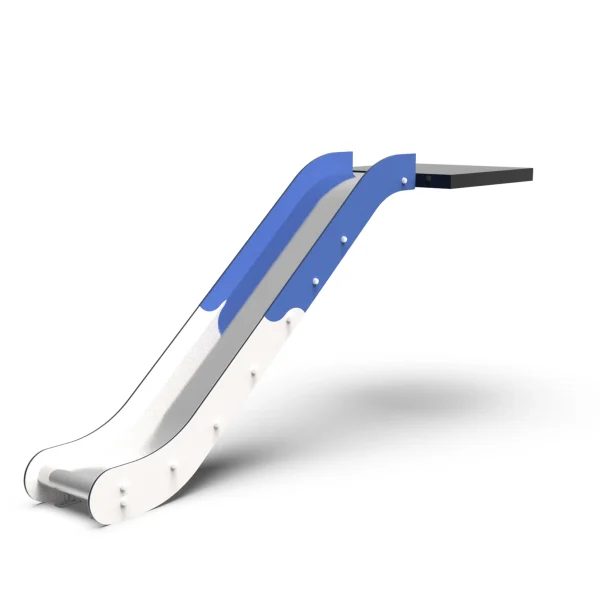
Brand colors appear across several material systems, and each system has its own color path. Powder-coated steel posts, frames, and brackets are matched through the powder process described above. Rotomolded plastic slides, however, may be pigmented inside the polymer rather than coated on the surface. HDPE or LLDPE panels are often supplied in a defined plastic color range. The challenge is to make those different materials look unified when installed side by side. A color program is only successful when the Playground Slide Manufacturer OEM finish and the Playground Play Panels Manufacturer OEM surface are approved together, not as isolated swatches.
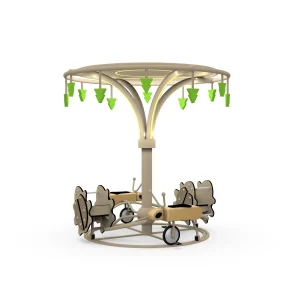
The same discipline applies to moving equipment. A Playground Spinner Manufacturer OEM unit may combine a powder-coated frame with rotomolded seats or hand grips. If the brand color is only approved on steel, the plastic elements may still drift away from the intended identity. A complete color package should therefore list the target reference for every substrate: steel powder, plastic color, and any printed graphics or logo panels.
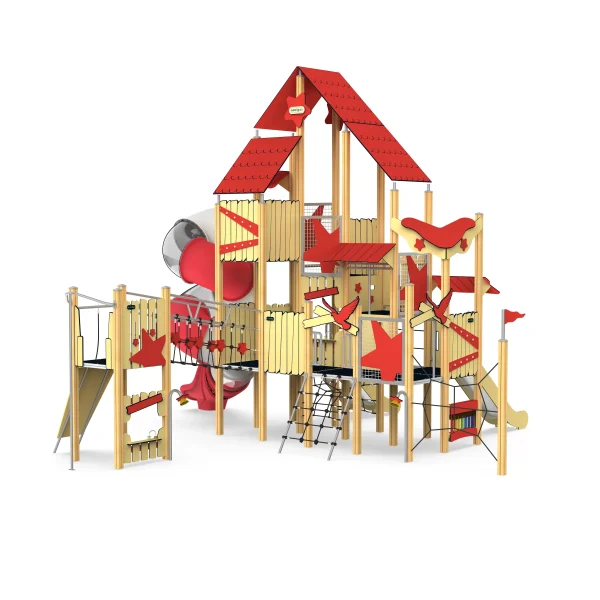
Logos and themed graphics usually sit on panel surfaces or entry arches, so the panel substrate must be chosen before final color approval. <Playground Play Panels Material Selection and Secure Installation> covers material and installation decisions that affect long-term color performance.
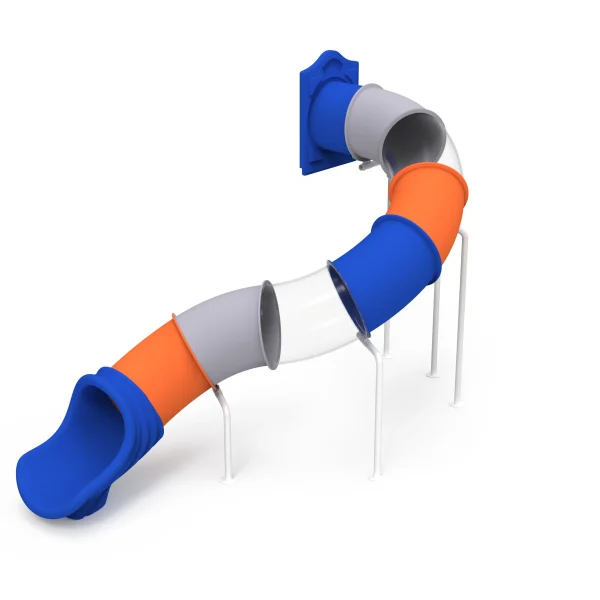
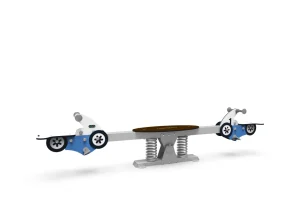
For example, when a hotel brand asks for the same terracotta on a slide roof, a spring rider body, and a play panel frame, we first test the Pantone chip under D65 lighting, produce sample plates from the same powder batch, and then use the approved plate as the production standard for all three product lines. This one-approval method is more dependable than matching each component separately late in production.
Common Causes of Color Drift and How They Are Controlled
Even with an approved panel, field color drift can occur when key production variables are not controlled. Film thickness matters because a powder that looks correct at 80 microns may appear lighter or darker at 40 microns. Cure temperature and dwell time affect final pigment response, especially for reds, oranges, and yellows. Different batches of raw pigment can also introduce small shifts, which is why reliable suppliers retain master samples and test incoming material before large runs.
Surface preparation is another silent variable. Steel that carries oil, rust, or uneven pre-treatment will not hold color uniformly. A proper pre-treatment sequence before powder application, followed by consistent line speed and oven performance, keeps the approved color repeatable across a full order. Buyers should ask whether the supplier keeps production-control records for oven temperature, film thickness, and panel measurements on color-critical projects.
A color-matched finish is only as stable as the inspection schedule behind it. <Annual Maintenance Calendar for Outdoor Play Equipment A Guide> covers seasonal touch-up and inspection timing for outdoor equipment.
Get a Brand-Consistent Color Quote
Suzhou LvDong Amusement Equipment Co., Ltd. supports color-critical playground projects from early sampling through production. Send the following information to receive a color-matching proposal:
- Pantone, RAL, or NCS color references for each equipment component
- Required gloss level and finish type
- The substrate to be matched, such as steel frame, rotomolded slide, or HDPE panel
- Site environment, especially high UV, coastal, or humid exposure
- Whether the buyer requires physical panels, L*a*b* reports, or both
Contact our team at [email protected] or WhatsApp +8613915684545. We will confirm feasibility, prepare substrate-specific color proofs, and define the approval tolerance before manufacturing begins.
FAQ
Can every Pantone color be matched in powder coating?
Not every Pantone reference translates perfectly into exterior-grade powder. Most brand colors can be matched to a tight tolerance, but some fluorescent, neon, metallic, or highly saturated shades may require custom formulation or a different decorative system. A physical draft panel determines what is realistically achievable.
What color tolerance should a buyer specify for playground powder coating?
For visible brand parts, a tolerance of ∆E ≤ 1.0 is a practical starting point under D65 daylight measurement. Textured, metallic, or heavily contoured surfaces may require a slightly wider tolerance. The key is to agree on the tolerance before production begins.
How do you match powder-coated steel to rotomolded plastic parts?
The steel and plastic are approved together against the same brand target. One powder-coated panel and one molded plastic chip are measured side by side, and both must fall within the agreed color difference. This prevents the common problem of matching steel only and accepting a visually different plastic later.
How long will a matched powder-coated finish hold its color outdoors?
The service life depends on the resin system, pigment quality, UV exposure, and maintenance schedule. Exterior-grade polyester or polyurethane powder with UV-stable pigments holds color longer than interior-grade alternatives. Regular cleaning and inspection also help protect long-term appearance.
Can you match colors years later with a touch-up kit?
Touch-up products can restore small areas, but a perfect match may be difficult on heavily weathered surfaces. Retaining the original color records, including powder code and L*a*b* data, makes future matching much more accurate than working from a faded photograph or memory.
References
[1] Pantone LLC, “Pantone Color Systems,” Pantone.com.
[2] ASTM International, ASTM D2244-23, “Standard Practice for Calculation of Color Tolerances and Color Differences from Instrumentally Measured Color Coordinates,” 2023.
[3] Qualicoat, “Specifications for a Quality Label for Liquid and Powder Organic Coatings on Aluminium for Architectural Applications,” 2024.
[4] International Organization for Standardization, ISO 2813:2014, “Paints and Varnishes — Determination of Gloss Value at 20°, 60° and 85°,” 2014.
[5] European Committee for Standardization, EN 1176-1:2017, “Playground Equipment and Surfacing — Part 1: General Safety Requirements and Test Methods,” 2017.
If you’re interested, check out these related articles:
Stand and Spin Equipment Essential Maintenance Safety Guide
Indoor Playground Design Consultation Your Project Blueprint
Optimal Seasonal Care for Outdoor Metal Swing Sets
OEM Branding Services Elevating Outdoor Playset Manufacturing