EU municipal buyers often mistake a generic CE declaration for full EN 1176 compliance, and the problem surfaces after installation when a technical inspector or insurance assessor asks for test reports that were never produced. That leaves procurement teams holding equipment that cannot be handed over safely or on time. EN 1176 compliance is a chain of specific design, production, material, and installation evidence rather than a single certificate. I want to show municipal purchasers where that chain breaks, and which checks protect a public playground project from costly remedial work.
What Does EN 1176 Compliance Actually Cover for a Municipal Playground?
EN 1176 is a series, not a single certificate. For a municipal playground, the core documents typically include EN 1176-1 for general safety requirements and test methods, EN 1176-2 for swings, EN 1176-3 for slides, EN 1176-5 for carousels and rotating equipment, EN 1176-6 for rocking equipment, and EN 1176-7 for installation and inspection. EN 1176-11 adds requirements for impact attenuating playground surfacing, which municipal buyers should treat as part of the safety system rather than a civil works afterthought.
The first mistake is treating a CE declaration as evidence of EN 1176 compliance. A CE mark says the product enters the market through a conformity route. It does not prove that each moving assembly, guardrail dimension, and entrapment opening was tested against the clause that applies to that item.
Which EN 1176 Equipment Categories Carry the Highest Compliance Risk?
From our project experience, spinners and seesaws generate the most questions from technical inspectors. The steel structure is rarely the issue. The moving assembly is. Inspectors ask how the rotating platform behaves under continuous load, how the pivot gap responds to finger probes, and whether the fall height on the drawings matches the installed surfacing depth. Those are the points where a general certificate often exists but a model-specific test report does not.
This is why I prefer model-level data. A multi-user spinner with a user capacity of 6 to 10 children and a maximum falling height of 55 to 77 cm cannot be verified against a report prepared for a single-user rotating seat with a 34 cm maximum falling height.
| Equipment category | Main EN 1176 part | What municipal buyers should check | Frequent audit gap |
|---|---|---|---|
| Swings | EN 1176-2 | Swing arc clearance, seat impact performance, surfacing under the arc | Surfacing depth measured before installation, not after |
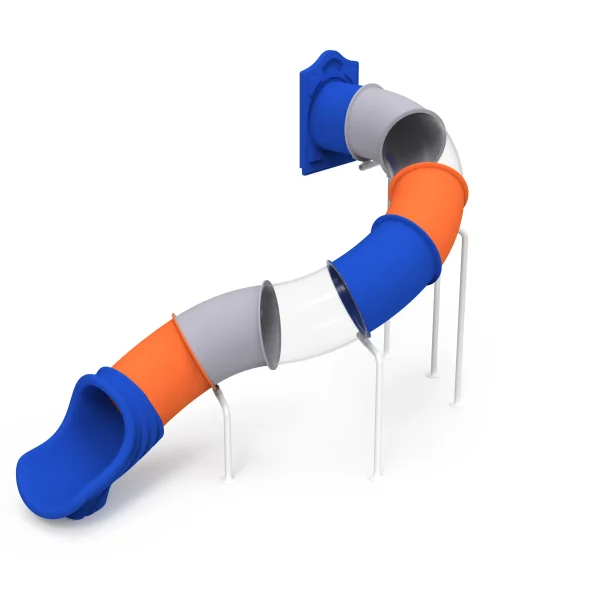
| Slides | EN 1176-3 | Guardrails, side walls, exit runout, handrail dimensions | Runout too short after surrounding surface build-up |
| Spinners and carousels | EN 1176-5 | Dynamic load test, rotational fatigue, finger and head entrapment gaps | A static structural report with no rotating assembly evidence |
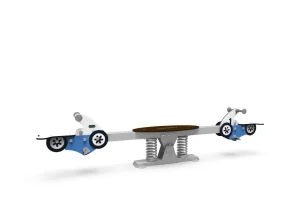
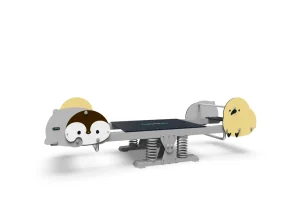
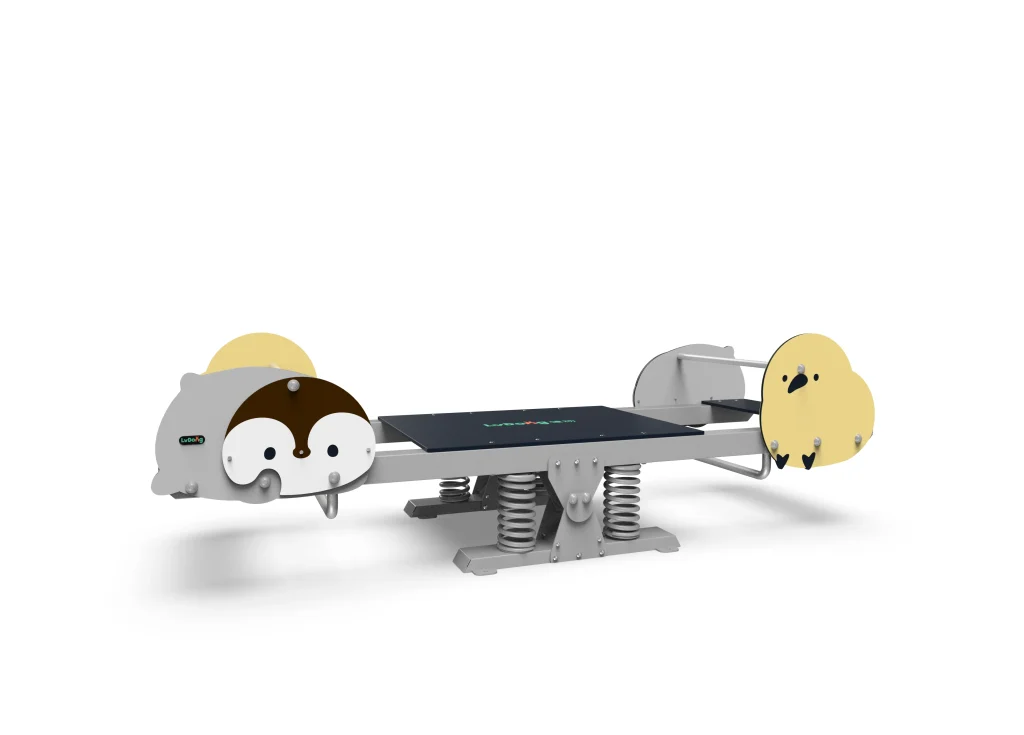
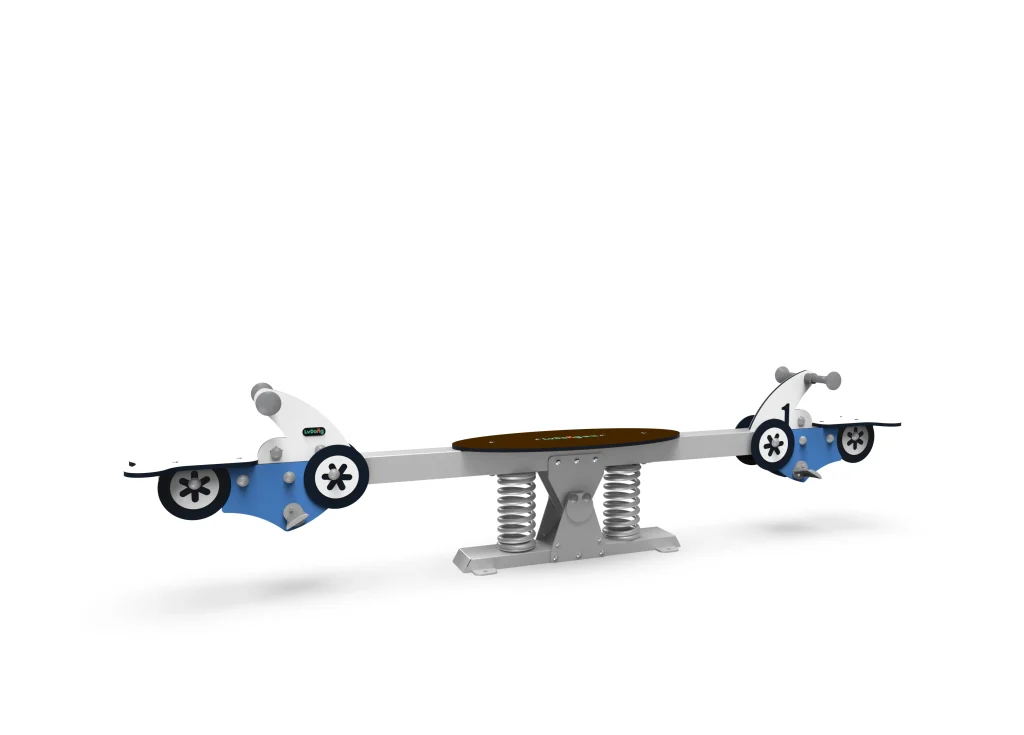
| Spring riders and seesaws | EN 1176-6 | Spring travel, stability, clearance at moving joints | Missing third-party fatigue or impact test for the exact model |
Moving equipment creates audit risk that static structures do not. <Hurricane Spinner Load Testing Unpacking Playground Safety Standards> covers what 24-hour continuous rotation testing reveals about weld fatigue, bearing temperature, and the load cases a credible EN 1176-5 report should include.
What EN 1176 Documentation Should EU Buyers Require Before Contract Signature?
Tender packages often ask only for a certificate, a warranty, and a delivery date. That leaves too much open. I would require three layers.
- Product-specific EN 1176 test reports naming the exact model, dimensions, age range, and standard part.
- Material and coating evidence for galvanizing thickness, powder coating adhesion, and UV stability if plastic components are included.
- Installation and maintenance files aligned with EN 1176-7, showing fall height assumptions, surfacing depths, inspection intervals, and replacement limits for moving parts.
If the supplier cannot connect the test reports to the model in the quotation, the document package is not ready for a municipal purchase. This is where we usually see delays. A buyer waits until the factory has finished production before discovering that the test file belongs to a smaller or discontinued version.
For mixed tenders that include swings, spinners, slides, and seesaws, it is worth confirming the report map before the evaluation closes. Send the proposed equipment schedule and site location to [email protected] and we can confirm which EN 1176 reports are available for each item.
How Do You Verify EN 1176 Compliance During Production and Pre-Shipment?
Certificate review is only half the job. The buyer should confirm that the equipment being fabricated matches the equipment that was tested. In our Suzhou LvDong Amusement Equipment design and quality team, the production file includes the approved drawing revision, the bill of materials, and the specific standard clause for each item.
- Confirm the bill of materials matches the quoted components, especially steel wall thickness, surfacing materials, and bearing types.
- Ask for weld inspection and material traceability records for the main structural connections.
- Arrange or review a third-party pre-shipment inspection that checks dimensions, moving part gaps, and packaging against the approved drawings.
- Confirm that installation drawings show the same fall height and zone requirements as the test report.
Surface temperature is one check that municipal inspectors in southern Europe apply during summer acceptance. A metal slide or dark painted surface can pass a dimensional audit but fail a practical usability check. Coating selection and orientation matter.
For metal components, surface temperature under direct sun is a compliance factor that is easy to overlook until a summer inspection records surface temperatures above the acceptable limit. <Mastering Metal Slide Heat Prevention Strategies for Playgrounds> covers how material selection, coatings, and siting affect heat readings on public playgrounds.
Public sites also fail when equipment is compliant on day one but cannot hold up to continuous use. Bearing assemblies, spring mounts, and slide entry points should be reviewed for wear patterns, not only for static compliance. Municipal buyers should ask whether the supplier has durability evidence for high-use conditions, not just a safety report.
What Should EU Municipal Buyers Confirm Before Signing the Next Order?
Most compliance failures in municipal playground projects are not caused by a missing standard. They come from a procurement process that stops at the quotation and never connects design evidence to the delivered item. Before you sign, confirm that the supplier has named the exact EN 1176 parts applicable to every item, can supply model-specific test reports, and will permit third-party inspection before shipment. If any of those three answers is unclear, do not leave the tender cycle to resolve it later.
For municipal buyers preparing a tender or validating a supplier, send the equipment list, target installation date, and site conditions to [email protected] or WhatsApp +8613915684545. We can respond with the applicable EN 1176 test report mapping, production lead times, and any site-specific concerns for the equipment you are considering.
What Questions Do Municipal Buyers Ask About EN 1176 Procurement?
What is the difference between a CE mark and EN 1176 compliance?
A CE mark is a legal claim that the product has entered the market through a conformity route. EN 1176 is a technical standard containing specific safety requirements and test methods. A product can have a CE mark through a broader conformity assessment, but municipal buyers still need the product-specific EN 1176 test evidence for the exact model, dimensions, and age group being supplied.
Can one EN 1176 certificate cover a full playground?
No, and this is one of the most common misunderstandings in municipal tender documents. A certificate for a slide does not cover a spinner or a seesaw because the load cases, entrapment risks, and moving-part tests differ. Each equipment category needs its own applicable part, such as EN 1176-3 for slides and EN 1176-5 for carousels and rotating equipment.
How recent should third-party test reports be?
It depends on whether the product design has changed and how long ago the report was issued. A product model that is still in production should have current reports matching today’s materials and fabrication details. Older reports are useful only if the manufacturer confirms in writing that the design, dimensions, and production methods have not changed.
If equipment has a minor non-conformance at site, who fixes it?
In the municipal projects I have reviewed, the practical answer is that responsibility depends on whether the non-conformance existed before delivery or arose during installation. The supplier should correct manufacturing defects and issue missing documentation. The installer must correct surfacing, anchoring, and civil works issues. Share your site photos and inspection report, and we will confirm which side the correction falls on before your case closes.
If you’re interested, check out these related articles:
Factory Visit Checklist Playground Equipment Supplier Evaluation
Outdoor Childrens Slides Age Grading 2-5 Versus 5-12
Factory Direct Playground Spring Riders Unbeatable Value Quality