Integrating slides with splash pads changes how every component near the slide exit needs to be specified. Most project teams treat the slide structure and the water feature as separate packages, then resolve the interface during installation. That sequencing is backwards. The slide runoff, nozzle spray throw, drainage fall, and fall surface all meet in one narrow band of paving, and that band is where corrosion, slip hazards, and early deck failure first appear. In the combined play zones we design and produce, the first drawing review starts at that interface, not at the slide shape. Four specifications decide whether the integration stays safe and serviceable for years.
The First Decision in Slide and Splash Pad Integration
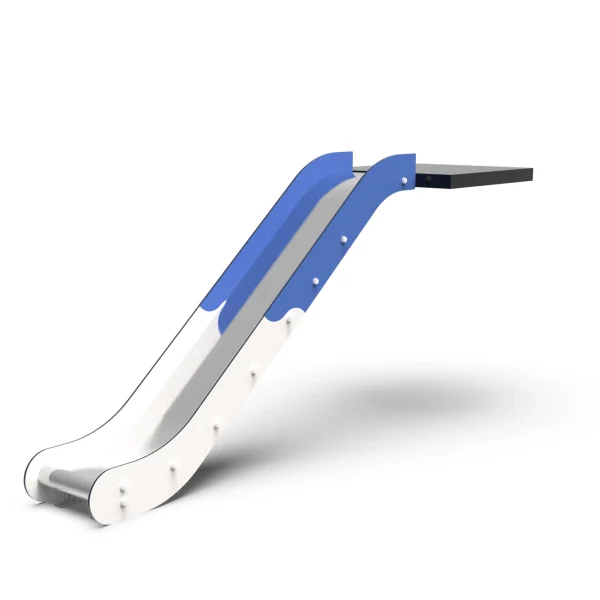
When we plan a slide and splash pad combination, the slide is not the starting point. The first decision is where the slide exit runout ends relative to the splash pad wet zone and drainage path. If the runout discharges onto rubber tiles that slope toward the drainage trench, water moves away cleanly. If the runout ends just outside the wet zone, children carry water onto dry surfacing and create a slip strip that is not managed by the splash pad recirculation system.
The sequencing we apply in design review follows three checks. First, locate the slide runout and confirm the 1.5 m buffer beyond the exit. Second, map nozzle spray arcs to verify they do not saturate the slide platform or stairs. Third, set the drainage fall so water from both systems moves toward the same collection point.
Splash Pad Surface and Drainage Specifications
Combined zones fail when the surface looks continuous but performs as two different drainage systems. Wet pour rubber, concrete, and synthetic turf each respond differently to continuous water exposure, and the transition between them needs a physical separation or a controlled overlap. For splash pad areas we specify a reinforced concrete base with a slip resistant finish, while the slide fall zone uses impact attenuating surfacing rated for wet use. The joint between these materials should sit outside the slide runout and outside the nozzle spray radius.
Surface Slope and Drainage Fall in Combined Zones
The fall across the splash pad and slide runout usually looks simple on plan, but small errors add up quickly. We design the combined area to slope no less than 1 percent toward a continuous trench drain, and we keep the drain at the low point where slide runoff and splash pad water converge. A grate with narrow openings backs up with leaves and sand, so we specify a linear trench grate wide enough to pass debris during peak use. The trench body should connect to the splash pad recirculation line, not to a separate dry park drain.
| Interface condition | Recommended specification | Reason |
|---|---|---|
| Slide exit runoff across wet pour rubber | Linear trench drain 1.5 m beyond runout | Prevents water sheeting into dry zones |
| Nozzle within 2 m of slide footing | Stainless steel fasteners with isolation washers | Reduces galvanic corrosion and loosening |
| Water adjacent steel column base | Hot dip galvanized base plate on raised plinth | Keeps base plate above intermittent flooding |
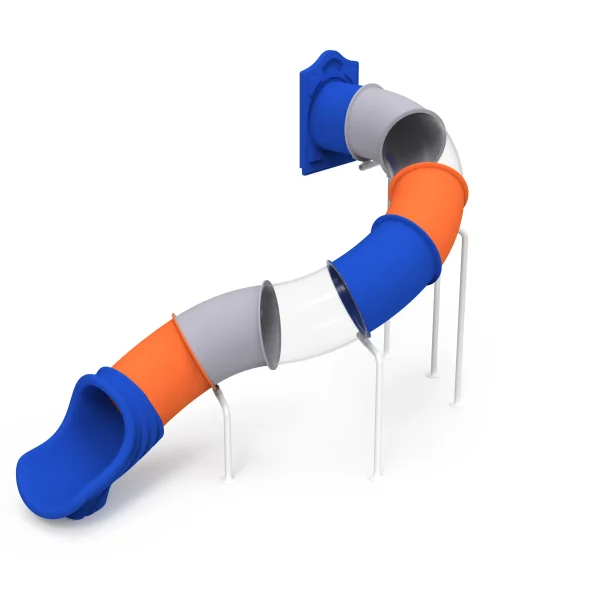
| Tunnel slide underside above splash pad | Vented panel, not sealed steel | Avoids trapped moisture inside the shell |
| Painted surfaces near spray | UV stable polyurethane topcoat over primed steel | Resists chemical and water damage |
Material Transitions Between Wet and Dry Fall Zones
The wet dry transition is often placed as a curved edge on plan, but the real requirement is that no standing water can sit at the joint. We use a raised or contrasting border strip that separates the splash pad from the fall surface and gives children a visual cue. If the client wants a flush transition, we take the drainage trench to the edge and use a drain body with a heel safe grate to avoid trip points. In retrofit conditions, the existing dry surface may not have enough slope, so a saw cut channel can be the least disruptive way to intercept slide runoff.
Drainage and surface detail decide whether a combined play zone stays clean and slip resistant over several seasons. <Advanced Tunnel Slide Support Structure and Ventilation Design> covers how enclosed slide sections manage moisture, airflow, and load transfer when they sit close to wet areas.
Wet Service Joints and Galvanic Protection
Water changes the failure mode of every joint near the slide. On a dry playground, a loose bolt is a slow maintenance issue. In a combined splash pad zone, the same bolt becomes a corrosion cell and a pinch hazard. Where stainless steel hardware contacts carbon steel, we isolate the two metals with nylon washers or bar stock. Where a slide column sits in intermittent water, we raise the base plate on a concrete plinth and use hot dip galvanized steel. These details are not upgrades. They are the minimum for a wet service installation.
We also watch the underside of tunnel slides and platform decks. Water sprays upward from some nozzle patterns and can enter vent holes or panel seams. The answer is not to seal everything, because a fully sealed cavity traps humidity and accelerates coating failure. We prefer vented panels that let air move while keeping direct spray out of structural cavities.
If your splash pad uses recycled or treated water, chloride, pH, and residual chemical levels should be confirmed against the slide and frame coating before you finalize the material schedule. Send your water quality parameters and equipment layout to [email protected] and we will check the interface details.
Runoff Zone Safety Where Slides Meet Splash Pads
The slide exit is the highest risk point in a combined play zone. Children leave the slide at speed and meet a surface that may be wet, shaded, or covered with a thin layer of splash water. The fall surface has to keep wet slip resistance without losing impact attenuation. The fall zone still falls under EN 1176 impact attenuation requirements, but a wet surface introduces slip risks that dry surfacing tests do not capture. We specify the full runout length and then add a transition strip before the splash pad edge so a running child can decelerate without crossing into a hard curb or step. This strip should be visually distinct from the splash pad so the boundary is clear to both children and supervisors.
Weekly Inspection Points for Splash Pad Slide Interfaces
In a combined installation, the simple walk through inspection changes. We check the slide exit for surface wear, the drainage grate for debris, and the nozzle heads for alignment. Blocked drainage turns a runout zone into a standing water hazard within one afternoon. We also lift the trench grate covers and look for sand buildup, because sand accelerates abrasion on moving parts and hides loose fasteners. If the splash pad water chemistry is aggressive, we record pH and residual chlorine at the same time so coating damage can be caught before it spreads.
Water Chemistry and Component Service Life
Recycled water and salt air both change the maintenance schedule. If the splash pad uses treated water with high chloride or residual chlorine, we inspect zinc coatings and paint edges more often because chemical exposure attacks the cut edges first. We also check isolation washers at the slide column bases for cracking. In coastal installations, the same surface may look intact while the hidden fastener shank corrodes, so pull testing a sample fastener during the annual inspection gives a better picture of the remaining service life.
Once water is part of the daily load, inspection routines need to shift. <Playground Equipment Safety Your Essential Self Inspection Checklist> covers the checks that catch loose fasteners, blocked drainage, and surface wear before they become compliance failures.
Interface Confirmation Before Order Finalization
The hardest part of combining slides with splash pads is not the slide itself. It is the boundary where the two systems meet, and that boundary is often left to the installer because the drawings do not show enough detail. Across more than 1,500 delivered playground projects, we have found that early interface confirmation reduces field changes more than any other single review. Send your slide layout, splash pad dimensions, water quality parameters, and local drainage requirements to [email protected] or WhatsApp +8613915684545. We will confirm the material schedule and interface details before you commit to production.
Common Questions About Slide and Splash Pad Integration
Does the slide exit area need separate drainage if the splash pad already has a central drain?
Yes. Slide runoff carries a larger water volume to one point than most nozzle spray patterns, and it arrives with the force of a child entering the runout. A central splash pad drain is sized for distributed spray, not for a concentrated runout stream. We specify a dedicated linear drain along the slide exit edge because it catches sheeting water before it spreads across the fall surface. Without that drain, the runout becomes the wettest part of the playground after only a few minutes of combined use.
Does stainless steel solve all corrosion concerns in splash pad areas?
No. Stainless steel resists many forms of corrosion, but it can still suffer crevice corrosion when water sits in tight joints or under washers. The more serious problem is galvanic corrosion when stainless steel fasteners contact carbon steel frames. We isolate the two metals and specify the grade after checking the local water chemistry. For coastal splash pads with chloride exposure, the fastener selection and isolation details matter more than the difference between two stainless steel grades.
Is it better to place the splash pad beside the slide or below the slide exit?
It depends on the slide height, the nozzle throw distance, and the fall surfacing. A splash pad beside the slide keeps the runout zone dry and easier to inspect, but it adds a walking path between wet and dry zones. A splash pad below the slide exit creates a more exciting sequence, but it demands a longer drainage trench and a wet rated fall surface. For most municipal and resort projects, we prefer the splash pad beside the slide with a controlled transition strip, unless the visual water entry effect is the core design goal.
What is the most common post installation problem in combined play areas?
In projects we have reviewed, the most missed item is not the slide structure but the drainage grate capacity during heavy use. Combined zones pull in leaves, sand, and water in the same afternoon, and a narrow grate backs up quickly. Once the water pools, children track it onto the dry fall surface and create exactly the slip path the design was meant to avoid. Specify a wide, lockable trench grate across the full runout edge, and make it part of the daily check during the opening season. Share your layout and water flow estimate, and we will point out the interface risks before installation.
If you’re interested, check out these related articles:
Stand and Spin Equipment Essential Maintenance Safety Guide
Swing Set Components Advanced Material Selection for Durability
Top 10 Animal Spring Rider Designs for Modern Playgrounds
Playground Spring Rider Materials Steel vs Anti Rust
Outdoor Childrens Slides Age Grading 2-5 Versus 5-12