Selecting a school playground equipment supplier is a decision that will shape children’s play experiences and school liability for years. Many procurement guides emphasize price comparison and reference checks, but we have seen schools overlook the more important factors: manufacturing quality, installation expertise, and long-term service reliability. Over the past decade, our team at Suzhou LvDong has completed more than 1,500 playground projects, many for schools and educational institutions. This guide draws on that on-the-ground experience to help you evaluate suppliers beyond the sales brochure, focusing on the technical and operational details that determine whether your school playground will remain safe, engaging, and low-maintenance.
Start by Defining Your School’s Playground Requirements — Not a Supplier’s Catalog
Before sending any RFQs, map out what your school actually needs. A kindergarten playground for ages 2–5 demands different fall heights, handrail dimensions, and activity density than an elementary school zone for ages 5–12. Document the available footprint, note any drainage or slope issues, and list the play activities your curriculum requires: climbing, sliding, swinging, spinning, sand and water play, or sensory exploration.
A capable supplier will ask these questions before proposing equipment, because a slide platform height that works for a 6‑year‑old is a safety risk for a 3‑year‑old. When a supplier jumps straight to a pre‑configured package without a site discussion, treat it as a yellow flag.
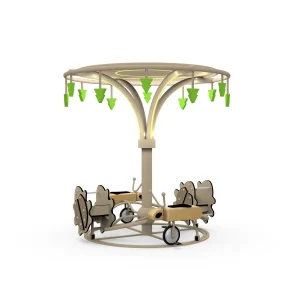
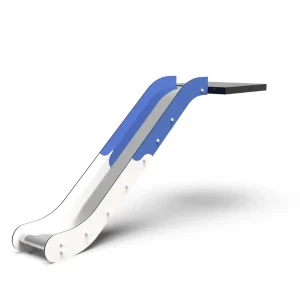
Also consider how the playground supports non‑physical goals. We worked with a primary school that wanted structured social play zones and quiet sensory corners. They gave us a functional brief, not a product list. That allowed our design team to propose a compact playhouse with an attached slide, a multi‑player spinning wheel, and interactive activity panels, all arranged to keep sightlines open for teacher supervision.
Assess a Playground Equipment Supplier’s Manufacturing and Design Depth
The most overlooked step in supplier selection is verifying what happens before the paint goes on. I have walked through factories where steel pipe wall thickness was below the quoted specification and welds were ground poorly to hide porosity. These hidden shortcuts surface as rust, cracked joints, and replacement costs two years later.
Ask for the factory address and production floor area. A manufacturer that operates its own metal fabrication shop, plastic rotational molding equipment, and a quality management system — like the 10,000‑square‑meter integrated facility we run in Suzhou — controls every variable from raw material to final assembly. A trading company that subcontracts production cannot give you that traceability.
Certifications are your second checkpoint. For U.S. public school playgrounds, ASTM F1487 is the baseline, ideally verified by IPEMA. European projects require EN 1176; domestically within China, GB/T 34272‑2017 applies. Couple these with an ISO 9001 quality management certification and you have a credible foundation. Below is a quick reference table:
| Certification | Scope | Region |
|---|---|---|
| ASTM F1487 | Public playground equipment safety | United States |
| EN 1176 | Playground equipment and surfacing | European Union |
| GB/T 34272‑2017 | Safety of amusement playground equipment | China |
| ISO 9001 | Quality management system | International |
| IPEMA | Third‑party validation of ASTM compliance | United States |
A supplier that hesitates to share recent test reports or offers only catalog photos is not worth a factory visit.
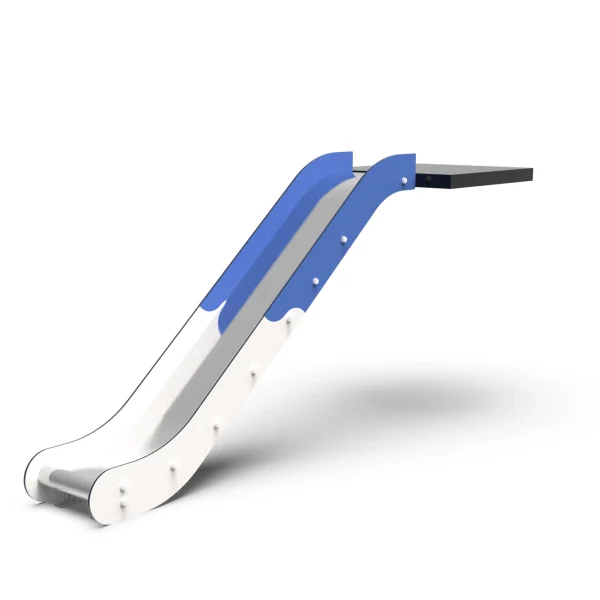
Once you confirm manufacturing substance, evaluate design capability. Many school sites are irregular, sloped, or need to align with a themed curriculum. Off‑the‑shelf sets rarely fit. Ask whether the supplier provides free 3D design services, how many revision rounds are included, and whether they customize colors, themes, and equipment combinations in‑house. We recently designed a nature‑themed play zone for a school that combined a tunnel slide embedded in a small hill, a climbing rock wall, and a custom tree‑house platform. The design went through three revision rounds based on teacher feedback before we cut any steel. That collaborative process is only possible when the design team sits under the same roof as production.
If your school is planning a multi‑structure playground with specific safety and design requirements, it is worth confirming the supplier can provide full design‑to‑installation documentation before you finalize your shortlist. Reach out at [email protected] to discuss your project’s technical needs.
Verify the Supplier’s Project Delivery, Installation, and After-Sales Support
The best equipment on paper becomes a headache if it arrives late, is installed incorrectly, or lacks spare parts support later. We have seen project timelines collapse because a supplier quoted a 30‑day production window while their actual factory was backlogged by three months.
Request a written production and shipping schedule with milestone dates: raw material procurement, metal fabrication, plastic molding, surface finishing, quality inspection, container loading, and estimated vessel departure. For ocean freight, add 3 to 6 weeks transit time, and clarify who handles customs clearance and inland transportation.
Installation is another break point. Some suppliers ship the equipment and leave the school to find local contractors; this can work only if you have a trusted installer who will follow the manufacturer’s specification sheet exactly. Even a 5‑centimeter error in footing depth can compromise structural integrity. A full‑service supplier that sends its own installation team or provides on‑site supervision eliminates that risk. Ask explicitly: who pours the concrete? Who installs the safety surfacing? If the answer is “you arrange it yourself,” verify the warranty still covers installation‑related defects.
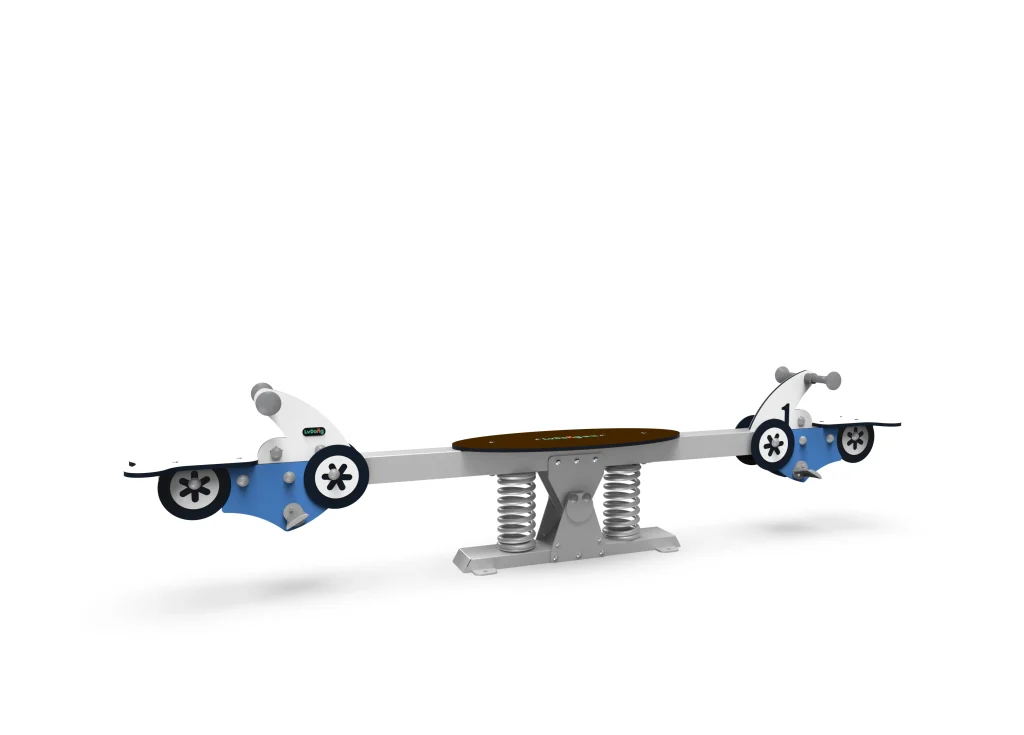
Post‑installation, confirm spare parts availability. Common wear items — swing chains, bearing assemblies, spring coils — should be kept in stock with short lead times. We maintain routine inventory of these parts and can ship most standard components within 7 business days. For larger fabricated sections like slide beds or climbing shells, ask about replacement lead time and cost before you sign. Also, read the warranty fine print: many policies cover the main structure but exclude moving parts or plastic components after the first year. A transparent supplier will state exactly what is covered and for how long, and will share their process for filing a claim.
Make the Final Decision: Comparing Price, Contract, and Partnership Value
When you have two or three shortlisted suppliers that pass the manufacturing, design, and delivery checks, the final step is comparing the total value — not just the unit price.
Request a fully itemized quotation that separates equipment cost, freight, installation, design fees, and any import duties. Some suppliers offer low equipment prices but inflate freight or hide design fees. At the same time, review the proposed contract for clear delivery milestones, payment terms tied to project completion, and penalty clauses for delays. A supplier with genuine production capacity and project management experience will not hesitate to commit to these terms in writing.
Beyond the contract, ask yourself: does this supplier treat the project as a single transaction, or as the start of an ongoing relationship? The difference shows up when you need a replacement part two years later, want to extend the playground with new equipment, or need a safety re‑inspection. A partner‑minded supplier keeps your site files, remembers your layout, and responds quickly.
At Suzhou LvDong, we combine in‑house design, a 10,000‑square‑meter factory, and a project track record of over 1,500 installations to deliver school playgrounds that meet safety standards and educational goals. If you are ready to start, send your site dimensions and a brief description of your needs to [email protected] or reach our team on WhatsApp at +8613915684545. We will prepare a custom 3D layout and quotation within your budget range — with no upfront design fee.
Common Questions When Selecting a School Playground Supplier
What safety certifications should a school playground supplier provide?
At a minimum, the supplier must meet the safety standard that applies in your country. For U.S. schools, ASTM F1487 is the baseline and is often validated by IPEMA. In Europe, EN 1176 certification is required. Internationally, many schools also look for ISO 9001 quality management and CE marking. Always request current test reports issued by an accredited third‑party laboratory, not just a supplier’s self‑declaration.
How long does a typical school playground project take from order to installation?
Production usually takes 4 to 8 weeks, depending on complexity. Ocean shipping adds another 3 to 6 weeks, and on‑site installation typically requires 1 to 2 weeks. A realistic timeline from contract signing to handover is 2 to 3 months. Ask for a detailed project schedule with clear milestones during the evaluation phase.
Can the supplier share examples of previous school installations?
Reputable suppliers can provide project photos, descriptions, and sometimes direct references. Because many schools prefer privacy, the supplier may share anonymized case summaries. At Suzhou LvDong, we maintain a portfolio of school projects and can arrange a video walkthrough of selected installations so you can assess the finished quality.
Do you offer maintenance support and spare parts after the playground opens?
Yes, we keep a stock of commonly replaced parts such as swing bearings, spring coils, and connection hardware. Orders for these parts usually ship within 7 business days. We also provide a maintenance manual and can schedule periodic inspections for larger installations.
What if our school has a themed requirement and a tight deadline?
Custom theming and tight timelines are both manageable if the supplier has in‑house design and production capacity. We have delivered complete themed playgrounds in under 10 weeks, but feasibility depends on material availability and shipping conditions at the time. If your deadline is firm, share your project brief early, and we can confirm feasibility and outline a realistic schedule. Reach out at [email protected] with your requirements, and we will provide compliance documentation and an initial timeline within a few business days.
If you’re interested, check out these related articles:
Playground Slides Buying Guide Height Slope and Critical Safety
Large Playground Slide Transport and Crane Planning
Evaluate Commercial Playground Manufacturers 8 Critical Selection Factors
Merry Go Round Spinners Traditional vs Modern Playground Evolution