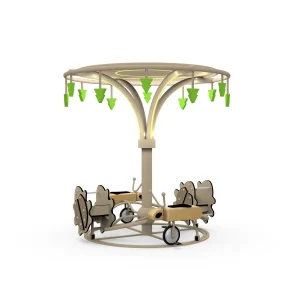
For a restaurant owner, carving out a children’s play area often means wrestling with a tight floorplan and the need to keep little guests safe. The wrong restaurant play area equipment can create hazards, disrupt foot traffic, or simply gather dust because it doesn’t engage children. Instead, I’ve seen that compact, safety-certified units designed for small commercial footprints can turn a corner of the dining room into a reason for families to return. Selecting equipment that meets strict safety standards while making the most of every square meter requires a different approach than outfitting a large outdoor playground.
Matching Play Equipment to Your Restaurant’s Space Constraints
Most restaurants allocate a corner alcove or a narrow strip along a wall for the play zone. Before looking at any catalog, measure the available floor area and note the ceiling height. Then walk the path a child will take from the table to the play area and back. I’ve seen too many well-intentioned setups where a slide’s exit zone spilled into a server aisle. We have designed compact restaurant play areas as small as 10 square meters by combining a single wall-mounted activity panel with a spring rider. That combination kept the footprint minimal while giving children two distinct play experiences. The goal is not to pack in every type of equipment. It is to select one or two pieces that match the available area, leave required safety clearances, and still let a parent watch from the nearest table.
Safety Standards Every Restaurant Play Area Must Meet
All commercial play equipment should carry certification to EN 1176 or ASTM F1487. I require that every piece we install in a restaurant has a current test report from an accredited lab. This matters because a restaurant is a high-traffic, mixed-use environment. Children of different ages will use the equipment, often while parents are eating. The most common oversight I encounter is ignoring fall zone requirements. Even a small spring rider needs an impact-absorbing surface around it, not just restaurant tile. Below is a comparison of maximum fall heights for common compact options.
| Equipment Type | Typical Footprint | Max Fall Height | Age Range |
|---|---|---|---|
| Wall Panel | 120 x 10 cm | 0 cm | 2+ |
| Spring Rider | 99 x 39 cm | 50 cm | 2+ |
| Single Spinner | 60 x 60 cm | 34 cm | 2+ |
| Low Slide | 150 x 80 cm | 60 cm | 3+ |
If your restaurant’s layout presents unusual angles or extremely limited floorspace, it is worth confirming fall zone requirements with a manufacturer before selecting equipment — you can reach me at [email protected].
Equipment Materials and Maintenance for Food Environments
A restaurant play area demands materials that can be cleaned quickly and regularly. In my projects, I specify sealed, non-porous surfaces. High-density polyethylene slides, powder-coated steel frames, and rotationally molded plastic components all hold up to sanitizing wipes. Fabric, rope nets, and unsealed wood are not suitable here. They trap food residue and are difficult to disinfect between seatings. We also look for equipment with few crevices and rounded edges, which reduces crumb traps and makes daily wipe-downs faster. A spring rider with a smooth, molded seat and a coated spring can be cleaned in under a minute. This might not seem like a major decision point, but after a busy Saturday lunch service, the difference between a two-minute cleanup and a ten-minute scrub directly affects staff morale and table turnaround.
Compact Solutions: Slides, Panels, and Interactive Options
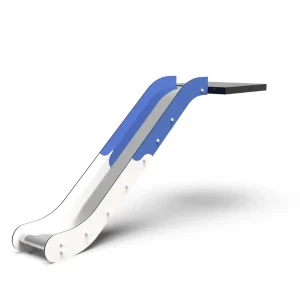
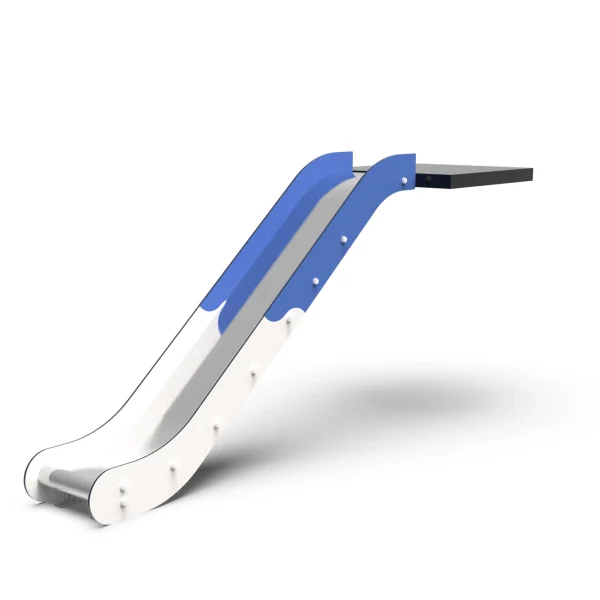
The most space-efficient choices fall into three categories: wall-mounted panels, small slides, and single-user spinning or rocking units. Activity panels that attach directly to a wall need zero floor space beyond the play envelope. They offer tactile, visual, and sometimes musical stimulation without any trip hazard. For restaurants that can spare a tight footprint, a low, curved slide that exits into a padded landing zone works well. I often recommend our curved playground slide models that have a modest run-off length and a gentle slope suitable for toddlers.
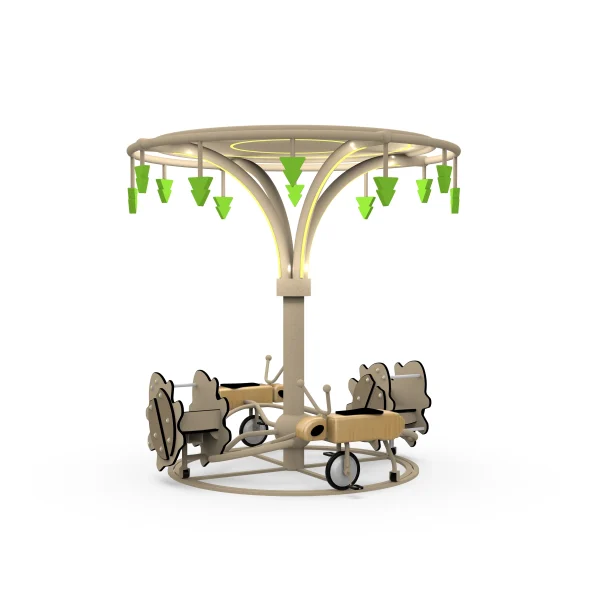
When even a slide feels too large, we turn to single-player spinning equipment. One unit we install frequently in restaurant corners has a 60 by 60 centimeter base and a maximum fall height of just 34 centimeters. Children sit or stand on a small rotating platform, and the motion is self-paced, which reduces the likelihood of collisions.
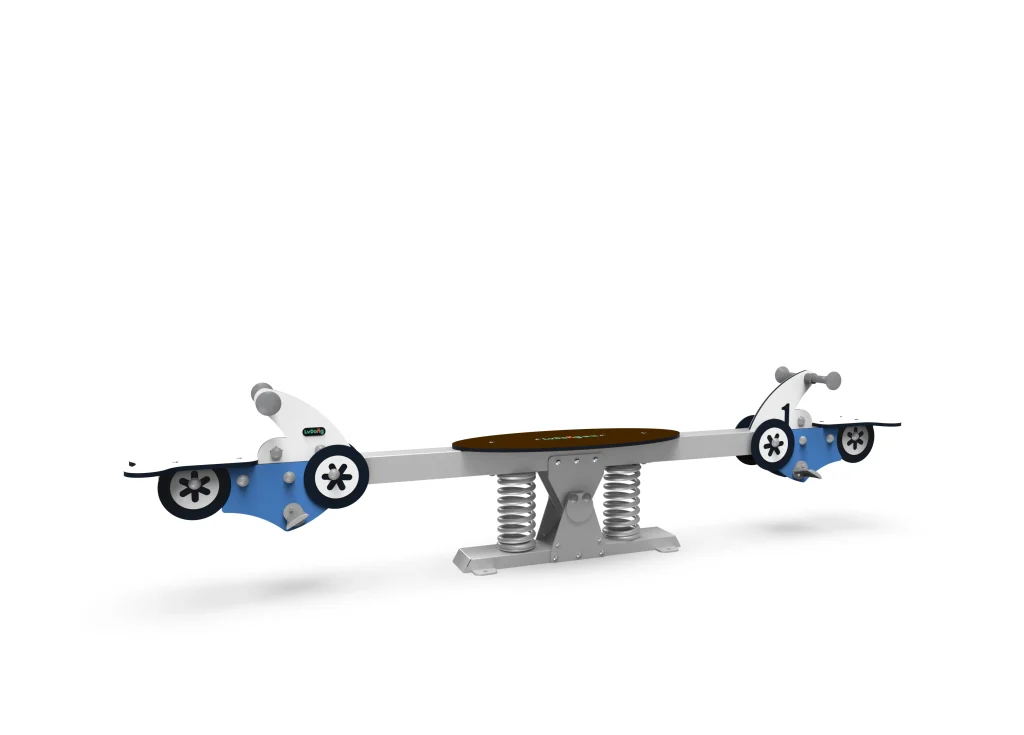
If the restaurant serves toddlers up to age 6, a single spring rider shaped like a friendly animal or vehicle provides a familiar, safe rocking experience. The footprint is typically under one meter long. You can place it in a dedicated play nook with a small safety mat, and it becomes an instant magnet for the youngest guests.
Working with a Manufacturer to Design Your Restaurant Play Zone
When a restaurant reaches out to us, the first step is always a floor plan review. We look at the floor plan, note the expected age range, and propose a 3D layout that respects traffic paths and exits. This pre-design work avoids two common headaches: ordering equipment that does not fit the space, and overlooking the installation requirements before construction is finished. The goal is a plug-and-play setup where the equipment arrives with clear installation instructions and all necessary hardware. For restaurant projects, we also coordinate delivery timing to minimize disruption to business hours. The after-sales support matters too: a dedicated contact who can send a replacement part quickly if something wears out. A restaurant cannot afford a play area out of service for two weeks.
When your space is measured and your requirements are clear, selecting the right equipment becomes a matter of matching specifications, not guesswork. Send your floor plan and target age group to [email protected] or WhatsApp +8613915684545. I’ll reply with a suggested equipment layout and a compliance review within two business days.
Common Questions About Restaurant Children’s Play Areas
What is the minimum square footage for a restaurant play area?
A functional play zone can fit in as little as 8 to 10 square meters, but the exact number depends on the equipment type. A single wall panel requires no floor area at all, just a clear standing space in front of it. A spring rider with the necessary fall zone typically needs about 2.5 square meters. When we design for very tight spaces, we map out the safety clearance radius for each piece and then check whether those circles overlap with furniture or pathways. I would rather recommend one well-placed piece than two squeezed in.
Do local health codes apply to restaurant play areas?
Yes, and this is often overlooked in the early planning stage. While health codes primarily address food contact surfaces, many inspectors will evaluate the play zone as part of the overall sanitation assessment. The equipment must be cleanable and free of sharp edges or entrapment points. Some jurisdictions require a barrier between the play area and food consumption areas to prevent contamination. I always advise clients to share the equipment specification sheets with their local health department before purchasing. It is much easier to adjust the layout at the design stage than to rework the space after installation fails an inspection.
Can I install the equipment myself, or does the manufacturer handle it?
It depends on the complexity. Most wall panels and small spring riders can be installed by a local handyman using the manufacturer’s instructions, provided the floor anchors are set correctly. We have seen restaurant staff successfully install simple units in under an hour. However, if the equipment involves a slide platform with a stepped entry or requires concrete footing, it is safer to have the manufacturer’s installation team or a certified contractor handle it. An incorrect anchor depth or a wobbly slide exit can create a serious safety risk that voids the warranty. If you’re considering self-installation, I can review the equipment manual with you and point out where professional help is essential.
How do I handle noise from the play area without disturbing diners?
Noise management starts with equipment selection. Rubber-coated components, soft-closing gates, and activity panels that use hand-turned mechanisms instead of impact-based sounds all reduce the din. In several restaurant projects, we positioned a low dividing planter or a clear acrylic screen to buffer sound while keeping sightlines open. Another tip is to schedule a deep cleaning and fastener check every two weeks; a loose bolt on a spring rider can create a creak that annoys adults more than any child’s laughter does. If noise remains a concern, share the floor plan at [email protected], and I’ll suggest specific sound-dampening material options that work with your decor.
If you’re interested, check out these related articles:
Eco Friendly Playground Equipment SGS REACH RoHS Standards Explained
12 Critical Post Installation Acceptance Tests for Playgrounds