Playground teeter-totters come in two fundamentally different configurations, and the choice between them shapes everything from daily maintenance schedules to how children actually use the equipment. Traditional pivot-based designs and spring-balanced models each solve the same basic problem—creating reciprocal motion between two seated users—but they do so through mechanisms that produce distinct play experiences, safety profiles, and installation requirements.
How Traditional and Spring-Balanced Teeter-Totters Actually Work
Traditional teeter-totters transfer weight directly through a rigid beam mounted on a central fulcrum. When one child pushes off the ground, their force travels through the beam and lifts the other child. The motion depends entirely on the users coordinating their timing and effort. Children learn quickly that the teeter-totter only works well when both participants contribute, which makes these units effective for teaching cause-and-effect relationships and basic physics principles through direct experience.
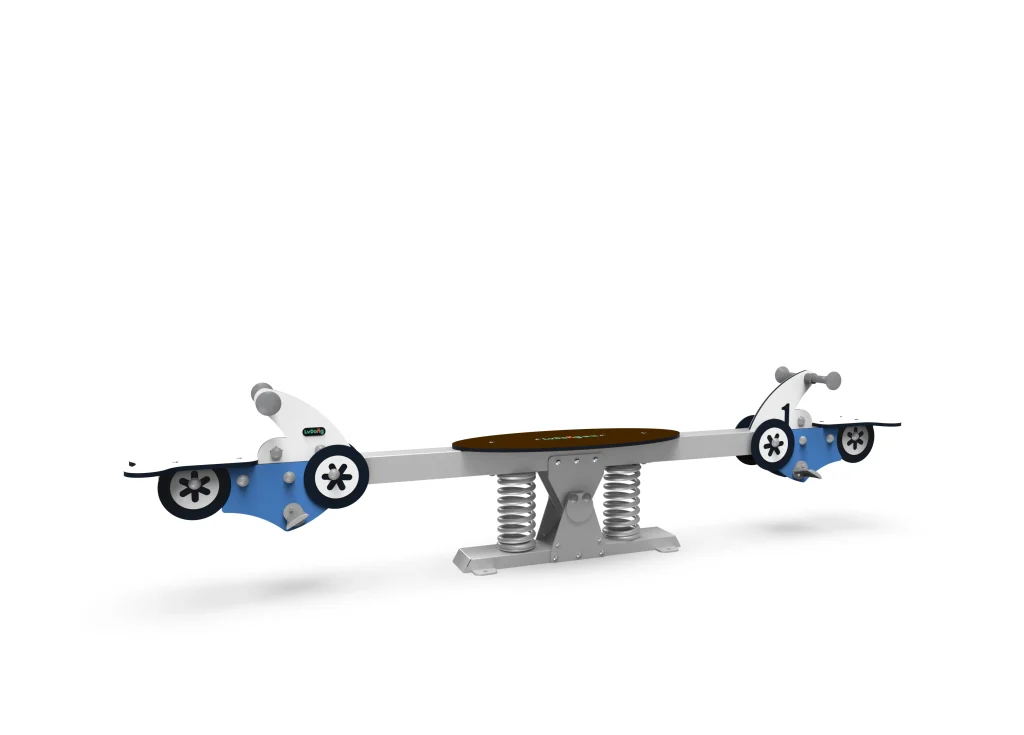
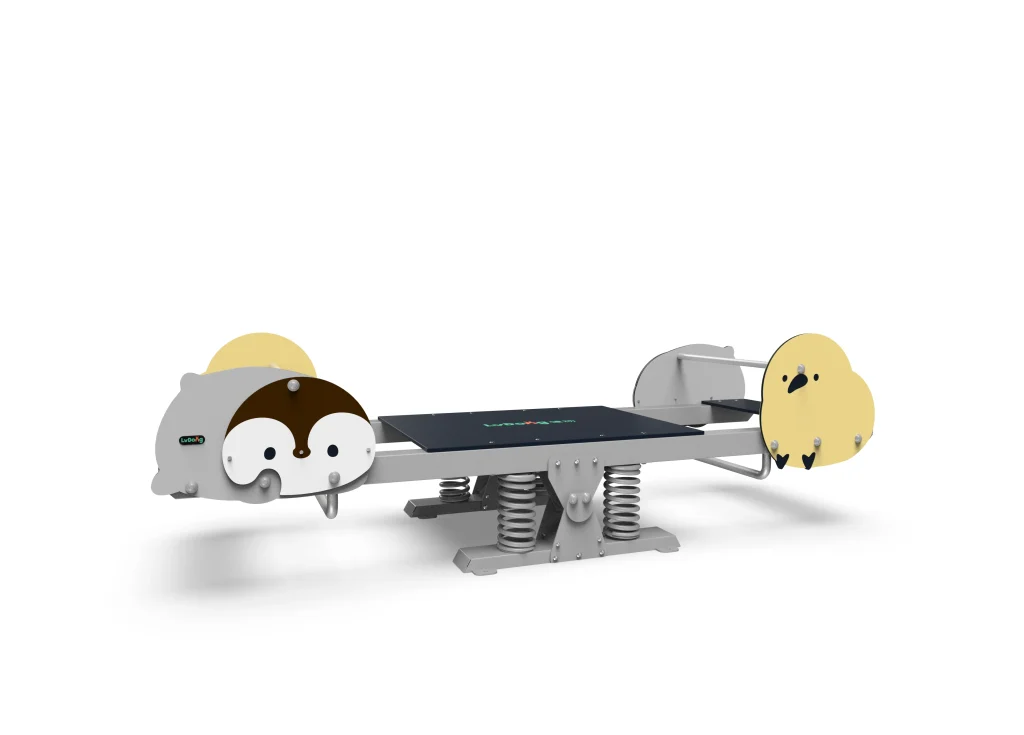
Spring-balanced teeter-totters replace the rigid fulcrum with heavy-duty coil springs mounted at the base. The springs absorb a portion of the downward force and return it as a controlled bounce rather than a direct transfer. This dampening effect means the motion feels less abrupt, and a single child can often generate enough movement to use the equipment independently. The trade-off is that the spring mechanism introduces additional components that require inspection and eventual replacement.
| Feature | Traditional Teeter-Totter | Spring-Balanced Teeter-Totter |
|---|---|---|
| Mechanism | Rigid beam on central pivot | Beam on heavy-duty springs |
| Motion | Full up-and-down, direct weight transfer | Controlled rocking, spring-assisted bounce |
| Impact | Direct, can be abrupt at ends of motion | Absorbed by springs, softer landing |
| Play Type | Cooperative, balance, coordination, physical strength | Gentle rocking, sensory input, accessible |
| Age Suitability | Generally older children (4+ years) | Wider range, including younger children (2+ years) |
| Fall Height | Can be higher depending on design | Often designed for lower fall heights |
What EN 1176 Requires for Both Teeter-Totter Types
Both traditional and spring-balanced teeter-totters installed in public spaces must comply with EN 1176, the European standard governing playground equipment safety. The standard specifies requirements for structural integrity under repeated loading, entrapment prevention at pivot points and spring housings, and impact attenuation in the surrounding surface zone.
For traditional designs, the critical compliance points center on the pivot mechanism itself. The standard requires that finger and head entrapment gaps fall outside the 9mm to 230mm range where injuries most commonly occur. The beam must withstand specified load cycles without developing cracks or loosening at connection points. Ground anchors need to maintain stability even when children apply asymmetric forces by jumping on one end.
Spring-balanced units face additional requirements around the spring mechanism. Springs must be enclosed or designed to prevent finger entrapment during compression. The fatigue resistance of the springs themselves must be documented through testing, since spring failure under load creates obvious safety hazards. Many manufacturers now use fully enclosed spring housings that prevent access to the moving components entirely.
Material selection directly affects both safety compliance and service life. Heavy-gauge steel frames with hot-dip galvanizing resist corrosion in outdoor installations. High-density polyethylene seats withstand UV exposure without becoming brittle. On a recent project, we specified impact-absorbing rubber surfacing extending 1.8 meters beyond the maximum swing arc of a traditional teeter-totter, which exceeded the minimum EN 1176 requirements. The facility reported measurably fewer minor incidents over the following year compared to their previous installation with standard surfacing.
Installation Differences That Affect Long-Term Performance
Traditional teeter-totters require precise leveling of the central pivot point. If the fulcrum sits even slightly off-level, the beam will favor one side, making the equipment frustrating to use and accelerating wear on the pivot bearings. Ground anchors must extend below the frost line in cold climates to prevent heaving that throws off the alignment. The installation footprint is relatively compact, but the surrounding safety zone extends in both directions along the beam’s arc of motion.
Spring-balanced installations involve additional complexity around the spring mounting. Springs must be tensioned correctly during installation—too loose and the motion becomes sluggish, too tight and the dampening effect disappears. The spring housing needs to remain accessible for inspection while preventing unauthorized access. Some designs use below-grade spring mounts that require excavation and drainage provisions to prevent water accumulation around the mechanism.
Both types benefit from concrete footings that extend below the equipment’s visible mounting points. Surface-mounted installations using anchor bolts into existing concrete are possible but generally produce shorter service lives due to the cyclic loading that teeter-totters experience. The repeated rocking motion gradually loosens surface anchors in ways that in-ground footings resist more effectively.
Maintenance schedules differ primarily in what needs inspection. Traditional teeter-totters require regular lubrication of the pivot bearing and inspection of the beam-to-pivot connection for wear. Spring-balanced units need spring tension checks and inspection of the spring housing seals. Both types require the same attention to seat attachment points, handle integrity, and ground anchor stability.
Why Spring-Balanced Models Often Work Better for Mixed-Age Playgrounds
The gentler motion profile of spring-balanced teeter-totters makes them accessible to children as young as two years old, while traditional designs typically suit children four and older. This age range difference matters significantly for playgrounds serving diverse communities where younger siblings often accompany older children.
Spring-balanced units also accommodate weight mismatches more gracefully. When children of significantly different sizes use a traditional teeter-totter, the heavier child dominates the motion unless they deliberately hold back. The spring mechanism partially compensates for weight differences by absorbing some of the heavier child’s force, producing a more balanced experience without requiring the larger child to restrain themselves.
The sensory input from spring-balanced motion appeals to children who find the abrupt stops of traditional teeter-totters uncomfortable. The bouncing quality provides vestibular stimulation in a controlled way that some children with sensory processing differences find more tolerable than the direct impact of traditional designs.
Traditional teeter-totters retain advantages for older children seeking more challenging play. The direct weight transfer requires genuine physical effort and coordination. Children must communicate with their partner to achieve smooth motion, which builds social skills alongside physical ones. The higher intensity of traditional teeter-totter play also provides more cardiovascular benefit for children who need active outlets.
Durability Factors That Actually Predict Service Life
The distinction between traditional and spring-balanced designs matters less for durability than the quality of materials and manufacturing. A well-built traditional teeter-totter using 3mm wall thickness steel tubing will outlast a spring-balanced unit using 2mm tubing, regardless of mechanism type. The reverse is equally true.
Steel frame construction should specify hot-dip galvanizing rather than powder coating alone for installations in humid or coastal environments. Powder coating provides color and initial corrosion resistance, but galvanizing creates a sacrificial zinc layer that continues protecting the steel even when the surface coating gets scratched. Combination treatments using galvanizing plus powder coating offer the best protection but add cost.
Spring fatigue is the primary durability concern specific to spring-balanced designs. Quality manufacturers test springs to documented cycle counts before failure, typically in the range of 500,000 to 1,000,000 cycles. A heavily used playground teeter-totter might see 200 cycles per day, suggesting spring replacement intervals of 7 to 14 years under normal conditions. Actual replacement timing depends on usage patterns, environmental exposure, and whether the springs show visible signs of fatigue like permanent set or surface corrosion.
Pivot bearings in traditional teeter-totters represent the analogous wear component. Sealed bearings with grease fittings for periodic lubrication typically last longer than unsealed bushings, though they cost more initially. Bearing replacement is generally simpler than spring replacement, requiring only removal of the beam rather than excavation of the spring housing.
Both equipment types benefit from seats made of high-density polyethylene rather than wood or metal. HDPE resists UV degradation, doesn’t splinter, stays cooler than metal in direct sun, and cleans easily. The material costs more than painted wood but eliminates the refinishing cycles that wood seats require every few years.
How Traditional Teeter-Totters Support Physical Development
Traditional teeter-totters engage children’s vestibular systems through the full arc of motion from ground level to maximum height. This range of movement challenges balance and proprioception in ways that gentler equipment cannot replicate. Children must constantly adjust their posture and muscle tension as the angle changes, building core strength and body awareness.
The cooperative requirement of traditional teeter-totters creates natural opportunities for social skill development. Children must negotiate who goes first, communicate about timing, and adjust their effort based on their partner’s actions. These interactions happen organically during play rather than requiring adult facilitation, which makes the learning more durable.
The physical effort required to operate a traditional teeter-totter provides genuine exercise. Unlike spring-assisted motion that does some of the work, traditional designs require children to push against the ground with enough force to lift their partner. This resistance training strengthens leg muscles and improves cardiovascular fitness, particularly when children engage in extended play sessions.
The cause-and-effect relationship in traditional teeter-totters is immediate and obvious. Push harder, go higher. Time your push with your partner’s descent, achieve smooth motion. These physics lessons embed themselves through repetition in ways that verbal instruction cannot match.
What Current Design Trends Mean for Teeter-Totter Selection
Contemporary teeter-totter designs increasingly incorporate variable resistance mechanisms that allow adjustment for different user weights and preferences. Some spring-balanced models now include tension adjustment features that maintenance staff can modify seasonally or as the primary user population changes. This adaptability extends the useful range of a single piece of equipment.
Material innovation focuses on sustainability without sacrificing durability. Recycled HDPE performs identically to virgin material for seat and handle applications while reducing environmental impact. Some manufacturers now offer FSC-certified wood options for facilities that prefer natural aesthetics, though these require more frequent maintenance than synthetic alternatives.
Inclusive design principles have influenced teeter-totter development significantly. Models with wider seats, integrated backrests, and transfer platforms allow children with mobility limitations to participate in teeter-totter play. Ground-level spring rockers provide similar motion experiences for children who cannot safely use elevated equipment. These accessibility features often benefit all users, not just those with specific needs.
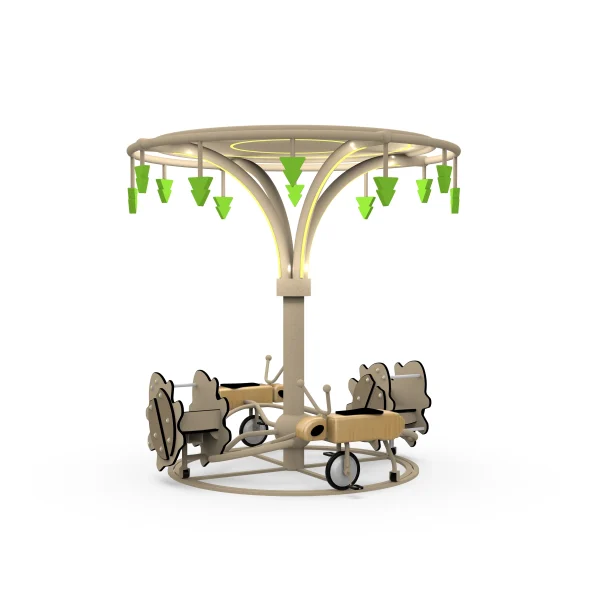
Aesthetic integration with playground themes has expanded the visual vocabulary of teeter-totters beyond the traditional plank-on-pivot form. Animal-shaped spring rockers, vehicle-themed seating, and abstract sculptural forms now provide teeter-totter motion within designs that contribute to overall playground character. These themed options typically cost more than basic designs but may increase playground appeal and usage.
Getting Specific Recommendations for Your Installation
The right teeter-totter choice depends on your specific user population, site conditions, and maintenance capacity. A playground primarily serving preschoolers has different requirements than one designed for elementary-age children. Coastal installations face different material challenges than inland sites. Facilities with dedicated maintenance staff can support equipment that requires more frequent attention than those relying on periodic contractor visits.
If you’re evaluating teeter-totter options for a public park or community playground, we can discuss how different configurations match your specific requirements. Contact us at [email protected] or WHATSAPP:+8613915684545 to start that conversation.
Frequently Asked Questions
Are spring-balanced teeter-totters always safer than traditional ones?
Spring mechanisms reduce impact forces at the ends of the motion arc, but safety depends more on proper installation, appropriate surfacing, and regular maintenance than on mechanism type alone. A poorly maintained spring-balanced unit with degraded springs can present hazards that a well-maintained traditional teeter-totter avoids. Both types require compliance with EN 1176 standards and ongoing inspection to remain safe.
Do traditional teeter-totters still have a place in modern playgrounds?
Traditional teeter-totters offer developmental benefits that spring-balanced models cannot fully replicate. The direct weight transfer, cooperative requirement, and physical challenge appeal to older children and provide specific balance and coordination training. Many playground designs include both types to serve different age groups and play preferences within the same facility.
What is the typical lifespan difference between the two types?
Material quality and manufacturing standards determine lifespan more than mechanism type. Both traditional and spring-balanced teeter-totters built with heavy-gauge galvanized steel and quality components routinely exceed 15 years of service with appropriate maintenance. Spring-balanced units may require spring replacement during that period, while traditional units may need bearing service, but neither type has an inherent longevity advantage.
Can both types of teeter-totters be made accessible for children with disabilities?
Both mechanism types can incorporate accessibility features including wider seats with backrests, transfer platforms at seat height, and ground-level mounting options. Spring-balanced designs often adapt more easily to accessibility modifications because the gentler motion accommodates children who might find traditional teeter-totter movement disorienting or uncomfortable.
Is there a significant cost difference in purchasing and installing these teeter-totters?
Spring-balanced models typically carry higher initial costs due to the spring mechanism and housing components. Installation costs depend more on site conditions than equipment type. Long-term cost comparison should factor in maintenance requirements, expected component replacement intervals, and the equipment’s suitability for your actual user population. A less expensive unit that doesn’t get used provides poor value regardless of purchase price. To discuss specific pricing for your project requirements, reach out to us directly.
If you’re interested, check out these related articles:
Optimal Seasonal Care for Outdoor Metal Swing Sets
Large Playground Slide Transport and Crane Planning