Salt spray changes the material math for any playground built within sight of the Maldives shoreline. Stainless steel choices determine whether a slide frame lasts for years or shows rust streaks before the second monsoon season. I have reviewed coastal resort specifications where powder-coated carbon steel failed within the first year, while properly specified stainless components still looked sound after repeated wet and dry cycles. This piece sets out the grades that hold up, where mixed-material construction reduces cost, and the specification details resort buyers should confirm before signing a purchase order.
What Salt Spray Does to Ordinary Playground Steel
Maldives coastal air is warm, humid, and loaded with airborne salt. When salt particles settle on steel, they draw moisture and form a chloride-rich film that breaks down the chromium oxide layer protecting stainless steel. Once that passive film fails, pitting starts at scratches, welds, and crevices. Powder-coated carbon steel looks acceptable on delivery but has no self-healing protection. Every scratch, bolt hole, or chip becomes a starting point for rust that spreads under the coating. Galvanized carbon steel resists this better because the zinc layer corrodes first. But in continuous coastal exposure, the zinc is consumed over time, and the base steel begins to rust once the coating is gone.
Resort operators learn this difference through maintenance logs. Coastal playgrounds are washed by rain, sea spray, and high humidity in repeating cycles. Equipment that is installed near the beach but made from ordinary steel may look fine after three months and then deteriorate rapidly. The cost of repair in the Maldives is not just the part. It is the freight, the site access, and the guest-facing downtime while a slide or swing is out of service.
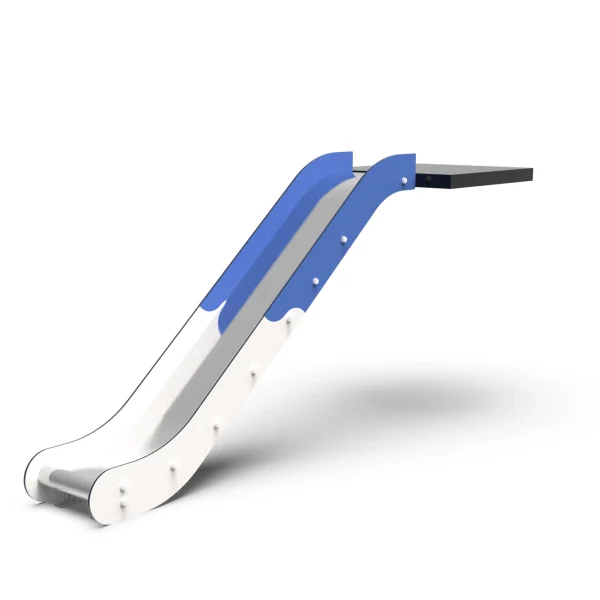
Corrosion resistance is one part of the safety picture. <Playground Slides Buying Guide Height Slope and Critical Safety> covers slide geometry and fall zone requirements that still apply to coastal resort installations.
304 and 316 Stainless Steel Grades for Coastal Playgrounds
Stainless steel is not one material. The two grades most often quoted for playground equipment are 304 and 316L, and they perform very differently in a Maldives beach environment. Grade 304 contains about 18 percent chromium and 8 percent nickel. It resists ordinary atmospheric corrosion but can pit when chlorides sit on the surface for long periods. Grade 316L adds molybdenum, usually 2 to 3 percent, which strengthens the passive film and gives much better resistance to pitting and crevice corrosion.
| Material | Salt spray behavior | Relative cost | Best use in coastal resorts |
|---|---|---|---|
| 304 stainless steel | Resists light coastal exposure but can pit in continuous salt spray | Moderate | Indoor or sheltered areas, low-chloride settings |
| 316L stainless steel | Strong resistance to pitting and crevice corrosion | Higher | Structural frames, fasteners, and chain attachments within 500 meters of shore |
| Galvanized carbon steel | Sacrificial zinc layer protects until consumed, then rust spreads | Lower | Temporary or inland components, buried anchors with isolation |
That difference matters most at joints, fasteners, and thin-walled sections where salt can concentrate. A slide frame made from 304 may survive several seasons if it is washed regularly and kept away from direct spray. A frame made from 316L has a wider safety margin when the resort is within 500 meters of the water or when the equipment cannot be rinsed frequently. In practice, we specify 316L for structural frames, bearing housings, springs, and any threaded component that will spend its life near the sea.
Mixed-Material Construction for Maldives Resorts
An all-stainless playground is rarely the best use of budget. The smart coastal specification mixes 316L stainless steel for the parts that carry load or trap salt, with UV-stabilized plastics, aluminum, or coated steel in protected locations. This keeps child-contact surfaces manageable and directs spending toward the components that determine service life. Structural posts, connecting plates, swing hangers, spring mechanisms, and fasteners get the higher grade. Decorative panels, slide beds, and shade elements can use materials selected for UV and heat behavior rather than corrosion alone.
One practical concern in the Maldives is surface temperature. Stainless steel exposed to full tropical sun becomes hot to the touch. For that reason, seating surfaces and hand grips often need shading or composite covers even when the underlying frame is stainless. This is not a reason to avoid stainless steel. It is a layout and surfacing decision that should be made before installation.
If your resort sits within 300 meters of the water and maintenance access is limited, confirm the grade and finish for every load-bearing connection before finalizing the equipment list. Send the site distance from shore and your component list to [email protected] for a written material confirmation.
Moving parts fail faster than static frames in salt spray because bearings, chains, and spring attachments trap chlorides. <Swing Set Components Advanced Material Selection for Durability> covers how component-level material decisions change maintenance budgets in humid environments.
Specification Details to Confirm Before Ordering
Coastal procurement should not stop at the word stainless steel. Four details separate a resort-grade structure from a standard catalog item.
Confirm the actual grade and finish
Ask the supplier to state the grade as 316L and to supply the mill certificate. The finish also matters. Electropolished stainless has a smoother surface that slows chloride adhesion and makes rinsing more effective. A brushed finish is acceptable on visible surfaces but should not be used where crevices are hard to clean.
Check fasteners and welds
Fasteners in a coastal playground should be A4 or 316 grade, not the standard 304 or zinc-plated hardware sometimes used on inland equipment. Welds need pickling and passivation after fabrication. Untreated weld zones are the first places pitting appears because welding changes the surface chemistry.
Ask for material certificates and test reports
For critical components, request documentation that shows the actual chemical composition rather than a generic statement. A pitting resistance equivalent number, or PREN, gives a quick comparison. Grade 316L with molybdenum near 2.5 percent will have a higher PREN than 304, which is why it survives longer in chloride-rich air.
If you are comparing supplier quotes, not all stainless steel pricing reflects the same grade, wall thickness, or finish. <Playground Equipment Balancing Price and Quality for Lasting Value> explains how to read quotes so hidden cost differences do not reappear after installation.
Sourcing Coastal Playground Equipment Without Overpaying
Maldives resort buyers often face a double problem. The environment is aggressive, and logistics make replacements expensive. A low purchase price is not a saving if the equipment needs repeated intervention. The better approach is to price the full cost over five to seven years, including freight, installation supervision, and parts availability.
Suzhou LvDong has supplied over 1,500 playground projects and understands that coastal specifications need to be locked before production. For a Maldives installation, send your site location, distance from the shoreline, equipment list, and any operator standards such as EN 1176 to [email protected] or WhatsApp +8613915684545. Request a material-specific quotation that names the grade, finish, and fastener standard for every exposed component.
Common Questions About Stainless Steel Coastal Playgrounds
Is 304 stainless steel good enough for a Maldives beach resort?
In most direct coastal installations, no. 304 resists mild atmospheric corrosion but can develop pitting in chloride-rich salt spray. It may be acceptable inside a shaded, recessed area far from direct sea exposure, but the safer default for structural frames within 500 meters of the water is 316L. The added cost is concentrated in the components that matter, and it buys a wider safety margin before visible corrosion appears.
Does stainless steel stay cooler than painted steel in the sun?
A common assumption is that bright stainless steel runs cooler than dark painted steel. The opposite is closer to the truth. Stainless steel absorbs solar radiation and can become too hot for bare skin in direct tropical sun. Shade structures, composite hand grips, and light colors on child-contact surfaces matter more than the choice of structural metal. The corrosion decision and the temperature decision should be handled separately.
What certifications should coastal playground equipment carry?
It depends on the resort operator and the imported product’s destination. Many Maldives projects follow EN 1176 for play equipment safety. Buyers should also ask for material certificates showing grade 316L, plus any salt spray test documentation for coated components. A supplier that only presents a CE marking without grade documentation is not giving you enough to evaluate long-term coastal performance.
How often should stainless steel playground equipment be washed in coastal conditions?
In coastal projects we have supported, the equipment that lasts longest is rinsed on a regular schedule. Fresh water removes salt deposits that would otherwise sit in crevices and accelerate pitting. Monthly washing is a reasonable starting point for equipment near the beach, with more frequent rinsing during windy periods when salt accumulates faster. Rinsing does not replace correct grade selection. It extends the life of the grade you chose. If your resort is within 500 meters of the shoreline, send a site description and equipment list to [email protected] or WhatsApp +8613915684545 to get a material-specific proposal.
If you’re interested, check out these related articles:
Eco Friendly Playground Equipment SGS REACH RoHS Standards Explained
Factory Visit Checklist Outdoor Playground Equipment Quality
Playground Equipment Balancing Price and Quality for Lasting Value
To discuss material choices for a coastal site, contact the LvDong team with your project requirements.