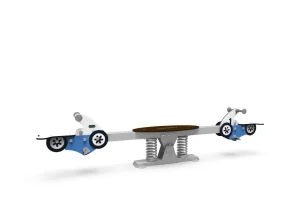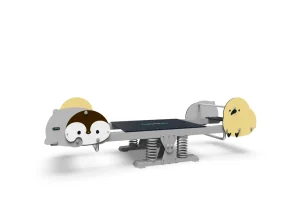
When interactive playground panels fail within the first two years, the problem is rarely the electronics themselves. In programs we have supported, the root cause is almost always the same: water got inside. A six-digit IP code on a datasheet provides a starting point, but it does not, by itself, tell a buyer whether that touchscreen or motion sensor will survive the particular abuse of a public outdoor playground. The IP code is a shorthand; what counts is whether the enclosure, seals, and production quality can handle the combination of pressure washing, condensation cycles, and fine sand that a playground sees every month, not just a single laboratory spray test. Buyers who rely on a generic IP65 label without understanding these failure paths are specifying equipment that is already on the clock.
Defining the IP Code in Playground Terms
The IEC 60529 standard uses two digits to describe ingress protection. The first digit, ranging from 0 to 6, indicates resistance to solid objects and dust. A rating of 6 means the enclosure is dust‑tight, preventing the entry of fine particles that can accumulate on circuit boards and cause short circuits or abrasive wear on connectors. The second digit, from 0 to 9, describes protection against water. IPX5 protects against low‑pressure water jets from any direction; IPX6 against powerful jets; IPX7 against temporary immersion up to one meter; IPX8 against continuous submersion under conditions defined by the manufacturer.
What a spreadsheet of two‑digit codes cannot convey is that these tests are performed on brand‑new, unmounted enclosures in a controlled laboratory. A playground panel, bolted to a post in a coastal town or a desert park, faces temperature swings that expand and contract every gasket, ultraviolet radiation that embrittles cable glands, and cleaning crews who treat an interactive screen like a concrete floor. The laboratory number is a starting point, not a performance guarantee.
Why IP65 Alone Creates a False Sense of Security
Many outdoor interactive units are sold with an IP65 rating and a reassurance that this is “rain‑proof.” In practice, IP65 is the minimum rating for ordinary outdoor exposure, designed for low‑pressure water jets and light dust. It covers rain, including wind‑driven rain. The problem is that playground maintenance procedures routinely subject mounted panels to conditions far beyond those simulated in an IP65 test. A garden hose with a spray nozzle or a municipal pressure washer used to remove mud, ice cream, or bird droppings from a play panel applies water at significantly higher pressure and from non‑standard angles. IP65 enclosures often fail at the seam or connector entry when hit by a focused jet, because the test only requires resistance to a 6.3 mm nozzle at 30 kPa from three meters away, not the concentrated stream of a commercial cleaner.
We have seen control boards corrode in panels that a quick glance at the datasheet would suggest were adequately protected. In one community park installation, touchscreens in interactive game panels began ghost‑registering inputs after six months of daily hosing. Opening the units revealed water staining along the bottom edge of the PCB, directly below a cable entry that had relied on a compression gasket degraded by UV and cleaning chemicals. A higher static IP rating would not have solved this; the failure was in the seal material choice and the enclosure’s drainage design.
The Overlooked Enemies: Condensation, Pressure Wash, and Sand
Condensation is the quietest destroyer of outdoor electronics and the least discussed in procurement briefs. A sealed enclosure that keeps out rain can still trap humid air inside. When the panel’s own electronics generate heat during the day and the outdoor temperature drops at night, moisture condenses on the coolest internal surfaces—often the underside of a metal mounting bracket or the back of a display glass. Without a drainage path, the accumulated water pools and corrodes component leads. IP6X dust tightness can work against the equipment here, because the same seal that blocks dust also prevents water vapor from escaping.
Pressure washing does its damage not through sustained submersion but through high‑velocity impact. A jet that strikes the edge of a silicone gasket at 10 MPa can momentarily deform the seal just enough to force a few droplets through. Repeated over months, this leads to progressive wetting of internal insulation. The water may evaporate between washings, leaving behind mineral deposits that eventually bridge circuit traces. IP66, which covers powerful water jets, is the more appropriate benchmark for this exposure, but even IP66 alone does not address the chemical environment. Detergents and disinfectants used on playground surfaces, particularly after the pandemic, can attack ethylene propylene diene monomer (EPDM) rubber seals, causing swelling and loss of compression set. Buyers need to request seal material datasheets, not just an IP number.
Fine sand and dust present a more mechanical problem. Even an IP6X‑rated enclosure will see its external connectors and rotary encoders, where a child spins a wheel or turns a knob on an interactive panel, accumulate grit. This grit abrades bearing surfaces and can eventually work its way past lip seals. In desert and coastal environments, where airborne particles are constant, specifying connectors with integrated wiper seals and protective boots becomes as important as the enclosure rating itself.
Specifying the Right IP Rating and Supplementary Sealing
Drawing on production experience, we recommend that any outdoor interactive playground equipment, whether a standalone activity panel, a spinner with integrated sound modules, or a slide with light effects, carry a minimum of IP66 for the enclosure that houses the main electronics. IP66 ensures the unit can survive the powerful water jets typical of commercial cleaning equipment, and the dust‑tight first digit prevents the sand ingress that accelerates connector wear.
However, the enclosure rating is only part of the specification. Buyers should also require the following in procurement documents:
- Silicone or fluorosilicone gasket material for all access covers and cable entries. Standard EPDM degrades too quickly under outdoor UV and chemical exposure.
- Integral condensation drain valves or Gore‑Tex vent plugs that allow water vapor to escape while blocking liquid entry. These are a low‑cost addition that significantly extends panel life in high‑humidity climates.
- Potting or conformal coating of circuit assemblies. Even if small amounts of moisture breach the enclosure, a properly coated PCB can survive long enough to dry out without damage.
- Connectors rated to at least IP66 themselves, not just the main box. The common weakness is the USB or RJ45 panel‑mount connector that carries an IP65 rating while the enclosure claims IP66. The system is only as good as its weakest opening.
For installations within 500 meters of salt water, stainless steel connector shells and a marine‑grade conformal coating become necessary to handle the corrosive salt mist that standard enclosures are not tested against. In regions with extreme temperature cycling—northern China, high‑altitude resorts, desert night‑time drops—the gasket material must be specified for a wider operating range, typically siloxane‑based, and the enclosure should include pressure‑equalization elements to prevent seal pumping due to internal air expansion and contraction.
Verifying IP Claims Before You Commit
A datasheet stating IP66 is meaningless without documentation of how that rating was achieved and verified. We always advise buyers to request at least two pieces of evidence from the supplier:
First, a test report from an accredited laboratory such as SGS, TÜV Rheinland, or Intertek. The report must identify the exact enclosure model tested, the production batch, and the test conditions used. A certificate that simply references the IEC 60529 standard without specifying whether the tests were performed on a sealed assembly with connectors installed is insufficient. Units tested without cable glands are not representative of the installed condition.
Second, a sample unit for in‑house water spray verification. A straightforward test is to subject the powered‑up panel to a commercial pressure washer at two meters distance for two minutes from each of four sides, then allow it to operate for 24 hours while monitoring for intermittent faults. This is more aggressive than the standard IP66 jet test and reflects real‑world cleaning. If the supplier is unwilling to provide a fully functional sample, that reluctance is itself a warning about confidence in their sealing design.
Verifying manufacturing consistency is easier when you can inspect the production line directly. <Factory Visit Checklist Playground Equipment Supplier Evaluation> covers the specific checks to make on gasket installation, connector torquing, and final enclosure testing, so you are not relying solely on paper certifications.
Beyond testing, the contract should explicitly state that the supplier warrants the electronics against water and dust ingress for a minimum of two years under normal outdoor use and cleaning procedures. The warranty clause needs to define “normal cleaning” to include pressure washing up to a specified bar pressure, because ambiguity here has led to denied claims when operators cleaned according to their standard park maintenance schedule.
Defining those warranty terms clearly in the purchase agreement prevents disputes later. <Key Contract Clauses for Commercial Playground Equipment Purchase> includes model language for ingress‑related warranty provisions that hold the manufacturer accountable for the rating they advertise.
Buyers should also plan to receive a spare set of gaskets and connector seals with the shipment. These components have a shorter service life than the steel structure, and having them on hand allows local maintenance staff to replace them before a leak develops, rather than after a board has failed.
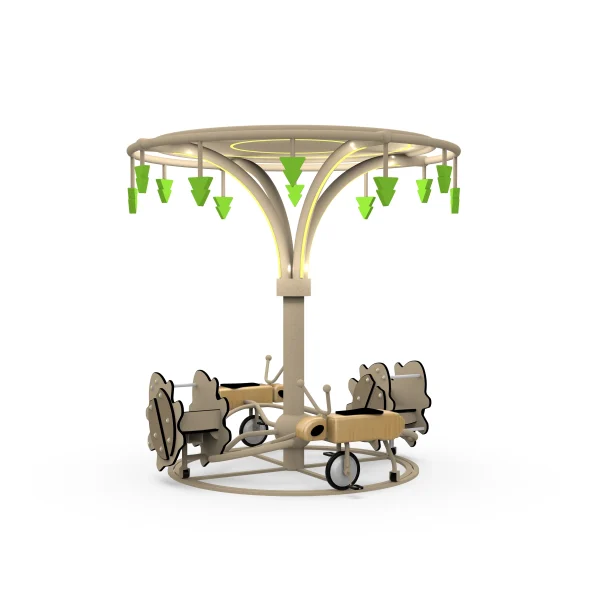
At Suzhou LvDong Amusement Equipment, we design interactive panels with IP66‑rated enclosures as the baseline, using full‑perimeter silicone gaskets and vented drain plugs on every weather‑exposed unit. Our test protocol includes the multi‑angle pressure‑wash sequence described above, and we supply the corresponding SGS test reports for each production batch. If your upcoming project involves outdoor interactive elements in a climate that pushes the limits of standard sealing, send your specifications and installation environment details to [email protected] or reach us on WhatsApp at +8613915684545. We will confirm which enclosure, gasket material, and drainage configuration fits the site conditions and provide a sample for your own verification before the order is finalized.
Common Questions About Playground Electronics Weatherproofing
The simple answer is IP66 as a minimum for the main enclosure, with all connectors also rated to that level. IP65 is suitable only for sheltered installations where pressure washing will never be used and where sand ingress is unlikely. IP67 adds temporary immersion protection, which is rarely necessary unless the equipment sits in a flood‑prone area, but IP67 enclosures often still require supplementary condensation management because the higher sealing can trap internal moisture. The safest specification for most public outdoor playgrounds is IP66, combined with a breather vent and conformally coated electronics.
Not reliably, which is why the IP rating should be backed by physical sample testing. IP66 certifies resistance to powerful water jets from a 12.5 mm nozzle at 100 kPa from a distance of 2.5 to 3 meters. A commercial pressure washer nozzle is usually smaller and delivered at higher pressure. This is why we recommend buyers perform their own jet test on a sample unit. If the panel fails during that test, it is not fit for the cleaning protocols used on most playgrounds.
No. A misconception we often encounter is that a higher number equals absolute waterproofing. IP67 means the enclosure withstood immersion in one meter of static water for 30 minutes in a laboratory. It says nothing about dynamic high‑pressure spray, condensation cycling, or long‑term seal aging under UV. For outdoor interactive equipment, a combination of IP66 for spray resistance and a vent for moisture equalization provides better real‑world durability than an unvented IP67 box that builds internal condensation.
We recommend inspecting seals every six months and replacing gaskets every two to three years, or sooner in coastal or high‑temperature environments. A visual check for cracks, swelling, or loss of compression is a five‑minute task that can be incorporated into the regular maintenance round. If you have a spare gasket kit on site, swapping seals takes under an hour per panel. Planning for this as part of the annual maintenance budget avoids emergency board replacements and keeps the interactive features running through the season. For help sizing the right spare parts package for your installation, share your equipment list and we will put together a seal kit that matches your panels.
If you’re interested, check out these related articles:
How Indoor Playground Equipment Manufacturers Customize Solutions
Swing Set Components Advanced Material Selection for Durability
Effectively Compare Playground Equipment Suppliers Services
To discuss outdoor exposure requirements for interactive equipment, contact the LvDong team with your project requirements.