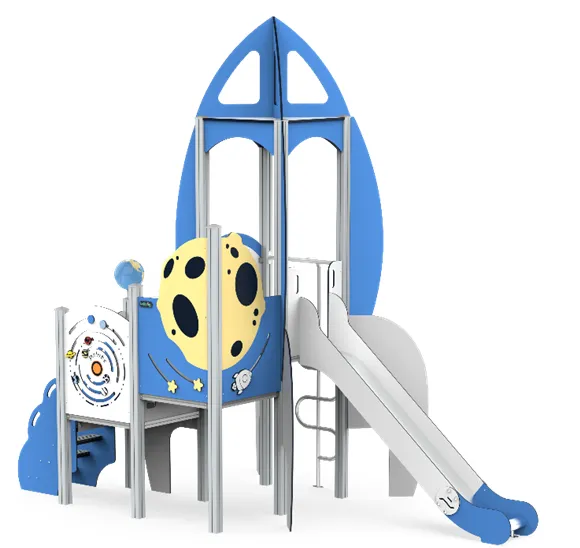
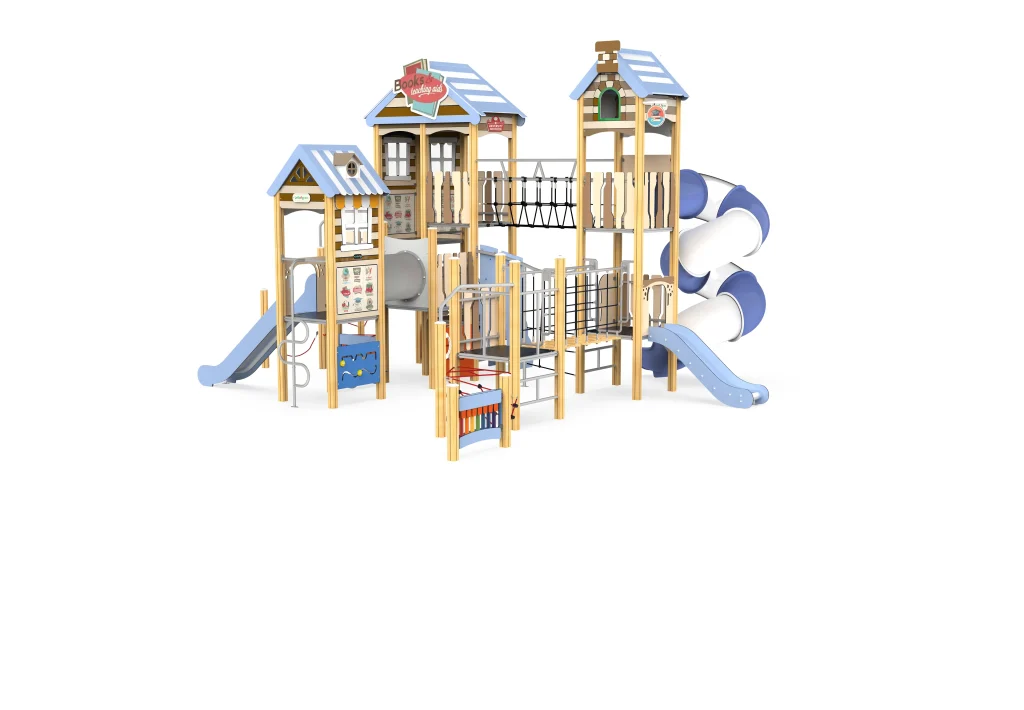
Play spaces that combine slides with playhouses tend to work harder than single-purpose equipment. Children move between climbing, sliding, and imaginative scenarios without the mental reset that comes from walking to a different structure. The result is longer, more varied play sessions and a richer mix of physical and social activity.
What Happens When Slides and Playhouses Share the Same Structure
When you put a slide next to a playhouse rather than across the playground, something shifts in how children use the space. They climb, pause to negotiate who goes first, duck into the playhouse for a quick imaginary tea party, then scramble back up for another slide. The transitions happen fast and naturally.
This kind of integrated setup pushes gross motor development—climbing, balancing, coordinating limbs—while also demanding cognitive work. Children figure out routes, judge distances, and adapt their plans when someone else claims the slide. The playhouse portion adds a layer of pretend play that standalone slides simply can’t offer. Suzhou LvDong Amusement Equipment Co. Ltd. builds these combined structures specifically to encourage that back-and-forth between active movement and imaginative engagement.
The social dimension matters too. Shared spaces force negotiation. Children learn to wait, to propose, to compromise. Role-playing inside a playhouse—running a pretend shop, hosting imaginary guests—builds communication skills in ways that pure physical equipment doesn’t.
Getting More Play Value From Less Ground
Combined structures make sense when square footage is tight. A slide-playhouse combination delivers activity variety that would otherwise require two or three separate pieces of equipment spread across a larger area. Urban parks and community centers dealing with limited space benefit most from this approach.
The variety also keeps children engaged longer. A standalone slide offers one activity. Add a playhouse and suddenly there are multiple ways to play—active, imaginative, social—all within arm’s reach. Children who tire of sliding can shift to pretend play without leaving the structure. Different age groups and play preferences find something that works for them.
How Combined Structures Build Social Skills
The design itself creates opportunities for cooperation. Children share the slide, take turns on the climbing section, and collaborate on whatever story unfolds in the playhouse. They negotiate roles, resolve small conflicts, and practice the give-and-take that group play requires. These interactions happen organically because the structure brings children together rather than spreading them out.
Safety and Longevity in Integrated Designs
International safety standards—EN 1176, GB/T 34272-2017—set the baseline for everything we build. Compliance isn’t optional. Fall heights, entrapment risks, impact surfacing, and structural anchoring all get addressed during the design phase.
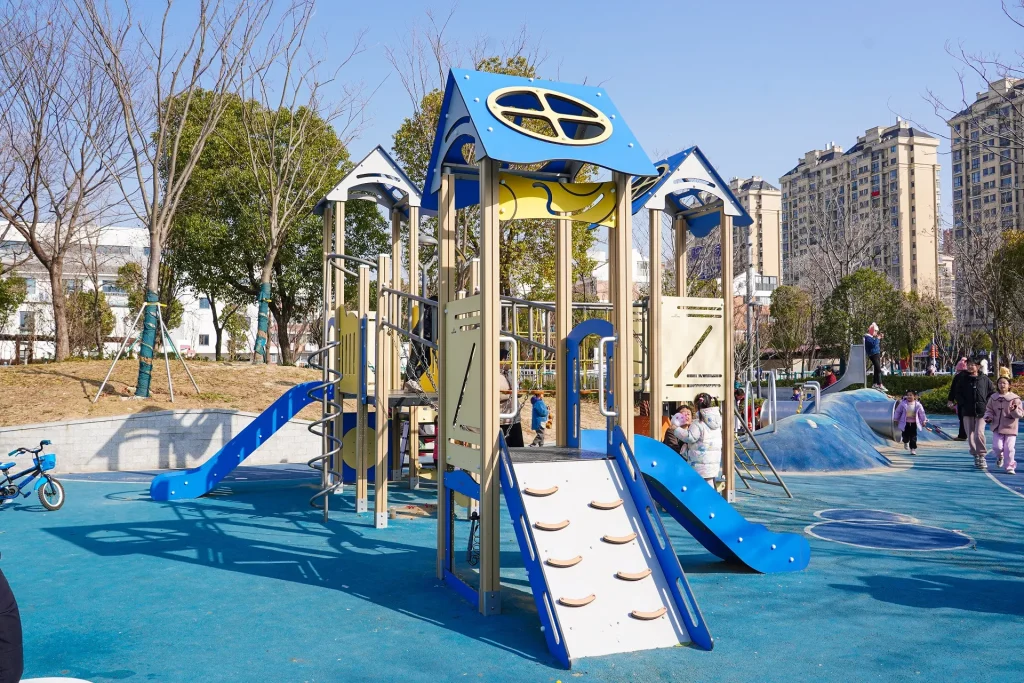
Material selection determines how well equipment holds up over years of use and weather exposure. We use robust plastics and treated metals that resist UV degradation, moisture, and the constant stress of children climbing, jumping, and sliding. Good materials reduce maintenance demands and extend useful life. Risk assessment guides the entire process, identifying potential hazards before they become problems. Regular inspections after installation catch wear before it becomes dangerous.
Safety Priorities for Integrated Structures
Fall height requirements and impact attenuation surfacing come first. Non-toxic materials are non-negotiable. Structural integrity depends on solid construction and secure anchoring—equipment that shifts or wobbles creates risk. Ongoing maintenance and inspection schedules matter as much as the initial build quality.
Long-Term Value for Communities and Schools
Well-designed play equipment pays dividends beyond the playground. Community parks with attractive, functional play spaces draw families, which strengthens neighborhood connections and can lift property values nearby. Schools and educational facilities get structures that support learning through physical activity, social interaction, and imaginative exploration.
The investment signals commitment to children’s wellbeing and public infrastructure. Healthy play habits, social skills, and physical development all flow from quality play spaces. Urban planners looking to maximize both utility and aesthetic appeal find that integrated designs deliver on both fronts.
For organizations looking to strengthen their recreational offerings, we provide the expertise to create engaging, safe play environments. More details are available at 《Why Choose Us》.
Adapting Designs to Different Settings
Modular construction allows these structures to fit municipal parks, residential communities, and everything in between. Site aesthetics, thematic preferences, and space constraints all factor into the final design. A playground in a wooded park looks different from one in an urban plaza, but both can deliver the same developmental benefits.
Modular systems also allow for future changes. Needs evolve, budgets expand, communities grow. Equipment that can be reconfigured or expanded offers flexibility that fixed designs can’t match. We work directly with clients to develop solutions that fit their specific situations.
Fitting Integrated Equipment Into Existing Spaces
Advanced design work allows structures to respect existing landscapes and architectural contexts while maximizing play potential. Natural contours, urban surroundings, and local cultural elements can all inform the final design. Thematic play areas reflecting community identity or educational goals are possible with the right planning.
| Product Type | User Capacity | Max Fall Height | Key Feature |
|---|---|---|---|
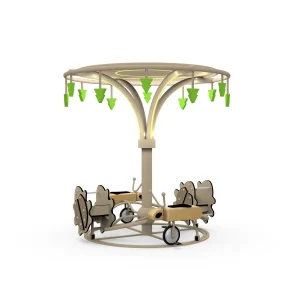
| Multi-Player Playground Spinning Wheel | 6-10 children | 55-77 cm | Collaborative and social play |
| Single Player Playground Spinner | 1 child | 34 cm | Independent balance and coordination |
| Spring Playground Equipment | 1 child | 50 cm | Balance, coordination, sensory |
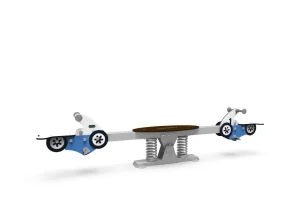
| Multi Person Playground Seesaw | 2-10 children | 60 cm | Interactive up-and-down play |
Partner with Suzhou LvDong Amusement Equipment Co.,Ltd.
Bring your next project to life with Suzhou LvDong Amusement Equipment Co.,Ltd.’s experience in integrated outdoor play solutions. We specialize in unpowered amusement equipment designed to be safe, engaging, and developmentally meaningful. Reach out to discuss how we can help. WHATSAPP:+8613915684545 | [email protected]
Frequently Asked Questions About Integrated Outdoor Play
What developmental benefits come from combining outdoor slides with playhouses?
The combination creates an environment where physical coordination, problem-solving, and imaginative play happen together. Children engage in more complex scenarios that mix individual exploration with group interaction. This integrated approach gets more out of outdoor play equipment than single-function pieces can deliver.
How do integrated structures help with space constraints?
By combining multiple play elements into one footprint, integrated structures pack more activity variety into smaller areas. Urban parks and high-density communities benefit most from this efficiency. Children get diverse play options without requiring the ground area that separate pieces would demand.
What safety standards and materials matter most for combined equipment?
International certifications like EN 1176 and ASTM F1487 establish the safety baseline. Non-toxic, durable materials—high-grade plastics and treated metals—resist weather and heavy use. Design must prevent entrapment, falls, and pinch points. Regular inspection and maintenance keep equipment safe over its full lifespan.