A school playground is a long-term investment in child development, and the decision of which supplier to trust with that project carries more weight than a simple price comparison. Too often, procurement decisions narrow down to matching a catalog image to a budget line, overlooking the manufacturing, safety documentation, and installation support that determine whether the equipment will still be safe and engaging after five years of daily use. Most guides on this topic emphasize surface-level comparisons, but from over a decade of coordinating playground projects across more than 1,500 sites, I have seen how the supplier’s internal quality systems and delivery model create the real difference between a playground that builds a school’s reputation and one that becomes a recurring maintenance burden.
What Are Your School’s Real Equipment Requirements
Before contacting any playground equipment supplier, define the functional and site-specific requirements. A mismatch here is the most common cause of cost overruns and design revisions later. Start with the available area. A 100-square-meter zone can support a compact multi-function playhouse with an integrated slide and swing, while larger spaces allow for separate zones with a double slide configuration, spinning equipment, and spring riders. Next, map the age range of the students who will use the playground daily. Equipment designed for ages 2 to 5 requires lower platform heights and tighter guardrail spacing than structures built for the 5 to 12 group. Our team evaluates every kindergarten playground project with a grade-based zoning plan, placing younger children’s activity panels and spring riders closer to the entry and older children’s climbing structures and tunnel slides further from the footpath.
Write down your surfacing plan during this stage. Pour-in-place rubber, engineered wood fiber, and synthetic turf each create different requirements for ground anchoring depth, drainage slope, and the overall layout of equipment posts. A playground slide with a 1.5-meter platform height installed over a surface that does not meet the critical fall height specification will fail a post-installation safety audit. The full list of functional requirements should also cover expected user capacity at peak recess periods, the number of simultaneous play stations you need, and whether themed designs are a curriculum or community engagement priority.
Verifying a Supplier’s Safety Documentation and Certifications
Safety documentation is where I see the widest gap between suppliers who sell playground equipment and those who engineer it. Every manufacturer can claim adherence to standards. Few can produce the test reports for the specific model and configuration you are buying.
The minimum certification layer is product-level compliance with EN 1176 or ASTM F1487, depending on your national or regional requirements. Ask for third-party test reports that reference the exact model number, not a general certificate covering a product family. A supplier that provides a TÜV or equivalent lab report for the multi-player spinning wheel, the single swing set, and the curved slide you have selected demonstrates a testing culture, not just a documentation formality.
The second layer is material and coating certifications. School playground environments demand more than basic paint durability. Outdoor equipment exposed to UV and humidity needs coatings tested under accelerated weathering cycles. For metal components such as swing frames and slide support structures, request details on surface preparation and the recoating interval the manufacturer recommends. Our production team uses a multi-stage pre-treatment before powder coating, and we share those process parameters with buyers because they affect the maintenance calendar directly.
The third layer is the factory’s own quality management system. ISO 9001 certification confirms a documented production process, but I always suggest asking for the internal inspection report template the factory uses before shipment. The structure of that template reveals whether the supplier conducts load testing on assembled units, weld inspection, and dimensional tolerance checks as standard procedure, or whether those steps depend on the buyer requesting them.
How Production Quality and Integrated Delivery Affect the Timeline
The way a playground equipment supplier organizes its production and project delivery chain is the single largest factor controlling installation deadlines and long-term durability. Many school buyers discover this only after signing a contract that splits manufacturing from installation from after-sales support across three different parties. When a site issue emerges during installation, the installer blames the factory, the factory points to the design, and the school loses weeks of playground access.
A supplier that operates with an integrated model manages R&D, production, installation supervision, and spare parts supply under one roof. This structure eliminates the coordination gaps that delay handover. Our 10,000-square-meter production facility operates under a standardized quality management system, which means the same team that fabricates a cantilever swing frame also prepares the foundation template and tests the assembled unit before crating it for shipment. This continuity makes site preparation measurable.
Before ordering, compare production lead time commitments against documented output capacity. A supplier quoting four weeks for a custom playground slide when their factory runs at full capacity is promising a date, not a plan. Ask how many playground projects the manufacturer completes annually and how many are school-specific installations. This helps calibrate whether the quoted timeline is realistic. More than 1,500 completed projects across diverse scenarios gives a supplier the production experience to sequence fabrication and logistics accurately, whereas a smaller operation may be sequencing orders one at a time without buffer capacity.
For international school buyers, shipping and import requirements should be discussed during the supplier evaluation, not after payment. Confirm container loading plans, the estimated number of crates, and whether the supplier provides a bilingual packing list organized by installation zone. A well-structured packing list reduces on-site sorting time by a full day or more, especially on multi-activity playgrounds with slides, swings, climbers, and interactive panels arriving in a single shipment.
Comparing Supplier Quotes, Warranty Structures, and Hidden Costs
Price comparison between playground equipment suppliers becomes misleading if the quotes are not normalized to the same specification baseline. I recommend building a comparison table that separates equipment cost, surfacing cost, installation cost, freight, and warranty coverage into distinct line items. A quote that appears 15% lower may exclude ground anchoring hardware, lack an installation supervision visit, or substitute a thinner pipe wall thickness that reduces the structure’s wind-load resistance.
| Cost Element | What to Verify | Red Flag if Missing |
|---|---|---|
| Equipment unit price | Matched to specified model and material | Quote lists generic category without model number |
| Surfacing and ground preparation | Critical fall height requirement stated | No reference to EN 1176 or ASTM surfacing depth table |
| Installation and supervision | On-site supervisor days and technician count | Installation lumped under equipment price with no detail |
| Freight and logistics | Container type, port of delivery, incoterm | Freight listed as “to be confirmed” |
| Warranty | Years of coverage on structure, moving parts, and coatings | One-line warranty with no spare parts commitment |
Warranty terms deserve particular attention. A one-year warranty on a swing set that will see hundreds of cycles per day is a different deal from a three- or five-year structural warranty that explicitly covers the post and clamping system, bearing replacement schedules, and chain wear rates. Ask the supplier to define what the warranty covers in terms of parts, labor contribution, and response time. Our standard warranty structure includes a five-year coverage period on the main structural frame, and we maintain a stocked spare parts inventory so that replacement bearings, spring assemblies, and swing chains ship within the same week a claim is validated.
Supplier Factory Visits and Evaluating Post-Sales Responsiveness
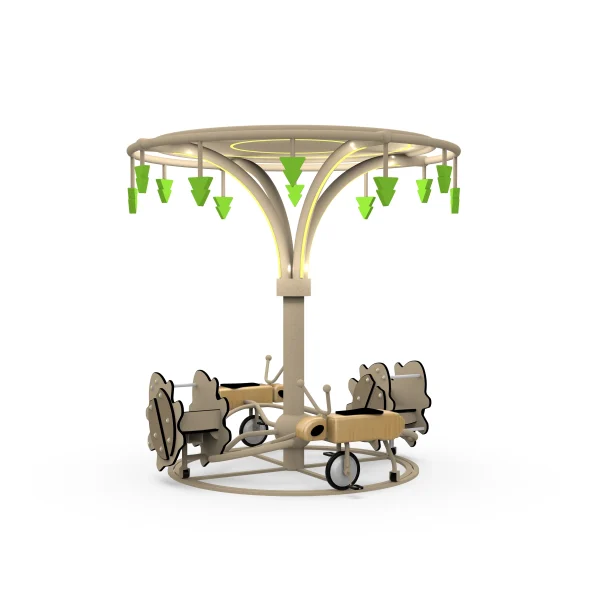
If the project budget and timeline allow, a factory visit reveals information that documentation alone cannot. When I accompany school procurement teams through our production facility, I walk them through the raw material storage area first. The condition of steel pipe and plate storage, the calibration records on welding equipment, and the organization of the assembly and testing zone all indicate whether the supplier treats production as a discipline or a throughput exercise.
Prepare a visit checklist before traveling. Check whether the factory has a dedicated quality control station on the production line, not a separate post-production inspection room. The former integrates quality into workflow; the latter catches defects after they occur. Inspect finished units that are prepared for shipment and look for consistency in weld appearance, coating thickness at edge transitions, and the quality of hardware packaging. If the supplier cannot show a recently assembled playground ready for inspection, it may signal that no buffer stock exists between production and dispatch, which amplifies the impact of any equipment failure during transit.
For buyers who cannot visit the factory, request a detailed video walkthrough of the production line showing the equipment fabrication and assembly process for the specific product categories in your order. A supplier that is hesitant to share production footage may be outsourcing fabrication to multiple workshops without a unified quality standard.
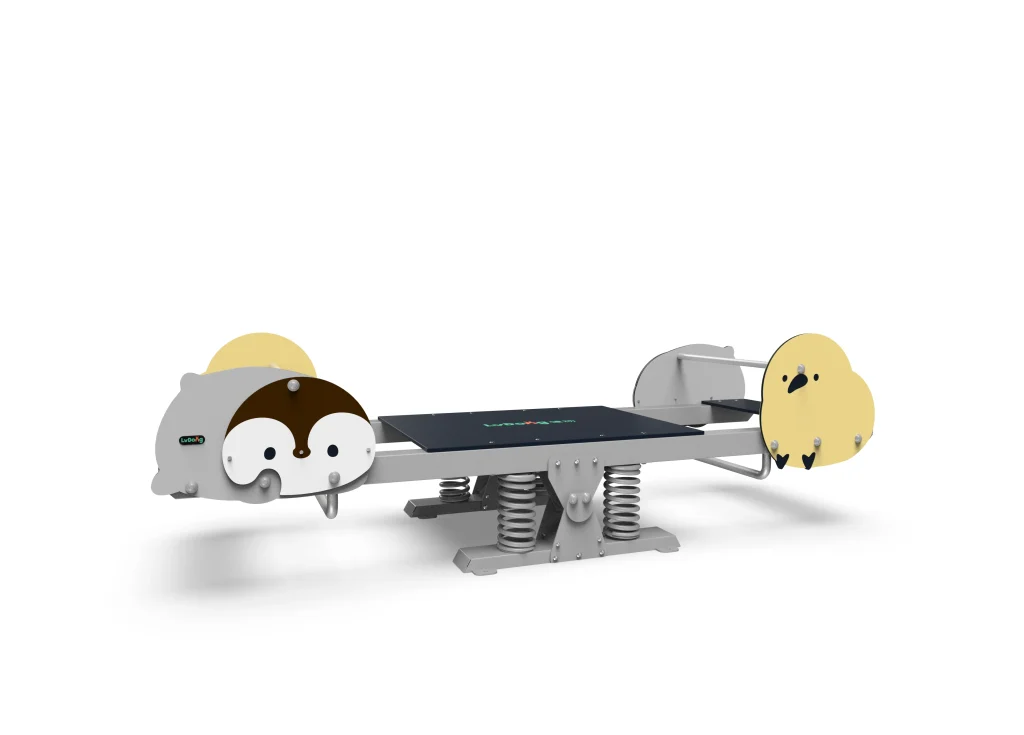
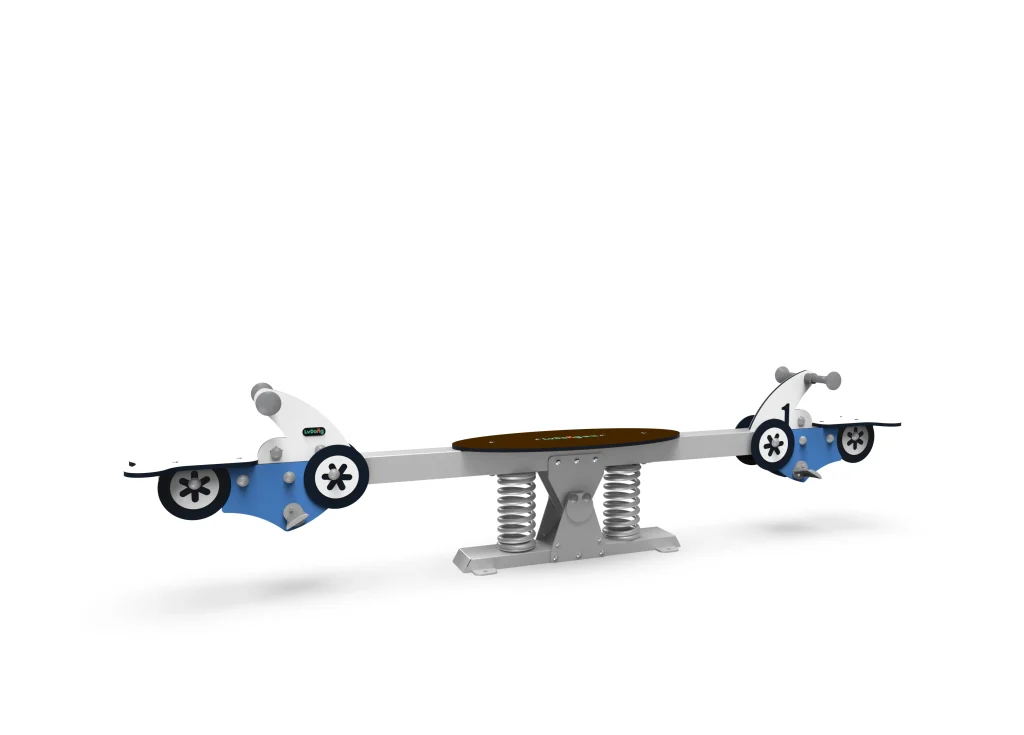
Post-sales responsiveness is best evaluated before the order is placed. Send a technical question about installation requirements for a multi-user teeter totter or a spinning wheel and measure the response time and specificity. A reply within one working day that references the product manual and provides foundation dimension drawings is a reliable indicator of the support you will receive after delivery. Also ask about the spare parts ordering process. The supplier should be able to provide a parts list with lead times for high-wear items such as swing bearings, spring assemblies, and slide connection clamps.
Common Questions About Selecting a Playground Supplier for Schools
What is the single most important certification I should check before ordering school playground equipment
Third-party product test reports for the specific model you are purchasing. Supplier-level certifications such as ISO 9001 indicate a quality management system exists, but they do not guarantee that an individual curved playground slide or spring rider meets the fall height and entrapment requirements of EN 1176 or ASTM F1487. Request the test report that references the exact equipment model number and verify that the testing laboratory is accredited. Without that report, the documentation package is incomplete if a safety audit or insurance review occurs after installation.
Does a lower-cost playground equipment quote always mean lower quality equipment
Not in every case, but the cost reduction usually comes from somewhere specific. I have seen quotes where the savings came from omitting the ground anchoring kit, using a thinner post wall that meets the minimum standard but shortens the equipment’s service life, or shipping the components without factory pre-assembly, which shifts the labor and the risk of assembly errors onto the school’s installation contractor. Identify where the cost difference sits and decide whether that trade-off aligns with your durability and safety requirements. If the supplier cannot articulate the source of the savings, treat the lower price as a risk until proven otherwise.
How do I confirm a supplier can manage the safety standards required in my country
Start by providing the supplier with your specific standard reference, whether that is EN 1176, ASTM F1487, AS 4685, or GB/T 34272, and ask for a compliance declaration for the exact equipment configuration in your order. Then request a sample of a past project documentation package that includes the installation manual, safety zone diagram, and maintenance checklist for a comparable installation. The structural depth of these documents reveals whether the supplier treats compliance as a checkbox or a design discipline. If your school is in a region with additional municipal inspection requirements, mention this early and confirm the supplier can provide supplemental documentation in the required format.
What should the maintenance support look like after the playground is installed
A supplier who views the sale as complete after installation will offer a generic maintenance leaflet. A supplier committed to long-term partnership will provide an annual maintenance calendar that schedules specific inspection actions by season, including torque checks on fasteners after freeze-thaw cycles, surfacing depth measurements before the peak-use summer term, and paint touch-up recommendations based on the coating system used. Ask for a sample calendar and a spare parts price list with lead times. If your project involves multiple equipment types such as a tunnel slide, a multi-person seesaw, and a single swing set, the supplier should be able to list the wear components for each unit and their typical replacement interval. For any compliance-sensitive component, share your requirements and we will confirm the relevant documentation is available before shipment.
If you’re interested, check out these related articles:
DIY vs Supplier Playground Equipment Installation Guide
Wholesale Pricing MOQ for Spring Riders A Strategic Guide
Factory Visit Checklist Outdoor Playground Equipment Quality