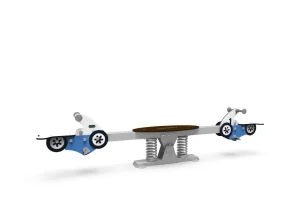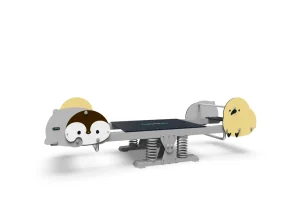
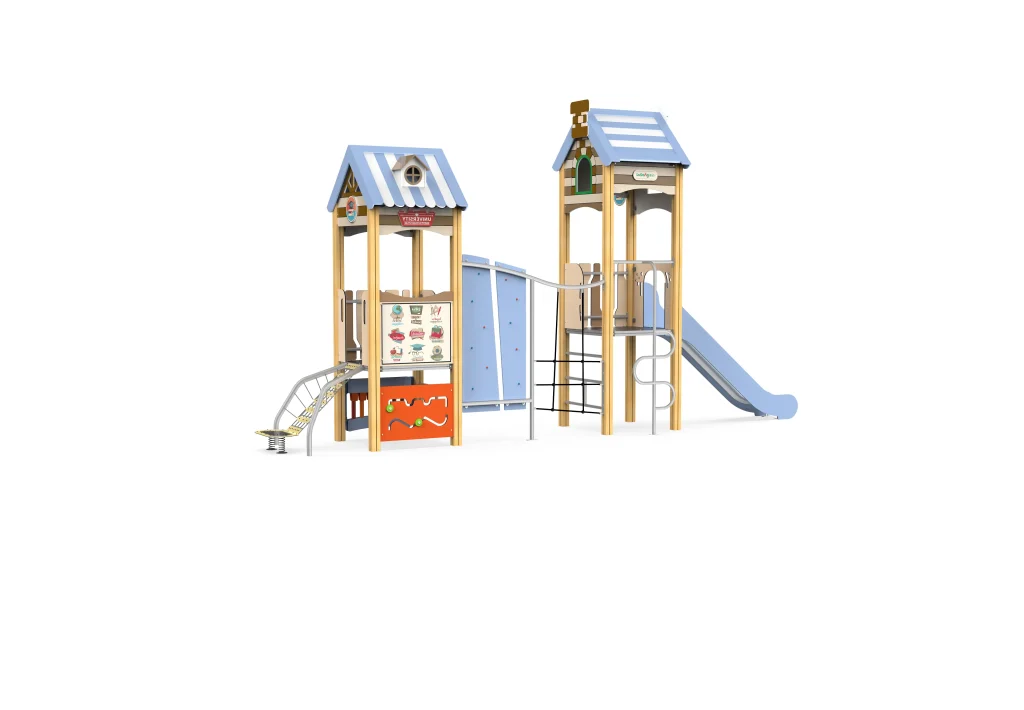
School playgrounds shape how children grow, move, and connect with each other. A thoughtfully designed play environment does more than fill recess time—it builds physical confidence, sparks curiosity, and teaches kids how to navigate social situations. At Suzhou LvDong Amusement Equipment Co.,Ltd., we approach playground design by matching equipment and layout to what children actually need at each stage of development, while keeping safety standards front and center.
How Developmental Stages Shape Playground Choices
Good playground design starts with understanding that a five-year-old and a twelve-year-old inhabit completely different worlds when it comes to play. Their bodies work differently, their minds process challenges differently, and their social needs pull them in different directions.
Young children between ages two and five are still figuring out how their bodies move through space. They explore through touch, sound, and repetition. Their play tends to happen alongside other kids rather than with them. Equipment for this group needs low platforms, simple cause-and-effect interactions, and forgiving surfaces.
Once children hit elementary school age, roughly six to ten, everything shifts. They want to climb higher, swing faster, and invent elaborate games with friends. Their coordination improves rapidly, and they start seeking out challenges that test their growing strength.
Pre-adolescents from eleven to thirteen need something else entirely. They crave complexity, social spaces, and activities that let them assess and manage real risks. Simple slides bore them. They want rope courses, climbing walls, and equipment that respects their emerging capabilities.
LvDong builds these developmental realities into every project. Each piece of equipment serves specific learning outcomes and physical development goals. The result is progressive challenge—younger children stay safe while older ones stay engaged.
| Developmental Stage | Age Range | Key Play Characteristics | Recommended Equipment Types |
|---|---|---|---|
| Early Childhood | 2-5 years | Sensory, parallel play, gross motor skills | Spring riders, low slides, sandboxes |
| Elementary School | 6-10 years | Cooperative play, imaginative, developing coordination | Climbing structures, swings, interactive panels |
| Pre-Adolescent | 11-13 years | Social interaction, complex challenges, risk assessment | Ropes courses, multi-sport courts, advanced climbers |
Making Multi Grade Environments Work Through Strategic Zoning
When a playground serves multiple grades, thoughtful zoning becomes non-negotiable. The goal is creating distinct areas that let each age group play appropriately without constant interference from others.
LvDong’s approach considers site topography, existing structures, and how children naturally move through spaces. We think about where the sun hits at different times, where noise carries, and how supervisors can maintain clear sightlines.
Quieter zones for younger children get positioned away from high-energy areas where older students run and climb. This prevents the accidental collisions that happen when a sprinting ten-year-old doesn’t see a wandering three-year-old. Natural barriers, landscaping features, and strategic equipment placement create boundaries that feel organic rather than restrictive.
How do age groups influence playground equipment selection?
Age groups drive equipment selection because safety and engagement depend on matching challenges to capabilities. For toddlers and preschoolers, equipment needs low fall heights and intuitive designs. Spring Playground Equipment and gentle slides work well for this group.
Elementary-age children can handle more complex climbing frames, swings, and interactive panels that encourage group play. Middle schoolers need challenging elements like ropes courses, fitness equipment, and multi-sport areas that respect their growing strength and coordination.
LvDong’s product range, including our Multi Player Playground Spinning Wheel and Multi Person Playground Seesaw, addresses these specific developmental needs while maintaining safety across all age groups.
Safety Standards and Inclusive Design Principles
Safety in playground design isn’t a checkbox—it’s a foundation that supports everything else. LvDong follows EN 1176 and GB/T 34272-2017 standards rigorously, building accessibility into designs from the start rather than treating it as an afterthought.
Our process includes thorough risk assessment for every play area. We evaluate potential hazards, specify appropriate surfacing materials based on fall height requirements, and follow strict equipment spacing guidelines. Engineered wood fiber, rubber tiles, and poured-in-place rubber each have their place depending on the specific installation.
Clear supervision zones matter too. Adults need to see what’s happening across the playground without constantly repositioning themselves. Good design accounts for this reality.
What are the key safety considerations for multi grade playgrounds?
Multi-grade playgrounds require attention to equipment selection, fall height requirements, and spacing between structures. Equipment must match the intended age group—what’s safe for a ten-year-old might pose real risks for a four-year-old.
Different zones need surfacing depths calculated for their specific fall heights. Adequate spacing between structures reduces collision risks, particularly where different age groups use adjacent areas. Supervision zones need clear sightlines so adults can monitor multiple activities simultaneously.
Building Play Value Through Thematic and Activity Zones
Age separation handles safety, but maximizing play value requires thinking about themes and activity types. Playgrounds can become outdoor learning environments when design supports imagination and varied play styles.
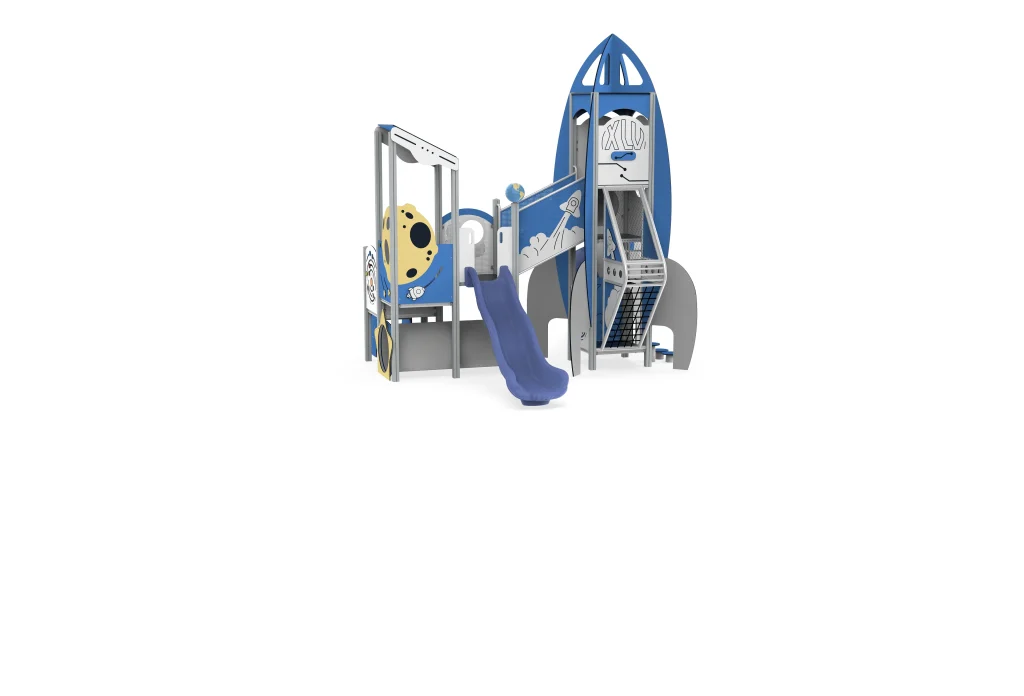
Thematic approaches give children narrative frameworks. A “Space Exploration Zone” or “Jungle Adventure” area transforms equipment into story elements that fuel imaginative play. Kids don’t just climb—they explore, discover, and create.
LvDong designs incorporate active play zones for physical challenges, sensory areas for tactile and auditory exploration, and quiet spaces for children who need calmer activities. A zone might feature a Playground with Tunnel Slide for active exploration while another offers interactive panels for cognitive engagement.
| Grade Level | Thematic Zone Idea | Key Activities | Developmental Benefits |
|---|---|---|---|
| Pre-K – K | Enchanted Forest | Animal spring riders, low slides, sensory paths | Imagination, gross motor, sensory |
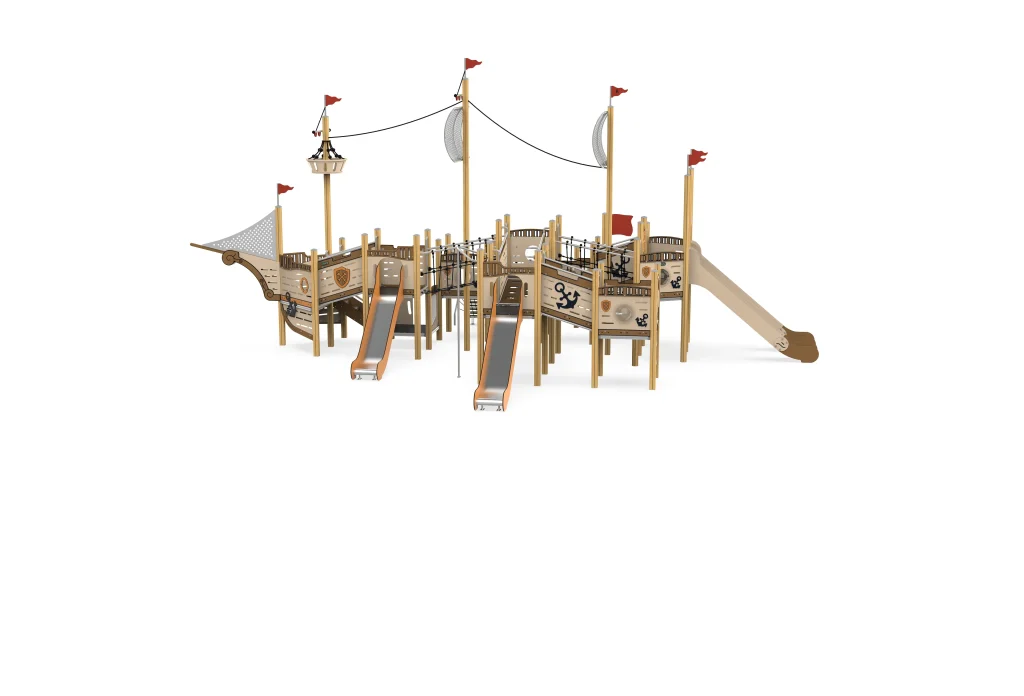
| 1st – 3rd | Pirate Ship Adventure | Climbing nets, steering wheels, tunnel slides | Role-playing, coordination, social |
| 4th – 5th | Discovery Lab | Interactive panels, puzzle elements, balance beams | Problem-solving, fine motor, balance |
| 6th – 8th | Urban Parkour | Ropes courses, climbing walls, fitness stations | Strength, agility, risk assessment |
How can zoning improve play experience and reduce conflict?
Zoning works because it gives each age group appropriate challenges while preventing the friction that happens when developmental needs collide. Younger children play without feeling overwhelmed by older, more energetic students. Older children access complex equipment without worrying about smaller kids underfoot.
This separation encourages cooperative play within each zone and reduces age-related conflicts. Varied activities within zones also accommodate different play preferences, supporting social and emotional development alongside physical growth.
From Design to Installation and Ongoing Maintenance
Implementation requires precision. LvDong provides full-service capability from initial concepts through professional installation. Every piece of equipment gets installed according to exact specifications, ensuring structural integrity and long-term durability.
Installation is just the beginning. Comprehensive maintenance plans keep equipment safe and functional over time. Regular inspections catch problems before they become hazards. Timely repairs extend equipment lifespan and maintain safety standards.
We use durable materials designed for harsh weather and heavy daily use. Lifecycle cost analysis helps clients understand their long-term investment, and our after-sales support addresses concerns as they arise.
Proven Results and Emerging Trends
LvDong has completed over 1,500 projects across diverse settings, including schools of all sizes. A recent elementary school project created distinct zones for early years, primary grades, and upper primary students, each with tailored equipment including multi-player spinning wheels and custom climbing structures.
We track educational playground trends and integrate smart technology where it adds genuine value. Sustainable solutions using recycled materials and environmentally conscious designs are becoming standard practice. Future developments will likely bring greater customization, digital interactive elements, and even more inclusive play experiences.
Work with Suzhou LvDong Amusement Equipment Co.,Ltd.
Suzhou LvDong Amusement Equipment Co.,Ltd. brings over a decade of innovation to unpowered amusement equipment. Our integrated approach covers R&D, design, production, installation, and after-sales support. Reach out to discuss how grade-based zoning can transform your school’s outdoor spaces into environments where every child can play, learn, and grow.
WHATSAPP: +8613915684545 | Email: [email protected]
Frequently Asked Questions About School Playground Zoning
Why is grade-based zoning crucial for school playground equipment?
Grade-based zoning matches play areas to the developmental stages, physical abilities, and safety needs of different age groups. This approach minimizes conflicts between children of different sizes and capabilities, maximizes engagement by providing appropriate challenges, and reduces injury risks. The result is a more inclusive environment where all students can play effectively.
What types of playground equipment are best suited for different school grades?
Younger grades benefit from low-height climbers, sensory panels, and small slides. Mid-grades engage well with complex climbing structures, swings, and Interactive Playground Equipment. Older grades need challenging ropes courses, fitness equipment, and multi-sport courts. LvDong offers equipment designed specifically for each developmental stage.
How does Suzhou LvDong Amusement Equipment Co.,Ltd. ensure safety in zoned playgrounds?
LvDong ensures safety through rigorous design principles, adherence to international standards, and high-quality materials. Our process includes comprehensive risk assessments, appropriate fall height calculations, and strategic equipment spacing. Professional installation and guidance on proper safety surfacing complete the picture, creating secure play environments for every grade level.