The safety of playground slides is paramount, demanding meticulous attention to design, installation, and ongoing maintenance. We recognize that every component, from platform height to exit zone design, directly impacts user well-being. Our commitment involves adhering to stringent international standards and employing best practices to mitigate risks. This comprehensive approach guarantees that children can enjoy our equipment safely, fostering positive play experiences. We continuously innovate to enhance safety features across our entire product range.
Understanding International Slide Safety Standards and Compliance
Adherence to international safety standards forms the bedrock of safe playground equipment design and manufacturing. These regulations provide critical frameworks that govern every aspect of slide design, material selection, and installation. Compliance ensures that playground equipment is inherently safe for its intended users, minimizing potential hazards.
Key international standards include ASTM F1487 (Standard Consumer Safety Performance Specification for Playground Equipment for Public Use) and EN 1176 (Playground Equipment and Surfacing). ASTM F1487, primarily used in North America, specifies requirements for public playground equipment, covering aspects like structural integrity, entrapment prevention, and fall protection. EN 1176, the European standard, provides similar comprehensive guidelines, often with slightly different dimensional requirements and testing methodologies. Both standards are crucial for manufacturers operating globally, necessitating a thorough understanding and application of their respective provisions.
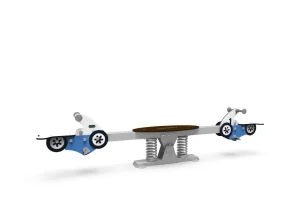
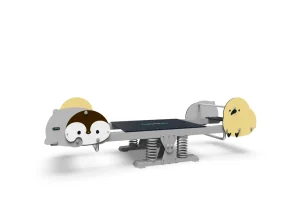
For instance, our Multi-Player Playground Spinning Wheel and Single-Player Playground Spinning Equipment are fully compliant with both EN 1176 and GB/T 34272-2017 (Chinese National Standard). This dual certification demonstrates our commitment to global safety benchmarks. Similarly, our Spring Playground Equipment and Multi-Person Outdoor Playground Seesaw also meet these rigorous standards. These certifications are not merely labels; they represent a deep integration of safety principles into our product development and manufacturing processes. They guide decisions on material strength, structural stability, and ergonomic design, ensuring that even dynamic equipment like spinning wheels and seesaws offer controlled and safe play experiences.
We implement a rigorous standardized quality management system within our 10,000-square-meter intelligent production base. This system ensures that all products, from initial design to final assembly, consistently meet or exceed these international safety compliance benchmarks. Our decade of experience in the unpowered amusement equipment industry reinforces our expertise in navigating and applying these complex regulatory landscapes.
| Standard | Region/Scope | Key Focus Areas |
|---|---|---|
| ASTM F1487 | North America | Structural integrity, fall zones, entrapment, accessibility |
| EN 1176 | Europe | Materials, design, installation, maintenance, impact attenuation |
| GB/T 34272-2017 | China | General safety requirements for playground equipment |
For deeper insights into our operational excellence and commitment to safety, you might find our article 《Why Choose Us》 particularly informative.
Critical Platform Height Specifications for Diverse Slide Designs
Platform height is a fundamental safety parameter for playground slides, directly influencing the potential fall height and the design of fall attenuation surfacing. Precise specifications for maximum and minimum platform heights are crucial for ensuring age-appropriate safety and maintaining design integrity across various slide types. Incorrect platform heights can increase the risk of injury, even with proper surfacing.
Different slide designs necessitate distinct platform height considerations. Straight slides, spiral slides, and tube slides safety all have specific requirements to prevent accidental falls and ensure a controlled descent. For younger children, lower platform heights are mandated to reduce impact forces in case of a fall. Conversely, slides designed for older children or specific thrill levels may allow for greater heights, provided adequate safety measures are in place. These measures include appropriate guardrails, barriers, and extended run-out zones.
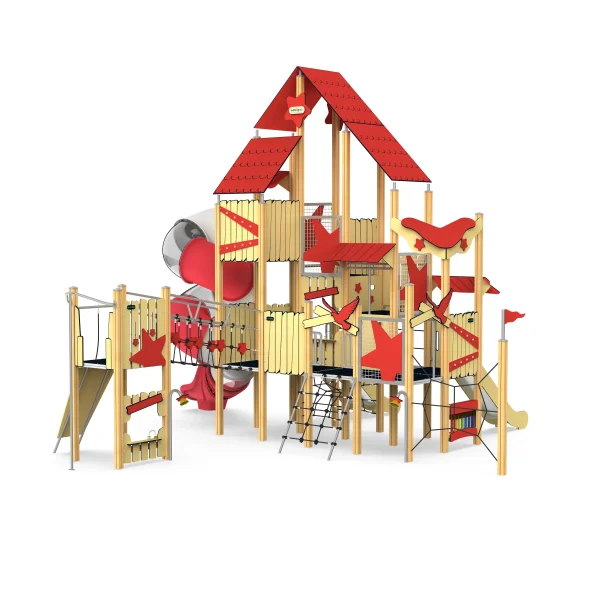
Our product development process meticulously considers these height specifications. For example, while our spinning equipment like the Multi-Player Playground Spinning Wheel has a maximum falling height of 55–77 cm, and the Single-Player Playground Spinning Equipment has a maximum falling height of 34 cm, slides introduce different dynamics. The design of any Playground Equipment Slides must integrate these height parameters with the overall structure. This ensures that the slide’s entry point, descent angle, and exit are all harmonized with safety regulations. We employ advanced design software to simulate user interaction and potential fall trajectories, optimizing platform heights for each specific slide type.
What are the specific platform height limits for different slide types?
Specific platform height limits vary based on the slide type, intended user age, and regional safety standards. For instance, straight slides generally have different height requirements than curved or spiral slides, which might have more forgiving fall zones due to their rotational descent. The critical fall height, which dictates the required depth and type of fall attenuation surfacing, is directly derived from the platform height. Compliance with these slide height regulations is non-negotiable; it ensures that the risk of serious injury from falls is significantly reduced. Proper design considers the entire fall zone, not just the immediate area beneath the platform.
Designing Safe Exit Zones and Run-Out Areas for User Protection
The design of exit zones and run-out areas is critical for ensuring user protection immediately after sliding. These areas must effectively decelerate a user and provide sufficient space to prevent collisions with other children or surrounding structures. Inadequate exit zone dimensions can lead to serious injuries, including impacts and pile-ups.
Best practices for designing run-out lengths consider the slide’s speed, angle, and typical user weight. The run-out length must be long enough to allow a user to come to a complete stop safely. Exit widths are equally important, preventing users from becoming wedged or colliding with the sides of the exit. Clear zones around the exit must be free of obstacles, ensuring an unobstructed path for users to move away from the slide. This prevents secondary collisions and maintains a smooth flow of play.
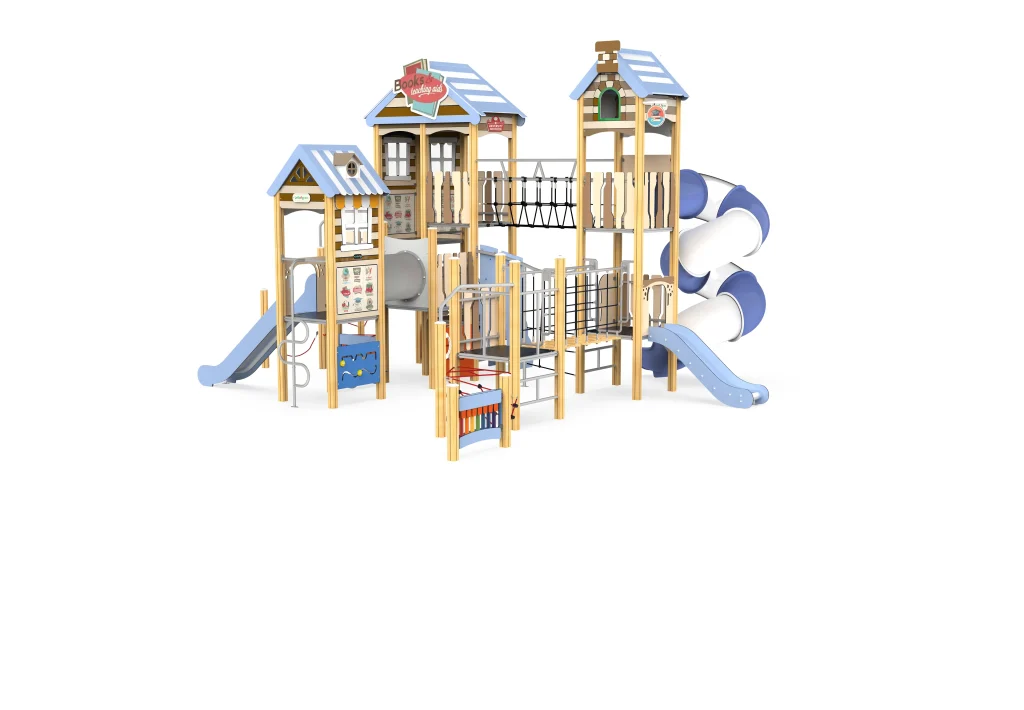
Our design philosophy integrates these principles into every Commercial Playground Slide. We engineer run-out areas that exceed minimum safety standards, using materials that facilitate a controlled stop. For example, a Playground with Tunnel Slide requires a carefully calculated run-out zone to account for the enclosed exit. Our experience with over 1,500 projects, including municipal parks and high-end communities, demonstrates our capability in designing complex, safe exit configurations. We utilize detailed flowcharts in our design process to map out user trajectories and ensure optimal exit zone dimensions, providing maximum safety and preventing injuries.
How do exit zone dimensions impact overall slide safety?
Exit zone dimensions profoundly impact overall slide safety by directly influencing the likelihood of collisions and uncontrolled exits. An insufficient run-out length can cause users to exit the slide at high speeds, leading to impacts with other children or playground components. Narrow exit widths can result in entrapment or collisions with the slide’s sides. Proper exit zone design ensures a smooth transition, allowing users to decelerate naturally and move away safely. This minimizes the risk of injuries, enhancing the overall user experience and reducing potential liabilities.
Fall Attenuation Surfacing: Material Selection and Installation Protocols
Fall attenuation surfacing is an indispensable component of playground safety, particularly around slides where falls are a possibility. This specialized surfacing is designed to absorb impact energy, thereby mitigating the severity of injuries from falls. Proper material selection and adherence to strict installation protocols are crucial for maximum safety performance.
Guidance on selecting appropriate impact-absorbing materials typically involves considering the critical fall height of the equipment. Common materials include engineered wood fiber (EWF), rubber tiles, poured-in-place (PIP) rubber, and loose-fill materials like sand or gravel. Each material offers distinct advantages and disadvantages regarding cost, maintenance, accessibility, and impact absorption properties. EWF provides a natural aesthetic and good impact absorption but requires regular maintenance to maintain depth. Rubber tiles and PIP rubber offer consistent impact absorption and accessibility but come at a higher initial cost.
Our expertise extends to advising on and implementing the most suitable fall protection surfacing for each project. For instance, around our Multi-Person Outdoor Playground Seesaw, which has a maximum fall height of 60 cm, we would recommend surfacing materials rated for this specific height. Similarly, for our Spring Playground Equipment with a 50 cm maximum fall height, different material specifications might apply. We ensure that all surfacing installations meet or exceed the required critical fall height ratings, providing a protective layer beneath and around all equipment. Our installation protocols emphasize proper depth, drainage, and perimeter containment to maintain the integrity and effectiveness of the surfacing over time.
| Material Type | Pros | Cons | Critical Fall Height Range |
|---|---|---|---|
| Engineered Wood Fiber | Natural look, good absorption, cost-effective | Requires regular raking, can decompose | Up to 12 feet |
| Rubber Tiles | Consistent absorption, low maintenance, accessible | Higher initial cost, can get hot | Up to 12 feet |
| Poured-in-Place Rubber | Seamless, highly accessible, customizable | Highest initial cost, professional installation | Up to 12 feet |
| Sand/Gravel | Low cost, natural drainage | Requires regular topping up, not accessible | Up to 9 feet |
What materials are recommended for effective fall attenuation around slides?
For effective fall attenuation around slides, several materials are recommended based on critical fall height and budget. Poured-in-place rubber offers a seamless, highly impact-absorbent surface, ideal for high-traffic areas and accessibility. Rubber tiles provide consistent protection and are durable, though they can be more expensive initially. Engineered wood fiber is a cost-effective option with good shock absorption but requires regular maintenance to ensure proper depth. Loose-fill materials like sand or pea gravel are also used but demand frequent checks for displacement and compaction.
Integrated Safety Management: From Design to Post-Installation Audits
Integrated safety management encompasses the entire lifecycle of playground equipment, from initial conceptualization to ongoing operational oversight. This holistic approach ensures consistent safety standards and performance. It reinforces our comprehensive commitment to user safety, extending beyond manufacturing to long-term site management.
Initial design considerations are paramount, incorporating safety standards from the outset. This includes material selection, structural analysis, and ergonomic design for all components. During manufacturing, rigorous quality control measures are implemented at every stage. Our intelligent production base, spanning over 10,000 square meters, utilizes advanced techniques to ensure product integrity and consistency. Professional installation is then crucial; even the safest equipment can become hazardous if improperly installed. Our certified teams follow precise protocols, ensuring stability and correct assembly.
Following installation, ongoing maintenance and inspection protocols are essential. Regular checks identify wear and tear, potential hazards, and areas requiring repair or replacement. Post-installation audits verify compliance with all relevant safety standards and ensure the playground remains safe for use. This continuous loop of design, production, installation, and auditing is fundamental to our operations. We have successfully implemented over 1,500 projects across diverse scenarios, demonstrating our capability in managing safety comprehensively. Our full-industry-chain service capability, encompassing R&D, design, production, installation, and after-sales support, ensures that safety is never compromised.
Partner with LvDong for Uncompromised Playground Safety
Ensuring the highest standards of playground safety requires expertise, adherence to regulations, and a commitment to quality. At Suzhou LvDong Amusement Equipment Co.,Ltd., we offer comprehensive solutions for your unpowered amusement equipment needs, backed by a decade of innovation and over 1,500 successful projects. Contact us today to discuss your project and discover how our certified, durable, and engaging playground equipment can create safe and inspiring play environments.
Email: [email protected]
WhatsApp: +8613915684545
FAQs
How often should playground slides be inspected for safety compliance?
Playground slides should undergo routine visual inspections daily or weekly, operational inspections every 1-3 months, and comprehensive annual inspections by a certified professional. Routine checks identify obvious hazards like broken parts or debris. Operational inspections assess functionality and wear. Annual inspections ensure compliance with all safety standards, including structural integrity and fall attenuation. This multi-tiered approach maintains safety and prolongs equipment lifespan.
Can existing slides be modified to meet current safety guidelines?
Modifying existing slides to meet current safety guidelines is often feasible but requires careful assessment. An audit by a certified playground safety inspector can identify non-compliant aspects. Modifications might include adding guardrails, extending run-out zones, upgrading fall attenuation surfacing, or replacing worn components. While some upgrades are straightforward, extensive modifications might be more costly than replacing older equipment with new, compliant designs.
What are the legal implications of non-compliance with slide safety standards?
Non-compliance with slide safety standards carries significant legal implications. Operators and manufacturers can face lawsuits for negligence if injuries occur due to substandard equipment or improper installation/maintenance. This can result in substantial financial penalties, legal fees, and reputational damage. Adhering to standards like ASTM F1487 and EN 1176 is crucial for risk management and demonstrating due diligence in providing a safe play environment.