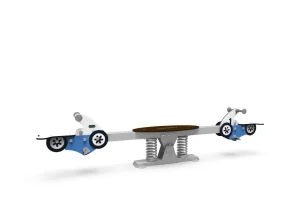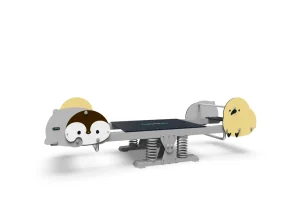
A kindergarten playground budget under $15,000 is enough for a focused play area, but only if buyers put multi-user movement and low-maintenance products ahead of one large custom structure. The workable kindergarten playground budget starts with compact spinners, spring riders, and a seesaw, then adds a slide or play panels if the freight and foundation reserve holds. The plan below sequences that spending, shows which Lvdong product lines fit a kindergarten site, and points out where hidden costs usually appear before quotation.
What Should a $15,000 Kindergarten Playground Budget Cover First?
The first decision is not which product looks best. It is which equipment will carry daily traffic from a class of 15 to 30 children without creating supervision blind spots. For a kindergarten playground budget under $15,000, we would anchor the plan around movement equipment that serves several children at once, then treat the slide as the visual accent, not the starting line item.
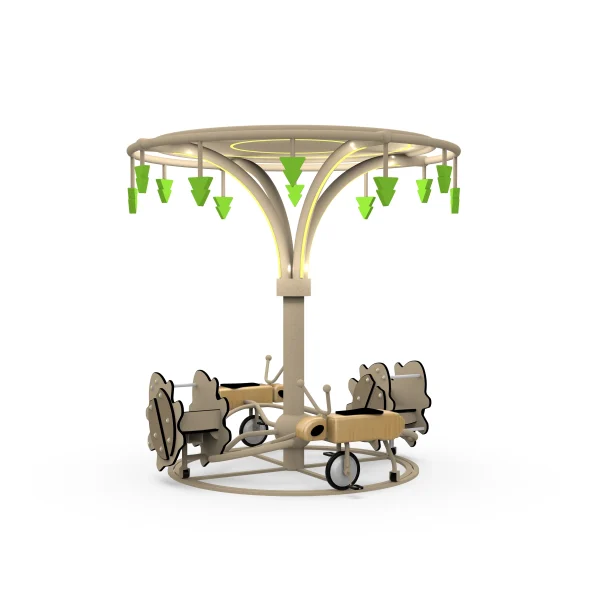
A multi-player spinner, four spring riders, and a multi-person seesaw often form the core of the equipment budget because they spread use across several zones. The exact mix shifts with the fall zone and the age split between 2 and 5 year olds.
A kindergarten site with mixed age groups needs more than a single fenced area, <School Playground Equipment Zoning for Grade Based Development> covers how grade-based zones prevent 2 to 5 year old movement patterns from colliding with older children.
The portion left for freight, foundations, and safety surfacing is not an afterthought. In a $15,000 plan, we usually hold 20 to 30 percent for these items, because a low-cost surface or a poorly planned concrete pad can turn a safe product into a future repair problem.
Which Equipment Types Fit a Kindergarten Playground Best?
Lvdong’s unpowered range gives a kindergarten buyer three practical entry points: compact multi-player spinners, single-user spring riders, and multi-person seesaws. All three product families comply with EN 1176 and GB/T 34272-2017, and each has a small enough footprint to leave room for circulation and adult supervision.
What Makes a Multi-Player Spinner Work in a Kindergarten?
Multi-player spinners are built for six to ten children per unit, and the smaller diameter versions in the 120 to 200 cm range work well for a kindergarten central play zone. The maximum falling height of 55 to 77 cm is higher than a spring rider, so the surfacing depth and fall zone around the spinner need more attention.
Where Do Spring Riders Fit in a Kindergarten Budget?
Spring riders serve one child at a time, sit close to the ground with a 50 cm maximum fall height, and install in roughly half a person-hour. A set of four to six creates rhythm and repeated use without dominating the site.
When Do Seesaws and Play Panels Earn Their Space?
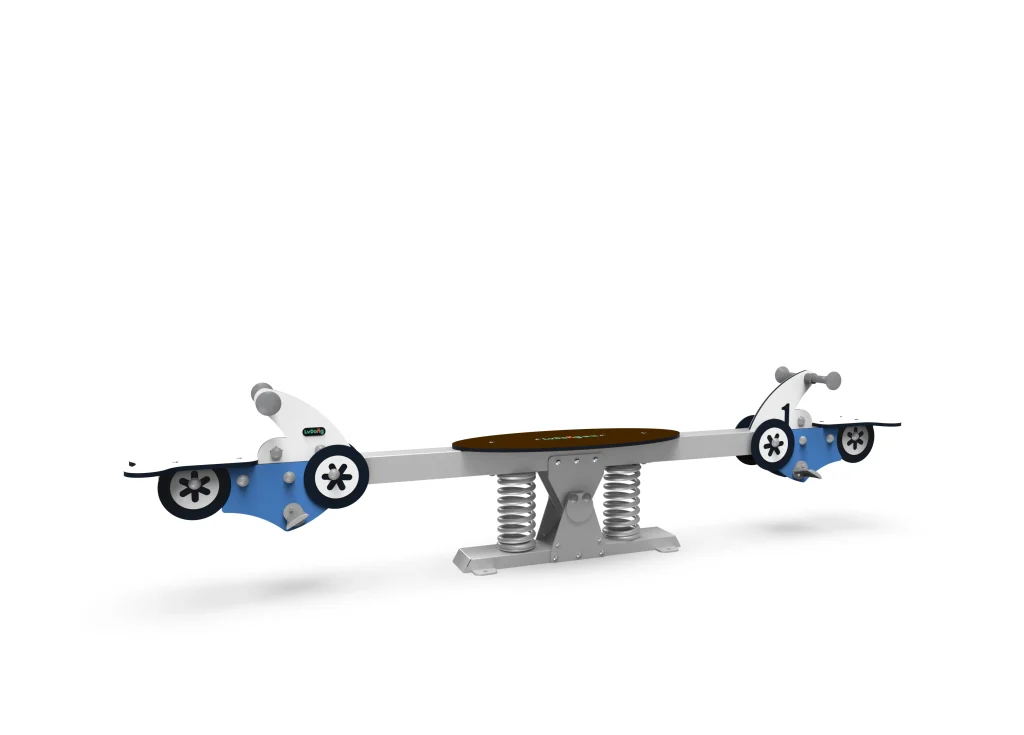
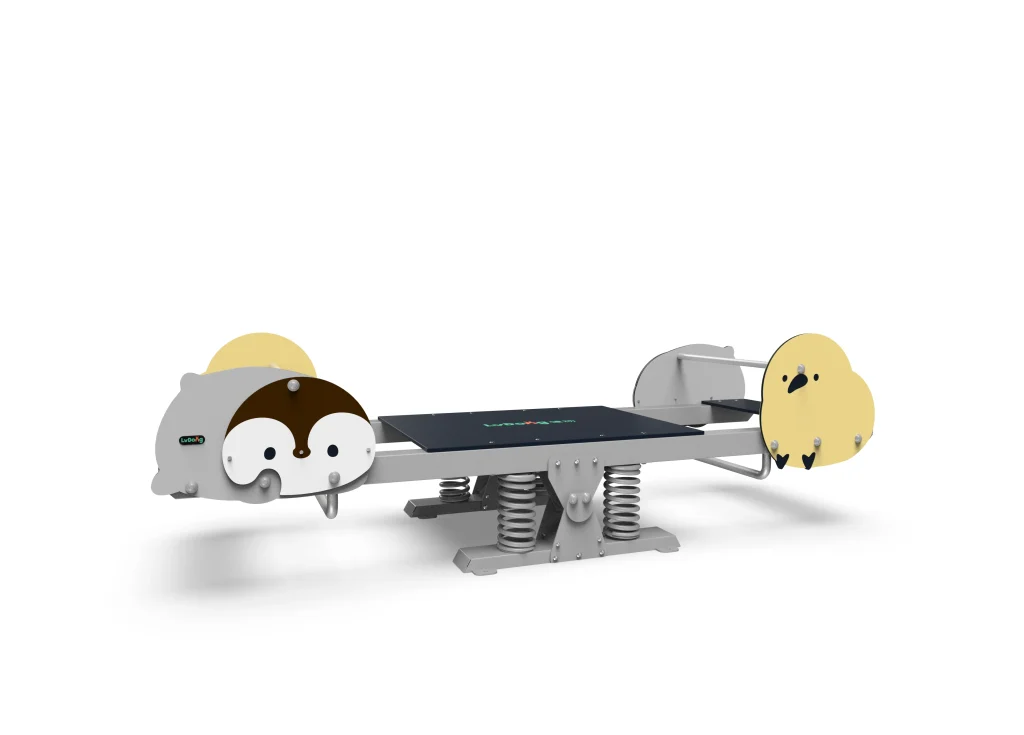
Multi-person seesaws with a 2 to 10 child capacity and 60 cm maximum fall height add cooperative play without the footprint of a large structure. If space and budget remain, play panels extend activity into quieter wall zones and give children a stationary option during high-traffic periods.
If a slide is required, a low platform height and a gentle straight or curved slide tend to protect more of the budget than a tall custom tunnel slide. A low-height slide keeps the fall zone smaller and the package easier to ship.
How Do You Compare Spinners, Spring Riders, and Seesaws for Kindergarten Use?
Comparison should start with fall height, user capacity, and installation time, because those three items drive both safety surfacing and total project cost.
| Product line | Age range | User capacity | Maximum falling height | Main kindergarten role |
|---|---|---|---|---|
| Multi-player spinner | 2+ to 6+ | 6 to 10 | 55 to 77 cm | Social play and central activity |
| Spring rider | 2+ or 3+ | 1 | 50 cm | Solo movement and compact zones |
| Multi-person seesaw | 3+ | 2 to 10 | 60 cm | Cooperative play and mixed ages |
| Single-player spinner | 2+ | 1 | 34 cm | Small corner activity and balance |
From this table, the single-player spinner has the lowest fall height at 34 cm, which makes it the easiest to locate near a wall or walkway. The multi-player spinner offers more group engagement on the same visit, but it asks for a larger safety zone.
Before comparing quotes, a kindergarten buyer should verify how the factory handles weld inspection and batch testing, because the same product name can hide different frame thicknesses. <Factory Visit Checklist Outdoor Playground Equipment Quality> covers the inspection points that separate a durable kindergarten installation from a short-lived price-driven one.
Where Do Kindergarten Playground Budgets Leak in Freight and Installation?
Most budget overruns in kindergarten projects come after the equipment list is approved. Freight, final surfacing depth, foundation bolts, and import paperwork each sit outside the unit price but still consume project funds.
Freight shifts by container volume and destination. A compact footprint matters because the equipment can share container space more efficiently; oversized slide components lower that efficiency quickly.
Foundations are the second common leak. The spinner and seesaw need anchor points that match local soil and wind conditions, and the surfacing zone must extend beyond the product edge. If the site has an existing concrete pad or drainage problem, confirm the foundation details before finalizing the equipment list. Send a site photo and dimensions to [email protected] for a basic compatibility review.
Slides often become the third leak because custom length, tunnel sections, and platform height change both manufacturing and packaging. A custom piece may be worth it, but it should be value-engineered before the rest of the order is fixed.
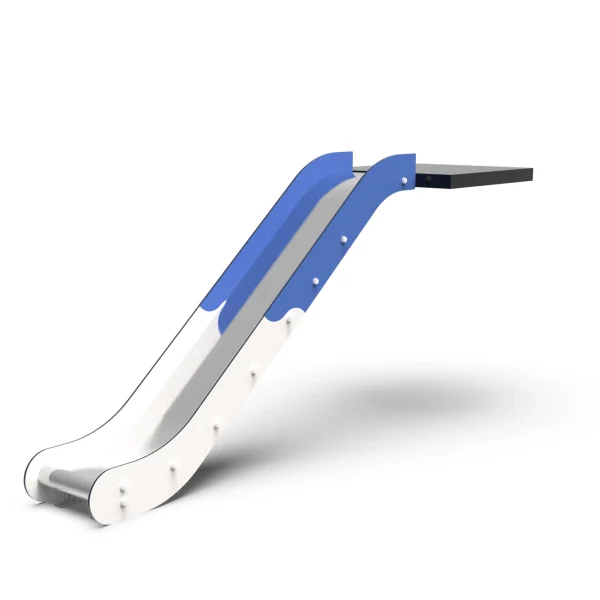
A slide looks simple in a catalog, but custom dimensions can change structure, packaging, and foundation loads, <Custom Playground Slide Design From Vision to 3D Reality> covers how a slide moves from concept to production file, which is where unnecessary cost usually enters.
How Should a Kindergarten Buyer Move Forward With a $15,000 Plan?
The worst position is to lock the full equipment list before someone has checked the site constraints and the compliance documents. That is how a kindergarten playground budget under $15,000 becomes a $17,500 project with no room for safety surfacing.
Lvdong’s project team can quote a focused equipment package from the product range, with the EN 1176 and GB/T 34272-2017 certificates matched to the selected items. We ask for three pieces of information: site dimensions, the age range of the children, and whether the surface will be new or existing. Send these details with your preferred product list to [email protected], or message WhatsApp at +8613915684545, and we will return a line-by-line quotation with freight and installation considerations flagged separately.
What Else Should Kindergarten Buyers Ask About Playground Budgets?
How much should a kindergarten set aside for freight, foundation, and installation?
A safe planning reserve is 20 to 30 percent of the equipment value, but the final figure depends on distance, site access, soil conditions, and whether installation is handled locally. If the site has prepared concrete pads and the equipment is compact, the reserve can stay near 20 percent. If the ground needs new excavation or the delivery passes through difficult access, push it closer to 30 percent. The point is to keep surfacing and foundation money separate from the equipment line, because those costs should not be traded away for a larger slide.
Is a $15,000 budget enough for a full kindergarten playground?
It is enough for a focused play area, not a full site build-out with surfacing, shade, fencing, and site works. Many buyers start with the idea of a complete playground and are surprised when safety surfacing takes a large share of the project. A more realistic plan uses the $15,000 budget for the active play cluster, then adds perimeter improvements in a later stage. This keeps the equipment compliant and usable while the kindergarten raises funds for the next stage.
Which equipment gives the most play value in a compact kindergarten?
For most kindergartens, the answer starts with multi-user motion equipment rather than one large structure. A multi-player spinner and a multi-person seesaw let several children play at once, while spring riders serve the younger group at lower height. A small slide or play panel can follow if the budget remains after freight and foundations are accounted for. The priority should be the items that will carry the most repeated daily use.
What compliance documents should accompany a kindergarten order?
In the documentation we prepare, the equipment certificates, installation drawings, and a maintenance schedule are included as a package. Ask for EN 1176 and GB/T 34272-2017 documents matched to the quoted models, plus the foundation and surfacing requirements for the specific site. The certificate should not be generic; it should list the actual product codes in your quotation. Share your requirements and we will confirm which certificates apply to your selected equipment.
If you’re interested, check out these related articles:
Large Playground Slide Transport and Crane Planning
Weatherproof Play Panels Material Durability Comparison
Top 10 Animal Spring Rider Designs for Modern Playgrounds