Selecting a playground equipment supplier for your school is not a decision you can undo with a quick reorder. The structures will bear the weight of hundreds of children daily, sit outdoors through sun and rain for years, and carry direct safety liability for your institution. I have spent over a decade designing and manufacturing unpowered playground equipment and have watched schools absorb costly failures from suppliers who cut corners on materials. One municipal kindergarten replaced an entire swing set within two years because the supplier used thinner-gauge steel tubing than the quotation specified. Demolition and reinstallation cost nearly double the original savings. The right supplier is the one whose claims about materials, certifications, and project delivery can be verified before a single piece of equipment ships.
What Does Your School Actually Need from a Playground?
Before contacting any supplier, settle the three constraints that will shape every quotation: the age groups using the equipment, the available ground space, and the surface conditions at your site.
Start with age grouping. Equipment rated for ages 2 to 5 has different maximum fall heights, guardrail requirements, and activity intensity than equipment for ages 5 to 12. Many schools try to buy one set for all ages and end up with equipment that is too restrictive for older children and too advanced for younger ones. I recommend splitting the playground into at least two zones when budget allows. A supplier with design capability should show you a layout plan with clear age-zone separation.
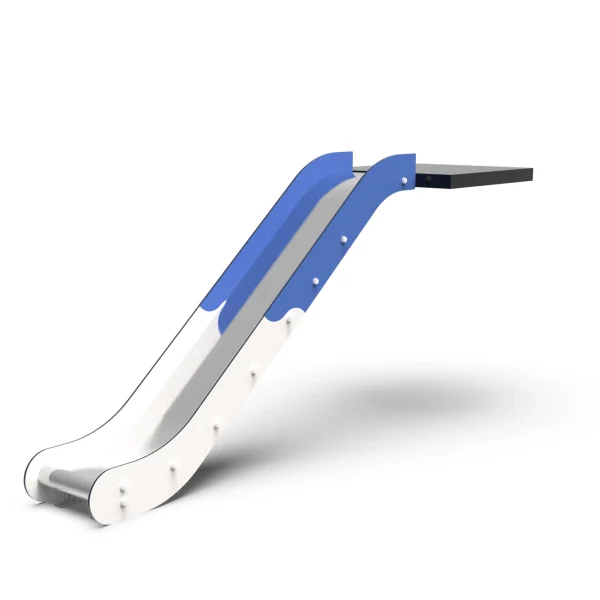
Next, measure the actual usable area. Do not rely on the total square footage of your outdoor space. Subtract the required safety surfacing zones around each piece of equipment, which typically extend 1.5 to 2 meters from the equipment footprint in all directions. A playground slide with a 3-meter platform height needs a fall zone that can consume 25 to 30 square meters of ground space on its own. If your supplier does not ask for your site dimensions and surfacing plans early in the conversation, treat that as a warning sign.
Soil and drainage conditions are often overlooked until installation begins. Equipment installed on ground that holds water will develop rust, rot, or foundation instability much faster than equipment on well-drained soil. Ask suppliers whether they review site photos or drainage maps before quoting. At Suzhou LvDong, we request site information as a standard part of the pre-quotation process because equipment longevity depends on what it sits on as much as what it is made of.
Which Safety Certifications Should You Verify First?
Every supplier will tell you their equipment meets safety standards. Your job is to verify that claim before money changes hands. Certification documentation is where the gap between marketing and manufacturing becomes visible.
The two standards that matter most for school playground equipment are EN 1176, the European safety standard covering general safety requirements, impact attenuation, and entrapment hazards, and GB/T 34272-2017, the Chinese national standard for amusement equipment safety. If you are importing equipment, ask the supplier which specific parts of EN 1176 their products have been tested against. EN 1176 is a multi-part standard. Part 1 covers general safety, Part 2 covers swings, Part 3 covers slides, and so on. A supplier who claims EN 1176 compliance but cannot name which parts apply to their equipment is worth pressing further.
Request the actual test reports, not just the certificate. A test report shows the testing laboratory name, the equipment model tested, the specific clauses evaluated, and whether each clause passed or failed. Certificates without supporting reports are marketing documents. I have seen certificates issued for one product model used to sell a completely different model that shared only a superficial design similarity.
For schools in regions that follow ASTM F1487, the U.S. standard for public playground equipment, confirm whether the supplier has tested to that standard specifically. Most Chinese manufacturers test to EN 1176 and GB/T standards by default. ASTM compliance typically requires separate testing at additional cost. Do not assume one standard covers another.
Also check whether the supplier holds ISO 9001 certification for their manufacturing facility. ISO 9001 does not directly address playground safety, but it tells you the factory operates under a documented quality management system, which significantly reduces the risk of production shortcuts.
What Should You Look for During a Factory Visit?
A factory visit reveals more about a supplier than any brochure or sales presentation. If visiting in person is not practical, request a video walkthrough that shows the production floor in real time, not a pre-edited promotional clip.
The first thing I tell school procurement teams to examine is the steel storage and processing area. For outdoor playground equipment, the steel should be galvanized or stainless, and raw materials should be stored under cover, not left exposed to rain. Surface rust on incoming material before fabrication even begins tells you everything about how the factory handles quality control.
Walk through the welding stations and check whether welds are ground smooth. On equipment designed for children, sharp edges or protruding weld beads are a safety hazard and a sign of rushed production. Good manufacturers grind and polish every weld point on structures children will touch.
Ask to see the paint or powder coating line. Outdoor playground equipment needs UV-resistant, weather-durable finishing. In a well-organized factory, the coating process is separated from the fabrication area to prevent dust contamination. If painting and welding happen in the same open bay, the finish quality on your equipment will likely show it within the first year of sun exposure.
Finally, check the assembly and testing area. Completed equipment should be partially or fully assembled for inspection before packing. If the supplier only shows you packed crates ready to ship, you are not seeing whether the bolt holes align, whether moving parts operate smoothly, or whether the structure stands level on its feet. These are the problems that turn a straightforward installation into a week of field modifications.
A responsible supplier will also walk you through their production schedule for your specific order. For a school playground order involving multiple equipment types, a typical production cycle from confirmed drawings to ready-to-ship status runs four to six weeks, depending on complexity and factory workload. If a supplier promises delivery in two weeks without explaining how they manage that timeline, ask which existing inventory they are pulling from.
| What to Check | What a Reliable Factory Shows | Red Flags |
|---|---|---|
| Steel storage | Covered, dry, rust-free raw materials | Rust on incoming steel, open-air storage |
| Welding quality | Smooth, ground welds with no sharp edges | Protruding beads, no post-weld grinding |
| Coating process | Separate enclosed coating line | Painting in open fabrication bay |
| Assembly testing | Partial assembly for pre-shipment check | Only packed crates visible |
| Production timeline | Realistic 4-6 weeks for custom orders | Promises under 2 weeks with no inventory proof |
If your school is ordering a multi-structure playground with slides, swings, and climbing elements combined, the factory should produce design drawings that show how these structures connect and how the safety zones overlap. Request a 3D rendering of the proposed layout before signing. A supplier who resists providing detailed design drawings at the quotation stage is often one that outsources production to multiple sub-factories and cannot control the final assembly fit. When your project involves custom configurations like this, confirming the supplier has in-house design engineers rather than outsourced drafting makes a measurable difference to both lead time and design accuracy. If your layout involves specific safety zone calculations or age-zone separation, send your site plan to [email protected] and we can walk through the design feasibility before you commit to a quotation.
How Do Delivery, Installation, and After-Sales Support Compare?
Delivery and installation are where supplier reliability becomes immediately measurable. A playground set delivered late, with missing components, or without clear installation documentation can delay a school opening or leave a construction site idle at daily cost.
Start by confirming what the supplier’s quoted price includes. Some suppliers quote equipment only and leave shipping, customs clearance, and installation as the buyer’s responsibility. Others offer a turnkey price that covers factory-to-site logistics and professional installation. For international procurement, clarify whether the price is FOB, CIF, or DDP. FOB means you own the goods and the shipping risk from the moment they leave the factory gate. DDP means the supplier handles everything through to your site. The price difference can be significant, but so is the difference in administrative workload for your procurement team.
Ask for a sample packing list from a previous school project. A professional packing list shows each component individually labeled, with part numbers that match the installation manual. If a supplier sends equipment in bulk crates with no itemized list, expect installation delays while your team identifies which bolt goes where.
Installation support matters differently depending on whether you plan to use the supplier’s installation team or hire local contractors. If using the supplier’s team, confirm how many installers they send, how many days installation takes, and whether they provide a supervisor who speaks your project language. For a typical school playground with five to eight equipment structures, professional installation by an experienced crew of three to four workers takes three to five working days, assuming the ground surfacing is already prepared.
If using local contractors, request a detailed installation manual with assembly diagrams before the equipment ships. Review the manual with your contractor to confirm they can follow it. Some manuals are essentially exploded parts diagrams with no step-by-step sequence. A good installation manual tells you the order of assembly: foundations first, then main posts, then platforms, then accessories. It also specifies foundation depth, concrete curing time before loading, and bolt torque values. If your supplier cannot offer this level of documentation, factor in the cost of hiring an experienced playground installer rather than a general contractor.
After-sales support separates transactional suppliers from long-term partners. Ask these questions directly:
– What is the warranty period for steel structures, plastic components, and moving parts individually? Steel frames may carry a five-year structural warranty while springs and bearings carry one to two years.
– How are spare parts ordered and what is the typical lead time? For a school that needs a replacement swing seat mid-semester, waiting three months is not acceptable.
– Does the supplier stock common wear parts, or do they fabricate on demand?
– What does the warranty claims process actually require from you? Some warranties demand photographic evidence and written reports before authorizing replacement. Others ask you to ship the defective part back at your cost.
For schools that have no full-time maintenance staff, consider suppliers who offer annual inspection services or maintenance contracts. The cost of an annual safety inspection is small compared to the liability of undetected equipment deterioration.
How Should You Evaluate Quotes Beyond the Bottom Line?
When you receive quotations from multiple playground equipment suppliers, the lowest total price is the easiest number to compare and the most misleading. A quote that appears cheaper on page one often assumes you will absorb costs that a more transparent supplier has already included.
Create a comparison table that breaks down each quotation into the same cost categories. Start with equipment cost, then add freight and logistics, then installation labor, then surfacing and site preparation, and finally any separate charges for design services, documentation, or project management.
| Cost Category | What to Verify |
|---|---|
| Equipment | Confirm material specs match the quote: 304 stainless or galvanized mild steel? LLDPE or HDPE plastic? Wall thickness stated? |
| Freight and logistics | Is this FOB, CIF, or DDP? Who handles customs clearance? |
| Installation | Is labor included? How many installers? How many days? |
| Surfacing | Does the quote assume you already have safety surfacing installed? |
| Design and documentation | Are 3D renderings, layout plans, and installation manuals included or charged separately? |
| Warranty and spares | What is covered, for how long, and what is excluded? Are spare parts included in the initial order? |
Watch for these common hidden-cost patterns. Some suppliers quote equipment with thinner steel wall thickness than the design drawing specifies because the price difference between 2.0mm and 2.5mm wall tubing is significant over a full playground order. Require material specifications in writing, with measurable parameters you can verify on delivery.
Other suppliers exclude safety surfacing from their quotation entirely, assuming you will handle it separately. If your site currently has grass or hard-packed earth, you will need impact-attenuating surfacing installed before the equipment can be used safely. Engineered wood fiber, poured-in-place rubber, or rubber tiles are common options, and the cost for surfacing a 200-square-meter playground can equal 30 to 50 percent of the equipment cost itself.
Ask suppliers to include a spare parts package in the initial quotation, even if you do not order it immediately. Items like swing seats, bearing sets, and spring assemblies wear faster than steel frames and having spares on hand from day one eliminates future procurement delays. A supplier who recommends specific spare parts based on their experience with the equipment demonstrates they understand the product lifecycle, not just the sale.
When you have narrowed to two or three suppliers, request references from school projects they completed at least three years ago. Contact those schools and ask whether the equipment has held up, whether the supplier responded to warranty claims, and whether they would buy from the same supplier again. A reference from a project completed six months ago tells you about the sales and installation experience. A reference from a project completed three years ago tells you about durability and after-sales support.
Moving Forward with Confidence
Choosing a school playground equipment supplier requires moving beyond catalog images and price lists into verification of what the supplier actually produces and how they support it after delivery. The supplier your school selects will influence the safety of children for years, the maintenance demands on your facilities staff, and whether the playground remains an asset or becomes a liability.
Before finalizing any order, confirm that the supplier has provided dated test reports for the specific equipment models you are purchasing, that you have seen production evidence either through a factory visit or a live video walkthrough, and that the quotation breaks down all costs transparently including logistics, installation, and spare parts.
If your school is planning a new playground or upgrading existing equipment, our team at Suzhou LvDong can prepare design drawings, material specifications, and safety documentation for your review. Send your site dimensions and age-group requirements to [email protected] or reach us on WhatsApp at +8613915684545, and we will deliver a detailed quotation with a 3D layout proposal specific to your school.
Common Questions About Selecting a School Playground Supplier
How long should a school playground equipment project take from order to installation?
For a typical school playground with five to eight equipment structures, expect four to six weeks of production after design drawings are confirmed, plus shipping time depending on distance and customs clearance. Installation by an experienced crew takes three to five working days after the equipment arrives on site and the safety surfacing is prepared. If your school orders during the peak season, which in China runs roughly from March through August, add two to three weeks to the production timeline and confirm the schedule in writing with your supplier.
Is it better to buy pre-configured playground sets or request custom design?
It depends on two factors: how closely your site matches standard dimensions and whether your school has specific educational programming needs. Pre-configured sets are faster to quote and produce, and they work well when your space and age-group requirements match a standard layout. If your site has irregular dimensions, drainage constraints, or a particular theme requirement, custom design is worth the additional lead time and design cost. A supplier with in-house design capability can adjust platform heights, activity sequencing, and theme elements to fit your space without compromising safety zone requirements. Avoid suppliers who offer custom design but outsource the actual design work, as this creates communication delays and quality gaps between what is drawn and what is manufactured.
What certifications are absolutely non-negotiable for school playground equipment?
A common misconception is that any CE mark or general compliance statement is sufficient. The reality is that EN 1176 or ASTM F1487 test reports for the specific equipment models you are purchasing are the baseline requirement, backed by ISO 9001 certification for the manufacturing facility. For schools in regions with additional local safety regulations, confirm whether the supplier has tested to those standards as well. A dated test report from a recognized laboratory carries far more weight than a general certificate. If a supplier cannot produce a test report for the exact model you are buying, assume no testing has been done. For projects where compliance documentation must be submitted as part of your procurement file, share your documentation checklist with us at [email protected] and we will confirm which test reports and material certifications are available for the equipment you need.
If you’re interested, check out these related articles:
Slide Platform Height and Exit Safety Guidelines for Playgrounds
Single vs Double Seat Playground Horse Spring Riders A Comparison
DIY vs Supplier Playground Equipment Installation Guide
Evaluate Playground Equipment Samples Before Buying A Guide